Apartment Application Process Explained for First-Time NYC Renters Today
Introduction
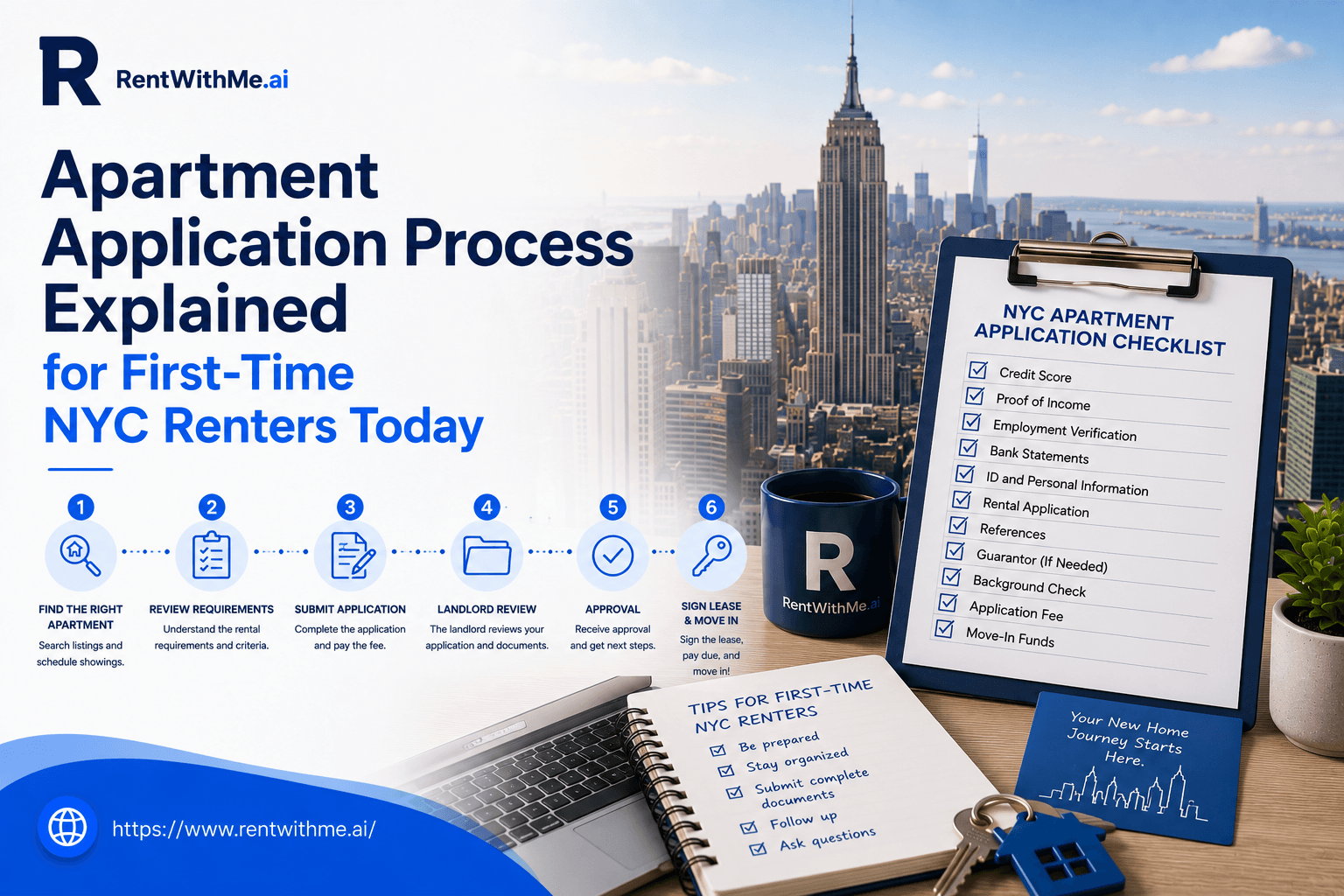
Applying for your first apartment in New York City can feel both exciting and overwhelming. The rental market moves quickly, competition is often intense, and many first-time renters are surprised by the amount of paperwork required before they can secure a home.
Unlike simply touring apartments, the application process involves proving that you meet a landlord’s financial and rental requirements. Missing a document, misunderstanding a requirement, or delaying your response can cause you to lose an apartment to another qualified applicant.
The good news is that the process becomes much easier once you understand each step. By preparing in advance and knowing exactly what landlords expect, you can submit a strong application and improve your chances of approval.
This guide explains the NYC apartment application process in detail for first-time renters. From gathering documents to understanding income requirements and organizing your paperwork, you’ll learn how to navigate the process with confidence.
Understanding the NYC Apartment Application Process
The apartment application process is designed to help landlords evaluate whether a prospective tenant is financially responsible and likely to fulfill the lease agreement.
Once you find an apartment you want to rent, you’ll typically complete an application that provides personal, employment, financial, and rental history information. The landlord or property manager then reviews your application and verifies the information you provide.
Depending on the building and management company, this review may include credit checks, employment verification, income verification, reference checks, and background screening. Each property may have slightly different requirements, but the overall process follows a similar structure throughout New York City.
Understanding how each stage works helps reduce uncertainty and allows you to prepare before opportunities arise. In a competitive market, preparation often makes the difference between securing your preferred apartment and missing out.

Why First-Time NYC Renters Should Prepare Before Applying
New York City’s rental market is known for moving quickly. Desirable apartments sometimes receive multiple applications within hours of being listed.
If your documents are not ready, another applicant may complete the process before you even submit your paperwork. Preparation allows you to respond immediately when you find the right apartment.
Being organized also demonstrates responsibility to landlords and leasing agents. Complete, accurate applications create a positive first impression and reduce unnecessary delays during the approval process.
Preparing ahead also gives you time to review your finances, gather supporting documents, and correct any issues before they affect your application. Instead of rushing under pressure, you can move through each step with confidence.
Common Apartment Application Mistakes to Avoid
Many first-time renters unintentionally make mistakes that slow down or weaken their applications. Fortunately, most of these issues can be prevented with proper preparation.
One common mistake is waiting until after finding an apartment to begin collecting documents. Employment letters, bank statements, identification, and other records often take time to obtain.
Another mistake is providing incomplete or inaccurate information. Even small inconsistencies between your application and supporting documents can create unnecessary questions during the review process.
Some applicants also underestimate the importance of responding quickly. If a landlord requests additional documentation, delaying your reply may allow another applicant to move ahead.
Avoid these common mistakes whenever possible:
- Submitting incomplete applications.
- Providing outdated financial documents.
- Forgetting required identification.
- Waiting too long to respond to landlord requests.
- Applying without understanding the building’s requirements.
- Assuming every landlord follows identical approval standards.
Avoiding these issues makes your application stronger and demonstrates that you are prepared to become a responsible tenant.

Determining Whether You Meet Basic Rental Requirements
Before applying, it is important to understand the qualifications many landlords use when reviewing applicants.
Although requirements vary between buildings, most property owners evaluate whether applicants can comfortably afford the monthly rent and maintain a stable financial history. Employment, income, and previous rental experience often play important roles during this evaluation.
Some landlords also review credit history to better understand an applicant’s borrowing and payment habits. A strong credit profile may improve your chances of approval, while applicants with limited credit history may be asked to provide additional documentation or a guarantor.
If you are unsure whether you meet the requirements for a particular apartment, ask the leasing agent before submitting your application. Clarifying expectations early can save both time and application fees.
Understanding these qualifications allows you to focus your apartment search on properties where you are more likely to qualify.
Documents You Should Gather Before Applying
Having your paperwork ready before beginning your apartment search can significantly improve your chances of securing a rental quickly.
Most landlords request several documents to verify your identity, employment, and financial stability. Organizing these records in advance allows you to submit your application immediately when you find the right apartment.
Commonly requested documents include:
| Document | Purpose |
|---|---|
| Government-issued photo ID | Verifies your identity |
| Recent pay stubs | Confirms current income |
| Employment verification letter | Confirms employment status |
| Recent bank statements | Demonstrates financial stability |
| Tax returns, if requested | Verifies annual income |
| Previous landlord references | Shows rental history |
| Credit authorization form | Allows credit review |
Depending on your situation, landlords may request additional documents. Self-employed applicants, students, retirees, or international renters often need alternative financial records that demonstrate their ability to meet rental obligations.
Keeping digital copies of your documents in a secure folder also makes it easier to submit applications electronically, which is increasingly common throughout New York City.

Understanding Income, Employment, and Credit Expectations
Financial qualifications are among the most important parts of any apartment application.
Landlords want confidence that tenants can consistently pay rent throughout the lease term. Employment stability, income level, and responsible financial management all contribute to that assessment.
Many NYC landlords compare an applicant’s annual income with the monthly rent when evaluating affordability. While individual requirements differ, understanding that landlords closely review income helps you prepare appropriate documentation before applying.
Employment verification also confirms that your reported income is accurate and ongoing. If you recently changed jobs, be prepared to provide additional information that demonstrates your continued financial stability.
Credit history provides another perspective on financial responsibility. While not every applicant has an extensive credit history, paying bills consistently and managing debt responsibly can strengthen your application.
Applicants with limited credit history should not assume they will automatically be rejected. Many landlords consider multiple financial factors rather than relying on a single credit score.
Guarantors and Co-Signers in NYC Rentals
Some first-time renters may not fully meet a landlord’s income or credit requirements. In these situations, a guarantor or co-signer may help strengthen the application.
A guarantor agrees to assume financial responsibility if the tenant is unable to fulfill the lease obligations. Because this represents a significant commitment, landlords usually require guarantors to meet specific financial qualifications.
Students, recent graduates, individuals starting new careers, and applicants relocating to New York City commonly use guarantors when applying for apartments.
If you believe you may need a guarantor, discuss the building’s specific requirements before submitting your application. Every landlord establishes different qualification standards, documentation requirements, and approval procedures.
Preparing guarantor documents early can prevent delays if additional financial support becomes necessary during the application review.
Application Fees, Deposits, and Upfront Costs
Applying for an apartment often involves more than completing paperwork.
Many renters should also prepare for various upfront costs that may arise during the application and leasing process. Understanding these expenses helps you budget appropriately and avoid unexpected financial stress.
Potential costs can include application fees, security deposits, the first month’s rent, and other move-in expenses depending on the property and lease terms.
Before submitting any payment, ask for a clear explanation of each charge and understand whether certain fees are refundable under specific circumstances. Keeping copies of receipts and payment confirmations is also a good practice.
Planning ahead for these expenses allows you to move quickly when your application is approved without placing unnecessary strain on your finances.

Organizing Your Rental Documents for Faster Approval
Submitting documents is only part of the application process. How you organize them can also affect how efficiently your application is reviewed.
Create clearly labeled digital folders containing identification, employment records, income verification, bank statements, references, and any additional supporting documents. Naming each file clearly helps property managers locate information quickly.
Review every document before submitting it to ensure the information is current, accurate, and easy to read. Double-check that names, addresses, employment information, and financial records remain consistent across your entire application package.
If you submit documents electronically, verify that every file uploaded successfully before considering your application complete. Small technical errors can delay review even when your paperwork is otherwise ready.
With your documentation fully organized and your qualifications prepared, the next stage is completing the apartment application itself. Understanding how to accurately fill out the application, respond to verification requests, navigate background checks, and improve your chances of approval will help move your rental journey one step closer to signing your first NYC lease.
Completing the Apartment Application Correctly
Once you have gathered all your documents, the next step is completing the apartment application carefully and accurately. This may seem straightforward, but even small mistakes can delay the approval process or raise unnecessary questions.
Take your time when entering personal information such as your name, current address, employment details, income, and contact information. Ensure every answer matches the supporting documents you provide.
Never leave required fields blank unless instructed to do so. If a question does not apply to your situation, follow the property’s instructions or ask the leasing office for clarification.
Before submitting your application, review it one final time. Verifying every detail now is much easier than correcting errors after the landlord begins reviewing your file.

How Background and Credit Checks Work
Most NYC landlords conduct background and credit checks as part of their tenant screening process. These reviews help them evaluate an applicant’s financial responsibility and rental reliability.
A credit check generally examines your borrowing history, payment patterns, outstanding debts, and overall credit profile. Landlords are usually looking for evidence that you consistently manage financial obligations responsibly.
Background checks may vary depending on the building or management company. Some properties perform more comprehensive screenings than others, while smaller landlords may rely on simpler verification methods.
If your credit history contains past financial difficulties, be prepared to explain your circumstances honestly if asked. Many landlords appreciate transparency and may consider your overall financial situation rather than focusing on a single issue.
Applicants who have limited credit history should not automatically assume they will be denied. Stable employment, sufficient income, strong references, or a qualified guarantor may help strengthen the application.
Employment and Income Verification Process
Income verification allows landlords to confirm that applicants can comfortably afford the monthly rent throughout the lease period.
After reviewing your application, the property manager may contact your employer to verify your position, employment status, and in some cases, your salary. Some employers respond quickly, while others require several business days.
If you recently started a new job, provide an offer letter along with any requested supporting documentation. Being proactive can help reduce delays during the verification process.
Self-employed applicants often need to provide additional financial documentation instead of traditional employment verification. Tax returns, business records, bank statements, or accountant-prepared financial documents may be requested depending on the landlord’s requirements.
Regardless of your employment type, providing organized and accurate documentation demonstrates professionalism and improves the overall efficiency of the application review.
Rental History and Reference Checks
Previous rental history gives landlords additional confidence that an applicant has been a responsible tenant.
If you have rented before, landlords may contact previous property owners or managers to confirm your payment history, lease compliance, and general tenancy experience.
Questions often focus on whether rent was paid on time, whether the apartment was maintained properly, and whether any significant lease violations occurred during your tenancy.
First-time renters who have never leased an apartment should not be discouraged. Many landlords understand that everyone starts somewhere and may place greater emphasis on employment stability, financial qualifications, or guarantor support.
Providing accurate contact information for references helps landlords complete this stage more efficiently and reduces unnecessary follow-up requests.

Responding to Requests for Additional Documents
It is common for landlords to request additional information after reviewing an application.
These requests do not necessarily indicate a problem with your application. Instead, they often help clarify specific financial details or verify information that requires additional documentation.
If you receive a request, respond as quickly as possible. Delays can slow the approval process, especially in competitive rental markets where multiple applicants are being considered.
Keep all requested documents organized and submit exactly what has been requested. Sending unrelated paperwork may create confusion and extend the review process.
Maintaining polite and professional communication throughout this stage demonstrates responsibility and helps establish a positive relationship with the property manager.
Understanding Apartment Application Timelines
Many first-time renters wonder how long apartment approvals actually take.
The answer depends on several factors, including the property’s screening procedures, how quickly employers and references respond, and whether your application is complete when submitted.
Some applications receive decisions within a day or two, while others require additional time if multiple verifications are necessary. Larger apartment communities often have standardized review procedures that may differ from smaller independent landlords.
Although waiting can feel stressful, avoid submitting repeated follow-up requests immediately after applying. Allow the landlord sufficient time to review your application before checking on its status.
During the waiting period, remain available by phone and email in case additional information is requested.
Reasons Apartment Applications Are Delayed or Denied
Understanding why applications experience delays helps first-time renters avoid common problems.
Many delays occur because documents are incomplete, employment verification takes longer than expected, or references cannot be reached promptly. These issues are often resolved once the missing information is provided.
Applications may also require additional review when financial documentation is inconsistent or difficult to verify. Carefully reviewing your paperwork before submission reduces the likelihood of these situations.
Common reasons applications may experience delays include:
- Missing supporting documents.
- Incomplete application forms.
- Delayed employer verification.
- Unavailable rental references.
- Inconsistent financial information.
- Slow responses to landlord requests.
While some applications are denied, many delays simply result from administrative processes rather than serious concerns. Remaining organized and responsive gives your application the best opportunity for timely review.
What to Do If Your Application Is Rejected
Receiving a rejection can be disappointing, but it should not discourage you from continuing your apartment search.
Every landlord evaluates applicants differently, and one property’s decision does not determine your ability to secure another apartment.
If appropriate, politely ask whether there were specific factors that affected the decision. Understanding the reason may help you strengthen future applications.
Use the experience as an opportunity to review your documents, verify your financial information, and improve your overall application package before applying elsewhere.
Many successful renters experience one or more rejected applications before finding the apartment that ultimately becomes their home.

Tips to Improve Your Chances of Approval
Although every application is evaluated individually, several practical steps can improve your likelihood of approval.
Prepare every required document before beginning your apartment search so you can submit a complete application immediately when needed.
Communicate professionally throughout the process and respond quickly whenever additional information is requested.
The following table summarizes strategies that help strengthen an apartment application.
| Strategy | Benefit |
|---|---|
| Submit complete documentation | Reduces processing delays |
| Verify information before applying | Prevents inconsistencies |
| Respond promptly to requests | Demonstrates responsibility |
| Maintain organized records | Simplifies landlord review |
| Provide accurate references | Speeds verification process |
| Prepare guarantor documents if needed | Strengthens financial qualifications |
These habits not only improve your current application but also make future apartment searches significantly easier.
Preparing for Lease Approval and Signing
Once your application has successfully passed the review process, the landlord will begin preparing the lease agreement.
Before signing, carefully review every document and compare it with the information discussed during the apartment tour and application process. Verify important details such as monthly rent, lease duration, security deposit, move-in date, included utilities, and building policies.
If anything appears different from your previous discussions, ask questions before signing. A lease is a legally binding agreement, and understanding every section helps protect both you and the landlord.
Approval is an exciting milestone, but it is not the final step in your rental journey. Before officially moving into your new NYC apartment, you should carefully review the lease, prepare required payments, organize your move, set up essential services, understand your responsibilities as a tenant, and take the necessary steps to build a successful long-term rental experience.
Reviewing the Lease Before Signing
Receiving lease approval is an exciting moment, but it is important not to rush through the final paperwork. Before signing, take time to read the entire lease carefully, even if you are eager to secure the apartment.
Review the monthly rent, lease start and end dates, security deposit amount, renewal terms, late payment policies, maintenance responsibilities, and any building rules. Every important detail discussed during the application process should appear clearly in the lease agreement.
If something seems different from what was originally explained, ask for clarification before signing. It is much easier to resolve questions before the lease becomes legally binding.
Do not hesitate to request additional time if you need to review the document thoroughly. A careful review now can help prevent misunderstandings throughout your tenancy.
Understanding Your Financial Responsibilities Before Move-In
Before receiving your keys, you will usually need to complete several financial obligations.
Depending on the building and lease agreement, these payments may include the first month’s rent, the security deposit, and any other approved move-in charges. Knowing exactly what is due helps you avoid last-minute surprises.
Always request payment instructions directly from the landlord or property manager. Be cautious of unexpected payment requests or changes in payment methods, especially if they differ from previous communications.
Keep copies of every receipt, confirmation email, and payment record. Organized financial documentation provides valuable protection should questions arise later.
The following table summarizes common move-in expenses.
| Expense | Purpose |
|---|---|
| First Month’s Rent | Begins your lease payments |
| Security Deposit | Covers eligible damages under the lease |
| Application Fee (if applicable) | Covers application processing |
| Move-In Fee (if applicable) | Building-specific administrative charge |
| Utility Setup Costs | Activates essential services |
| Renters Insurance | Protects personal belongings and liability |
Understanding these expenses in advance allows you to move into your new apartment with greater confidence and financial preparedness.
Preparing for Move-In Day
Once your lease is signed, the focus shifts toward planning a smooth move.
Create a moving checklist that includes scheduling movers, packing belongings, changing your mailing address, transferring subscriptions, and confirming your move-in date with building management. Completing these tasks gradually makes the moving process much less stressful.
If your building requires elevator reservations or designated moving hours, arrange them as early as possible. Many apartment buildings in New York City have specific procedures designed to minimize disruption for other residents.
Before bringing furniture inside, inspect the apartment one final time. Confirm that any promised repairs have been completed and that appliances, plumbing fixtures, windows, doors, and lighting are functioning properly.
Taking photographs of every room before moving your belongings is also a smart practice. These records help document the apartment’s original condition and may prove valuable when you eventually move out.
Setting Up Utilities, Internet, and Renters Insurance
Your apartment will feel like home much faster when essential services are ready before move-in day.
Confirm which utilities are included in your rent and which services you are responsible for establishing independently. Electricity, gas, internet, cable television, and other utilities should ideally be scheduled before you arrive.
Reliable internet service has become essential for work, education, communication, and entertainment. Research available providers early so installation appointments do not delay your transition into the apartment.
Renters insurance is another important consideration. While some landlords require it, even optional coverage can help protect your personal belongings from unexpected events while also providing liability protection in many situations.
Store copies of your insurance policy, utility account numbers, and service provider contact information together with your lease documents for easy access.
Building a Good Relationship With Your Landlord or Property Manager
A positive relationship with your landlord or property manager often contributes to a smoother rental experience.
Communicate respectfully and professionally from the beginning of your tenancy. If maintenance issues arise, report them promptly rather than waiting until they become larger problems.
Pay rent on time every month and follow the building’s policies regarding guests, common areas, parking, waste disposal, and other community guidelines. Responsible tenants often enjoy better communication and faster assistance when maintenance needs arise.
Keep written records of important conversations, maintenance requests, inspection notices, and lease-related communications. Organized documentation benefits both tenants and property managers throughout the lease.
Treating the property with care also reflects positively on you as a tenant and helps preserve the apartment’s condition.
Protecting Your Security Deposit Throughout Your Lease
Many first-time renters focus on receiving the apartment but overlook the importance of protecting their security deposit.
As soon as you move in, document the apartment’s condition with dated photographs or videos. Capture images of walls, flooring, appliances, windows, doors, plumbing fixtures, cabinets, and any existing cosmetic damage.
Continue maintaining the apartment responsibly throughout your lease. Regular cleaning and promptly reporting maintenance concerns help prevent avoidable damage from becoming more serious.
When preparing to move out, review your lease carefully to understand cleaning expectations and move-out procedures. Returning the apartment in good condition greatly improves the likelihood of receiving your security deposit according to the lease agreement.
Retain copies of inspection reports, maintenance records, and move-out documentation until your security deposit has been returned.
Frequently Asked Questions About the NYC Apartment Application Process
Many first-time renters have similar concerns when applying for apartments in New York City. Understanding these common questions can help you approach the application process with greater confidence.
How long does the apartment application process usually take?
The timeline varies depending on the property, the completeness of your application, and how quickly employment, income, and reference verifications are completed. Providing organized documentation can often help prevent unnecessary delays.
What documents are most commonly required?
Most landlords request government-issued identification, proof of income, employment verification, recent bank statements, and authorization for a credit check. Some applicants may also need tax documents, landlord references, or guarantor information.
Can I rent an apartment with limited credit history?
Yes. Limited credit history does not automatically prevent approval. Some landlords consider stable employment, sufficient income, savings, rental references, or the use of a qualified guarantor when evaluating applicants.
Should I apply for multiple apartments?
Applying for more than one apartment may increase your chances in competitive markets, but you should carefully consider application costs and ensure you can meet the obligations if more than one application is approved.
What happens after my application is approved?
Once approved, you will typically review and sign the lease, complete required payments, receive move-in instructions, and schedule your move into the apartment.
How can I make my application stronger?
Preparing documents in advance, providing accurate information, responding quickly to landlord requests, maintaining organized records, and demonstrating stable financial qualifications all contribute to a stronger application.
Complete NYC Apartment Application Checklist
Use the following checklist to stay organized throughout the apartment application process.
| Application Stage | Tasks to Complete |
|---|---|
| Before Applying | Set your budget, research neighborhoods, confirm eligibility requirements |
| Document Preparation | Gather identification, proof of income, employment verification, bank statements, references |
| Application Submission | Complete every section accurately, review information before submitting |
| Verification Process | Respond promptly to requests, provide additional documents if needed |
| Approval Stage | Review lease terms, verify financial obligations, confirm move-in date |
| Before Move-In | Arrange utilities, renters insurance, moving services, and address updates |
| After Move-In | Document apartment condition, organize lease documents, report maintenance issues promptly |
Using a checklist keeps the application process organized and helps ensure that important tasks are completed on time. Being prepared also allows you to respond quickly when desirable apartments become available in New York City’s competitive rental market.
Conclusion
The apartment application process may seem complicated at first, especially for first-time NYC renters, but understanding each step makes it much more manageable. Preparation, organization, and attention to detail are the keys to submitting a strong application and improving your chances of approval.
From gathering financial documents and understanding landlord requirements to completing the application accurately and reviewing the lease carefully, every stage plays an important role in securing your new home. Taking the time to prepare in advance allows you to respond quickly when you find the right apartment.
Remember that every landlord may have slightly different requirements, so staying flexible and maintaining organized records will benefit you throughout your apartment search. Even if you encounter setbacks, each application provides valuable experience that strengthens future opportunities.
With the right preparation, realistic expectations, and a clear understanding of the NYC apartment application process, you can approach your rental search with confidence. By following the guidance in this article, you’ll be well equipped to navigate the application process, secure your ideal apartment, and begin your new chapter in New York City with peace of mind.