
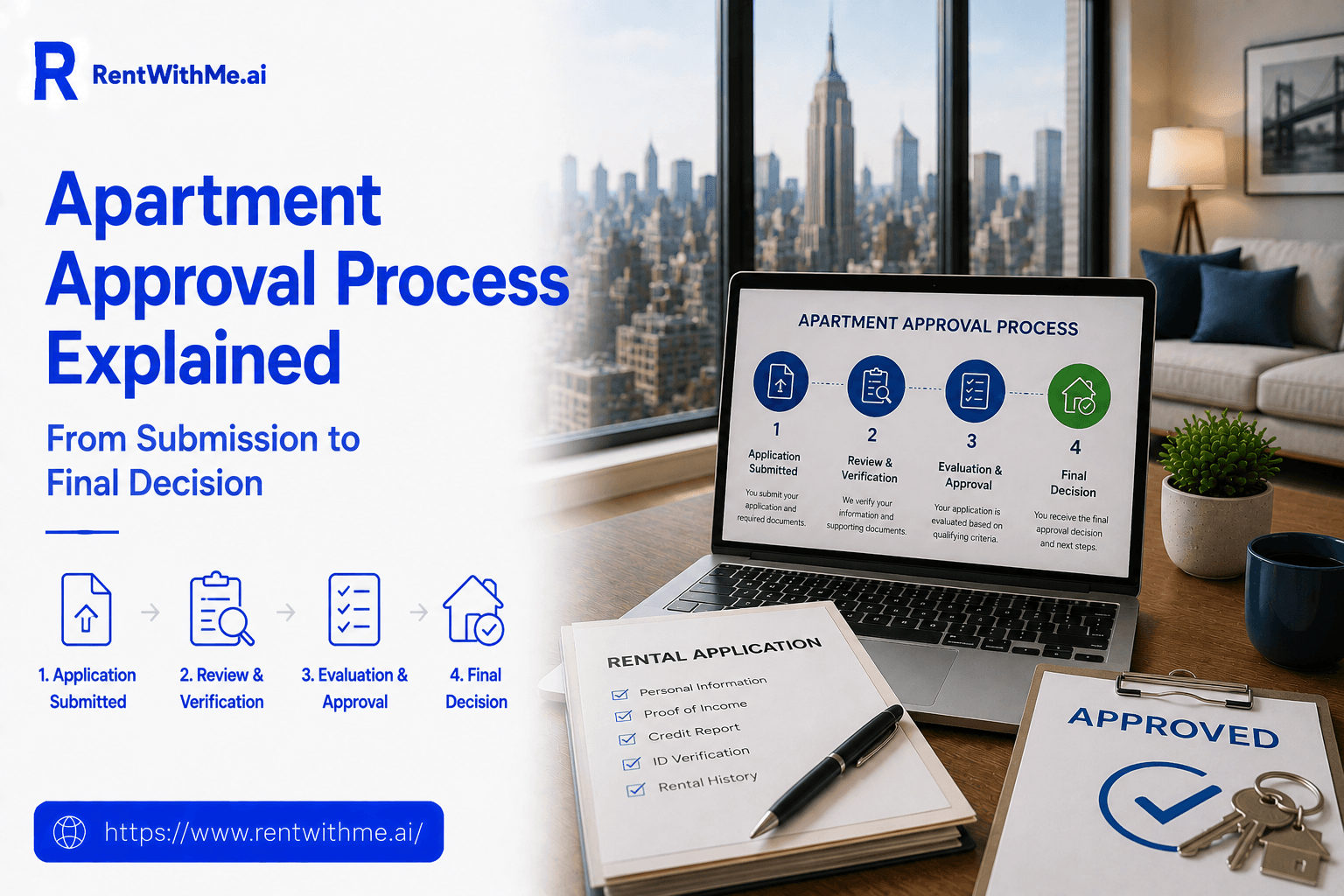
Apartment Approval Process Explained From Submission to Final Decision
Introduction
Finding the perfect apartment is exciting, but many renters become anxious after clicking the submit button on their rental application. Questions begin to surface almost immediately. How long will approval take? What is the landlord reviewing? Will additional documents be required? Is there anything that can speed up the process?
The apartment approval process involves much more than simply checking whether an applicant earns enough income. Property managers carefully review identification, employment, financial stability, rental history, supporting documents, and several other factors before making a final decision. Every step is designed to help them select tenants who are financially qualified and likely to fulfill the lease successfully.
Understanding what happens after you submit your application removes much of the uncertainty. Instead of wondering why the process takes time, you will know exactly what landlords are evaluating and why each stage is important.
This guide explains the apartment approval process from submission to the final decision. Whether you are renting your first apartment or moving into a new home, learning how the process works can help you prepare a stronger application, respond confidently to landlord requests, and improve your chances of receiving a faster approval.
Why Understanding the Apartment Approval Process Matters
Many renters focus their attention on finding available apartments but spend very little time learning how approval actually works. This often creates unnecessary stress because applicants are unsure what happens once their paperwork has been submitted.
Understanding the approval process helps you prepare before problems occur. When you know what documents landlords typically verify and why certain questions are asked, you can organize your application more effectively and avoid common delays. Knowledge also improves communication with property managers. Instead of guessing what information may be required, you can anticipate requests and respond quickly if additional documentation is needed.
Applicants who understand the process often feel more confident throughout their apartment search. They know that a request for additional paperwork or verification does not necessarily indicate a problem with their application.

What Happens Immediately After You Submit Your Rental Application
The approval process begins almost as soon as your application is received. Most property management companies first confirm that the application has been submitted successfully and that all required documents are included. At this point, they are not determining whether you qualify. Instead, they are verifying that enough information has been provided to begin the formal review.
If documents are missing, the leasing office usually contacts you before moving forward. Missing pay stubs, unsigned authorization forms, incomplete applications, or unreadable document uploads are common reasons applications temporarily pause during this stage.
Many apartment communities also organize applications in the order they are received. This administrative review allows leasing staff to prepare each file before detailed screening begins.
Applicants who submit complete and organized applications often move through this stage much more quickly than those who require multiple follow-up requests.
Overview of the Apartment Approval Timeline
Although every landlord follows slightly different procedures, most apartment approvals follow a similar sequence. Each stage verifies a different part of your application until the landlord has enough information to make an informed decision.
A typical apartment approval timeline includes:
- Application submission and completeness review.
- Identity verification.
- Employment and income verification.
- Financial document review.
- Credit screening when required.
- Rental history and landlord reference checks.
- Background screening if part of the property’s policy.
- Final approval review.
- Lease preparation and move-in coordination.
Knowing this sequence helps explain why approvals sometimes require several business days. Each stage depends on documentation, third-party responses, and careful review rather than a simple pass-or-fail evaluation.
Initial Application Review and Completeness Check
Before landlords begin evaluating qualifications, they first determine whether your application is complete. Leasing staff compare your submission against the property’s application requirements. They verify that every required form has been completed, signatures are included, and supporting documents have been uploaded correctly.
This review also helps identify obvious inconsistencies that could delay the process later. For example, if the name on your identification differs from your employment records, the leasing office may request clarification before continuing. Applicants sometimes assume their application is being reviewed for approval when, in reality, the leasing office is still waiting for missing paperwork. Providing complete documentation the first time significantly reduces these delays.
A well-organized application package demonstrates professionalism while allowing property managers to begin verification immediately.

Identity Verification and Personal Information Validation
Once your application passes the completeness check, identity verification usually becomes the next priority. Landlords verify that your government-issued identification matches the information provided throughout your application. Names, addresses, dates of birth, and other identifying details should remain consistent across every document.
This process protects both the property owner and legitimate applicants by helping prevent identity fraud and ensuring lease agreements are prepared accurately.
The following table summarizes the documents commonly reviewed during identity verification.
| Verification Item | Purpose |
|---|---|
| Government-issued driver’s license | Confirms legal identity |
| State-issued identification card | Alternative identity verification |
| Passport | Government-issued photo identification |
| Permanent resident documentation when applicable | Confirms residency status |
| Personal information on the application | Verifies consistency across all records |
If recent changes have occurred, such as a legal name change or new address, additional documentation may be requested. Providing accurate information from the beginning helps this stage move efficiently.
Income Verification and Employment Confirmation
One of the most important parts of the approval process is confirming that applicants can comfortably afford the apartment. Landlords review your employment information, current income, job stability, and supporting financial documents. Their goal is to verify that your reported earnings accurately reflect your ability to meet monthly rent obligations.
Employment verification may include reviewing recent pay stubs, employer letters, tax documents, or official employment records. Some landlords also contact employers directly to confirm your current position and salary.
Applicants who recently accepted new jobs may be asked to provide employment offer letters or updated verification documents. Self-employed applicants often submit business tax returns, profit and loss statements, or accountant-prepared financial summaries instead. Stable employment and consistent income generally strengthen an application while reducing the need for additional verification.

Financial Review and Rent Affordability Assessment
Employment income provides only one part of the financial picture. Many landlords also review bank statements and other financial documents to evaluate overall financial stability. They want confidence that applicants can consistently meet their rental obligations throughout the lease period.
Property managers may consider available savings, regular income deposits, financial reserves, and overall affordability rather than focusing exclusively on salary. Applicants with additional income sources such as bonuses, freelance work, retirement income, or investments often include supporting documentation to present a more complete financial profile. This broader review allows landlords to understand an applicant’s financial situation more accurately. Strong financial organization also demonstrates responsibility and preparation.
Credit Check Process and How It Influences Approval
Many apartment communities perform credit screening as one part of their overall approval process. Contrary to popular belief, landlords rarely focus on a single credit score alone. Instead, they often evaluate payment history, outstanding financial obligations, borrowing habits, and overall patterns of financial responsibility.
Credit reports help landlords assess how applicants have managed previous financial commitments. Consistent payment behavior generally carries more weight than isolated financial events. Applicants with limited credit history should not assume approval is impossible. Strong employment, sufficient income, stable savings, positive rental references, or a qualified guarantor often strengthen the overall application.
Reviewing your own credit information before apartment hunting allows you to identify potential concerns and prepare explanations if questions arise during the approval process.

Common Reasons Applications Move Quickly or Experience Delays
Some apartment applications receive approval within a day, while others require considerably more time. The speed of approval often depends on preparation, document quality, third-party response times, and how complete the original application was. Well-prepared applicants naturally move through the process more efficiently because fewer follow-up requests are necessary.
Several factors commonly influence approval timelines:
- Complete and organized application documents.
- Prompt responses to landlord requests.
- Easily verified employment information.
- Responsive employers and previous landlords.
- Accurate financial records.
- Consistent information across every document.
Most approval delays occur because landlords are waiting for missing paperwork or responses from employers, references, or previous landlords rather than because there is a problem with the application itself. Once your identity, employment, financial qualifications, and initial screening have been successfully reviewed, the process continues with rental history verification, landlord references, background screening, guarantor evaluation when necessary, and several additional assessments before a final approval decision can be made.
Rental History Verification and Previous Landlord Checks
After your financial qualifications have been reviewed, many landlords begin evaluating your rental history. This stage helps them understand how you managed previous leases and whether you have demonstrated responsible tenant behavior over time.
Property managers may contact your current or previous landlords to verify important details about your tenancy. They often ask whether rent was paid on time, whether the property was maintained properly, whether lease terms were followed, and whether they would rent to you again.
Positive rental references strengthen your application because they provide independent confirmation of your reliability. A landlord who speaks highly of your tenancy can reinforce the confidence already established through your financial documentation.
If you are applying for your first apartment and have no rental history, do not assume your application will automatically be rejected. Many landlords simply place greater emphasis on your employment, financial stability, references, or guarantor documentation.
Employment Follow-Up and Additional Income Verification
Some applications require additional employment verification before moving to the final review stage. For example, if your employment recently changed or your income comes from several different sources, the leasing office may request updated documentation. They may also contact your employer to verify your position, salary, or employment status.
Self-employed applicants often experience more detailed financial reviews because traditional payroll records are unavailable. Business tax returns, profit and loss statements, accountant-prepared financial reports, or client contracts may all help demonstrate consistent income.
Applicants who receive commissions, bonuses, freelance income, retirement benefits, or investment income may also provide supporting documentation when requested. Presenting organized financial records makes these reviews more efficient and reduces unnecessary follow-up questions.
Responding quickly whenever additional verification is requested helps keep your application moving toward approval.

Background Screening and Public Record Review
Many apartment communities include a background screening as part of their standard approval procedures. The purpose of this review is to verify certain information already provided in your application while helping property managers make informed leasing decisions. Screening requirements vary between properties and must comply with applicable housing laws and regulations.
Background reviews may include identity verification, previous address history, and other legally permissible public record searches performed through professional screening companies.
The following table summarizes common components of apartment background screenings.
| Screening Component | Purpose |
|---|---|
| Identity verification | Confirms applicant identity |
| Address history | Reviews previous residences |
| Credit screening | Evaluates financial responsibility |
| Public record review | Reviews legally permitted public records |
| Rental history verification | Confirms previous tenancy information |
| Employment verification | Confirms current employment status |
Not every apartment community performs every type of screening. Independent landlords and large property management companies often have different approval procedures based on their own policies.
Guarantor or Co-Signer Evaluation Process
If an applicant does not fully satisfy the property’s financial qualifications, a guarantor or co-signer may become part of the approval process. The guarantor is typically evaluated using standards similar to those applied to the primary applicant. Property managers review identification, employment, income, financial stability, and any additional documents required by the property’s leasing guidelines.
Because guarantors agree to assume financial responsibility under certain circumstances, landlords carefully verify their ability to meet those obligations. Preparing guarantor documents before apartment hunting can save valuable time later. Applications often move much faster when guarantor paperwork is submitted together with the primary application instead of several days afterward.
Applicants should also maintain communication with their guarantor throughout the review process. Quick responses from both parties help prevent unnecessary delays.

How Property Managers Compare Multiple Qualified Applicants
In competitive rental markets, landlords often receive multiple applications from well-qualified renters.
When several applicants meet the basic financial requirements, property managers evaluate the overall strength of each application rather than relying on a single factor. They consider financial stability, employment consistency, rental history, references, document quality, and how complete each application is.
Professional communication also plays a role. Applicants who respond promptly, submit organized paperwork, and communicate respectfully often create a positive impression throughout the review process.
Every application tells a broader story than income alone. A renter with slightly lower earnings but excellent references, organized documentation, and stable employment may appear stronger than someone with higher income but incomplete paperwork.
This holistic review allows landlords to select tenants who appear most likely to fulfill their lease responsibilities successfully.
Requests for Additional Documents and How to Respond
Receiving a request for additional documentation is common and should not immediately be viewed as a negative sign.
Property managers may need updated pay stubs, recent bank statements, clarification regarding employment, proof of savings, or additional information explaining unique financial circumstances. These requests usually mean your application is still under active consideration.
When responding, provide exactly what has been requested and organize your documents clearly. Avoid sending unrelated paperwork that could slow the review process.
Keep copies of every document you submit. Maintaining organized records allows you to respond confidently if additional questions arise later.
Prompt, professional responses demonstrate responsibility and help maintain momentum throughout the approval process.
Typical Apartment Approval Timelines
One of the most common questions renters ask is how long apartment approval takes. There is no universal timeline because every property follows its own procedures. Staffing levels, application volume, employer response times, and third-party screening services all influence how quickly a decision can be made.
Some applicants receive approval within one business day when documentation is complete and verification is straightforward. Others may wait several business days while landlords complete employment verification, rental references, background screening, or guarantor reviews. Applications requiring additional financial documentation or clarification naturally take longer because more information must be evaluated. Understanding these variables helps applicants remain patient while still staying prepared to respond quickly if contacted.
What Applicants Should Do While Waiting
Waiting for an approval decision can feel stressful, particularly when you are excited about a specific apartment. Continue checking your email, voicemail, and phone regularly throughout the review period. Leasing offices often move quickly once verification is complete, and delayed responses may slow the approval process.
Avoid making major financial changes while your application is under review whenever possible. New loans, significant purchases, or unexpected employment changes may complicate additional financial verification if requested. Keep your application documents organized and easily accessible. If updated paperwork is requested, you will be able to respond immediately rather than searching through multiple files. Remaining patient, organized, and responsive demonstrates the same reliability that landlords look for in long-term tenants.
Signs Your Application Is Progressing Toward Approval
Although leasing offices do not always provide detailed status updates, certain developments often indicate that your application is moving toward a final decision. Requests for your preferred move-in date, renters insurance information, payment instructions, or emergency contact details frequently occur after most verification steps have been completed. These administrative conversations often suggest that the leasing office is preparing for the next phase.
Applicants may also be asked to confirm lease dates, utility arrangements, parking preferences, or other move-in logistics. While these requests do not guarantee approval, they generally indicate that the application has advanced significantly.
Even if you have not yet received official approval, continued communication from the property manager is usually a positive sign that your application remains under active review. Once rental history verification, employment confirmation, background screening, guarantor evaluation, and applicant comparisons have been completed, the final stage focuses on the approval decision, reviewing and signing the lease agreement, paying required move-in costs, preparing for move-in day, understanding how to respond if an application is denied, and completing the remaining steps before receiving the keys to your new apartment.

Receiving the Final Apartment Approval Decision
After every stage of the review process has been completed, the landlord or property manager reaches a final decision. By this point, your identity, employment, financial information, rental history, and any additional supporting documents have been carefully evaluated.
If your application is approved, you will typically receive a phone call, email, or notification through the property’s online portal. The approval notice usually includes the lease start date, move-in timeline, payment instructions, and the deadline for accepting the apartment.
Review the approval carefully before responding. If you need clarification about any requirement, ask questions immediately so there are no misunderstandings before you sign the lease.
Many apartment communities require applicants to respond within a specific timeframe. Delaying your response could result in the apartment being offered to another qualified applicant.
Reviewing and Understanding Your Lease Agreement
Receiving approval is an exciting moment, but it is equally important to review the lease carefully before signing. A lease outlines the legal responsibilities of both the tenant and the landlord throughout the rental period. Reading every section carefully helps you understand your obligations and prevents unexpected surprises after you move in.
Pay close attention to rent amounts, payment due dates, lease duration, renewal options, maintenance responsibilities, pet policies, parking rules, guest policies, and procedures for ending the lease.
Before signing, carefully review the following items:
- Monthly rent and payment schedule.
- Lease start and end dates.
- Security deposit requirements.
- Utility responsibilities.
- Maintenance and repair procedures.
- Community rules and occupancy policies.
Taking time to understand the lease protects your interests while ensuring you know exactly what is expected during your tenancy. Never feel rushed into signing a lease you have not fully reviewed.
Paying the Security Deposit and Other Move-In Costs
Most apartment communities require several payments before handing over the keys. These costs often include the security deposit, the first month’s rent, and, depending on the property, prorated rent or other approved fees. The exact amount varies according to the lease agreement and local rental practices.
The following table outlines common move-in expenses.
| Move-In Expense | Purpose |
|---|---|
| Security deposit | Covers eligible damages or unpaid lease obligations |
| First month’s rent | Pays for the initial rental period |
| Prorated rent when applicable | Covers occupancy during a partial month |
| Parking fees when applicable | Provides access to assigned parking |
| Amenity fees when applicable | Covers community facilities or services |
| Pet-related fees when applicable | Applies to approved pets under the lease |
Always request receipts for every payment you make. Keeping organized financial records can be helpful throughout your tenancy and when you eventually move out.
Preparing for Move-In Day
After signing the lease and completing all required payments, you can begin preparing for move-in day. Coordinate your move-in schedule with the leasing office well in advance. Some apartment communities require elevator reservations, loading dock appointments, or designated move-in time slots to help manage resident traffic.
Arrange for utilities such as electricity, gas, water, internet, and renters insurance before moving whenever possible. Having these services ready ensures your new apartment is comfortable from the first day. Before bringing in your belongings, inspect the apartment carefully. Take clear photographs of every room and report any existing damage to the landlord so it can be documented before your tenancy begins. Keeping detailed records protects both you and the property manager if questions arise later regarding the apartment’s condition.
What to Do If Your Apartment Application Is Denied
Receiving a denial can be disappointing, but it does not mean your apartment search is over. If appropriate, politely ask the landlord or property manager whether they can provide general feedback about the decision. While they may not always be able to share detailed information, any guidance can help you improve future applications.
Review your application to determine whether additional documentation, stronger references, updated financial information, or a qualified guarantor could strengthen your next submission. Small improvements often make a significant difference. Remember that every property has different approval standards. A denial from one apartment community does not necessarily predict the outcome of another application. Continue searching for apartments that match your financial qualifications and remain prepared to submit a complete application when new opportunities become available.
Frequently Asked Questions About the Apartment Approval Process
Understanding the approval process becomes much easier when you know the answers to the questions renters ask most often.
How long does apartment approval usually take?
Approval timelines vary depending on the property, application volume, and verification requirements. Some applicants receive a decision within one business day, while others wait several business days for employment verification, reference checks, or additional reviews.
Can I check on the status of my application?
Yes. A polite follow-up after a reasonable amount of time is appropriate if you have not received an update. Avoid contacting the leasing office repeatedly within short periods, as excessive follow-ups may slow communication.
Will every landlord contact my employer?
Not always. Some landlords rely on employment verification letters and supporting documents, while others contact employers directly to confirm current employment and income.
What happens if additional documents are requested?
Provide the requested information as quickly as possible. Prompt responses help prevent delays and allow the landlord to continue reviewing your application without interruption.
Does apartment approval mean I can move in immediately?
Usually not. After approval, applicants must typically review and sign the lease, submit required payments, and schedule their move-in date before receiving the apartment keys.
Should I save copies of my application documents?
Yes. Keeping copies of your application, lease agreement, payment receipts, and supporting documents is helpful throughout your tenancy and makes future apartment applications much easier.
Complete Apartment Approval Process Checklist
Use this checklist to track every important stage of the apartment approval process.
| Approval Stage | Status |
|---|---|
| Rental application submitted | ✓ |
| Required documents uploaded | ✓ |
| Identity verification completed | ✓ |
| Employment and income verified | ✓ |
| Financial records reviewed | ✓ |
| Credit screening completed when applicable | ✓ |
| Rental history and references verified | ✓ |
| Background screening completed if required | ✓ |
| Final approval received | ✓ |
| Lease reviewed and signed | ✓ |
| Security deposit and move-in costs paid | ✓ |
| Move-in date confirmed | ✓ |
Following each step carefully reduces the chance of overlooking important requirements. A structured approach also helps you stay organized from application submission through move-in day.
Expert Tips for Faster Apartment Approval
A faster approval often begins long before you submit your application. Prepare every required document before apartment hunting so you can apply immediately after finding the right property. Keeping digital and printed copies of your paperwork organized allows you to respond quickly whenever additional information is requested.
Review your application carefully before submitting it, making sure all information is accurate and consistent across every document. Even small errors can create unnecessary delays if landlords need clarification. Communicate professionally throughout the process and respond promptly to emails or phone calls from the leasing office. Professional communication reinforces the positive impression created by a complete and organized application.
Finally, apply for apartments that realistically match your financial qualifications. Focusing on properties where you meet the stated requirements improves your chances of approval while reducing unnecessary application costs.
Conclusion
The apartment approval process is much more than a simple review of your rental application. From the moment you submit your paperwork until the final leasing decision is made, landlords carefully verify your identity, employment, financial qualifications, rental history, and supporting documentation to determine whether you are a suitable tenant.
Understanding each stage of the process helps remove much of the uncertainty that renters often experience. Instead of wondering why approval takes time, you can appreciate the purpose behind every verification step and prepare accordingly before submitting your application.
Preparation remains the single most effective way to improve your chances of success. Organizing your documents in advance, verifying that every detail is accurate, responding quickly to requests for additional information, and maintaining professional communication all contribute to a smoother approval experience.
Whether you are applying for your first apartment or relocating to a new home, knowing how the apartment approval process works allows you to move through each stage with confidence. By following the guidance in this article, staying organized, and understanding what landlords are looking for, you can improve your chances of receiving a faster approval and begin the next chapter in your new apartment with greater peace of mind.