
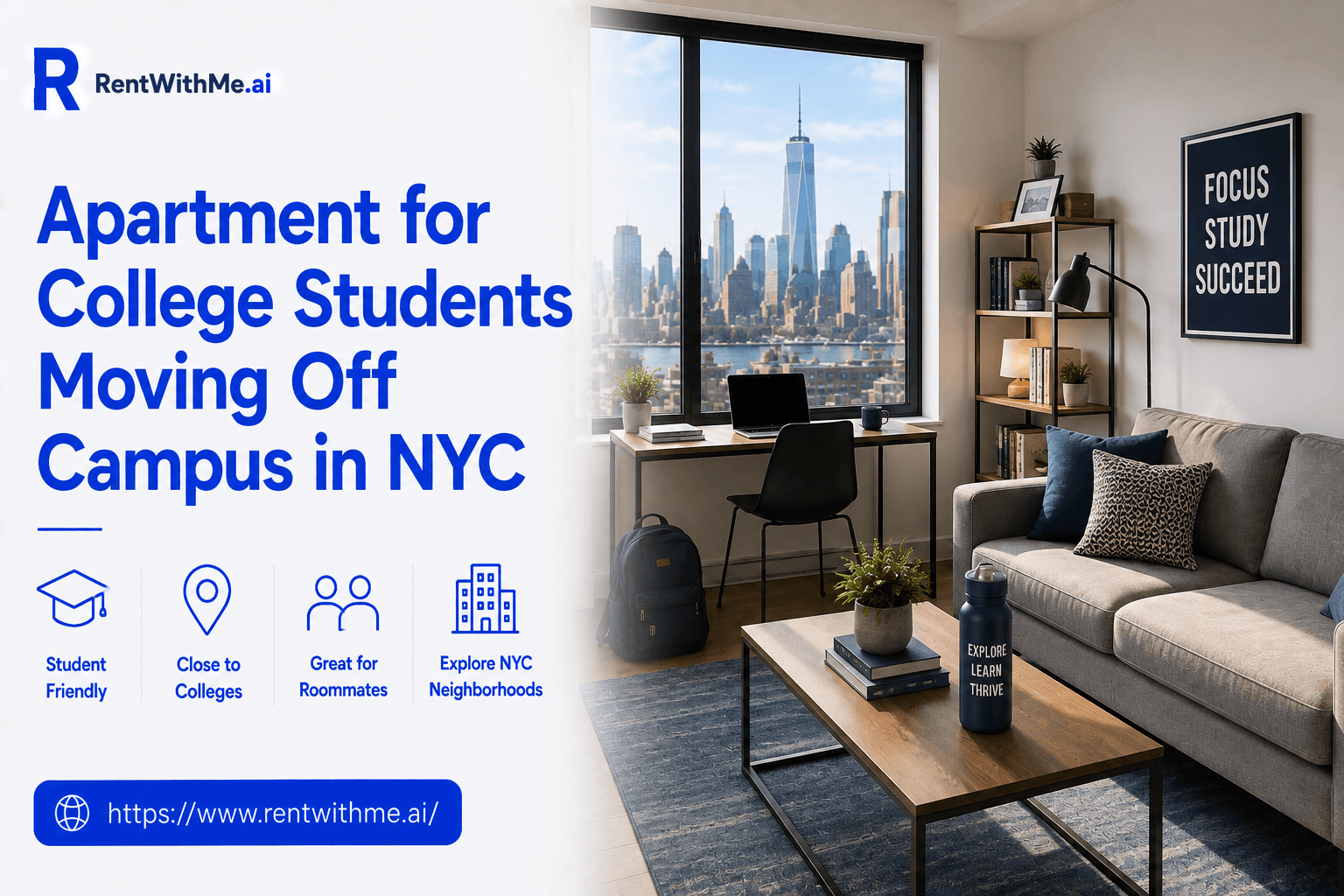
Apartment for College Students Moving Off Campus in NYC
Introduction
Moving off campus and into your first apartment is an exciting milestone for many college students. It offers greater independence, more privacy, and the opportunity to create a living environment that better fits your academic schedule and personal lifestyle.
For students attending college in New York City, renting an apartment also introduces new responsibilities. Unlike campus housing, off-campus living requires you to manage rent, utilities, groceries, transportation, household maintenance, and communication with landlords or property managers.
The NYC rental market can feel overwhelming, especially for students renting for the first time. Apartments move quickly, rental requirements can vary, and budgeting becomes even more important when every monthly expense comes directly from your own finances.
Fortunately, careful planning makes the process much easier. Understanding how to budget, choose the right neighborhood, evaluate apartments, and prepare your rental application helps you avoid common mistakes while finding housing that supports both your education and your financial well-being.
This guide walks college students through everything they should know before moving off campus in NYC, helping them make informed decisions and enjoy a smoother transition into independent living.
Why More College Students Are Moving Off Campus in NYC
Many students choose off-campus housing because it offers greater flexibility than traditional dorm living.
Living in an apartment allows students to select neighborhoods that better fit their lifestyle, enjoy additional privacy, and often gain more living space than campus housing provides. Some students also prefer having their own kitchen, flexible visitor policies, and fewer residential restrictions.
For upperclassmen, graduate students, and students with internships or part-time jobs, off-campus housing may also provide a location that reduces commuting time between work, school, and other daily activities.
Although moving off campus introduces additional responsibilities, many students find the increased independence rewarding.

Benefits and Challenges of Renting an Apartment as a Student
Off-campus living offers numerous advantages, but students should understand both the opportunities and the responsibilities before signing a lease.
One major benefit is independence. Students can create their own schedules, decorate their apartments, prepare meals, and enjoy a quieter environment that may better support studying.
Apartments also provide greater flexibility for roommates, visitors, and daily routines compared to many residence halls.
At the same time, living off campus requires students to manage every aspect of household life. Rent payments, grocery shopping, utility bills, cleaning, furniture purchases, and apartment maintenance all become personal responsibilities.
Understanding both sides of the experience helps students prepare for a successful transition.
Determining Your Off-Campus Housing Budget
Creating a realistic budget should be one of the first steps before searching for apartments.
Rather than focusing only on monthly rent, calculate your total housing expenses based on your income, savings, financial aid if applicable, family support, or part-time employment.
Living in New York City can involve numerous recurring costs beyond rent, making careful financial planning especially important.
Choose a housing budget that allows room for unexpected expenses while still supporting your academic priorities.
Financial stability often contributes just as much to a successful college experience as choosing the right apartment.

Understanding Student Rental Costs Beyond Monthly Rent
Many first-time student renters underestimate how much it costs to live independently.
Rent is usually the largest expense, but several additional costs should be included in your monthly budget before signing a lease.
Common housing expenses include:
- Monthly rent.
- Utilities.
- Internet service.
- Groceries.
- Transportation.
- Renters insurance.
Students should also budget for household supplies, laundry, furniture, textbooks, personal expenses, and emergency savings whenever possible.
Planning for these expenses early helps prevent financial surprises after moving in.
Choosing the Right NYC Neighborhood Near Your Campus
Location plays a major role in your daily college experience.
A lower monthly rent may seem attractive, but an extremely long commute can increase transportation costs, reduce study time, and make daily life more stressful.
When evaluating neighborhoods, consider your campus location, public transportation options, grocery stores, pharmacies, restaurants, libraries, fitness centers, and other places you expect to visit regularly.
Visiting neighborhoods at different times of day also provides valuable insight into traffic, noise levels, and the overall atmosphere.
Selecting the right neighborhood often improves both academic performance and overall quality of life.

Deciding Between Living Alone and Having Roommates
Many students must decide whether to rent alone or share an apartment with roommates.
Living alone provides greater privacy, independence, and complete control over your living environment. However, it also means paying every housing expense yourself.
Sharing an apartment usually reduces individual housing costs by dividing rent, utilities, and household expenses among multiple people.
When considering roommates, think carefully about financial responsibility, study habits, cleanliness, communication, and daily routines. Choosing compatible roommates often contributes significantly to a positive off-campus experience.
The right decision depends on your financial situation, personality, and preferred lifestyle.
Apartment Features College Students Should Prioritize
Every apartment offers different amenities, but students should prioritize features that support everyday living rather than focusing only on luxury upgrades.
Reliable public transportation, sufficient storage, dependable internet availability, laundry access, secure building entry, and practical kitchen space often provide greater long-term value than premium amenities that may rarely be used.
Students should also evaluate the apartment’s condition, natural lighting, heating and cooling systems, and overall functionality before making a decision.
Important features to consider include:
- Easy access to public transportation.
- Safe building access.
- Reliable internet availability.
- Functional kitchen.
- Laundry access.
- Adequate storage space.
Choosing practical features helps create a comfortable home that supports both studying and daily life.

Common Mistakes Students Make When Renting Their First Apartment
Many college students experience similar challenges during their first apartment search.
One common mistake is choosing an apartment based only on monthly rent without calculating total living expenses. Utility bills, groceries, transportation, furniture, and other recurring costs can significantly affect a student’s budget.
Another mistake is delaying the apartment search until just before the semester begins. Competitive rental markets like New York City often require students to begin searching well in advance.
Some students also overlook lease details, fail to inspect the apartment carefully, or underestimate the importance of selecting compatible roommates.
Avoiding these common mistakes helps create a much smoother rental experience.
Benefits of Planning Early Before the School Semester Begins
Starting your apartment search early provides several important advantages.
Students who begin planning before the busiest rental periods often have more apartment choices, additional time to compare neighborhoods, and greater flexibility when reviewing lease agreements.
Early preparation also allows sufficient time to organize financial documents, prepare rental applications, coordinate moving schedules, and purchase household necessities before classes begin.
Most importantly, planning ahead reduces unnecessary stress. Beginning the semester already settled into your apartment allows you to focus more fully on your academic goals instead of rushing through housing decisions.
In the next section, we’ll explore how to find student-friendly apartments in NYC, prepare a strong rental application, understand lease agreements, manage rent and monthly living expenses, organize a successful move from campus, set up utilities and essential household services, improve personal safety while living off campus, and build routines that balance apartment life with academic success.

Finding Student-Friendly Apartments in NYC
Searching for an apartment in New York City requires patience, flexibility, and preparation.
Student-friendly apartments are available throughout the city, but competition can be strong, especially before the beginning of a new academic semester. Starting your search early gives you more opportunities to compare neighborhoods, rental prices, and apartment features.
Focus on apartments that balance affordability, convenience, and safety. A slightly smaller apartment in a well-connected neighborhood may provide a better overall experience than a larger apartment with a difficult commute.
When touring apartments, pay attention to the condition of the building, the responsiveness of the property manager, and whether the apartment supports your academic lifestyle.
Taking detailed notes during each viewing makes it easier to compare your options later.
Preparing Your Rental Application and Required Documents
Once you find an apartment you like, being ready to submit a complete application can improve your chances of securing it.
Landlords often review multiple applications quickly, so having your paperwork organized before you begin apartment hunting saves valuable time.
Depending on the property, you may be asked to provide identification, proof of income, employment information if applicable, student enrollment verification, guarantor information if required, and authorization for background or credit checks.
Review every document carefully before submitting it. Complete and accurate applications demonstrate responsibility while helping avoid unnecessary delays.
Keeping digital copies of important paperwork also makes future apartment applications much easier.
Understanding Lease Agreements as a Student Renter
Your lease explains the rules and responsibilities that apply throughout your tenancy.
Rather than focusing only on monthly rent, carefully review the lease term, payment schedule, renewal procedures, maintenance reporting process, occupancy rules, security deposit conditions, and move-out requirements.
If you have questions, ask the landlord or property manager before signing. Understanding the agreement completely helps you avoid misunderstandings later.
Students renting for the first time sometimes feel rushed because apartments move quickly. However, taking time to understand the lease is always worthwhile.
A well-informed renter is far more likely to enjoy a positive rental experience.
Managing Rent, Utilities, and Monthly Living Expenses
Living off campus means managing your own monthly finances.
Create a payment schedule that includes rent, utilities, internet service, groceries, transportation, renters insurance if applicable, and other recurring expenses. Paying bills consistently helps build good financial habits throughout college.
Separate essential expenses from optional spending whenever possible. Prioritizing housing costs before entertainment or discretionary purchases makes budgeting much easier.
Helpful monthly financial habits include:
- Pay rent on time every month.
- Track utility expenses.
- Monitor grocery spending.
- Maintain an emergency savings fund.
- Review your monthly budget regularly.
- Keep payment confirmations organized.
Strong financial organization reduces stress and allows you to focus more on your academic responsibilities.

Planning a Successful Move From Campus to Your Apartment
Moving from campus housing into an apartment involves more planning than many students expect.
Begin organizing several weeks before move-in day by creating a checklist for packing, transportation, address updates, furniture needs, and utility activation. Completing tasks gradually makes the transition much less overwhelming.
Pack essential items separately so they remain easily accessible during your first night. Toiletries, medications, chargers, important documents, bedding, and basic kitchen supplies should be unpacked first.
If family members or friends are helping you move, coordinate schedules in advance to make moving day as efficient as possible.
Good planning allows you to settle into your apartment quickly before classes begin.
Setting Up Utilities and Essential Household Services
Before moving into your apartment, determine which utilities are included in your lease and which services you must arrange independently.
Electricity, gas, internet service, and renters insurance may all require advance planning depending on the property. Scheduling these services before move-in helps ensure your apartment is ready when you arrive.
Organize important account information, billing dates, and customer service contacts in one location for easy reference throughout the lease.
Setting reminders for monthly bills can also help you avoid missed payments while balancing coursework and other responsibilities.
Establishing organized household systems early makes apartment living much easier.
Personal Safety Tips for Students Living Off Campus
Personal safety should remain a priority when living independently.
Take time to become familiar with your building, nearby public transportation, emergency exits, and the surrounding neighborhood soon after moving in. Knowing your environment helps you feel more confident while reducing uncertainty.
Follow your building’s security procedures and report maintenance concerns promptly if they affect safety. Understanding visitor policies and package delivery procedures also contributes to a more secure living experience.
The table below highlights several practical safety habits.
| Safety Practice | Why It Is Helpful |
|---|---|
| Learn emergency exits | Improves emergency preparedness |
| Become familiar with your neighborhood | Builds confidence and awareness |
| Understand building security procedures | Supports everyday safety |
| Keep emergency contacts available | Provides quick assistance when needed |
| Report maintenance concerns promptly | Helps maintain a safe apartment |
| Stay aware of transportation options | Supports safer daily commuting |
Developing these habits early helps create a safer and more comfortable off-campus experience.

Creating Healthy Study and Daily Living Routines
Living off campus gives students greater independence, but it also requires stronger personal organization.
Establish regular routines for studying, meal preparation, grocery shopping, cleaning, laundry, and paying bills. Consistent habits help balance academic responsibilities with everyday household management.
Designate a comfortable study area within your apartment whenever possible. A dedicated workspace often improves concentration while separating academic work from personal relaxation.
It is equally important to maintain a healthy balance between studying and personal well-being. Getting adequate sleep, preparing nutritious meals, exercising regularly, and taking breaks throughout the week all contribute to academic success.
As your class schedule changes during the semester, adjust your routines to match your workload while maintaining consistency whenever possible.
In the final part of this guide, we’ll explore real-life student apartment success stories, answer frequently asked questions about renting off campus in NYC, provide a complete off-campus apartment checklist, share expert advice for balancing school and apartment life, discuss common mistakes students should avoid, explain additional ways to thrive while living independently, and conclude with practical advice before renting your first off-campus apartment.
Real-Life College Student Off-Campus Rental Success Stories
Moving off campus can feel like a major step, especially for students who have never managed an apartment before. While every student’s experience is different, careful planning often makes the transition much smoother.
The following examples are fictional and intended for educational purposes.
A Student Started Apartment Hunting Early
Isabella knew she wanted to move off campus before her junior year.
Instead of waiting until the last minute, she began researching neighborhoods and apartments several months before classes started. She compared rental costs, transportation options, and commute times before making her final decision.
Because she planned ahead, she had more apartment choices and avoided the stress that many students experience during peak rental season.
Two Friends Created a Detailed Budget
Noah and Ethan decided to share an apartment near their university.
Before signing the lease, they calculated every monthly expense, including rent, utilities, groceries, internet service, transportation, and household supplies. They also agreed on how shared expenses would be divided.
Their organized approach helped them stay within budget throughout the academic year.
A Student Balanced School and Apartment Life
Sophia moved from a campus residence hall into her first apartment.
She created weekly routines for studying, grocery shopping, cleaning, meal preparation, and paying bills. Following a consistent schedule allowed her to keep her apartment organized without falling behind on coursework.
Small daily habits made independent living much easier than she originally expected.
Careful Lease Review Prevented Problems
Daniel found an apartment that appeared perfect during the tour.
Before signing the lease, he carefully reviewed every section and asked questions about utilities, lease renewal, maintenance procedures, and move-out requirements. The additional time spent reviewing the agreement helped him fully understand his responsibilities.
Being informed gave him greater confidence throughout his tenancy.
These examples demonstrate that successful off-campus living usually begins with preparation rather than experience.
Frequently Asked Questions About Renting Apartments While in College
Students often have similar questions before moving off campus.
Should I start apartment hunting before the semester begins?
Yes.
Beginning your search early usually provides more apartment choices and additional time to compare neighborhoods and rental costs.
Is living with roommates a good way to reduce expenses?
For many students, sharing an apartment helps reduce housing costs by dividing rent, utilities, and household expenses.
However, choosing compatible roommates remains equally important.
Should I create a monthly budget before renting?
Absolutely.
A realistic budget helps you understand your complete housing costs instead of focusing only on monthly rent.
Do I need to read the lease carefully?
Yes.
Every student should understand the lease before signing so there are no surprises later.
What should I prioritize when choosing an apartment?
Look for a balance between affordability, location, safety, transportation access, and features that support your academic lifestyle.
Complete Off-Campus Apartment Checklist for NYC Students
Preparing before move-in helps reduce stress throughout the semester.
Use this checklist before renting your apartment.
- Create a realistic housing budget.
- Research neighborhoods near campus.
- Compare multiple apartments.
- Organize your rental application documents.
- Review the lease carefully.
- Confirm move-in costs.
- Schedule utility activation.
- Purchase basic household essentials.
- Plan your move-in day.
- Inspect the apartment before moving in.
- Document the apartment’s condition.
- Learn maintenance reporting procedures.
- Organize monthly bill payments.
- Create a weekly cleaning schedule.
- Build an emergency savings fund when possible.
Completing these steps helps students begin off-campus living with greater confidence and organization.
Expert Tips for Balancing School, Budget, and Apartment Life
Living independently requires good time management as much as financial planning.
Create a monthly calendar that includes rent due dates, utility payments, assignment deadlines, exams, grocery shopping, and household chores. Seeing everything in one place helps prevent important tasks from being overlooked.
Avoid furnishing your apartment all at once unless necessary. Purchasing essential items first allows you to stay within budget while gradually building a comfortable living space.
Maintain open communication with roommates if you share an apartment. Discuss household responsibilities early so expectations remain clear throughout the lease.
Finally, remember that your apartment should support your education. Create an environment that encourages productivity, adequate rest, and healthy daily routines.
Common Off-Campus Housing Mistakes Students Should Avoid
Many first-time student renters encounter similar challenges.
The table below highlights common mistakes together with better alternatives.
| Common Mistake | Better Approach |
|---|---|
| Waiting too long to search for housing | Begin apartment hunting well before the semester starts |
| Budgeting only for rent | Include utilities, groceries, transportation, and other monthly expenses |
| Choosing an apartment based only on appearance | Prioritize location, safety, and practicality |
| Signing the lease without reading it carefully | Review every section before signing |
| Ignoring commute times | Choose a location that supports your class schedule |
| Poor financial organization | Track bills and maintain a monthly budget |
Avoiding these common mistakes helps students enjoy a more successful off-campus experience.
Additional Ways to Thrive While Living Off Campus
Off-campus living offers opportunities to build valuable life skills beyond academics.
Learning how to manage a household, maintain a budget, prepare meals, and organize your time contributes to greater independence long after graduation. These experiences often become just as valuable as classroom learning.
Get to know your neighborhood by locating grocery stores, pharmacies, libraries, public transportation, and other essential services. Becoming familiar with your surroundings makes daily life more convenient and comfortable.
Continue refining your routines as the semester progresses. Flexibility allows you to adjust your schedule while maintaining healthy habits that support both your education and personal well-being.
Small improvements made consistently often lead to the greatest long-term success.
Final Advice Before Renting Your First Student Apartment
Before committing to an apartment, take enough time to compare your options carefully.
Evaluate your budget, neighborhood, transportation access, lease terms, and overall living expenses before making a final decision. Avoid rushing simply because an apartment appears attractive at first glance.
Remember that your goal is not only to find housing but also to create an environment where you can succeed academically while maintaining financial stability.
Careful planning, organized finances, and realistic expectations will help you enjoy a much smoother transition from campus housing to independent apartment living.
Conclusion
Moving off campus into your first apartment in New York City is an exciting opportunity to gain independence while creating a home that supports your academic and personal goals. Although the process involves more responsibility than living in a residence hall, thoughtful preparation makes the transition significantly easier. Understanding your budget, researching neighborhoods, reviewing lease agreements, and planning your move carefully all contribute to a successful rental experience.
Living off campus also teaches valuable life skills that extend beyond college. Managing monthly expenses, maintaining a household, communicating with landlords, organizing your schedule, and balancing financial responsibilities with coursework all help prepare you for future independence. These experiences often become important stepping stones toward long-term personal and professional success.
Financial planning remains one of the most important factors in off-campus living. Looking beyond monthly rent to include utilities, groceries, transportation, renters insurance, and household supplies provides a much more accurate picture of your true living costs. Creating a realistic budget and following it consistently helps reduce financial stress throughout the academic year.
Equally important is choosing an apartment that supports your daily routine. A convenient location, reliable transportation, a comfortable study environment, and practical apartment features often provide greater long-term value than luxury amenities. Selecting housing based on your actual needs instead of temporary wants allows you to focus more effectively on your education.
Ultimately, renting an apartment as a college student in NYC is about more than finding a place to live. It is about building independence, developing responsible financial habits, creating productive daily routines, and establishing a home where you can succeed both academically and personally. By planning ahead, asking thoughtful questions, staying organized, and making informed decisions throughout the rental process, you can enjoy a rewarding off-campus living experience that supports your college journey and prepares you for the future.