
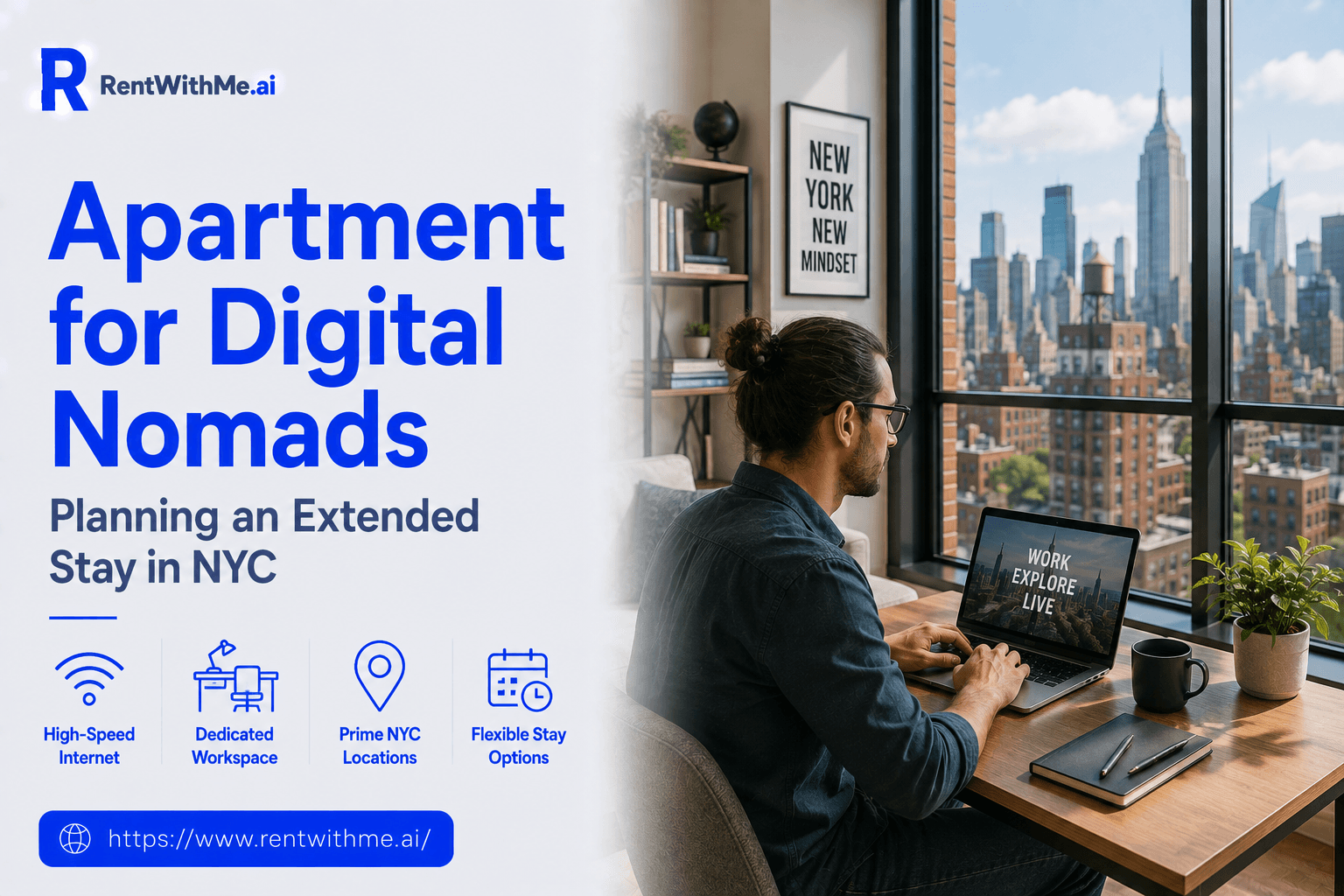
Apartment for Digital Nomads Planning an Extended Stay in NYC
Introduction
New York City has become one of the world’s most exciting destinations for digital nomads seeking a place that combines professional opportunity with an unforgettable urban experience. Whether you are a freelance designer, software developer, content creator, consultant, entrepreneur, or remote employee, spending several months in NYC allows you to experience one of the most dynamic cities while continuing your career.
Unlike a short vacation, an extended stay requires a different approach to housing. Your apartment becomes much more than a temporary place to sleep. It serves as your office, living space, meeting room, and personal retreat throughout your time in the city.
Finding the right apartment can feel challenging because New York offers countless neighborhoods, rental options, and price ranges. Choosing the wrong location or signing a lease without careful planning can affect both your productivity and your overall experience.
Fortunately, digital nomads who prepare in advance can find apartments that support both work and exploration. Understanding your budget, identifying essential apartment features, selecting the right neighborhood, and planning your stay carefully will help you enjoy everything New York has to offer while maintaining a productive work routine.
This guide explains everything digital nomads should know before renting an apartment for an extended stay in NYC, helping you make confident housing decisions that support your work, finances, and lifestyle.
Why NYC Is a Popular Destination for Digital Nomads
Few cities offer the combination of professional opportunity, cultural diversity, and global connectivity found in New York City.
Remote professionals are drawn to NYC because it provides access to networking events, coworking spaces, conferences, creative communities, and industries ranging from technology and finance to media, fashion, and entrepreneurship.
The city’s extensive public transportation system also makes it easy to explore different neighborhoods without needing a personal vehicle. This flexibility allows digital nomads to experience a wide variety of communities while maintaining an efficient daily routine.
Outside working hours, New York offers world-class museums, restaurants, parks, theaters, live music, and cultural events that create an exciting balance between work and leisure.
For many digital nomads, the opportunity to combine career growth with an immersive city experience makes New York an attractive destination for extended stays.

Understanding the Lifestyle of Long-Term Digital Nomads
Digital nomads often have different housing priorities than traditional renters.
Many work from laptops, participate in frequent video meetings, collaborate across multiple time zones, or manage clients from different countries. Their apartment needs to support both productivity and comfort throughout the day.
Unlike tourists, long-term visitors also become temporary residents. Grocery shopping, laundry, meal preparation, fitness routines, transportation, and neighborhood familiarity all become part of everyday life.
Flexibility is another important consideration. Work schedules may vary from week to week, requiring an apartment that remains comfortable whether you are working long hours or taking time to explore the city.
Understanding your own work habits before searching for housing helps you choose an apartment that supports your lifestyle rather than limiting it.
Creating a Realistic Housing Budget for an Extended Stay
Establishing a realistic housing budget is one of the most important steps before beginning your apartment search.
Calculate your expected monthly income alongside your anticipated living expenses. Because digital nomads often have variable income, creating a conservative budget provides greater financial security throughout an extended stay.
Remember that rent is only one part of your housing costs. Utilities, internet service, groceries, transportation, workspace equipment, and personal expenses should all be included when evaluating affordability.
Avoid selecting an apartment that leaves very little room for savings or unexpected costs. Maintaining financial flexibility allows you to enjoy your time in New York without unnecessary stress.
A well-planned budget also makes it easier to extend your stay if new opportunities arise.

Understanding the Full Cost of Living Beyond Monthly Rent
Many visitors underestimate the true cost of living in New York City.
While rent is usually the largest expense, numerous additional costs contribute to your monthly budget throughout an extended stay.
Common monthly expenses include:
- Rent.
- Utilities.
- High-speed internet service.
- Groceries.
- Transportation.
- Renters insurance when applicable.
Depending on your work requirements, you may also purchase office equipment, coworking memberships, storage solutions, or additional technology accessories.
Understanding your complete monthly expenses helps you choose housing that remains comfortable throughout your stay.
Choosing the Right NYC Neighborhood for Work and Exploration
The neighborhood you choose will shape much of your New York experience.
Consider how close the apartment is to public transportation, grocery stores, coffee shops, restaurants, parks, coworking spaces, fitness centers, and other places you expect to visit regularly.
Many digital nomads appreciate neighborhoods that provide a balance between productivity and recreation. Having convenient places to work, relax, and socialize nearby helps maintain a healthy routine during an extended stay.
Visit neighborhoods at different times of the day whenever possible. Morning activity, evening crowds, traffic patterns, and noise levels may vary considerably.
Choosing a neighborhood that supports both your work schedule and your personal interests contributes greatly to an enjoyable stay.

Deciding Between Living Alone, Coliving, or Sharing an Apartment
Housing preferences vary widely among digital nomads.
Living alone provides privacy, quiet working conditions, and complete control over your schedule. This option often appeals to professionals who spend many hours on video calls or require uninterrupted concentration.
Coliving communities offer opportunities to meet other remote workers while sharing common spaces. Many digital nomads enjoy the social aspect and built-in networking opportunities these environments can provide.
Sharing an apartment with roommates can also reduce monthly housing costs while offering companionship during a long stay.
Before making a decision, consider your work schedule, personality, budget, and preferred balance between privacy and social interaction.
The right housing arrangement depends entirely on your individual lifestyle.
Apartment Features Digital Nomads Should Prioritize
Some apartment features become especially valuable when your home also serves as your workplace.
Rather than focusing primarily on luxury amenities, prioritize practical features that improve productivity and everyday comfort.
Important apartment features include:
- Reliable high-speed internet availability.
- Quiet surroundings.
- Comfortable workspace potential.
- Good natural lighting.
- Functional kitchen.
- Convenient public transportation access.
Adequate storage, dependable heating and cooling, and secure building access also contribute to a more enjoyable long-term living experience.
Selecting practical features first often results in greater satisfaction throughout your stay.

Common Apartment Rental Mistakes Digital Nomads Should Avoid
Many digital nomads make avoidable mistakes during their apartment search.
One common mistake is choosing an apartment based entirely on photos without considering how the layout supports everyday work. Beautiful interiors may provide very little usable workspace.
Another mistake is overlooking internet availability before signing a lease. Reliable internet is often essential for remote work and should always be verified in advance.
Some renters also underestimate the importance of neighborhood convenience. Long walks to grocery stores, unreliable transportation, or constant noise can gradually affect both productivity and quality of life.
Finally, failing to calculate the complete monthly cost of living may create unnecessary financial pressure during an extended stay.
Careful planning helps avoid these common challenges.
Benefits of Planning Your Extended Stay Before Arriving in NYC
Preparing your housing arrangements before arriving provides significant advantages.
Early planning gives you time to compare neighborhoods, evaluate apartment options, understand lease terms, organize application documents, and create a realistic monthly budget without unnecessary pressure.
It also allows you to plan your workspace, schedule utility activation if needed, arrange transportation from the airport, and prepare for your first weeks in the city.
Most importantly, careful preparation allows you to begin your New York experience focused on work, exploration, and personal growth rather than dealing with avoidable housing challenges.
In the next section, we’ll explore how to find apartments suitable for extended stays in NYC, prepare rental applications, understand lease agreements and rental terms, set up internet and essential services, create a productive workspace, manage monthly expenses, balance work with exploring the city, and stay organized throughout your long-term stay.

Finding Apartments Suitable for Extended Stays in NYC
Searching for an apartment for an extended stay requires a different strategy than booking short-term accommodations.
Instead of focusing only on attractive interiors, evaluate whether the apartment can comfortably support your daily routine for several months. A property that feels ideal for a weekend may become less practical if you are working there every day.
Compare multiple apartments before making a decision. Pay attention to building maintenance, neighborhood convenience, transportation options, workspace potential, and the overall comfort of the living environment.
Beginning your apartment search well before your planned arrival gives you more flexibility and a wider range of housing options.
Preparing Your Rental Application and Required Documents
Many landlords appreciate applicants who are organized and prepared.
Before beginning your apartment search, gather the documents you may need during the application process. Having everything ready allows you to respond quickly if you find an apartment that meets your requirements.
Depending on the property, landlords may request identification, proof of income, employment verification, bank statements, previous rental history if available, and authorization for background or credit checks.
Digital nomads with international income should organize financial documentation carefully so they can clearly demonstrate their ability to meet rental obligations.
Review all paperwork before submitting it to ensure every document is complete and accurate.

Understanding Lease Agreements and Rental Terms
Before signing any lease, spend time reviewing every section carefully.
Understand the lease duration, monthly payment schedule, renewal options, security deposit terms, maintenance responsibilities, occupancy policies, and move-out procedures. Knowing these details helps you avoid misunderstandings throughout your stay.
Digital nomads planning an extended visit should also confirm how the lease aligns with their intended length of stay. Understanding your rental commitment before signing allows you to plan your schedule more effectively.
If anything appears unclear, ask questions before agreeing to the lease.
Taking extra time now often prevents unnecessary complications later.
Setting Up Internet, Utilities, and Essential Services
Reliable utilities become especially important when your apartment also serves as your workplace.
Confirm internet availability before moving in and determine which providers serve the building. Scheduling installation or activation before arrival helps ensure you can begin working immediately.
Also organize electricity, gas if applicable, water, renters insurance when appropriate, and any other services required under your lease.
Keep account information, billing dates, customer service contacts, and payment reminders organized in one location.
Preparing these essentials before beginning your work schedule creates a smoother transition into your temporary home.
Creating a Comfortable and Productive Home Workspace
Your workspace plays an important role in your overall experience as a digital nomad.
Choose an area with comfortable seating, adequate lighting, and enough room for your computer, monitor, and other equipment. Even in a smaller apartment, a dedicated workspace helps separate professional responsibilities from personal time.
Natural lighting often improves comfort during long work sessions, while an ergonomic chair and properly positioned monitor help reduce physical strain.
Keep frequently used equipment organized and within easy reach. Small improvements in workspace design often produce noticeable improvements in productivity.
A comfortable workspace supports consistent performance throughout your extended stay.
Managing Monthly Living Expenses During Your Stay
Living in New York for several months requires careful financial planning.
Track your recurring expenses regularly so you understand how much you spend on housing, groceries, transportation, internet service, dining, entertainment, and work-related purchases.
Separate essential expenses from discretionary spending whenever possible. This approach makes it easier to identify areas where you can reduce costs if necessary.
Helpful financial habits include:
- Pay rent before the due date.
- Monitor utility and internet expenses.
- Track work-related purchases.
- Maintain emergency savings.
- Review your monthly budget regularly.
- Keep payment records organized.
Consistent budgeting provides greater financial flexibility throughout your stay while helping you avoid unnecessary stress.

Balancing Work, Travel, and Everyday Life in NYC
One of the greatest advantages of being a digital nomad is the ability to experience new places while continuing your career.
However, balancing exploration with professional responsibilities requires thoughtful planning. Without structure, it becomes easy to either overwork or spend too much time sightseeing during work hours.
Create a weekly schedule that includes focused work periods alongside dedicated time for exploring neighborhoods, visiting museums, trying local restaurants, and enjoying parks or cultural events.
Maintaining consistent work hours also makes it easier to collaborate with clients or colleagues across different time zones.
Finding a healthy balance allows you to enjoy New York without sacrificing productivity.
Staying Organized During a Long-Term Temporary Stay
Although your stay may be temporary, treating your apartment like a true home makes everyday life much easier.
Develop routines for grocery shopping, laundry, apartment cleaning, meal preparation, and bill payments. These habits reduce decision fatigue while creating a more comfortable living environment.
The table below highlights several organizational habits that benefit long-term digital nomads.
| Habit | Benefit |
|---|---|
| Maintain a consistent work schedule | Improves productivity |
| Organize important documents | Simplifies everyday administration |
| Create weekly grocery routines | Saves time and money |
| Keep your workspace organized | Reduces distractions |
| Schedule regular apartment cleaning | Creates a comfortable environment |
| Review your monthly budget | Supports financial stability |
Staying organized allows you to focus more on your work and enjoy your experience in New York with fewer daily distractions.
In the final part of this guide, we’ll explore real-life digital nomad apartment success stories, answer frequently asked questions about renting apartments for extended stays in NYC, provide a complete apartment checklist, share expert tips for finding flexible and affordable housing, discuss common rental mistakes digital nomads should avoid, explain additional ways to stay productive while enjoying New York, and conclude with practical advice before renting an apartment for your extended stay.
Real-Life Digital Nomad Apartment Success Stories
Every digital nomad has unique priorities, but successful extended stays often begin with thoughtful housing decisions. Learning from realistic examples can help you identify strategies that support both productivity and an enjoyable experience in New York City.
The following examples are fictional and intended for educational purposes.
A Freelance Designer Chose Function Over Luxury
Sofia planned to spend six months working remotely from New York.
Instead of selecting the apartment with the most impressive amenities, she focused on reliable internet, a quiet neighborhood, and enough room for a comfortable workstation. Those practical choices allowed her to complete client projects efficiently while staying within her monthly budget.
Her apartment became a productive workspace without sacrificing comfort.
A Software Engineer Prioritized Location
Jacob worked remotely for a company based in another country.
He selected an apartment near several subway lines, grocery stores, parks, and coworking spaces. Although the monthly rent was slightly higher than some alternatives, the convenient location reduced travel time and made everyday life much easier.
The added convenience improved both his work schedule and his overall experience in the city.
Two Digital Nomads Shared an Apartment
Emma and Lucas met through a professional networking community before relocating to New York.
They rented a two-bedroom apartment that gave each person a dedicated workspace while allowing them to divide rent, utilities, and household expenses. Before moving in, they discussed work schedules, shared responsibilities, and quiet hours.
Their clear communication helped create a productive and enjoyable living environment throughout their stay.
Careful Planning Prevented Unexpected Expenses
Nathan carefully calculated his expected monthly costs before choosing an apartment.
He included rent, internet service, groceries, transportation, coworking memberships, entertainment, and emergency savings in his budget. Because he understood the complete cost of living, he avoided financial surprises and was able to extend his stay by several additional months.
Planning ahead gave him greater flexibility throughout his time in New York.
These examples show that successful extended stays are usually built on preparation, organization, and realistic financial planning.
Frequently Asked Questions About Renting an Apartment for an Extended Stay in NYC
Digital nomads often ask similar questions before relocating.
Should I start looking for an apartment before arriving in New York?
Yes.
Beginning your search early gives you more time to compare neighborhoods, rental prices, and apartment features before making a decision.
Is living alone better than sharing an apartment?
That depends on your priorities.
Living alone provides greater privacy, while sharing an apartment may reduce monthly expenses and create opportunities to meet other professionals.
How important is internet availability?
It is essential for most digital nomads.
Always confirm reliable high-speed internet service before signing a lease.
Should I choose an apartment close to coworking spaces?
If you expect to use coworking facilities regularly, living nearby can provide additional flexibility and reduce travel time.
How can I stay within budget during an extended stay?
Create a complete monthly budget, monitor spending regularly, and prioritize essential expenses before discretionary purchases.
Complete Apartment Checklist for Digital Nomads
Use this checklist before renting an apartment for an extended stay.
- Create a realistic monthly budget.
- Compare multiple neighborhoods.
- Confirm reliable high-speed internet availability.
- Tour several apartments before deciding.
- Read the lease carefully.
- Understand the lease duration and renewal terms.
- Schedule utility activation before moving in.
- Plan your workspace layout.
- Purchase essential household items.
- Organize important documents.
- Create a monthly bill payment schedule.
- Build emergency savings whenever possible.
- Develop consistent work routines.
- Explore nearby transportation and local services.
- Review your budget throughout your stay.
Completing these steps before moving in helps create a more comfortable and productive experience while living in New York.
Expert Tips for Finding Flexible and Affordable Housing
Finding affordable housing requires looking beyond the advertised monthly rent.
Compare the total value of each apartment by considering transportation access, internet availability, neighborhood convenience, building maintenance, and workspace potential. A slightly higher rent may provide better overall value if it reduces commuting time or supports greater productivity.
Remain flexible during your search. Expanding your preferred neighborhoods may reveal apartments that offer a better balance between affordability and convenience.
Visit apartments whenever possible before making a commitment. Walking through the space allows you to evaluate lighting, layout, storage, noise levels, and overall comfort much more effectively than photographs alone.
Finally, think about how you will use the apartment every day rather than how it appears during a brief tour.
Common Apartment Rental Mistakes Digital Nomads Should Avoid
Digital nomads sometimes overlook important details while planning an extended stay.
The table below highlights several common mistakes together with better alternatives.
| Common Mistake | Better Approach |
|---|---|
| Choosing an apartment based only on photos | Evaluate layout, workspace potential, and functionality |
| Ignoring internet availability | Confirm reliable high-speed internet before signing |
| Budgeting only for rent | Include utilities, groceries, transportation, and work-related expenses |
| Selecting a neighborhood without visiting it | Research and explore neighborhoods carefully |
| Working without a dedicated workspace | Create a comfortable and organized work area |
| Failing to plan for unexpected expenses | Maintain emergency savings throughout your stay |
Avoiding these common mistakes helps create a smoother and more enjoyable experience while living and working remotely.
Additional Ways to Stay Productive and Enjoy NYC During an Extended Stay
One of the greatest advantages of an extended stay is the opportunity to establish a balanced lifestyle.
Create a daily schedule that includes focused work sessions, regular breaks, exercise, and time to explore different neighborhoods. Maintaining structure helps you stay productive while making the most of your time in the city.
Take advantage of New York’s cultural attractions, parks, museums, restaurants, and local events during evenings or weekends. Experiencing the city gradually often creates a richer and less stressful experience than trying to see everything at once.
Continue reviewing your routines throughout your stay. Small improvements to your workspace, schedule, or budget can make daily life increasingly comfortable over time.
Final Advice Before Renting an Apartment as a Digital Nomad
Before signing a lease, think carefully about how the apartment will support both your professional responsibilities and your personal goals.
Choose housing that provides reliable internet, a comfortable workspace, convenient transportation, and a neighborhood where you will enjoy spending several months. An apartment should help you remain productive while also allowing you to experience the best of New York City.
Avoid making decisions based solely on appearance or short-term excitement. Practical features such as functionality, affordability, and everyday convenience usually have a much greater impact on your overall experience.
Remember that your apartment will become both your home and your workplace. Selecting it thoughtfully is one of the most important decisions you will make during your extended stay.
Conclusion
Spending an extended period in New York City as a digital nomad offers a unique opportunity to combine professional growth with the excitement of living in one of the world’s most dynamic cities. Choosing the right apartment is an essential part of making that experience successful. A well-selected home provides more than a place to sleep. It creates an environment where you can work efficiently, maintain healthy routines, and enjoy everything the city has to offer.
Successful apartment hunting begins with careful preparation. Establishing a realistic budget, understanding the complete cost of living, comparing neighborhoods, and identifying the features that matter most for remote work all help you make informed decisions before signing a lease. Looking beyond monthly rent to evaluate internet reliability, workspace potential, transportation access, and neighborhood convenience often leads to greater long-term satisfaction.
Equally important is creating a living environment that supports both productivity and personal well-being. A dedicated workspace, organized daily routines, reliable utilities, and thoughtful financial management allow digital nomads to remain focused while enjoying the flexibility that remote work provides. Small habits such as tracking expenses, maintaining an organized apartment, and scheduling time to explore the city contribute significantly to a balanced lifestyle.
An extended stay also provides the chance to experience New York like a resident rather than a visitor. Building routines, discovering local businesses, exploring different neighborhoods, and participating in community events can make your time in the city more rewarding while helping you maintain a healthy balance between work and leisure.
Ultimately, the best apartment for a digital nomad is one that combines affordability, functionality, comfort, and convenience. By planning carefully, comparing multiple options, asking the right questions before signing a lease, and creating a home that supports your professional and personal goals, you can enjoy a productive, memorable, and financially sustainable extended stay in New York City.