
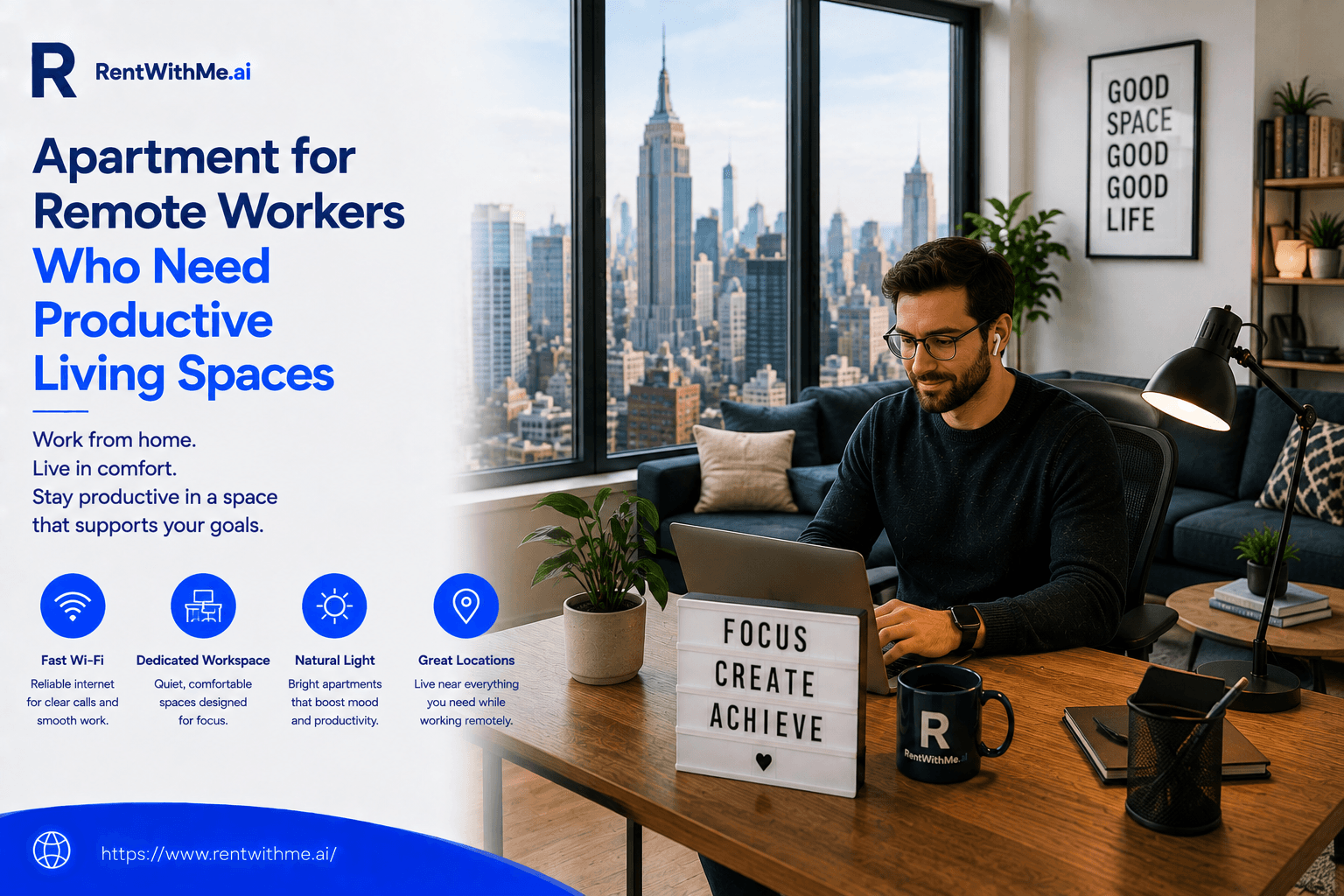
Apartment for Remote Workers Who Need Productive Living Spaces
Introduction
Working remotely has transformed the way many people think about renting an apartment. Instead of simply choosing a place to sleep after work, remote workers now need a home that supports productivity, comfort, and long-term well-being throughout the entire workday.
An apartment that works well for remote employment should provide more than enough room for a desk and a chair. It should offer a reliable internet connection, a comfortable workspace, manageable noise levels, and an environment where you can focus without constant distractions.
Finding that balance can be challenging, especially in a competitive rental market like New York City. Apartments vary significantly in layout, lighting, building quality, and neighborhood atmosphere, all of which influence your daily work experience.
Fortunately, with careful planning, it is possible to find an apartment that functions as both a comfortable home and an efficient workspace. Understanding which features matter most before signing a lease can help you avoid costly mistakes while creating an environment that supports your professional success.
This guide explores everything remote workers should consider when searching for an apartment, from budgeting and neighborhood selection to workspace planning and long-term productivity.
Why Apartment Choice Matters More for Remote Workers
For someone who works outside the home every day, an apartment primarily serves as a place to relax.
Remote workers, however, spend much more time inside their homes. The apartment becomes an office, meeting room, creative workspace, dining area, and personal retreat all at once.
Because of this, features that may seem minor during a brief apartment tour can have a significant impact on everyday life. Noise levels, natural lighting, internet availability, room layout, and building maintenance all influence productivity throughout the workweek.
Choosing an apartment that supports concentration can improve work performance while reducing stress and fatigue.
A thoughtfully selected living space also helps create healthier boundaries between work and personal life.

Benefits and Challenges of Working From Home
Remote work offers many advantages that traditional office environments may not provide.
Flexible schedules, reduced commuting time, greater control over your workspace, and increased independence are among the reasons many professionals enjoy working from home. These benefits often contribute to improved work-life balance when managed effectively.
However, remote work also presents unique challenges.
Without a dedicated office, distractions can become more frequent. Household chores, outside noise, limited workspace, and difficulty separating work from personal time may reduce productivity if the apartment is not well suited for remote employment.
Recognizing both the advantages and the challenges helps you select housing that supports consistent professional performance.
Creating a Housing Budget That Supports Remote Work
Your apartment budget should reflect both your housing needs and your work requirements.
While affordability remains important, remote workers may benefit from investing slightly more in an apartment that provides a productive environment. Features such as reliable internet access, additional workspace, or quieter surroundings may justify higher rent if they improve your daily work experience.
Before beginning your apartment search, calculate your monthly income and compare it with all expected living expenses. A realistic budget helps you identify apartments that support both your finances and your career.
Avoid stretching your budget simply to obtain luxury amenities that contribute little to your productivity.
The goal is to find housing that supports long-term financial stability while meeting your work needs.
Understanding Living Costs Beyond Monthly Rent
Many renters focus almost entirely on monthly rent when comparing apartments.
Remote workers should also consider the additional costs associated with living and working from home full time. Spending more hours in the apartment may increase certain household expenses throughout the year.
Common monthly housing expenses include:
- Rent.
- Utilities.
- High-speed internet service.
- Groceries.
- Renters insurance.
- Office supplies and equipment.
Depending on your work requirements, you may also budget for ergonomic furniture, upgraded internet plans, additional lighting, or technology accessories.
Understanding the complete cost of living helps you choose an apartment that remains financially comfortable over the long term.

Choosing the Right Neighborhood for Productivity and Lifestyle
The neighborhood surrounding your apartment influences your workday almost as much as the apartment itself.
A peaceful environment can improve concentration, while convenient access to grocery stores, coffee shops, fitness centers, parks, and public transportation supports a balanced daily routine.
Consider how the neighborhood aligns with your lifestyle outside working hours. Access to outdoor spaces, restaurants, healthcare facilities, and social activities contributes to overall well-being while working remotely.
Visit potential neighborhoods during different times of the day whenever possible. Morning traffic, afternoon activity, and evening noise levels may differ significantly.
Selecting a location that supports both productivity and personal life creates a stronger overall living experience.
Apartment Features Remote Workers Should Prioritize
Not every apartment feature contributes equally to remote work success.
Rather than focusing only on luxury amenities, prioritize practical characteristics that improve comfort, efficiency, and productivity throughout the workday.
Important apartment features include:
- Reliable high-speed internet availability.
- Quiet surroundings.
- Good natural lighting.
- Functional room layout.
- Adequate electrical outlets.
- Space for a dedicated workstation.
Storage space, comfortable heating and cooling, and dependable building maintenance also contribute to a more enjoyable remote working environment.
Choosing practical features first often provides greater long-term value than amenities designed primarily for recreation.

Designing a Functional Home Workspace From Day One
One of the biggest advantages of working remotely is the ability to customize your workspace.
Even if your apartment is relatively small, creating a dedicated work area helps establish mental boundaries between work and personal life. A consistent workspace also reduces distractions and improves daily organization.
Choose a location with adequate lighting, comfortable seating, and enough space for your computer and essential equipment. If possible, avoid working from your bed or sofa every day, as separate workspaces generally improve both focus and posture.
Organize cables, office supplies, and frequently used equipment so everything remains within easy reach.
A thoughtfully designed workspace supports productivity while making the apartment feel more organized overall.
Common Apartment Rental Mistakes Remote Workers Should Avoid
Remote workers sometimes prioritize apartment appearance while overlooking features that affect daily productivity.
One common mistake is assuming any apartment can function equally well as a home office. In reality, poor layouts, unreliable internet availability, limited electrical outlets, or constant outside noise can make remote work significantly more difficult.
Another mistake is underestimating the value of natural light and comfortable workspace. Spending eight or more hours each day in a poorly designed environment may reduce both productivity and overall well-being.
Some renters also overlook the importance of testing internet service availability before signing a lease or fail to evaluate how much usable workspace actually exists inside the apartment.
Avoiding these common mistakes helps create a home that supports long-term professional success.

Benefits of Planning Before Signing a Lease
Careful planning allows remote workers to make housing decisions based on long-term needs rather than first impressions.
Comparing neighborhoods, evaluating apartment layouts, confirming internet availability, reviewing lease agreements, and calculating total monthly expenses all contribute to better decision-making.
Planning ahead also provides time to think about furniture placement, workspace design, utility setup, and moving logistics before work responsibilities become overwhelming.
Most importantly, preparation reduces the risk of choosing an apartment that looks attractive during a tour but proves difficult to work from every day.
In the next section, we’ll explore how to find apartments that support remote work, prepare a strong rental application, understand lease agreements, set up high-speed internet and utilities, create an ergonomic home office, manage monthly living and work-related expenses, build productive daily routines, and maintain a healthy work-life balance while working from home.
Finding Apartments That Support Remote Work
Searching for an apartment as a remote worker requires a different perspective than a traditional apartment search.
Instead of focusing only on square footage or attractive finishes, evaluate how well the apartment supports your daily work routine. Consider whether you will be able to attend virtual meetings comfortably, concentrate for extended periods, and maintain a healthy separation between work and personal life.
During apartment tours, pay close attention to room layout, window placement, natural lighting, and overall noise levels. Imagine where your desk, monitor, chair, and other work equipment would fit before making a decision.
Whenever possible, begin your apartment search several weeks or months before your planned move. Early planning gives you more opportunities to compare apartments based on productivity rather than rushing into the first available option.

Preparing Your Rental Application and Required Documents
Being prepared to submit a complete rental application helps you compete more effectively in a busy rental market.
Organize your paperwork before you begin apartment hunting so you can respond quickly if you find a property that meets your needs.
Depending on the property, landlords may request identification, proof of employment, income documentation, bank statements, previous rental history if available, and authorization for background or credit checks.
Review every document before submitting your application to ensure everything is accurate and complete.
Keeping both printed and digital copies of important paperwork also makes future apartment searches much easier.
Understanding Lease Agreements Before Signing
Before signing any lease, take time to understand exactly what you are agreeing to.
Review the payment schedule, lease term, renewal procedures, maintenance responsibilities, security deposit conditions, occupancy policies, and move-out requirements carefully. A clear understanding of these terms helps avoid confusion later.
Remote workers should also pay attention to any building policies that may affect daily work. For example, understanding maintenance schedules, construction policies, or building access procedures can help you plan your workday more effectively.
If any part of the lease seems unclear, ask questions before signing rather than making assumptions afterward.
Taking extra time now often prevents unnecessary problems during your tenancy.

Setting Up High-Speed Internet and Essential Utilities
Reliable internet is one of the most important tools for anyone working remotely.
Before moving into your apartment, confirm that high-speed internet service is available and determine which providers serve the building. Scheduling installation before move-in helps ensure you can begin working immediately without unexpected delays.
In addition to internet service, organize electricity, gas if applicable, water, renters insurance, and any other utilities required by your lease.
Keep account numbers, billing dates, customer service contacts, and payment reminders organized in one location for easy reference.
Planning these services early allows you to focus on work instead of resolving household issues during your first week.
Creating an Ergonomic and Productive Home Office
A comfortable workspace supports both productivity and long-term health.
Investing in a supportive chair, properly positioned desk, and suitable monitor height can reduce physical strain during long workdays. Even modest improvements to your workspace often make a noticeable difference in comfort.
Good lighting is equally important. Natural light helps many people feel more alert, while adjustable task lighting supports productivity during evening work sessions.
Keep frequently used equipment within easy reach to reduce unnecessary interruptions throughout the day.
Small improvements to workspace organization often lead to greater efficiency over time.
Managing Monthly Living and Work-Related Expenses
Working from home may change your monthly spending patterns.
You may spend less on commuting while spending more on electricity, internet service, office equipment, or household supplies. Reviewing these expenses regularly helps you maintain an accurate budget.
Separate essential housing costs from work-related purchases whenever possible. Understanding where your money is going makes it easier to identify opportunities for savings.
Helpful financial habits include:
- Pay rent on time each month.
- Monitor utility and internet costs.
- Track work-related purchases.
- Maintain emergency savings.
- Review your monthly budget regularly.
- Keep important payment records organized.
Consistent budgeting helps remote workers manage both household expenses and professional needs more effectively.

Building Healthy Daily Work-From-Home Routines
One of the greatest challenges of remote work is maintaining structure throughout the day.
Creating consistent routines helps establish clear expectations for both work and personal time. Starting work at a regular hour, scheduling breaks, preparing meals in advance, and ending work at a consistent time all contribute to better productivity.
Organizing your apartment each evening also creates a cleaner, more focused environment for the following workday.
Simple habits repeated consistently usually have a greater impact than dramatic productivity changes.
Maintaining routines also makes it easier to stay motivated during busy work periods.
Maintaining Work-Life Balance While Living and Working in the Same Space
When your home also functions as your workplace, separating professional responsibilities from personal time becomes especially important.
Create physical and mental boundaries whenever possible. Working from a dedicated area instead of your bedroom or dining table helps signal the beginning and end of the workday.
The table below highlights several habits that encourage a healthier balance between work and personal life.
| Habit | Benefit |
|---|---|
| Dedicated workspace | Separates work from personal activities |
| Regular work schedule | Creates consistency throughout the day |
| Planned breaks | Reduces mental fatigue |
| Organized workspace | Improves focus and efficiency |
| End-of-day routine | Helps transition into personal time |
| Daily movement or exercise | Supports physical and mental well-being |
Maintaining these habits helps prevent work from extending into every part of your daily life while supporting long-term productivity.
In the final part of this guide, we’ll explore real-life apartment success stories from remote workers, answer frequently asked questions about renting an apartment for remote work, provide a complete apartment checklist, share expert tips for creating productive living spaces, discuss common rental mistakes remote workers should avoid, explain additional ways to improve productivity while working from home, and conclude with practical advice before choosing your next apartment.
Real-Life Apartment Success Stories for Remote Workers
Many people discover that the right apartment can significantly improve both their work performance and overall quality of life. While every remote worker has different priorities, thoughtful planning often leads to better long-term results.
The following examples are fictional and intended for educational purposes.
A Software Developer Prioritized a Dedicated Workspace
Alex worked full time as a software developer and knew he would spend most of his weekdays at home.
Instead of choosing the least expensive apartment available, he selected one with a separate area that comfortably fit a desk, monitor, and ergonomic chair. Having a dedicated workspace allowed him to stay focused during the day while relaxing more easily after work.
His productivity improved because work and personal activities no longer competed for the same space.
A Marketing Professional Chose a Quieter Neighborhood
Emily worked remotely for a digital marketing agency.
After touring several apartments, she selected one in a quieter neighborhood even though it required a slightly longer trip into the city on the days she visited the office. The peaceful environment helped her concentrate during client meetings and creative work.
The improved work environment outweighed the occasional additional commute.
Two Remote Workers Shared an Apartment Successfully
Daniel and Sarah both worked remotely for different companies.
Before renting together, they discussed work schedules, video meeting times, internet requirements, and shared space expectations. They selected an apartment with enough room for two separate workstations, allowing each person to work without disturbing the other.
Clear communication and thoughtful planning helped them maintain a productive household.
Careful Internet Research Prevented Future Problems
Michael found an apartment that looked perfect during his initial tour.
Before signing the lease, he confirmed high-speed internet availability and reviewed several provider options for the building. This extra step ensured he could support daily video conferences and large file transfers without interruption.
Verifying internet service before moving saved him from unexpected work disruptions.
These examples illustrate that small planning decisions often have a significant impact on long-term remote work success.
Frequently Asked Questions About Renting an Apartment for Remote Work
Remote workers often have similar questions while searching for housing.
Should I prioritize internet availability before renting?
Yes.
Reliable high-speed internet is one of the most important features for anyone working remotely.
Is a separate home office necessary?
Not always.
Many remote workers create productive workspaces within living rooms or bedrooms, provided they establish clear boundaries and maintain good organization.
Should I pay more for a quieter apartment?
Depending on your work requirements, it may be worthwhile.
A quieter environment can improve concentration, reduce meeting interruptions, and create a more comfortable workday.
What apartment feature matters most?
There is no single answer.
Reliable internet, practical layout, natural lighting, comfortable workspace, and manageable noise levels all contribute to a productive home office.
Should I furnish my workspace immediately?
Start with the essentials.
A supportive chair, stable desk, proper lighting, and reliable equipment usually provide the greatest immediate benefit.
Complete Apartment Checklist for Remote Workers
Preparing before signing a lease helps remote workers avoid unnecessary problems later.
Use this checklist before choosing your apartment.
- Create a realistic housing budget.
- Confirm high-speed internet availability.
- Compare multiple apartments.
- Evaluate neighborhood noise levels.
- Check natural lighting throughout the apartment.
- Identify space for a dedicated workstation.
- Review the lease carefully.
- Schedule utility and internet installation.
- Purchase ergonomic office essentials.
- Organize monthly bill payments.
- Plan furniture placement before moving.
- Maintain emergency savings.
- Develop consistent daily routines.
- Create boundaries between work and personal life.
- Review your monthly budget regularly.
Completing these steps helps create a home that supports both productivity and long-term comfort.
Expert Tips for Creating a Productive Living Space
Creating a productive apartment involves much more than purchasing office furniture.
Position your workspace near natural light whenever possible while minimizing screen glare. A comfortable environment improves concentration and reduces fatigue during long work sessions.
Keep your work area organized by storing office supplies, cables, and equipment neatly. Reducing clutter often makes it easier to stay focused throughout the day.
If your apartment has limited space, use furniture creatively. Compact desks, wall-mounted shelving, and multifunctional storage solutions can help maximize productivity without making the apartment feel crowded.
Finally, maintain your workspace regularly. A clean and organized environment supports clearer thinking and more efficient work habits.
Common Apartment Rental Mistakes Remote Workers Should Avoid
Remote workers sometimes overlook practical details that become important after moving in.
The table below highlights several common mistakes together with better alternatives.
| Common Mistake | Better Approach |
|---|---|
| Choosing an apartment based only on appearance | Prioritize functionality and workspace potential |
| Failing to verify internet availability | Confirm reliable high-speed service before signing |
| Ignoring neighborhood noise | Visit at different times to evaluate daily conditions |
| Working from the sofa or bed every day | Create a dedicated workspace whenever possible |
| Buying unnecessary office equipment immediately | Start with essential ergonomic furniture |
| Allowing work to spread throughout the apartment | Establish clear work and personal zones |
Avoiding these common mistakes helps create a healthier and more productive remote working environment.
Additional Ways to Improve Productivity While Working From Home
Long-term productivity comes from consistent habits rather than dramatic changes.
Begin each workday with a regular routine that prepares you mentally for work. Simple activities such as organizing your desk, reviewing your schedule, and planning priorities help create a focused mindset.
Take scheduled breaks throughout the day to stretch, walk, or step outside for fresh air. Short breaks often improve concentration and reduce mental fatigue during extended work sessions.
Keep your apartment comfortable by maintaining a suitable temperature, reducing unnecessary distractions, and ensuring your workspace remains clean and organized.
Small improvements made consistently usually have the greatest impact over time.
Final Advice Before Renting an Apartment for Remote Work
Before signing a lease, evaluate the apartment from the perspective of someone who will spend much of the day working there.
Look beyond attractive finishes and imagine your daily routine. Consider where your workstation will be located, how reliable the internet service is, whether the neighborhood supports concentration, and whether the apartment provides enough flexibility for both work and relaxation.
Choose an apartment that supports your professional responsibilities without exceeding your financial comfort zone. A practical, well-planned living space often contributes more to long-term success than luxury amenities.
Remember that your apartment is not only your home. It is also an important part of your professional environment.
Conclusion
Remote work has changed what many renters expect from an apartment. A productive home now requires more than comfortable living space. It should support focused work, reliable communication, healthy routines, and a balanced lifestyle. Choosing an apartment with these priorities in mind allows remote workers to create an environment where both personal and professional goals can thrive.
Finding the right apartment begins with careful planning. Establishing a realistic budget, evaluating neighborhoods, confirming internet availability, and selecting a functional layout all contribute to a better living experience. Looking beyond monthly rent to consider utilities, workspace needs, and long-term comfort provides a more complete understanding of an apartment’s true value.
A well-designed workspace also plays an important role in productivity. Comfortable furniture, good lighting, organized storage, and clear separation between work and personal life help reduce distractions while improving focus. Even smaller apartments can become highly effective work environments when arranged thoughtfully.
Financial organization remains equally important. Managing recurring expenses, maintaining emergency savings, tracking work-related purchases, and reviewing monthly budgets regularly help remote workers remain financially stable while enjoying the flexibility of working from home. Strong financial habits support both career growth and personal peace of mind.
Ultimately, the best apartment for a remote worker is one that combines comfort, practicality, and affordability. By planning carefully, comparing multiple options, asking the right questions before signing a lease, and designing a workspace that encourages productivity, you can create a home that supports your career every day while providing a comfortable place to relax, recharge, and enjoy life outside working hours.