Apartment Lease Agreement Terms Every Tenant Should Read Carefully
Introduction
Signing an apartment lease is one of the most important steps in the rental process. While finding the right apartment often receives most of a renter’s attention, the lease agreement deserves just as much careful consideration because it defines the legal relationship between the tenant and the landlord.
Many renters, especially those leasing their first apartment, quickly skim through the lease and sign it without fully understanding every provision. Later, they may discover rules, responsibilities, or restrictions they did not expect. These misunderstandings can lead to unnecessary stress, financial obligations, or disagreements during the tenancy.
An apartment lease agreement is much more than a formality. It outlines payment obligations, occupancy rules, maintenance responsibilities, lease duration, renewal options, security deposit terms, and many other conditions that affect everyday living.
This guide explains the apartment lease agreement terms every tenant should read carefully before signing. Understanding these provisions helps you make informed decisions, protect your interests, and enjoy a smoother rental experience from move-in through move-out.
What Is an Apartment Lease Agreement?
An apartment lease agreement is a legally binding contract between a landlord and a tenant that establishes the terms and conditions of renting a residential property.
The lease explains each party’s rights, responsibilities, and expectations throughout the rental period. It provides a written framework that helps reduce misunderstandings by clearly defining how the tenancy will operate.
Although lease agreements often follow similar formats, every property may include different provisions depending on the landlord, management company, property type, and applicable laws. For this reason, renters should review every lease individually rather than assuming all agreements contain the same terms.
A carefully reviewed lease provides clarity from the beginning of the tenancy and serves as an important reference whenever questions arise during the rental period.
Why Reading Every Lease Term Matters
Many lease agreements contain several pages of detailed legal language, making it tempting to sign quickly without reading every section. However, taking time to understand the document can prevent many common rental problems.
Every clause in the lease has a purpose. Some explain financial responsibilities, while others establish rules regarding occupancy, maintenance, property use, and the procedures that apply throughout the tenancy.
Reading every provision also allows tenants to identify unclear language before signing. Asking questions in advance is much easier than trying to resolve misunderstandings after moving into the apartment.
Understanding the lease promotes better communication between landlords and tenants. When both parties know what the agreement requires, expectations become clearer and disputes are often easier to avoid.

Essential Lease Agreement Terms Every Tenant Should Understand
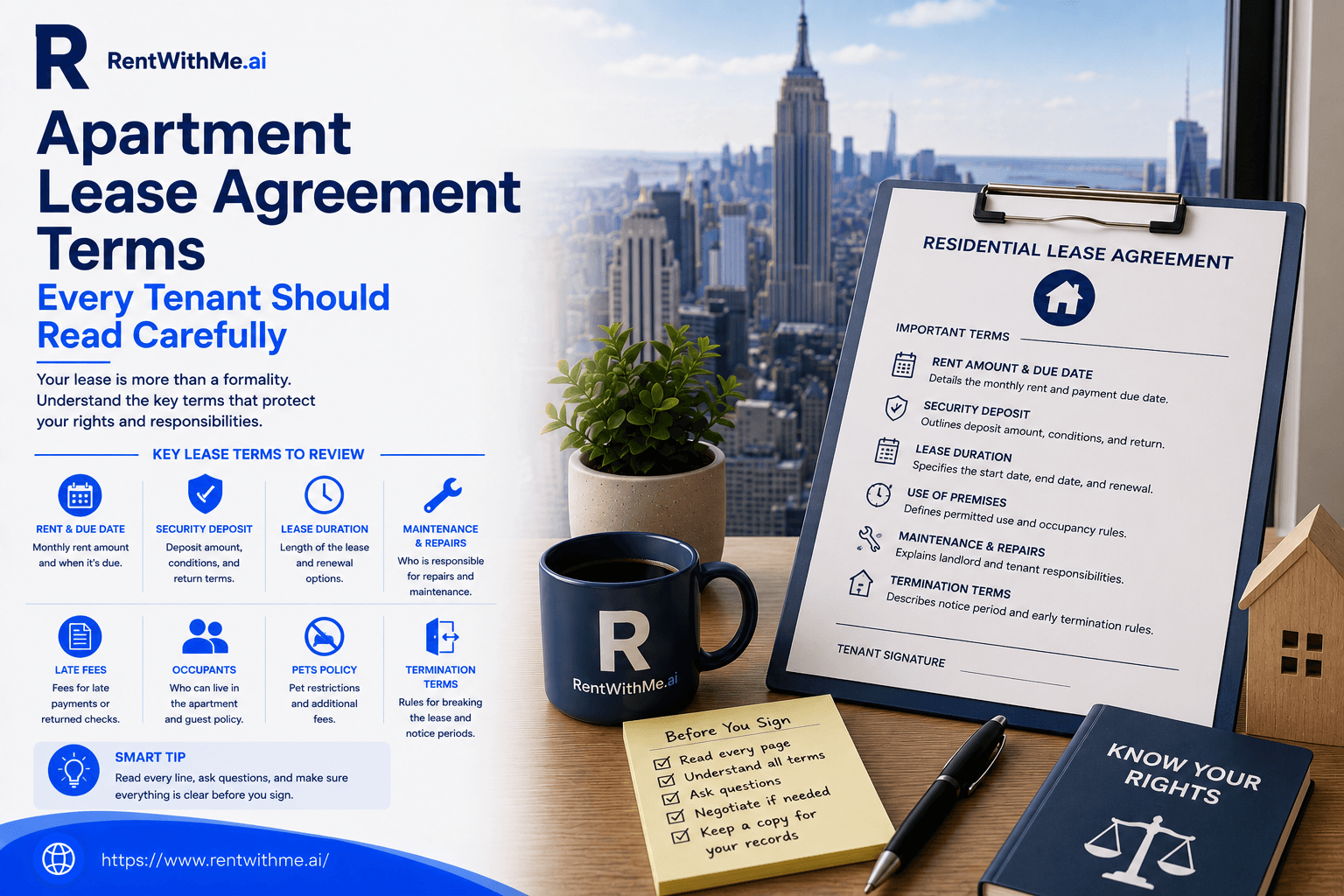
Although every lease is unique, several sections appear in most apartment lease agreements and deserve careful attention.
These provisions establish how the tenancy will operate and often influence both the renter’s financial obligations and daily living experience.
Some of the most important lease terms include:
- Lease duration and renewal conditions.
- Monthly rent amount and payment schedule.
- Security deposit provisions.
- Maintenance and repair responsibilities.
- Occupancy and guest policies.
- Pet rules and building restrictions.
- Early termination conditions.
- Notice requirements for lease changes or renewal.
Understanding these sections before signing allows renters to evaluate whether the apartment aligns with both their housing needs and their long-term plans.
Lease Duration and Renewal Clauses
The lease term specifies how long the rental agreement remains in effect.
Many residential leases establish a fixed period, while others may follow different arrangements depending on the property and the agreement between the parties. Understanding the lease duration helps renters plan future housing decisions well before the tenancy ends.
Renewal clauses explain what may happen when the initial lease period expires. Some agreements describe renewal procedures, required notice periods, or other conditions that apply if either party wishes to continue or end the tenancy.
Reviewing these provisions early helps tenants avoid uncertainty as the lease approaches its expiration date.
The table below summarizes common lease duration provisions that renters often encounter.
| Lease Provision | Why It Matters |
|---|---|
| Lease start date | Indicates when tenancy officially begins |
| Lease end date | Defines the scheduled conclusion of the agreement |
| Renewal clause | Explains potential renewal procedures |
| Notice requirements | Describes advance notice that may be required before lease changes or non-renewal |
| Extension provisions | Identifies any conditions related to continuing occupancy |
Understanding these terms allows renters to prepare for future decisions instead of facing unexpected deadlines near the end of the lease.

Rent Payment Terms and Late Payment Policies
One of the most important sections of any lease agreement explains how rent should be paid.
This portion typically identifies the monthly rent amount, payment schedule, acceptable payment methods, and any additional procedures associated with submitting rent.
Many leases also describe what happens if rent is paid after the required due date. Reviewing these provisions carefully helps tenants understand their financial obligations and avoid preventable issues during the lease.
Renters should also pay attention to any instructions regarding payment confirmation, online payment systems, or other administrative requirements outlined in the agreement.
Establishing a routine for paying rent on time not only supports a positive landlord-tenant relationship but also contributes to a more organized financial plan throughout the tenancy.
Security Deposit Terms Within the Lease
The lease agreement also explains how the security deposit relates to the tenancy.
This section commonly describes the amount collected before move-in, the general purpose of the deposit, and the conditions that may affect its return at the end of the lease, subject to applicable laws.
Tenants should read this portion carefully to understand their responsibilities regarding property care, move-out expectations, and any procedures connected with the security deposit.
Because security deposit requirements vary depending on local regulations and individual lease agreements, renters should ensure they understand every provision before signing.
Taking time to review these terms helps reduce confusion and supports a smoother move-out process when the tenancy eventually concludes.

Tenant and Landlord Responsibilities
A successful tenancy depends on both parties understanding their respective responsibilities.
The lease generally explains which obligations belong to the tenant and which remain the responsibility of the landlord. These responsibilities often relate to property maintenance, communication, access to the apartment, and compliance with community rules.
Tenants are usually expected to care for the apartment responsibly, follow the lease terms, report maintenance concerns promptly, and respect building policies. Landlords generally retain responsibilities associated with maintaining the property according to the lease and applicable laws.
Understanding these expectations early encourages cooperation throughout the tenancy and helps minimize misunderstandings when maintenance or other issues arise.
Common Misunderstandings About Lease Agreements
Many renters misunderstand lease agreements because they assume every apartment follows identical rules.
One common misconception is that verbal conversations automatically replace written lease provisions. While communication is important, the written lease generally serves as the primary reference for the rental agreement.
Another misunderstanding is believing that every apartment has the same policies regarding guests, pets, maintenance responsibilities, or lease renewals. In reality, these provisions often vary significantly between properties.
Some renters also believe they can review the lease after signing if questions arise later. While keeping a copy of the agreement is important, understanding its contents before signing provides much stronger protection against future misunderstandings.
Recognizing these common misconceptions encourages tenants to approach every lease with careful attention rather than relying on assumptions.

Benefits of Reviewing a Lease Carefully Before Signing
Reading an apartment lease carefully before signing provides benefits that extend throughout the entire tenancy.
First, it allows tenants to understand every financial obligation associated with renting the apartment. Instead of focusing only on monthly rent, renters gain a complete understanding of payment requirements, security deposit provisions, and other important terms.
Careful review also helps identify restrictions that could affect everyday living, such as guest policies, pet rules, parking arrangements, or community regulations. Understanding these expectations in advance allows tenants to determine whether the apartment truly fits their lifestyle.
Perhaps most importantly, reviewing the lease promotes confidence. Knowing exactly what the agreement says reduces uncertainty and helps tenants make informed decisions before committing to the rental.
In the next section, we’ll explore maintenance and repair clauses, occupancy limits, guest policies, pet restrictions, community rules, early lease termination provisions, renewal and notice requirements, common lease agreement mistakes tenants should avoid, and the important steps every renter should take before signing an apartment lease.
Maintenance and Repair Responsibilities Explained
One of the most important sections of an apartment lease explains who is responsible for maintaining different parts of the property. Many renters assume every repair automatically falls under the landlord’s responsibility, but lease agreements often distinguish between property maintenance and tenant responsibilities.
The lease typically outlines how maintenance requests should be submitted, expected communication procedures, and the responsibilities of each party throughout the tenancy. Understanding these provisions before moving in helps prevent confusion if maintenance issues arise later.
Tenants are generally expected to keep the apartment reasonably clean, report maintenance concerns promptly, and avoid causing unnecessary damage to the property. Delaying the reporting of minor problems can sometimes allow them to become more serious over time.
Landlords generally remain responsible for maintaining the property according to the lease agreement and applicable laws. Reading this section carefully helps renters understand what they can reasonably expect during the lease.

Occupancy Limits and Guest Policies
Occupancy provisions establish who is permitted to live in the apartment and how the property may be occupied throughout the lease.
These clauses are designed to help ensure the apartment is used according to the lease agreement and applicable housing regulations. They often specify the approved occupants listed on the lease and explain procedures for adding or changing occupants.
Guest policies are another area that tenants frequently overlook. While most landlords welcome occasional visitors, some lease agreements establish guidelines regarding extended stays or guests who remain in the apartment for longer periods.
Understanding these rules before signing the lease helps avoid misunderstandings and ensures that tenants comply with the agreed occupancy requirements throughout the rental period.
Pet Policies and Other Property Restrictions
If you own a pet or plan to adopt one during your tenancy, the lease agreement should be reviewed very carefully.
Some apartments welcome pets with certain conditions, while others limit the types, sizes, or number of animals allowed. Certain properties may also include additional requirements regarding pet registration, deposits where permitted, or community rules.
Property restrictions may extend beyond pets. Lease agreements sometimes include provisions regarding smoking, alterations to the apartment, satellite dishes, balconies, noise levels, business activities, or the installation of appliances and fixtures.
Rather than assuming every apartment follows similar rules, tenants should carefully review each property’s individual restrictions before committing to the lease.
Apartment Rules, Community Policies, and Building Regulations
Many apartment communities have rules that extend beyond the individual lease agreement.
These policies help maintain a comfortable living environment for all residents and may address shared spaces, parking areas, recreational facilities, waste disposal, package delivery, and general building etiquette.
Community rules can also establish quiet hours, visitor parking procedures, elevator reservations for moving, and the proper use of amenities such as fitness centers or rooftop spaces.
Understanding these policies before moving into the building allows tenants to adjust more easily and reduces the likelihood of unintentionally violating community expectations.

Early Lease Termination Clauses
Life circumstances sometimes change unexpectedly, making it necessary for a tenant to relocate before the lease expires.
Because of this possibility, every renter should carefully review the lease’s early termination provisions before signing. These clauses explain the procedures that apply if the lease ends before its scheduled expiration.
The agreement may outline notice requirements, responsibilities following early termination, or other conditions that become relevant when a tenant moves out before the lease concludes. The exact terms vary depending on the lease agreement and applicable laws.
Knowing these provisions in advance helps renters understand their options and make informed decisions if unexpected circumstances arise during the tenancy.
Lease Renewal, Rent Increase, and Notice Requirements
As the lease approaches its expiration date, renewal provisions become increasingly important.
The lease often explains how renewal discussions take place, what notice periods may apply, and the procedures for continuing or ending the tenancy.
Notice requirements benefit both landlords and tenants by providing adequate time to prepare for future housing decisions. Missing an important deadline may complicate the renewal process or create unnecessary uncertainty.
The lease may also explain how future rent adjustments are handled, subject to applicable laws and the terms of the agreement. Reviewing these provisions early helps renters understand how the tenancy may continue beyond the initial lease period.
Common Lease Agreement Mistakes Tenants Should Avoid
Many lease-related problems occur because renters overlook important details before signing.
One common mistake is reading only the financial sections while ignoring occupancy rules, maintenance responsibilities, or community policies. Every part of the lease contributes to the overall rental relationship.
Another frequent mistake is relying solely on verbal conversations without confirming that important agreements appear in the written lease. Written documentation provides much greater clarity if questions arise later.
Some renters also fail to ask questions when legal or technical language seems confusing. Requesting clarification before signing is much easier than attempting to resolve misunderstandings after moving into the apartment.
Finally, rushing through the lease because the apartment is in high demand can lead to overlooked responsibilities that affect the tenancy for months or even years.

What to Do Before Signing Your Apartment Lease
Taking a few additional steps before signing can significantly improve your understanding of the lease agreement.
Begin by reading the document carefully from beginning to end instead of focusing only on rent and move-in dates. Pay attention to every section that discusses responsibilities, restrictions, payment obligations, maintenance procedures, and renewal conditions.
The table below highlights several important areas every renter should review before signing.
| Lease Section | Why It Deserves Attention |
|---|---|
| Rent payment terms | Explains payment schedule and procedures |
| Security deposit provisions | Describes deposit-related responsibilities |
| Maintenance responsibilities | Clarifies repair and reporting obligations |
| Occupancy and guest policies | Defines who may occupy the apartment |
| Community rules | Explains building expectations and restrictions |
| Renewal and termination clauses | Helps plan future housing decisions |
After reviewing the lease, keep a signed copy in a secure location where it can be easily accessed throughout the tenancy. Having the agreement readily available makes it much easier to answer questions if they arise later.
If any provision appears unclear, request clarification before signing rather than making assumptions. Understanding every important clause before committing to the lease provides greater confidence and helps establish a successful landlord-tenant relationship from the very beginning.
In the final part of this guide, we’ll explore real-life apartment lease agreement examples, answer frequently asked questions, provide a complete lease review checklist, share expert strategies for reading a lease like a smart tenant, examine common mistakes that can create future problems, discuss additional ways to protect yourself before signing, and conclude with practical advice every renter should know before entering a lease agreement.
Real-Life Apartment Lease Agreement Examples
Understanding lease terms becomes much easier when you see how they apply in everyday rental situations. While every lease agreement is different, the following examples illustrate how carefully reading the document before signing can help tenants avoid misunderstandings and make informed decisions.
These scenarios are hypothetical and intended for educational purposes. Individual lease agreements and local laws may differ, so tenants should always review their own lease carefully.
A First-Time Renter Reviews the Lease
Sarah found an apartment that fit her budget and was eager to secure it before someone else did. Instead of signing immediately, she spent time reading every section of the lease.
During her review, she discovered that renters insurance was required before move-in and that guests staying beyond a certain period had to be approved according to the lease. Because she identified these requirements in advance, she was able to prepare accordingly and avoid last-minute surprises.
A Tenant Understands Renewal Deadlines
James planned to remain in his apartment for another year but assumed the landlord would contact him when it was time to renew the lease.
After reviewing the renewal section, he realized the lease required written notice well before the expiration date. Knowing this deadline allowed him to communicate with the landlord on time and avoid unnecessary uncertainty about his housing plans.
A Family Reviews Occupancy Rules
Maria and her family intended to have a relative stay with them for several months after moving into their apartment.
Before signing the lease, they carefully reviewed the occupancy provisions and discussed them with the property manager. This conversation clarified the applicable requirements and helped everyone avoid misunderstandings after move-in.
A Remote Worker Examines Property Restrictions
Daniel worked from home several days each week and planned to create a dedicated office space inside the apartment.
While reviewing the lease, he noticed restrictions regarding modifications to walls and the installation of certain fixtures. Because he understood these rules before moving in, he adjusted his workspace plans without violating the lease agreement.
These examples demonstrate that taking the time to understand lease provisions can prevent problems that might otherwise arise during the tenancy.
Frequently Asked Questions About Apartment Lease Agreements
Many renters have similar questions when reviewing a lease agreement for the first time. Understanding the answers to these common questions can help you approach the leasing process with greater confidence.
Why should I read every page of the lease?
Every section of the lease establishes rights, responsibilities, or procedures that may affect your tenancy.
Skipping portions of the agreement may cause you to overlook important obligations regarding payments, maintenance, occupancy, or lease termination.
Can verbal promises replace the written lease?
The written lease generally serves as the primary agreement between the landlord and tenant.
If an important agreement has been discussed, it is best to ensure it is reflected in the written lease whenever appropriate.
What should I do if I do not understand a lease provision?
Ask questions before signing.
Property managers and landlords can often explain unfamiliar language, and obtaining clarification beforehand helps prevent misunderstandings later.
Should I keep a copy of my signed lease?
Yes.
A signed copy provides an important reference throughout your tenancy and allows you to review specific provisions whenever questions arise.
Can lease agreements vary between apartments?
Absolutely.
Different landlords and property management companies may use different lease forms and include unique policies, making it important to review every lease individually rather than assuming they are all the same.
Complete Apartment Lease Review Checklist
Before signing your apartment lease, take time to verify that you understand each important section of the agreement.
Use the following checklist during your review.
- Confirm the lease start and end dates.
- Review the monthly rent amount and payment procedures.
- Understand the security deposit provisions.
- Verify maintenance and repair responsibilities.
- Read occupancy and guest policies carefully.
- Review pet policies and community restrictions.
- Understand lease renewal and termination procedures.
- Check notice requirements for important lease actions.
- Ask questions about anything that appears unclear.
- Keep a signed copy of the completed lease.
Completing this checklist before signing helps reduce uncertainty and allows you to enter the tenancy with a clear understanding of your responsibilities and expectations.
Expert Tips for Reading a Lease Like a Smart Tenant
Reading a lease carefully is one of the simplest ways to protect yourself throughout the rental process.
Begin by reviewing the entire agreement without rushing. Even sections that appear routine may contain important information regarding payment procedures, maintenance obligations, or property rules.
Highlight unfamiliar language and prepare questions before meeting with the landlord or property manager. Taking notes while reading also makes it easier to remember important provisions after signing.
Compare the lease with the information discussed during apartment tours or conversations with the property manager. Confirm that the written agreement accurately reflects the terms you expect before committing to the rental.
Finally, avoid signing a lease under unnecessary pressure. A few extra minutes spent reviewing the agreement can prevent months of confusion later.
Common Lease Mistakes That Can Create Future Problems
Many lease-related issues can be avoided with careful preparation before signing.
The table below highlights several common mistakes and better approaches.
| Common Mistake | Better Approach |
|---|---|
| Signing without reading the full lease | Review every section carefully before signing |
| Assuming all apartment leases are identical | Evaluate each lease individually |
| Ignoring occupancy or guest rules | Read community policies completely |
| Forgetting renewal deadlines | Record important dates immediately |
| Relying only on verbal discussions | Verify important information in the written agreement |
| Not keeping a signed copy | Store the lease in a secure location for future reference |
Avoiding these common mistakes helps create a smoother rental experience and reduces the likelihood of future misunderstandings.
Additional Ways to Protect Yourself Before Signing a Lease
Preparation extends beyond reading the lease itself.
Inspect the apartment carefully before moving in and document its condition if appropriate. Keeping records of the property’s condition at move-in can help provide clarity at the end of the tenancy.
Organize copies of important rental documents, including the signed lease, payment receipts, correspondence, and any other relevant records. Maintaining organized documentation can make future communication much easier.
It is also beneficial to understand the policies that govern the building or community. Parking procedures, package delivery, amenity access, trash collection, and other operational policies often affect daily living and are worth reviewing before move-in.
If you have questions about any provision, ask for clarification before signing. Entering a lease with a complete understanding of its terms creates a stronger foundation for a successful tenancy.
Final Advice for Every Apartment Renter
Whether you are renting your first apartment or have signed multiple leases over the years, taking time to understand the lease agreement remains one of the smartest decisions you can make.
A lease is not simply paperwork required to receive the keys. It is the document that defines the expectations, responsibilities, and procedures that will guide your tenancy from the first day through move-out.
Reading each section carefully, asking thoughtful questions, and maintaining organized records can help you avoid many of the misunderstandings that commonly occur during the rental process.
Approaching the lease with patience and attention to detail allows you to begin your new home with confidence and a clear understanding of your rights and responsibilities.
Conclusion
An apartment lease agreement is far more than a routine document completed before moving into a new home. It serves as the legal foundation of the landlord-tenant relationship and establishes the expectations, responsibilities, and procedures that apply throughout the tenancy. Taking the time to understand every section before signing is one of the most effective ways to protect yourself and enjoy a smoother rental experience.
Important lease provisions such as rent payment terms, lease duration, renewal clauses, security deposit conditions, maintenance responsibilities, occupancy rules, pet policies, and community regulations all influence daily life in ways that may not be immediately obvious. Carefully reviewing these sections helps eliminate uncertainty and reduces the risk of unexpected surprises after move-in.
Reading a lease thoroughly also encourages better communication between tenants and landlords. When both parties understand the written agreement from the beginning, it becomes much easier to address questions, resolve concerns, and maintain a positive rental relationship throughout the lease period.
It is equally important to avoid making assumptions based on previous rental experiences or verbal conversations. Every property may have different policies, and each lease should be evaluated individually. Asking questions before signing demonstrates responsibility and provides an opportunity to clarify unfamiliar language or specific requirements before they become future issues.
Keeping a signed copy of the lease, documenting important dates, and staying familiar with the agreement throughout your tenancy can provide valuable guidance whenever questions arise. A well-organized tenant is often better prepared to manage responsibilities and respond confidently to changing circumstances.
Ultimately, understanding your apartment lease agreement is an investment in your financial security, legal awareness, and overall peace of mind. By reading every term carefully, planning ahead, and approaching the leasing process with confidence, you can begin your tenancy knowing exactly what to expect and focus on enjoying your new home rather than dealing with preventable misunderstandings.