
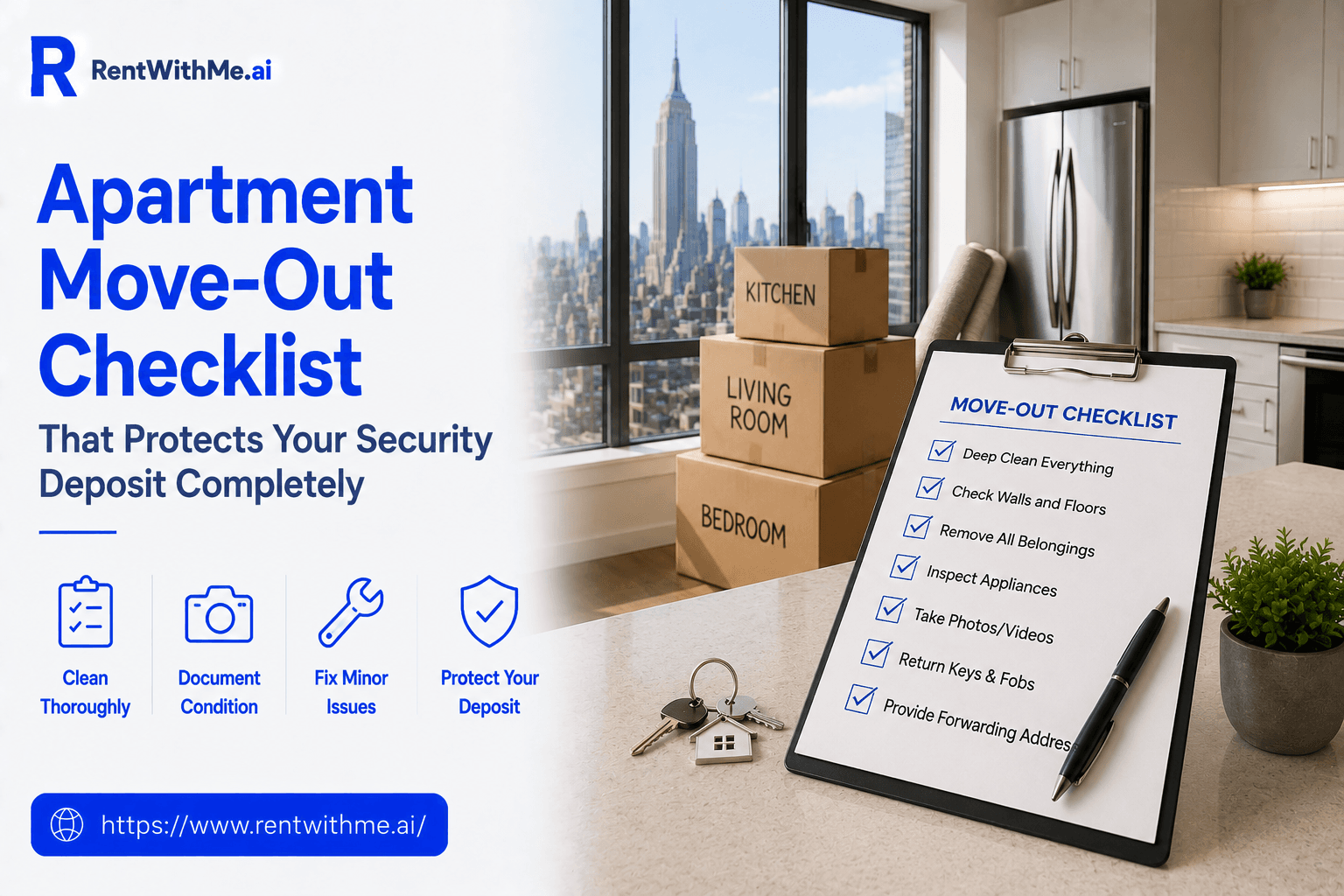
Apartment Move-Out Checklist That Protects Your Security Deposit Completely
Introduction
Moving out of an apartment is just as important as moving in. While many tenants focus on packing boxes and arranging transportation, the final days of a tenancy can have a significant impact on whether the security deposit is returned smoothly. A well-organized move-out process helps reduce stress, prevents overlooked responsibilities, and creates a positive conclusion to your rental experience.
Many renters underestimate the amount of preparation required before handing over the keys. Waiting until the last minute often leads to rushed cleaning, forgotten paperwork, incomplete repairs, or missed move-out procedures that could have been addressed with better planning.
A comprehensive move-out checklist helps you stay organized from the moment you decide to leave until your tenancy officially ends. It allows you to complete important tasks in a logical order while documenting the apartment’s condition and fulfilling your lease obligations.
This guide provides a complete apartment move-out checklist designed to help protect your security deposit and make your transition to your next home as smooth as possible.
Why a Move-Out Checklist Helps Protect Your Security Deposit
A move-out checklist provides structure during one of the busiest parts of the rental process. Instead of trying to remember dozens of responsibilities during your final days in the apartment, you can complete each task methodically while keeping track of your progress.
A checklist also reduces the likelihood of overlooking small details. Cleaning overlooked areas, forgetting to remove personal belongings, or missing required paperwork can create unnecessary complications that are often preventable with careful planning.
Following a structured checklist encourages consistency. Every room receives attention, important documents remain organized, and move-out responsibilities are completed before the final walkthrough.
Most importantly, preparation helps create a positive rental conclusion by demonstrating that you have taken reasonable care of the property throughout your tenancy.

Understanding the Purpose of a Security Deposit
Before preparing to move out, it helps to understand why security deposits exist.
A security deposit is generally collected at the beginning of a tenancy as part of the rental agreement. The lease typically explains how the deposit is handled and outlines the responsibilities tenants are expected to fulfill before moving out.
Understanding your lease provisions allows you to prepare more effectively throughout the move-out process. Instead of making assumptions, you can review the specific expectations established when the tenancy began.
Many tenants benefit from reading the security deposit section of the lease several weeks before moving. Doing so provides sufficient time to organize cleaning, documentation, and any remaining responsibilities before returning possession of the apartment. Approaching the process with a clear understanding of your lease helps reduce uncertainty during the final stages of your tenancy.
When to Start Preparing for Move-Out
Successful move-outs begin well before moving day arrives. As soon as you know you will be leaving the apartment, begin creating a timeline for the remaining weeks. Breaking the work into smaller projects makes the overall process much more manageable.
Several weeks before moving, start organizing belongings, collecting packing supplies, reviewing your lease, and scheduling utility transfers if necessary. Early preparation reduces the pressure that often accompanies the final few days.
Avoid leaving everything until the weekend before your move. Rushed packing and last-minute cleaning frequently result in overlooked responsibilities that could have been handled much more comfortably with additional time. Planning ahead also gives you flexibility if unexpected circumstances arise before your scheduled move-out date.

Reviewing Your Lease Before Moving Out
Your lease agreement should become your primary reference before beginning the move-out process. Every rental agreement contains specific provisions regarding notice requirements, cleaning expectations, key return procedures, inspections, and other responsibilities that may differ from one property to another.
Read the move-out section carefully and make notes regarding any deadlines or required procedures. If questions arise while reviewing the lease, seek clarification before moving day rather than making assumptions.
Pay particular attention to information regarding inspections, forwarding addresses, utility responsibilities, parking permits, storage areas, and the return of access devices.Understanding these details early allows you to organize your move more effectively and reduces the likelihood of overlooking important obligations.
Gathering Cleaning Supplies and Moving Essentials
Cleaning becomes much easier when you have the proper supplies available before packing begins. Rather than searching for products during the final days of your move, assemble everything you may need in advance.
Helpful move-out supplies include:
- Multi-purpose cleaning products.
- Glass cleaner.
- Floor cleaning supplies.
- Sponges and microfiber cloths.
- Vacuum cleaner.
- Trash bags.
- Paper towels.
You should also organize packing materials such as boxes, packing tape, labels, protective wrapping, and markers well before moving day.
Keeping these supplies together allows you to complete packing and final cleaning more efficiently without interrupting your workflow.

Organizing Documents and Move-Out Records
Good documentation is valuable throughout the move-out process. Before packing your files, gather important documents into one organized folder that remains easily accessible until your tenancy officially ends.
Important records commonly include:
- Signed lease agreement.
- Security deposit records.
- Rent payment history.
- Maintenance requests.
- Inspection reports.
- Important emails or written correspondence.
- Utility account information.
Keeping both printed and digital copies whenever possible provides additional peace of mind if questions arise after you have moved. Well-organized records also make it easier to complete forwarding address information and communicate with property management during the final stages of your tenancy.
Decluttering and Packing Before Final Cleaning
Cleaning becomes much more effective once unnecessary belongings have been removed from the apartment.
Begin by sorting items into categories for packing, donating, recycling, or disposal. Reducing clutter before cleaning allows you to reach every surface more easily. Pack non-essential belongings first while leaving everyday necessities available until the final few days. This gradual approach helps maintain a comfortable living environment while steadily preparing for the move.
Once furniture begins leaving the apartment, previously hidden areas become accessible for inspection and cleaning. Taking advantage of this opportunity helps ensure no areas are overlooked before the final walkthrough. A systematic packing strategy also makes unpacking at your next home significantly easier.

Common Move-Out Mistakes That Can Affect Your Security Deposit
Many tenants unintentionally create avoidable problems during the move-out process. One common mistake is waiting until the final day to begin cleaning. Thorough cleaning requires time, especially after furniture has been removed.
Another frequent mistake is failing to review the lease before moving. Overlooking required procedures or deadlines may create unnecessary confusion during move-out. Some renters also forget to document the apartment’s condition before leaving. Photographs taken after cleaning and before returning the keys create a useful record of the apartment’s appearance at move-out.
Leaving personal belongings behind is another preventable mistake. Carefully checking every cabinet, drawer, closet, shelf, and storage area before leaving helps ensure the apartment is completely empty.
Benefits of Planning Your Move-Out in Advance
Early planning transforms the entire move-out experience. Instead of feeling overwhelmed by dozens of responsibilities during your final days, you can complete each task gradually while maintaining better organization throughout the process.
Preparation also reduces unnecessary expenses. Last-minute purchases, rushed moving arrangements, duplicate utility charges, and forgotten cleaning supplies often cost both time and money. Perhaps most importantly, thoughtful planning creates confidence. Knowing that your lease has been reviewed, documents are organized, packing is progressing, and cleaning has been scheduled allows you to approach move-out with far less stress.
In the next section, we’ll complete a room-by-room move-out cleaning checklist, explain how to prepare the kitchen and bathroom, review walls, floors, windows, and general interior cleaning, discuss minor repairs tenants should consider, walk through the final apartment inspection, explain how to document the apartment before leaving, and outline the key return procedures that help complete your tenancy smoothly.
Room-by-Room Move-Out Cleaning Checklist
Cleaning every room systematically helps ensure nothing is overlooked before your final walkthrough. Rather than cleaning randomly, work through the apartment one room at a time after furniture and personal belongings have been removed. An empty apartment makes it much easier to reach every surface and identify areas that need additional attention.
Start with rooms that are no longer being used and save frequently used spaces until the end. This approach prevents cleaned areas from becoming dirty again while you continue packing. A room-by-room strategy also makes it easier to track your progress and reduces the stress that often accompanies the final day of moving.

Kitchen Cleaning and Appliance Preparation
The kitchen usually requires the most time during move-out because it contains multiple appliances, cabinets, and food storage areas.
Begin by removing all food, cookware, and personal belongings from cabinets, drawers, the pantry, and the refrigerator. Empty every storage area completely before beginning the cleaning process. Wipe countertops, cabinet interiors, cabinet doors, shelves, backsplashes, sinks, and faucets. Pay attention to corners and areas that are often overlooked during everyday cleaning.
Inspect appliances carefully after they have been emptied. Refrigerators, ovens, microwaves, dishwashers, and range hoods should all be cleaned according to their condition before the apartment is returned.
Helpful kitchen cleaning tasks include:
- Empty all cabinets and drawers.
- Clean countertops and backsplashes.
- Wipe cabinet interiors and shelves.
- Clean sinks and faucets.
- Empty and clean appliances.
- Remove all food and trash.
Completing these tasks after packing prevents unnecessary re-cleaning later.
Bathroom Cleaning Checklist
Bathrooms deserve special attention because moisture can leave behind soap residue, mineral deposits, and other buildup over time. Begin by removing every personal item from cabinets, drawers, medicine cabinets, showers, and storage shelves. Once the room is completely empty, clean each fixture carefully.
Inspect sinks, toilets, bathtubs, showers, mirrors, vanities, flooring, and exhaust fans. Pay attention to areas surrounding faucets, drains, grout lines, and corners where buildup commonly occurs. Remember to empty trash containers and wipe shelving before leaving the apartment. A clean bathroom contributes significantly to a positive final inspection.

Walls, Floors, Windows, and General Interior Inspection
Once furniture has been removed, conduct a careful inspection of the apartment’s interior. Walk through every room while examining walls, ceilings, trim, flooring, doors, windows, closets, and storage spaces. Empty rooms make it much easier to notice conditions that were previously hidden.
Dust window sills, wipe baseboards, clean doors, and remove any remaining tape, hooks, or temporary decorations if appropriate for your lease. Vacuum carpets thoroughly and sweep or mop hard flooring after all belongings have been removed. Completing floor cleaning last prevents additional dirt from accumulating while other cleaning tasks are underway.
Before leaving each room, perform one final visual inspection to ensure nothing has been overlooked.
Minor Repairs Every Tenant Should Consider
Normal everyday living often results in small cosmetic imperfections that become noticeable during move-out. Before leaving the apartment, review the lease to understand which responsibilities belong to the tenant and which are handled by property management. Avoid making repairs that are inconsistent with the lease or could unintentionally create additional problems. Small issues are generally easier to identify after furniture has been removed from the apartment.
Examples of areas worth reviewing include:
- Loose cabinet handles.
- Burned-out light bulbs where appropriate.
- Remaining adhesive strips or removable hooks.
- Minor cleaning touch-ups.
- Closet shelving and hardware.
- Door handles and interior hardware.
If you discover maintenance concerns that require professional attention, communicate them according to your lease rather than attempting repairs that exceed your responsibilities.

Final Walkthrough Before Vacating the Apartment
Your final walkthrough is the last opportunity to verify that the apartment is ready to be returned. Move slowly from room to room while checking every cabinet, drawer, closet, shelf, storage space, and appliance. Open every door to ensure no personal belongings remain behind.
Look at the apartment from the perspective of someone seeing it for the first time. Empty rooms often reveal small details that were difficult to notice while furniture was still present. Pay attention to lighting fixtures, windows, flooring, walls, and bathrooms one final time before leaving. A careful walkthrough provides confidence that the apartment has been prepared as thoroughly as possible.
Photographing the Apartment and Keeping Documentation
Documentation remains important until your tenancy officially concludes. After cleaning has been completed and before returning the keys, photograph every room while the apartment is completely empty. Include wide-angle photographs showing the overall condition together with closer images of major features.
Organize these photographs with other important records including inspection reports, lease documents, maintenance correspondence, receipts, and move-out communications.
The table below outlines several records that tenants often find useful to retain.
| Document | Why It Is Helpful |
|---|---|
| Lease agreement | Confirms move-out responsibilities |
| Move-in inspection records | Provides original property condition |
| Move-out photographs | Documents apartment condition after cleaning |
| Maintenance correspondence | Records completed repairs or requests |
| Rent payment records | Confirms payment history |
| Key return confirmation | Documents completion of move-out procedures |
Maintaining organized records provides valuable reference material if questions arise after you have moved.

Returning Keys and Completing Move-Out Procedures
Returning possession of the apartment is one of the final responsibilities of the tenancy. Review your lease carefully to understand the required procedure for returning keys, access cards, garage remotes, parking permits, mailbox keys, or other property belonging to the landlord.
Before leaving, verify that every personal item has been removed and that all agreed-upon move-out tasks have been completed. Double-check closets, storage spaces, kitchen cabinets, bathrooms, and balconies if applicable.
If your lease requires written confirmation of your forwarding address or move-out date, complete those requirements before departing. Taking a few extra minutes to confirm every detail helps ensure the move-out process ends smoothly and professionally.
In the final part of this guide, we’ll explore real-life apartment move-out examples, answer frequently asked questions about protecting your security deposit, provide a complete move-out checklist, share expert recommendations for maximizing your security deposit return, discuss common move-out mistakes that cost tenants money, explain additional ways to protect yourself after leaving the apartment, and conclude with practical advice for ending your tenancy on the best possible terms.
Real-Life Apartment Move-Out Examples
Understanding how other renters successfully prepare for move-out can make your own experience much easier. While every apartment and lease agreement is different, these examples demonstrate how planning ahead often helps create a smooth transition.
The situations below are fictional and provided for educational purposes.
A First-Time Renter Starts Early
Amanda knew her lease would end in one month.
Instead of waiting until the final weekend, she packed unused belongings gradually, reviewed her lease agreement, and created a cleaning schedule for each room. By move-out day, only a few final tasks remained.
Her organized approach reduced stress and allowed her to complete the final walkthrough without feeling rushed.
A Family Cleans Room by Room
Carlos and his family moved into a larger apartment after several years in their rental.
After moving furniture out, they cleaned one room at a time instead of trying to clean the entire apartment at once. This method helped them notice small areas that needed additional attention before returning the keys.
Working systematically also made the final inspection much more manageable.
A Remote Worker Documents Everything
Emily relied heavily on documentation throughout her tenancy.
Before leaving the apartment, she photographed every room after cleaning, saved copies of her lease, maintenance correspondence, rent payment records, and key return confirmation.
Keeping organized records gave her confidence that she had documented the apartment’s condition before ending the lease.
A Couple Completes a Final Walkthrough
Daniel and Olivia believed they had finished everything before leaving.
Rather than locking the door immediately, they completed one final walkthrough. During the inspection, they discovered several forgotten items inside a kitchen cabinet and noticed a small area that required additional cleaning. Taking a few extra minutes allowed them to leave the apartment exactly as intended. These examples demonstrate that successful move-outs are usually the result of preparation rather than last-minute effort.
Frequently Asked Questions About Security Deposits and Move-Out
Many renters have similar questions before ending their tenancy.
Should I review my lease before moving out?
Yes.
Reviewing the lease helps you understand your move-out responsibilities, cleaning expectations, inspection procedures, and key return requirements before your tenancy ends.
Why should I photograph the apartment before leaving?
Photographs create a record of the apartment’s condition after cleaning and before possession is returned.
Organized documentation can be valuable if questions arise later.
Should I remove all personal belongings?
Absolutely.
Every cabinet, drawer, closet, shelf, storage area, and appliance should be checked carefully to ensure the apartment is completely empty before returning the keys.
Is a final walkthrough really necessary?
Yes.
A final walkthrough often reveals small cleaning tasks or forgotten belongings that are easy to miss while packing.
Should I keep copies of move-out records?
Yes.
Retain copies of important documents, photographs, correspondence, and key return confirmation together with your lease for future reference.
Complete Apartment Move-Out Checklist
Following a structured checklist helps ensure nothing important is forgotten before leaving your apartment.
Use the following checklist during your final preparation.
- Review your lease agreement.
- Organize important documents.
- Pack all personal belongings.
- Remove all trash.
- Clean every room thoroughly.
- Empty cabinets, closets, and storage areas.
- Clean kitchen appliances.
- Clean bathrooms completely.
- Vacuum and mop flooring.
- Inspect walls, windows, and doors.
- Complete a final walkthrough.
- Photograph every room.
- Return all keys and access devices.
- Provide your forwarding address if required.
- Keep copies of all move-out records.
Completing every item before leaving creates a more organized move-out process and helps reduce unnecessary stress.
Expert Tips for Maximizing Your Security Deposit Return
Preparation remains your greatest advantage during move-out. Begin organizing several weeks before your lease ends rather than waiting until the final few days. Small tasks completed gradually often produce much better results than trying to accomplish everything in a single weekend.
Keep cleaning supplies available until the apartment is completely empty. Final touch-ups are much easier after furniture has been removed and every surface is fully accessible.
Maintain organized documentation throughout the entire process. Saving photographs, inspection notes, receipts, emails, and lease documents together creates a complete history of your tenancy.
If questions arise during move-out, communicate promptly with the property manager instead of making assumptions. Clear communication often prevents misunderstandings before they develop into larger concerns.
Finally, give yourself enough time for one last inspection before locking the door. A careful review often identifies small details that improve the overall condition of the apartment.
Common Move-Out Mistakes That Cost Tenants Money
Many move-out problems are entirely preventable with proper planning.
The table below highlights several common mistakes along with better approaches.
| Common Mistake | Better Approach |
|---|---|
| Waiting until the final day to clean | Begin cleaning after each room is emptied |
| Forgetting to review the lease | Read all move-out requirements in advance |
| Leaving personal belongings behind | Check every cabinet, drawer, and closet carefully |
| Failing to document the apartment | Photograph every room after cleaning |
| Misplacing important paperwork | Organize all records in one secure location |
| Skipping the final walkthrough | Inspect the apartment one last time before leaving |
Avoiding these common mistakes helps create a smoother move-out experience while ensuring that important responsibilities are completed before your tenancy officially ends.
Additional Ways to Protect Yourself After Moving Out
Your responsibilities do not necessarily end once the moving truck leaves. Keep your move-out documentation together in a secure location, including photographs, inspection records, maintenance correspondence, rent payment history, and any written communication related to the end of your lease.
It is also beneficial to retain confirmation that keys and other access devices were returned according to the required procedures. Organized records provide valuable reference material if questions arise after your tenancy concludes.
If you provided a forwarding address, verify that it is accurate and monitor future correspondence related to your tenancy. Responding promptly to any legitimate questions helps bring the rental relationship to a smooth conclusion.
Maintaining complete documentation provides peace of mind long after you have settled into your next home.
Final Advice Before Leaving Your Apartment
Moving out successfully is about more than carrying boxes to a moving truck.
The final days of your tenancy offer an opportunity to demonstrate responsibility, organization, and attention to detail. Taking time to clean thoroughly, document the apartment carefully, review your lease, and complete every required procedure helps create a positive ending to your rental experience.
Avoid rushing through the final walkthrough simply because you are eager to begin life in your new home. A few additional minutes spent checking every room can prevent overlooked issues that might otherwise cause unnecessary stress later. Leaving your apartment in an organized condition benefits everyone involved and allows you to begin your next chapter with greater confidence.
Conclusion
Moving out of an apartment involves much more than packing boxes and returning the keys. A thoughtful move-out plan helps ensure that your tenancy ends on positive terms while giving you the opportunity to leave the property in excellent condition. Following a structured checklist makes it easier to stay organized, complete important responsibilities, and avoid last-minute stress.
Preparation is one of the most effective ways to simplify the entire process. Reviewing your lease well before move-out, organizing important documents, gathering cleaning supplies, and packing gradually all help create a manageable schedule instead of a rushed final weekend. Small tasks completed consistently over time often produce much better results than trying to accomplish everything at once.
Thorough cleaning and careful documentation also play an important role. Inspecting every room, removing personal belongings, photographing the apartment after cleaning, and maintaining organized records provide a clear history of the property’s condition at the end of your tenancy. These simple habits promote transparency and help reduce misunderstandings.
Completing a final walkthrough before returning the keys is equally valuable. Empty rooms make it easier to identify forgotten items, overlooked cleaning tasks, or maintenance concerns that may not have been visible earlier. Spending a little extra time reviewing the apartment can provide lasting peace of mind.
Ultimately, protecting your security deposit begins with preparation, organization, and attention to detail. By following a comprehensive move-out checklist, fulfilling your lease responsibilities, communicating professionally, and documenting the apartment carefully, you can complete your move with confidence while leaving your rental property in the best possible condition for its next occupant.