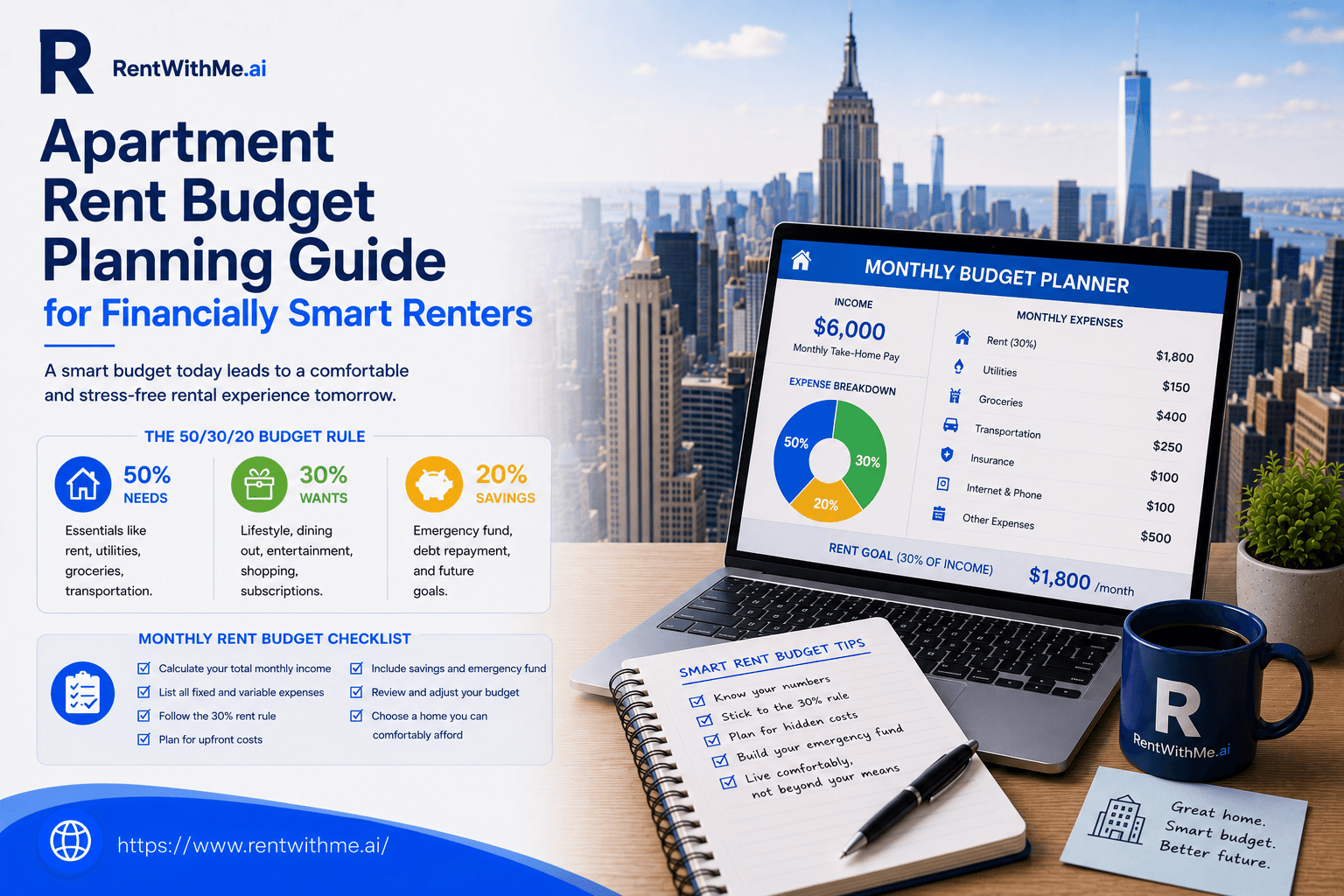
Apartment Rent Budget Planning Guide for Financially Smart Renters
Introduction
Finding the perfect apartment is exciting, but choosing the right rental budget is what ultimately determines whether your new home becomes a source of comfort or financial stress. Many renters begin searching based on the apartments they like instead of what they can realistically afford, and that approach often leads to difficult financial decisions later.
A well-planned rent budget helps you understand how much you can comfortably spend each month while still covering your everyday expenses, building savings, and preparing for unexpected situations. Instead of relying on rough estimates, you create a financial plan that supports both your current lifestyle and your future goals.
Budget planning is about much more than qualifying for an apartment. It is about ensuring that your rent fits within your overall financial picture, allowing you to enjoy your home without constantly worrying about your next payment.
This guide explains how financially smart renters plan their apartment budgets, which expenses they should consider, the common mistakes to avoid, and how proper planning can make apartment hunting more efficient and less stressful.
What Is Apartment Rent Budget Planning?
Apartment rent budget planning is the process of determining how much you can comfortably spend on housing each month after considering your income, financial obligations, lifestyle, and long-term goals.
Rather than selecting an apartment first and hoping the finances work out, smart renters establish their budget before beginning the apartment search. This approach narrows the available options to properties that align with their financial situation.
Effective budget planning also accounts for both predictable and unexpected expenses. Rent may be your largest monthly payment, but it is only one part of your overall housing costs.
A realistic budget allows you to enjoy your apartment while maintaining financial flexibility for savings, emergencies, and future opportunities.

Why Every Renter Should Create a Rent Budget Before Apartment Hunting
Apartment hunting becomes significantly easier when you know exactly what you can afford.
Without a defined budget, renters often spend valuable time touring apartments that exceed their financial comfort zone. While these apartments may be attractive, they can create long-term financial strain if the monthly rent consumes too much of the household income.
Creating a budget before searching also improves decision-making. Instead of comparing apartments based only on appearance or amenities, you evaluate them according to both lifestyle preferences and financial sustainability.
Budget planning can also reduce application disappointment. By targeting apartments that realistically fit your finances, you improve the likelihood of qualifying for properties within your preferred price range.
Understanding Your Monthly Income and Spending Habits
A successful rent budget begins with understanding where your money comes from and where it goes every month.
Start by calculating your reliable monthly income. This includes salary, wages, freelance earnings, business income, or any other consistent source of funds that you can depend on throughout the lease period.
Next, review your spending habits honestly. Monthly subscriptions, dining out, transportation, entertainment, shopping, insurance, loan payments, and recurring bills all reduce the amount available for housing.
Many renters discover that small recurring expenses have a larger impact than expected. Reviewing bank statements and budgeting apps can provide a much clearer picture of actual spending patterns than relying on memory alone.

The Difference Between Affordable Rent and Maximum Rent
One of the biggest misconceptions among renters is believing that the highest rent they qualify for is automatically the amount they should spend.
In reality, there is an important difference between affordable rent and maximum rent.
Maximum rent refers to the highest amount you may qualify for based on landlord income requirements or general budgeting guidelines. Affordable rent is the amount that allows you to comfortably manage your finances while maintaining savings and covering everyday living expenses.
Choosing an apartment at the very top of your financial limit often leaves little room for unexpected situations such as medical expenses, vehicle repairs, job changes, or rising living costs.
Financially smart renters usually prioritize flexibility over maximizing their monthly housing budget.
Essential Monthly Expenses to Include in Your Housing Budget
Many people underestimate the true cost of renting because they focus almost entirely on the advertised monthly rent.
A complete housing budget should include every recurring expense associated with living in the apartment.
Some of the most common expenses include:
- Monthly rent
- Utilities
- Internet service
- Renters insurance
- Transportation
- Groceries
- Parking fees
- Household supplies
- Pet expenses, if applicable
- Monthly savings contributions
Including these expenses creates a more accurate picture of your financial obligations. Even relatively small recurring costs can significantly affect your monthly cash flow when combined.

How Lifestyle Choices Influence Your Rent Budget
Every renter has different financial priorities, which is why no single rental budget works for everyone.
Someone who enjoys frequent travel, dining at restaurants, attending concerts, or pursuing expensive hobbies may require more disposable income each month than someone with fewer discretionary expenses.
Family responsibilities also influence budgeting decisions. Childcare, education costs, healthcare expenses, and support for dependents should all be considered before deciding how much rent fits comfortably within your finances.
Career goals may play a role as well. Individuals saving for graduate school, starting a business, or purchasing a home in the future often choose lower monthly rent to accelerate their savings.
Understanding your personal priorities helps ensure that your apartment supports your lifestyle instead of limiting it.
Common Budget Planning Mistakes First-Time Renters Make
Many first-time renters make budgeting mistakes simply because they have never managed the full cost of maintaining a household.
One common mistake is calculating affordability based only on income while ignoring recurring monthly expenses. This often creates unrealistic expectations during apartment hunting.
Another frequent issue is forgetting one-time move-in costs such as security deposits, application fees, moving services, furniture purchases, and utility setup charges. These expenses can significantly affect your finances during the first month.
Some renters also overlook future financial changes. Planning a budget that leaves no room for inflation, emergency expenses, or unexpected life events may create unnecessary financial stress later.
Learning from these common mistakes allows new renters to build a stronger financial foundation from the beginning.

Benefits of Building a Realistic Apartment Budget
Creating a realistic apartment budget provides advantages that extend well beyond paying rent on time.
A carefully planned budget helps reduce financial anxiety because you know your housing costs fit comfortably within your monthly income. This confidence allows you to focus on enjoying your new home rather than worrying about unexpected bills.
Budget planning also improves long-term financial health. Maintaining manageable housing expenses makes it easier to build emergency savings, contribute to retirement accounts, reduce debt, and prepare for future financial milestones.
Perhaps most importantly, a realistic budget gives you greater flexibility when life changes. Whether you experience career growth, family changes, or unexpected expenses, having financial breathing room makes those transitions much easier to manage.
In the next section, we’ll walk through a step-by-step process for creating an apartment rent budget, explore popular budgeting guidelines, explain how to balance rent with savings and debt, discuss planning for move-in costs, compare budgets across different cost-of-living areas, examine landlord income expectations, identify common budgeting mistakes to avoid, and outline what financially smart renters do after determining their ideal rent range.
Step-by-Step Process for Creating an Apartment Rent Budget
Once you understand your income, spending habits, and financial priorities, the next step is turning that information into a practical rental budget. A structured approach makes it easier to identify a rent range that supports your lifestyle without placing unnecessary pressure on your finances.
Rather than focusing only on what you qualify for, build a budget that leaves room for everyday living, savings, and future financial goals. This approach helps you enjoy your apartment while maintaining long-term financial stability.
A practical rent budgeting process typically includes these steps:
- Calculate your total monthly income.
- List all fixed monthly expenses.
- Estimate your variable monthly spending.
- Set aside money for savings and emergency funds.
- Account for existing debt payments.
- Estimate total housing costs beyond rent.
- Determine a comfortable monthly rent range.
- Compare available apartments within your established budget.
Completing these steps before apartment hunting helps you make informed decisions instead of emotional ones. It also allows you to adjust your expectations early, saving valuable time during your search.

Popular Rent Budgeting Rules and When to Use Them
Many renters use budgeting guidelines as a starting point when determining how much rent they can afford. These rules are helpful because they provide a simple framework for evaluating housing costs.
The most widely recognized guideline recommends allocating around 30 percent of your gross monthly income toward housing. While this benchmark works well for many households, it should not be viewed as a universal rule.
Personal finances vary significantly from one renter to another. Someone with little debt and strong savings may comfortably spend more on housing, while another person with student loans or family obligations may need to stay below that percentage.
Instead of treating any budgeting rule as an exact formula, use it alongside your complete financial picture. Your personal circumstances should always guide your final decision.
Balancing Rent, Savings, Debt, and Everyday Living Expenses
A financially healthy rental budget balances today’s housing costs with tomorrow’s financial goals.
Rent should never consume so much of your income that it prevents you from saving for emergencies or paying down existing debt. Financial flexibility becomes especially valuable when unexpected expenses arise.
Monthly debt payments such as student loans, vehicle financing, personal loans, and credit card balances reduce the amount available for housing. Ignoring these obligations often creates financial stress later in the lease.
Savings deserve equal attention. Whether you are building an emergency fund, investing for retirement, planning future travel, or saving for a home purchase, these goals should remain part of your monthly budget.
When your budget balances rent with savings and everyday expenses, you create greater financial stability throughout the life of your lease.

Popular Rent Budgeting Rules and When to Use Them
Monthly rent represents only part of the financial commitment involved in renting an apartment.
Before moving in, renters often encounter several upfront expenses that require careful planning. These costs can significantly increase the amount of money needed during the first month.
Common move-in expenses include application fees, security deposits, moving services, utility activation charges, renters insurance, furniture, kitchen supplies, and other household essentials.
Planning ahead for these initial costs helps prevent unnecessary financial strain. Building a separate moving budget allows you to begin your lease without immediately reducing your emergency savings.
Adjusting Your Budget for Different Cities and Cost of Living
Rental prices vary widely depending on location, making local cost of living an important factor in budget planning.
Apartments in major metropolitan areas generally require higher housing budgets than similar properties in smaller cities or suburban communities. Transportation, groceries, parking, and entertainment costs may also differ considerably between locations.
Instead of comparing rent alone, evaluate your complete monthly expenses when considering different neighborhoods or cities. Sometimes a lower monthly rent is offset by higher commuting costs, while a more expensive apartment may reduce transportation expenses because it is closer to work.
Researching neighborhood living costs before signing a lease helps ensure your budget reflects the full financial reality of your chosen location.
Matching Your Budget with Landlord Income Requirements
Creating a personal rent budget is only one part of preparing for apartment applications. Renters should also understand how landlords evaluate financial qualifications.
Many property owners review applicant income as part of the approval process. Their goal is to determine whether prospective tenants have sufficient financial resources to consistently meet lease obligations.
Although qualification standards vary by property, renters benefit from comparing their personal budget with the landlord’s published income requirements whenever possible.
The table below highlights the difference between personal budgeting and landlord qualification standards.
| Financial Consideration | Primary Purpose |
|---|---|
| Personal rent budget | Determines what you can comfortably afford |
| Monthly expense plan | Measures overall financial sustainability |
| Landlord income requirement | Evaluates rental eligibility |
| Credit review | Assesses financial responsibility |
| Complete rental application | Demonstrates overall financial readiness |
Meeting a landlord’s income requirement does not automatically mean the apartment fits comfortably within your personal finances. Smart renters consider both perspectives before committing to a lease.

Common Apartment Budget Planning Mistakes to Avoid
Even well-prepared renters occasionally overlook important budgeting details.
One common mistake is selecting an apartment at the highest price your income appears to support. While you may technically afford the monthly rent, doing so can leave very little room for savings or unexpected expenses.
Another frequent mistake is forgetting irregular expenses that occur throughout the year. Vehicle maintenance, holiday spending, medical costs, professional memberships, annual insurance payments, and home furnishings should all influence your overall financial planning.
Some renters also fail to review their budget after major life changes. A new job, salary adjustment, family responsibilities, or changing debt obligations may require revisiting your rental budget before signing a lease.
Carefully reviewing your finances from multiple perspectives helps reduce the likelihood of financial surprises after moving into your new apartment.
What to Do After Determining Your Ideal Rent Range
Once you establish a comfortable rental budget, your apartment search becomes more focused and productive.
You can begin comparing apartments that fit your financial goals instead of spending time evaluating properties outside your price range. This often makes decision-making faster and less stressful.
Your budget also becomes a valuable tool during apartment tours. Instead of asking whether you love a particular apartment, you can ask whether it fits comfortably within your long-term financial plan.
As your search continues, revisit your budget whenever your financial situation changes. Keeping your budget current ensures your housing decisions remain aligned with your income, expenses, and future goals.
In the final part of this guide, we’ll examine real-life apartment rent budgeting examples, answer frequently asked questions, provide a complete apartment budget planning checklist, share expert strategies for maintaining a healthy rental budget, discuss financial habits that commonly lead to rental stress, explore additional ways to strengthen your financial readiness before renting, and conclude with practical advice for financially smart renters.
Real-Life Apartment Rent Budget Planning Examples
Creating a rent budget becomes much easier when you see how different financial situations influence housing decisions. While every renter’s circumstances are unique, the following examples illustrate how thoughtful planning helps people choose apartments they can comfortably afford.
These examples are hypothetical and intended for educational purposes. Actual affordability depends on your income, expenses, local rental market, and landlord qualification requirements.
Recent College Graduate
Sophia recently started her first full-time job after graduating from college. Although she earns a steady salary, she also has student loan payments and wants to begin building an emergency fund.
Instead of searching for the nicest apartment she could qualify for, she created a detailed monthly budget. After accounting for transportation, groceries, insurance, and savings, she selected an apartment that allowed her to live comfortably without sacrificing her financial goals.
Within her first year of renting, Sophia built several months of emergency savings while continuing to make all of her monthly payments on time.
Young Professional Advancing in Their Career
Michael received a promotion that significantly increased his income. His first instinct was to upgrade to a much larger apartment with premium amenities.
Before signing a lease, he reviewed his long-term financial goals. He realized he also wanted to increase his retirement contributions and save for a future home purchase.
Rather than spending every additional dollar on rent, Michael chose an apartment slightly below his maximum budget. This decision allowed him to improve his quality of life while continuing to build long-term wealth.
Growing Family
A married couple preparing for their first child began apartment hunting several months before the baby’s arrival.
Although they qualified for a higher-priced apartment, they anticipated increased healthcare expenses, childcare costs, and additional household purchases. After carefully reviewing their projected monthly expenses, they intentionally selected a lower rent range.
The financial flexibility created by their budget helped reduce stress during the family’s first year together.
Self-Employed Business Owner
Daniel operates a successful consulting business with income that varies throughout the year.
Instead of using his highest earning months when planning his rental budget, he calculated his average monthly income over the previous twelve months. This conservative approach produced a more reliable budget that remained manageable during slower business periods.
By planning for income fluctuations, Daniel avoided financial pressure and maintained greater stability throughout his lease.
These examples demonstrate that financially smart renters do not simply ask how much apartment they can afford. They ask how much rent allows them to live comfortably while continuing to achieve their broader financial goals.
Frequently Asked Questions About Apartment Rent Budget Planning
Many renters have similar questions when planning their rental budget. Understanding these answers can help you make more informed financial decisions before beginning your apartment search.
How much of my income should go toward rent?
Many financial experts recommend using housing guidelines such as spending around 30 percent of gross monthly income on housing. However, this is only a starting point.
Your personal budget should also consider debt, savings goals, transportation costs, family responsibilities, and lifestyle preferences.
Should I budget using gross income or net income?
Many budgeting guidelines reference gross income because landlords often use it during the application process.
For personal financial planning, however, reviewing your take-home income alongside all monthly expenses often provides a clearer picture of what you can comfortably afford.
Should I include utilities in my rent budget?
Yes.
Utilities, internet service, renters insurance, parking, and other recurring housing expenses should all be included when calculating your total monthly housing costs.
What if my income changes each month?
Renters with variable income should consider averaging their earnings over several months rather than budgeting based on unusually high income periods.
Using conservative income estimates generally creates a more stable rental budget.
Can I adjust my rent budget after moving?
Absolutely.
Financial situations change over time. Reviewing your budget periodically helps ensure your housing expenses continue supporting your financial goals throughout your lease.
Complete Apartment Budget Planning Checklist
Preparing before apartment hunting helps simplify the entire rental process.
Use this checklist before submitting rental applications.
- Calculate your monthly income.
- Review all recurring monthly expenses.
- Estimate utility and housing-related costs.
- Include debt payments.
- Plan monthly savings contributions.
- Budget for groceries and transportation.
- Estimate move-in expenses.
- Research rental prices in your preferred neighborhoods.
- Compare your budget with landlord qualification requirements.
- Review your budget before signing any lease.
Completing these steps provides confidence throughout your apartment search. A well-prepared renter can evaluate apartments based on both affordability and long-term financial sustainability.
Expert Tips for Maintaining a Healthy Rental Budget
Creating a budget is only the beginning. Maintaining that budget throughout your lease is equally important.
Review your finances every month rather than assuming your spending habits remain unchanged. Small increases in recurring expenses can gradually affect your overall financial picture.
Whenever your income increases, avoid automatically increasing your housing budget. Directing some of that additional income toward savings, debt reduction, or investments often produces stronger long-term financial results.
Continue building an emergency fund even after moving into your apartment. Unexpected medical expenses, job changes, vehicle repairs, or family emergencies become much easier to manage when savings are available.
It is also helpful to track discretionary spending. Dining out, shopping, entertainment, and subscriptions can gradually consume money that could otherwise strengthen your financial security.
Common Financial Habits That Lead to Rental Stress
Financial stress rarely results from a single decision. More often, it develops through a series of small budgeting mistakes.
The following table highlights several habits that commonly create financial pressure and healthier alternatives.
| Financial Habit | Better Approach |
|---|---|
| Choosing the highest rent you qualify for | Select a rent that leaves room for savings |
| Ignoring recurring household expenses | Budget for total monthly housing costs |
| Relying on future income increases | Base decisions on current verified income |
| Spending emergency savings on move-in costs | Build a separate moving fund |
| Failing to review monthly spending | Track expenses regularly and adjust your budget |
| Comparing your budget with others | Build a budget based on your own financial goals |
Avoiding these habits helps renters maintain greater financial stability throughout the lease period. Careful budgeting also makes it easier to adapt when unexpected life events occur.
Additional Ways to Strengthen Your Financial Readiness Before Renting
A strong apartment budget becomes even more effective when combined with good financial preparation.
Review your credit report before apartment hunting and resolve any errors you discover. Accurate financial records may improve your overall rental application and reduce delays during the approval process.
If possible, reduce outstanding debt before signing a lease. Lower monthly obligations create additional flexibility within your housing budget.
Continue building your emergency savings before moving. Even a modest financial cushion can help cover unexpected expenses without disrupting your monthly budget.
Finally, organize important financial documents before applying for apartments. Recent pay stubs, bank statements, tax returns, identification, and employment verification are commonly requested during the application process.
Final Advice for Financially Smart Renters
Smart rent budgeting is not about finding the cheapest apartment available. It is about choosing a home that supports your lifestyle while protecting your long-term financial well-being.
Take time to evaluate your complete financial picture before beginning your apartment search. Consider your income, recurring expenses, debt, savings goals, and future plans rather than focusing only on monthly rent.
Remember that financial flexibility has real value. Choosing an apartment that leaves room for savings and unexpected expenses often leads to greater peace of mind throughout your lease.
Approaching apartment hunting with a well-developed budget allows you to make confident decisions based on financial stability instead of emotion.
Conclusion
Apartment rent budget planning is one of the most important steps in the rental journey. While finding the right neighborhood, amenities, and floor plan matters, none of those features can replace the confidence that comes from knowing your housing costs fit comfortably within your financial situation.
A carefully planned budget helps you understand not only what you can qualify for but also what you can comfortably sustain over time. By evaluating your income, recurring expenses, debt obligations, savings goals, and lifestyle priorities, you create a financial foundation that supports both your current needs and your future aspirations.
Successful renters recognize that rent is only one part of the total cost of living. Utilities, transportation, groceries, insurance, household supplies, entertainment, and unexpected expenses all influence how much housing you can realistically afford. Considering these costs together results in more informed financial decisions and fewer surprises after moving in.
It is equally important to remember that budgeting is not a one-time exercise. Your financial circumstances will continue to evolve as your career grows, your family changes, or your goals shift. Regularly reviewing and adjusting your rent budget ensures your housing costs remain aligned with your overall financial well-being.
Preparing before apartment hunting also improves the rental experience. Researching neighborhoods, understanding landlord income requirements, organizing financial documents, and planning for move-in costs all help make the application process smoother and more efficient.
Ultimately, financially smart renters understand that the best apartment is not necessarily the most expensive one they can afford. It is the one that allows them to enjoy their home, meet their financial responsibilities, continue saving for the future, and maintain peace of mind throughout the lease. By building a realistic apartment rent budget before beginning your search, you place yourself in a stronger position to make confident decisions and enjoy a successful, financially healthy renting experience.