Apartment Renting Process Explained From Search to Lease Signing
Introduction
Renting an apartment is one of the biggest financial and lifestyle decisions most people make. Whether you are moving into your first apartment, relocating for work, or simply looking for a new place to call home, the process involves much more than finding an attractive listing online. Every decision, from setting your budget to signing the lease, can affect your experience for months or even years.
For many renters, the apartment search feels overwhelming because there are so many moving parts. You need to compare neighborhoods, understand rental costs, gather financial documents, schedule apartment tours, complete applications, and review legal agreements, often within a relatively short period of time.
The good news is that the apartment renting process becomes much easier when you understand each stage before you begin. Instead of reacting to every listing that appears, you can approach the search with a clear plan and make informed decisions with confidence.
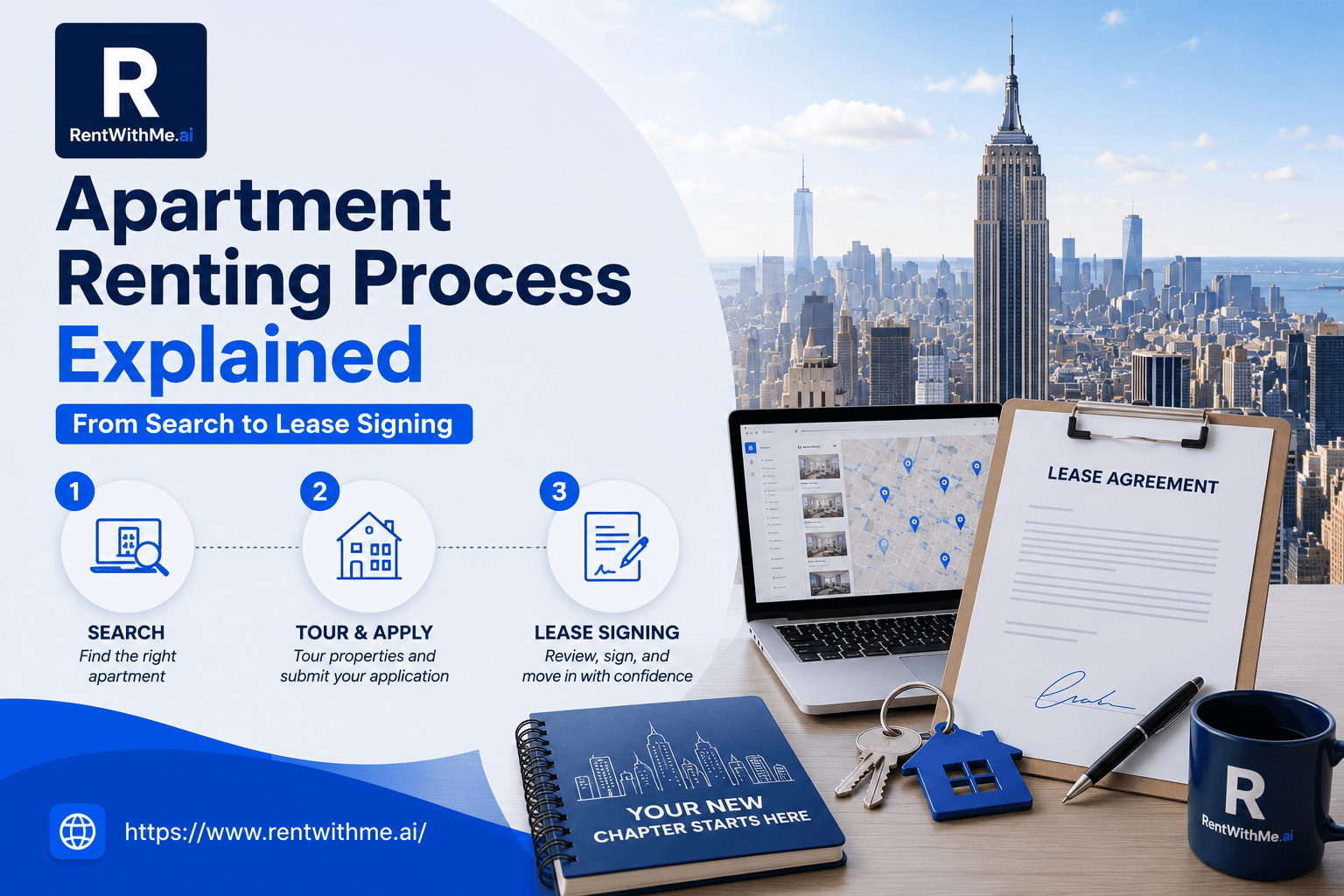
This guide explains the complete apartment renting process from the moment you decide to start searching until the day you sign your lease. By understanding how each step works, you can avoid common mistakes, reduce stress, and increase your chances of finding an apartment that fits both your lifestyle and your budget.
Understanding the Complete Apartment Renting Process
Many people think apartment hunting begins when they open a rental website, but the process actually starts much earlier. Successful renters spend time preparing before they ever schedule a tour.
The complete renting journey includes financial planning, neighborhood research, apartment searching, property viewings, application preparation, lease review, and move-in planning. Every stage builds on the previous one, making preparation just as important as quick decision-making.
Skipping early planning often creates unnecessary problems later. For example, renters who do not establish a realistic budget may waste time touring apartments they cannot comfortably afford. Likewise, applicants who wait to gather documents until after finding an apartment may lose it to someone who was already prepared.
Thinking of the renting process as a series of connected steps helps you stay organized from beginning to end. Rather than feeling rushed, you can move through each stage with a better understanding of what comes next.
Why Preparation Makes the Renting Process Easier
Preparation is one of the biggest differences between a stressful apartment search and a successful one. When you already know your budget, preferred neighborhoods, required documents, and move-in timeline, you can respond much more quickly when the right apartment becomes available.
Many desirable apartments receive multiple inquiries within a short period. Landlords often prefer applicants who can provide complete information immediately rather than those who need several days to organize paperwork.
Preparation also improves your decision-making. Instead of becoming emotionally attached to every attractive apartment, you can evaluate each option against your priorities and financial goals.
Being prepared does not mean rushing into decisions. It means having enough information to act confidently when an opportunity matches your needs.
Step One: Defining Your Rental Needs and Priorities
Before looking at apartment listings, take time to decide what you actually need in your next home. Many renters begin searching without clear priorities, making it difficult to compare apartments objectively.
Start by identifying your essential requirements. These are the features you are unwilling to compromise on because they directly affect your daily life.
Your priorities may include apartment size, maximum rent, commute time, accessibility features, pet policies, or proximity to public transportation. Every renter has different needs, so your list should reflect your personal lifestyle rather than current housing trends.
It also helps to separate your preferences into two categories.
- Must-have features such as budget, neighborhood, commute time, and apartment size.
- Nice-to-have features such as rooftop amenities, fitness centers, balconies, smart home technology, or luxury finishes.
Making this distinction early prevents you from becoming distracted by attractive amenities that do not truly improve your everyday living experience.
As your search progresses, these priorities will help you compare apartments more efficiently and avoid making emotional decisions based solely on appearance.
Setting a Realistic Apartment Budget

Your budget serves as the foundation for every other decision throughout the renting process. Without a realistic financial plan, even the most organized apartment search can become frustrating.
Many renters focus only on monthly rent, but housing costs include much more than that. Utilities, internet service, transportation, renters insurance, groceries, laundry, parking, and entertainment all contribute to your overall monthly expenses.
A realistic budget allows you to enjoy your apartment without placing unnecessary strain on your finances. Leaving room for savings and unexpected expenses is just as important as finding an apartment that fits your preferred neighborhood.
Before beginning your search, calculate how much you can comfortably spend each month while still maintaining your other financial goals.
Creating this budget ahead of time keeps your apartment search focused on realistic options and prevents disappointment later.
Understanding Upfront Costs and Ongoing Monthly Expenses
The monthly rent is only one part of the overall cost of renting an apartment. First-time renters are often surprised by the amount of money required before they even receive their keys.
Depending on the property, move-in expenses may include the first month’s rent, a security deposit, utility setup charges, moving costs, renters insurance, and building-related fees.
After moving in, you will also have recurring monthly expenses beyond rent. These costs should be included when determining your long-term housing budget.
Some common expenses include:
| Expense | Why It Matters |
|---|---|
| Monthly rent | Your primary housing expense |
| Utilities | Electricity, gas, or water where applicable |
| Internet service | Essential for work and daily life |
| Renters insurance | Protects personal belongings |
| Transportation | Subway, bus, parking, or commuting costs |
| Laundry | Varies by building and neighborhood |
Looking at the complete financial picture allows you to compare apartments more accurately rather than focusing only on the advertised rent.
Understanding these expenses before apartment hunting also reduces the likelihood of financial surprises after you move in.
Preparing Your Financial Profile Before Searching
Your financial profile plays an important role in the apartment approval process. Landlords want confidence that tenants can consistently pay rent throughout the lease.
Review your income, savings, recurring expenses, and outstanding financial obligations before beginning your search. This gives you a clear understanding of what you can comfortably afford.
If you notice any issues with your financial records or credit history, address them before submitting rental applications whenever possible.
Building additional savings before apartment hunting also provides flexibility. Unexpected moving expenses are common, and having financial reserves makes the transition much less stressful.
Preparing your finances early positions you as a stronger applicant once you find the apartment you want.
Credit Scores, Income Requirements, and Guarantors Explained
Most landlords evaluate applicants using several financial factors rather than relying on a single requirement.
Income verification is typically one of the first areas reviewed. Property owners want reassurance that tenants have sufficient income to meet their rental obligations consistently throughout the lease.
Credit history is another common consideration. While strong credit can simplify the approval process, applicants with limited credit history or unique financial circumstances may still qualify depending on the property.
Some renters use a guarantor when additional financial support is needed. A guarantor agrees to assume responsibility for lease payments if the tenant cannot fulfill the agreement.
Applicants who are students, recent graduates, freelancers, or self-employed professionals may also provide additional financial documentation demonstrating their ability to pay rent.
Qualification standards differ between landlords, making preparation far more valuable than assumptions.
Documents You Need Before Apartment Hunting

One of the easiest ways to improve your chances of securing an apartment is by organizing your documents before you begin searching.
Competitive apartments often receive multiple applications within a short period. Having paperwork prepared allows you to submit your application immediately instead of spending valuable time gathering documents.
Most landlords request similar information during the approval process.
| Document | Purpose |
|---|---|
| Government-issued photo ID | Identity verification |
| Recent pay stubs | Proof of income |
| Employment verification letter | Confirms current employment |
| Recent bank statements | Demonstrates financial stability |
| Previous tax returns if requested | Additional income verification |
| Rental references if available | Supports rental history |
Many renters now store secure digital copies of these documents on cloud storage or encrypted devices. This makes it easy to upload files quickly when completing online applications.
Being organized also creates a positive impression because landlords appreciate applicants who provide complete documentation without unnecessary delays.
Choosing the Right Neighborhood for Your Lifestyle
An apartment is only one part of your living experience. The surrounding neighborhood will influence your daily routine just as much as the apartment itself.
Think about how you spend your average weekday and weekend. Consider your commute, grocery shopping, fitness routine, dining preferences, access to parks, healthcare facilities, and public transportation.
Visiting neighborhoods before apartment hunting can provide valuable insight that online research cannot fully capture. Walking around during different times of the day helps you understand traffic patterns, noise levels, and the overall atmosphere.
Sometimes paying slightly more for an apartment in a convenient location creates greater long-term value than choosing the least expensive option available.
Selecting a neighborhood that supports your lifestyle often leads to greater satisfaction throughout your lease.
Where to Begin Searching for Apartments
Once your budget, priorities, and documents are ready, you can begin looking for apartments with confidence.
Most renters start by exploring reputable online rental platforms because they make it easy to compare apartments based on neighborhood, price, amenities, apartment size, and availability.
Property management companies also advertise apartments directly through their own websites, providing another useful source of available listings.
Some renters choose to work with licensed real estate professionals who understand local market conditions and can recommend apartments that match specific requirements.
Whichever approach you choose, stay organized by saving listings, comparing features, and monitoring new opportunities regularly instead of searching randomly.
Creating an Organized Apartment Search Strategy
Apartment hunting becomes much easier when you follow a structured plan rather than relying on chance.
Create a spreadsheet, notebook, or digital tracking system where you record apartment addresses, monthly rent, neighborhood, amenities, tour dates, and personal impressions. Comparing apartments side by side makes decision-making much simpler after viewing multiple properties.
It is also helpful to establish a consistent routine for checking new listings. Looking at the same time each day helps you identify new opportunities quickly without becoming overwhelmed by constant searching.
As suitable apartments begin appearing, the next stage of the renting process becomes much more hands-on. Learning how to schedule apartment tours, evaluate properties objectively, compare multiple options, complete applications, and review lease agreements carefully will help you move from simply searching to confidently securing the right apartment.
Scheduling Apartment Tours Efficiently
After narrowing down your list of potential apartments, the next step is scheduling tours. In competitive rental markets, waiting too long can mean losing an apartment before you even have the chance to see it.
Try scheduling several apartment tours on the same day, especially if they are located within the same neighborhood. Seeing multiple properties back to back makes it much easier to compare layouts, finishes, pricing, and overall value while everything is still fresh in your memory.
Before confirming a tour, ask whether the apartment shown in the listing is the exact unit that is available. Some listings use photos from another apartment in the building that has a similar layout but different finishes or views.
If you are relocating from another city and cannot visit in person, request a live virtual tour. A real-time walkthrough allows you to ask questions and inspect specific features that may not be visible in professionally staged listing photos.
How to Evaluate an Apartment During a Viewing

An apartment may look impressive in photographs, but an in-person tour often reveals details that determine whether it will actually be comfortable to live in.
Walk through each room slowly instead of rushing to the next space. Open closets, inspect cabinets, turn on faucets, test light switches, flush toilets, and check windows to make sure they open and close properly.
Pay attention to natural lighting throughout the apartment. A unit that receives plenty of daylight often feels larger and more inviting than one with limited sunlight.
The building itself also deserves careful evaluation. Hallways, elevators, entrances, package rooms, laundry facilities, and common areas can provide valuable clues about how well the property is maintained.
Take time to evaluate several important features during every viewing.
- Overall cleanliness and maintenance
- Water pressure and plumbing
- Heating and cooling systems
- Kitchen appliances
- Storage space
- Noise from neighboring units or nearby streets
- Cell phone reception
- Building security and access
After each apartment tour, spend a few minutes recording your impressions. Writing notes immediately helps prevent different apartments from blending together after several viewings.
Questions You Should Ask Before Applying
Finding an attractive apartment is only part of the decision. Before submitting an application, make sure you understand exactly what you are agreeing to.
Many important details are not always included in online listings. Asking thoughtful questions helps eliminate uncertainty and prevents unpleasant surprises after moving in.
Some useful questions include:
| Question | Why It Is Important |
|---|---|
| Which utilities are included in the rent? | Helps calculate total monthly costs. |
| Are there move-in or move-out procedures? | Allows you to prepare ahead of time. |
| How are maintenance requests handled? | Shows how responsive management is. |
| Is renters insurance required? | Some buildings require proof before move-in. |
| Are pets allowed? | Important for current or future pet owners. |
| What are the lease renewal policies? | Helps with long-term planning. |
Do not hesitate to ask follow-up questions if something is unclear. Professional landlords and property managers generally appreciate renters who take the time to understand the property before signing a lease.
These conversations also provide insight into how management communicates with tenants. Clear, respectful communication early in the process often leads to a smoother rental experience later.
Comparing Multiple Apartments Objectively
After touring several apartments, it becomes easy to forget small but important differences between them. Attractive kitchens, spacious bedrooms, or impressive amenities can blur together after multiple visits.
Rather than relying on memory alone, compare each apartment using the same evaluation criteria. Looking at every property consistently helps you make a logical decision instead of an emotional one.
Think about factors such as monthly cost, neighborhood, commute time, building condition, available storage, natural light, included amenities, and overall comfort.
Sometimes the apartment that initially seems less exciting turns out to be the better long-term choice because it offers a stronger balance between affordability, convenience, and quality of life.
Avoid making decisions based solely on cosmetic features. Fresh paint or stylish furniture can be changed, but location, commute, and building management have a much greater impact on your daily experience.
Understanding the Apartment Application Process
Once you decide which apartment you want, the application process usually begins immediately. In many markets, especially New York City, landlords often review applications as soon as they are received.
Most applications request similar information, including identification, proof of income, employment verification, financial documents, and authorization for a credit check.
Submitting complete and accurate information is extremely important. Missing documents or inconsistent information can delay your application or allow another qualified renter to move ahead.
Before sending your application, review every document carefully. Verify names, addresses, employment information, and financial details to ensure everything is accurate.
Many landlords now accept digital applications, making it easy to upload documents securely and complete the process online.
What Landlords Review Before Approving Applicants
Landlords are looking for tenants who are likely to pay rent consistently and take good care of the property. Their review process is designed to evaluate financial stability and overall reliability.
Income is usually one of the first factors considered. Property owners want confidence that applicants have enough income to comfortably afford the monthly rent.
Credit history is another common consideration. While excellent credit can strengthen an application, many landlords also consider employment history, available savings, and overall financial responsibility.
Rental history may also influence approval decisions. Applicants who have previously rented successfully often have an advantage because positive references demonstrate reliability.
Each landlord establishes their own approval standards. Receiving additional questions during the review process is normal and does not necessarily indicate a problem with your application.
Avoiding Common Rental Scams During the Search
Apartment scams continue to affect renters every year, particularly in competitive markets where people feel pressure to act quickly.
One of the most common warning signs is an apartment advertised well below the typical market price. While good opportunities certainly exist, unusually inexpensive listings deserve additional verification.
Never send money before confirming that the apartment exists and that the person advertising it has the legal authority to rent the property. Legitimate landlords and licensed brokers understand the importance of verification.
Be cautious if someone refuses to show the apartment, requests payment immediately, or claims they are unavailable because they are traveling.
Protect yourself by taking a few simple precautions.
- Verify the property address.
- Confirm the identity of the landlord or broker.
- Request a tour before making payments.
- Obtain written confirmation of rental terms.
- Keep records of all communications.
A few extra minutes spent verifying information can prevent significant financial losses and unnecessary stress.
Broker Fees, No-Fee Apartments, and Other Rental Costs
Monthly rent is only one part of the total cost of renting an apartment. Understanding every potential expense helps you compare apartments more accurately.
Some apartments are rented directly through property owners or management companies, while others are represented by licensed real estate brokers. Depending on the arrangement, additional fees may apply.
Rather than focusing on a single expense, evaluate the complete financial picture. An apartment with slightly higher rent but fewer upfront costs may actually be the better overall value.
Common expenses beyond monthly rent may include security deposits, utility setup charges, moving costs, renters insurance, and building-specific move-in fees.
Request a complete breakdown of all expected costs before making your final decision so there are no surprises after approval.
Reading and Understanding Your Lease Agreement
Receiving lease approval is exciting, but it is important not to rush through the final paperwork.
Your lease is a legally binding agreement that explains your rights, responsibilities, monthly rent, lease duration, payment schedule, renewal terms, maintenance expectations, and building policies.
Read every section carefully before signing. Confirm that the apartment address, monthly rent, move-in date, lease term, and agreed-upon conditions match your earlier conversations.
Pay special attention to clauses involving late payment policies, renewal procedures, maintenance responsibilities, guest rules, pets, subletting, and early lease termination.
If any part of the lease seems confusing, ask questions before signing. Understanding your agreement now is much easier than resolving misunderstandings after moving into the apartment.
Common Mistakes to Avoid Before Signing a Lease
The final stage of the apartment renting process often feels exciting, but it is also where many renters make avoidable mistakes.
One common mistake is signing the lease without reading every section carefully. Another is assuming verbal conversations automatically become part of the written agreement.
Some renters also forget to inspect the apartment one final time before signing. Confirming that everything matches what you expected provides additional peace of mind.
Avoid rushing simply because you are excited. Taking a little extra time to review documents carefully can prevent significant problems later.
What Happens After Your Application Is Approved
Once your application has been approved, the landlord or property manager will typically provide instructions for signing the lease and completing any remaining payments.
At this stage, you should review the lease one final time, prepare your move-in funds, and confirm your move-in date with building management.
Keep copies of every important document, including your lease agreement, payment receipts, correspondence, and any written promises made during the rental process. Organized records are valuable throughout your tenancy.
Although signing the lease marks the completion of the apartment search, it also begins a new stage of the renting journey. Preparing for move-in, setting up essential services, understanding your responsibilities as a tenant, and building a positive relationship with your landlord will help ensure your new apartment becomes a comfortable and successful place to call home.
Preparing for Move-In Day
Signing your lease is an exciting milestone, but there are still several important tasks to complete before you officially move into your new apartment. A little planning now can make your move far less stressful and help you settle in much more quickly.
Start by creating a moving timeline that includes packing, scheduling movers if necessary, transferring utilities, changing your mailing address, and notifying your current landlord according to your lease requirements. Completing these tasks over several weeks is much easier than trying to handle everything during the final few days.
Many apartment buildings have move-in procedures that renters overlook. Some require advance elevator reservations, designated move-in hours, or certificates of insurance from professional moving companies. Confirm these requirements with building management before moving day arrives.
Before bringing furniture into the apartment, inspect every room carefully. Photograph walls, flooring, windows, appliances, cabinets, and fixtures. Having a record of the apartment’s condition provides useful documentation if questions arise later regarding existing wear or damage.
A simple moving checklist helps keep everything organized.
- Confirm your move-in date and building requirements.
- Pack important documents separately from household items.
- Label every box by room.
- Bring cleaning supplies and basic tools.
- Verify that utilities are active before arrival.
- Complete a final walkthrough before unpacking.
Completing these steps before you begin unpacking allows you to enjoy your first day in the apartment instead of dealing with avoidable problems.
Setting Up Utilities, Internet, and Renters Insurance
After receiving your keys, your apartment still needs several essential services before it is fully functional. Taking care of these items early prevents unnecessary inconvenience during your first week.
Review your lease to determine which utilities are included and which services you need to establish yourself. Electricity, natural gas, internet, and cable providers may require appointments or account activation before service begins.
If you work remotely or depend heavily on internet access, schedule installation as early as possible. Waiting until after you move may leave you without reliable service for several days.
Renters insurance is another important consideration. While some landlords require it, many renters choose coverage voluntarily because it helps protect personal belongings from certain covered events such as theft, fire, or water damage.
You should also update your address with banks, employers, insurance providers, subscription services, government agencies, and any organization that regularly sends important mail.
During your first few days, spend some time becoming familiar with your neighborhood. Locate nearby grocery stores, pharmacies, subway stations, hospitals, banks, and other places you expect to visit regularly.
Understanding Your Rights and Responsibilities as a Tenant
Becoming a tenant means entering into a legal agreement that includes responsibilities for both you and your landlord.
Property owners are generally responsible for maintaining safe and habitable living conditions while addressing qualifying repairs according to applicable housing regulations. Understanding these responsibilities helps you know when to request maintenance and what you should reasonably expect from building management.
Tenants also have responsibilities that contribute to a successful rental experience. Paying rent on time, following lease terms, maintaining the apartment responsibly, and respecting neighbors all help create a positive relationship throughout the lease.
If maintenance issues arise, report them promptly rather than waiting for the problem to become worse. Small repairs are often much easier to resolve when addressed early.
Keep organized records of your lease agreement, payment confirmations, maintenance requests, and important communications. Having documentation readily available can be extremely helpful if questions ever arise.
Building a Positive Relationship With Your Landlord or Property Manager
A successful tenancy often depends on more than simply paying rent each month. Good communication with your landlord or property manager can make everyday living much easier.
Respond promptly to emails or phone calls when management contacts you. Likewise, notify them quickly if maintenance concerns or unexpected situations develop within your apartment.
Respect building rules regarding guests, shared spaces, garbage disposal, parking, and quiet hours. These policies are intended to create a comfortable living environment for everyone in the building.
Paying rent consistently on time demonstrates reliability and helps establish trust. Responsible tenants often experience smoother communication when maintenance requests or lease renewal discussions occur.
If disagreements arise, approach the conversation professionally and focus on finding a practical solution. Calm communication usually produces better results than emotional confrontation.
Managing Your Apartment Successfully After Moving In
Many renters believe the apartment renting process ends once they receive their keys. In reality, maintaining a successful tenancy requires ongoing attention throughout the lease.
Develop routines that help keep your apartment clean and organized. Regular maintenance usually requires much less effort than trying to address months of neglected cleaning all at once.
Inspect your apartment periodically for small maintenance issues. Reporting a minor plumbing leak or appliance problem immediately can prevent more significant damage later.
Managing your finances remains equally important after moving in. Continue tracking your monthly expenses so you understand how much you spend on rent, utilities, groceries, transportation, and discretionary purchases.
Building an emergency savings fund should remain a priority even after moving expenses are complete. Unexpected personal expenses can arise at any time, and having financial reserves provides valuable peace of mind.
Getting to know your neighbors can also improve your overall experience. Friendly relationships often create a stronger sense of community and make apartment living more enjoyable.
Lease Renewals, Rent Increases, and Moving Out
Although your lease may have just begun, understanding what happens at the end of your tenancy helps you prepare well in advance.
As your lease approaches expiration, review your options carefully. Consider whether your apartment still fits your budget, commute, lifestyle, and future plans before deciding whether to renew.
If your landlord offers a renewal agreement, read it just as carefully as your original lease. Confirm updated rental rates, lease dates, and any policy changes before signing.
If you plan to move, begin searching for your next apartment early. Starting your search before your current lease expires gives you more choices and reduces unnecessary pressure.
Before moving out, clean the apartment thoroughly and remove all personal belongings. Take photographs after cleaning and return keys according to your lease instructions. These simple steps help document the apartment’s condition and support a smooth conclusion to your tenancy.
Frequently Asked Questions About the Apartment Renting Process
Renters often encounter similar questions throughout their apartment search. Here are answers to several of the most common concerns.
How early should I start searching for an apartment?
Most renters begin actively searching between 30 and 60 days before their intended move-in date. This generally aligns with how apartments become available in many rental markets.
How much money should I save before renting?
In addition to monthly rent, plan for the security deposit, moving expenses, utility setup costs, renters insurance, and a financial cushion for unexpected expenses.
Should I visit an apartment before applying?
Whenever possible, yes. An in-person visit or live virtual tour provides a much more accurate understanding of the apartment than photographs alone.
Can I negotiate rent?
Sometimes. Negotiation opportunities depend on local market conditions, vacancy rates, seasonality, and the landlord’s flexibility. Even if rent remains unchanged, other lease terms may occasionally be negotiable.
Is renters insurance necessary?
Many landlords require it, and even when optional, it is often a smart investment because it helps protect your personal belongings against covered losses.
What should I do if I notice maintenance issues after moving in?
Report the issue promptly to your landlord or property manager. Early communication usually leads to faster repairs and helps prevent small problems from becoming larger ones.
Apartment Renting Process Checklist From Search to Lease Signing
Following a structured process makes apartment hunting much more manageable and reduces the chance of overlooking important steps.
| Stage | Key Actions |
|---|---|
| Planning | Define priorities, establish your budget, and determine your move-in timeline. |
| Financial Preparation | Organize savings, review your credit, and prepare financial documents. |
| Apartment Search | Research neighborhoods, compare listings, and monitor new opportunities. |
| Apartment Tours | Inspect apartments carefully, evaluate buildings, and ask detailed questions. |
| Application | Submit complete documentation accurately and promptly. |
| Lease Review | Read every lease provision carefully before signing. |
| Move-In Preparation | Schedule movers, activate utilities, and document apartment condition. |
| Successful Tenancy | Pay rent on time, maintain communication, and follow lease responsibilities. |
Keeping this checklist throughout your apartment search helps ensure that every important step receives proper attention from the beginning of your search until long after you receive your keys.
Conclusion
Renting an apartment involves much more than finding an appealing listing online. It is a process that begins with careful planning, continues through apartment tours and applications, and extends well beyond lease signing into your daily life as a tenant.
Understanding each stage of the renting journey gives you a significant advantage. When you establish a realistic budget, organize your documents, research neighborhoods thoroughly, inspect apartments carefully, and review lease agreements thoughtfully, you dramatically improve your chances of finding a home that fits both your lifestyle and your financial goals.
Preparation also reduces unnecessary stress. Instead of making rushed decisions because you feel pressured by a competitive market, you can evaluate opportunities with confidence, knowing exactly what you need and what you can comfortably afford.
Remember that signing the lease is not the finish line. Building positive relationships with your landlord, maintaining your apartment responsibly, managing your finances wisely, and planning ahead for lease renewals all contribute to a successful renting experience.
Whether this is your very first apartment or simply your next move, following a structured approach makes the entire process far more manageable. By understanding the apartment renting process from search to lease signing, you will be well prepared to navigate every stage with confidence and choose a home that supports your needs today and in the future.