
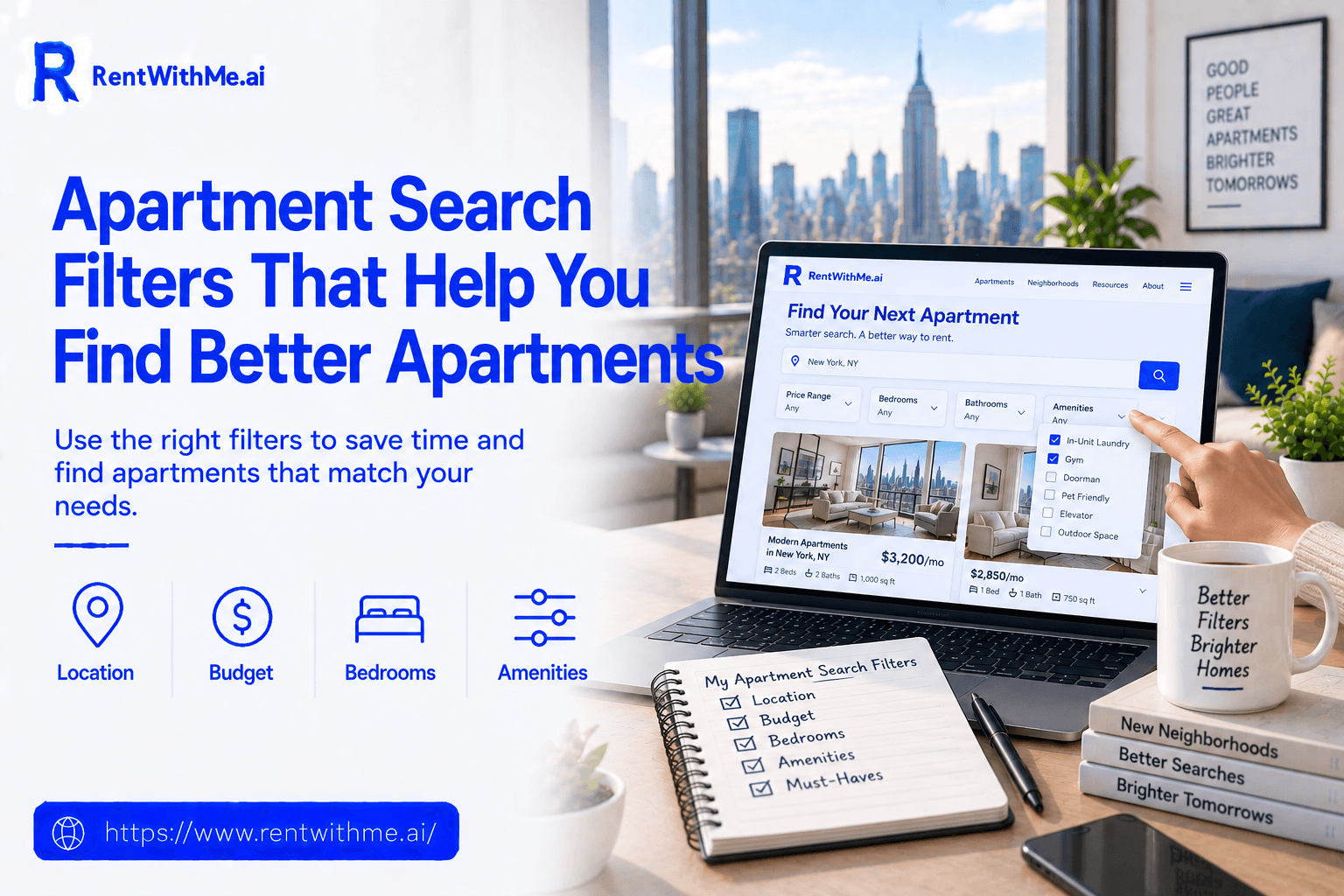
Apartment Search Filters That Help You Find Better Apartments
Introduction
Apartment search filters can save hours when they reflect your actual housing needs. Poorly chosen filters can hide strong rentals or flood results with irrelevant listings. The goal is creating useful boundaries without making your search unnecessarily restrictive.
Better filtering begins before you open any apartment search platform or rental website. You need clear priorities, realistic affordability limits, and a practical moving timeline first. Those decisions determine which filters deserve attention during active apartment searching.
Filters should guide your search rather than completely control your housing decisions. Every platform organizes apartment information differently and may leave important details unfiltered. Strong renters use filters alongside careful reading, verification, and practical judgment.
Define Your Apartment Needs Before Choosing Filters
Start by identifying the housing requirements that genuinely affect your everyday routine. Bedroom count, location, accessibility, and budget may become essential for your household. Other features can remain flexible when stronger overall apartments appear.
Think about how you actually use your current apartment each week. Storage, laundry, workspace, transportation, or privacy may strongly influence satisfaction. These recurring needs should shape your strongest apartment search filters.
Avoid selecting filters simply because platforms make those options easy to choose. A visible amenity checkbox does not automatically mean that feature matters personally. Your filtering system should reflect your life rather than platform design.
Write down your essential requirements before building any detailed online search. This gives you a stable reference when search results become overwhelming. Clear priorities also make later filter adjustments easier and more deliberate.

Understand How Apartment Search Filters Work
Search filters reduce a larger rental inventory into a smaller matching group. Every additional requirement can remove properties from your visible search results. That is useful when filters represent needs and risky when preferences become excessive.
Think of filters as screening tools rather than final apartment quality judgments. A listing matching every checkbox can still disappoint during an actual tour. Another strong apartment may disappear because one optional feature remains untagged.
Different platforms may classify apartment details in slightly different ways. One website may label laundry differently than another rental marketplace. This inconsistency makes manual listing review important even after filtering.
The strongest filtering strategy balances precision with enough inventory for meaningful comparison. You want fewer irrelevant listings without eliminating realistic alternatives. That balance usually requires testing and refinement during active searching.
Start With a Realistic Monthly Rent Filter
Price should usually become one of your earliest apartment search filters. Start with the comfortable range established through your personal housing budget. Avoid setting limits based only on attractive rentals currently appearing online.
Create a preferred range where most apartments should comfortably fit financially. Then establish a firm maximum that protects your broader monthly budget. This gives you flexibility without encouraging repeated rent increases.
Your maximum should account for recurring housing costs beyond advertised monthly rent. Utilities, transportation, laundry, and parking may affect complete affordability. A rent filter alone cannot capture every financial difference between properties.
Avoid intentionally searching far above your limit simply for inspiration. Repeated exposure can make uncomfortable prices gradually seem more normal. Strong financial boundaries work best when search settings reinforce them.

Account for Total Housing Costs Before Setting Price Limits
Base rent should not determine your search filter without additional financial context. Other recurring expenses can make two similarly priced apartments financially different. Estimate those costs before deciding where your price ceiling belongs.
Utilities can vary depending on which services remain the renter’s responsibility. Internet, laundry, and parking may add additional predictable monthly expenses. Transportation can create even larger differences between neighborhoods.
A slightly higher-rent apartment may reduce commuting or other regular costs. Another cheaper property could require more spending elsewhere every month. Your filter should therefore support complete affordability rather than headline rent alone.
Use reasonable estimates when exact figures remain unavailable before property contact. You can update calculations later as better information becomes available. Early estimates still create stronger search boundaries than ignoring those costs.
Choose Location Filters Strategically
Location filters should reflect both affordability and your everyday transportation needs. Start with neighborhoods that realistically fit your budget and routine. Avoid selecting areas simply because they currently appear popular or desirable.
Think about where you travel most frequently during ordinary weeks. Work, school, healthcare, groceries, and family may influence neighborhood suitability. A good location supports several important journeys rather than one destination.
Keep nearby alternative neighborhoods available when they offer similar practical benefits. Slight geographic flexibility can reveal better pricing and stronger apartment inventory. Overly narrow location filters may hide suitable homes only blocks away.
Your location filter should become focused without turning into a tiny boundary. Search enough surrounding areas to create meaningful housing choices. Then evaluate neighborhood quality more carefully during later research.

Use Commute Needs to Refine Location Filters
Commute filtering works best when you consider complete door-to-door travel. Straight-line distance rarely explains the actual effort required each day. Walking, transfers, waiting, and reliability all influence the experience.
Identify the destinations you visit most often before narrowing neighborhoods further. For some renters, work will dominate the transportation decision. Others may prioritize schools, healthcare, family, or multiple regular destinations.
A slightly farther neighborhood may offer a simpler direct commute. Another closer area could require several inconvenient transfers every day. Transportation quality should therefore refine geography beyond simple distance.
Test realistic routes before making a neighborhood filter permanently restrictive. Travel estimates can change depending on time and transportation mode. Practical route testing creates stronger location decisions than map distance alone.
Apartment Search Filter Planning Table
| Search Filter | Essential Requirement | Preferred Setting | Flexible Range | Reason It Matters | When Adjustment May Help |
|---|---|---|---|---|---|
| Monthly rent | Comfortable affordability | Preferred rent range | Up to firm maximum | Protects financial stability | When flexible features can change |
| Location | Practical neighborhood access | Target areas | Nearby alternatives | Supports commute and lifestyle | When inventory stays limited |
| Bedrooms | Household capacity | Required room count | Flexible only when practical | Supports daily living needs | When layouts offer equivalent function |
| Bathrooms | Household convenience | Preferred count | Lower count if workable | Affects daily routines | When budget or inventory requires compromise |
| Move-in date | Timing compatibility | Target window | Reasonable nearby dates | Prevents difficult lease gaps | When short overlap remains affordable |
| Accessibility | Essential physical access | Required features | Usually limited flexibility | Protects genuine household needs | Rarely adjusted when truly essential |
| Laundry | Convenience preference | Ideal arrangement | Building or nearby alternatives | Affects weekly routines | When other options remain practical |
| Parking | Vehicle-related need | Preferred arrangement | Nearby alternatives | Affects transportation practicality | When vehicle use remains limited |
| Outdoor space | Lifestyle preference | Preferred option | Shared or nearby alternatives | Adds recreational value | When usage would remain occasional |
Use this table before creating highly detailed searches on multiple platforms. It separates requirements from preferences and keeps adjustment options visible. This structure can prevent you from treating every filter as equally important.
Review the table whenever search results become either overwhelming or extremely limited. Flexible ranges show which settings can change without hurting core needs. Essential requirements should remain protected while optional filters receive more flexibility.
Set Bedroom and Bathroom Filters Carefully
Bedroom count should match actual household needs rather than aspirational extra space. A second room can help remote workers or growing households. However, unnecessary bedrooms often increase rent substantially in competitive markets.
Think about whether flexible layouts could satisfy your space requirements differently. A large alcove or separate living area may support occasional work. Room labels do not always describe how usable a layout feels.
Bathroom count can matter greatly within larger households or roommate situations. For one renter, an additional bathroom may provide limited everyday value. Set this filter according to real routines rather than general preference.
Avoid increasing room counts simply because more space sounds automatically better. Extra square footage can create higher rent and utility expenses. Functional space should justify the additional monthly cost.

Decide Whether Square Footage Should Become a Filter
Square footage can appear useful but sometimes creates misleading assumptions. Advertised measurements do not always explain how efficiently space functions. Room shape and storage can influence usability more than total size.
A smaller apartment with good proportions may feel surprisingly comfortable. A larger apartment with narrow rooms can feel difficult to furnish. Filtering strictly by size may therefore remove better layouts.
Use square footage filters carefully when you know minimum space requirements clearly. Households with substantial furniture may benefit from a reasonable lower threshold. Other renters may prefer evaluating floor plans before using strict size limits.
Consider usable layout whenever advertised dimensions remain uncertain or inconsistent. Floor plans and tours often reveal more than one number. Space should support your routine rather than simply satisfy a measurement.
Use Move-In Date Filters Realistically
Move-in timing can eliminate otherwise strong apartments from practical consideration. Set availability filters around your actual expected moving window. Avoid choosing broad dates that create unnecessary housing overlap.
A small amount of flexibility can improve available apartment inventory significantly. Several days or weeks may remain workable depending on circumstances. Compare the financial impact before accepting larger timing changes.
Your current lease should guide how much timing flexibility remains realistic. Early availability could create additional rental overlap expenses. Late availability may require temporary housing or storage arrangements.
Use move-in filters as a practical boundary rather than absolute precision. Exact dates can shift slightly during final rental coordination. Your search should allow manageable flexibility without creating serious logistical problems.

Choose Property Type Filters Based on Lifestyle
Property type can influence apartment availability, services, and daily building experience. Larger buildings may offer elevators, amenities, or professional management systems. Smaller properties can provide different layouts and neighborhood experiences.
Decide whether property type genuinely affects your household’s essential needs. Some renters strongly prefer staffed buildings or elevator access. Others care more about apartment quality than building category.
Avoid filtering out entire property types because of broad assumptions. Strong rentals can exist across different building styles and configurations. Evaluate which characteristics matter instead of relying only on labels.
Use property type filters when they meaningfully support your lifestyle priorities. Otherwise, keep this setting flexible during early searching. Additional variety can help you discover stronger rental value.
Filter for Accessibility Requirements Early
Accessibility requirements should receive priority before optional apartment preferences. If elevator access matters, include it during your initial filtering. The same applies to other genuinely necessary building or apartment features.
Do not rely solely on an accessibility filter without verifying details. Platform tags may not describe the complete route or layout. Important features should receive confirmation before you schedule serious property tours.
Consider the full journey from building entrance to apartment interior. Stairs, elevators, thresholds, hallways, and doors may all matter. Accessibility depends on how these elements work together throughout daily use.
Keep essential accessibility needs protected even when inventory becomes limited. These filters represent practical requirements rather than convenient preferences. Flexibility should happen elsewhere before compromising necessary access.

Decide Which Building Features Deserve Filters
Building features can improve convenience when they support repeated household routines. Laundry, elevators, parking, and storage may deserve strong consideration. The right filters depend entirely on how often you use them.
Laundry may become essential for households managing frequent weekly loads. Another renter might comfortably use a nearby laundromat instead. Filtering should reflect practical convenience rather than general expectations.
Parking deserves stronger filtering when reliable vehicle access remains important. Renters without cars should rarely let parking affect apartment results. Each feature should justify its place within your search criteria.
Avoid selecting every available building amenity simply because it sounds useful. Every checked box can reduce your visible apartment inventory. Keep filters focused on features providing clear personal value.
Separate Valuable Amenities From Attractive Extras
Amenities often look appealing because rental marketing emphasizes them strongly. Fitness centers, lounges, rooftops, and outdoor areas can attract attention. Their actual value depends on whether you would use them regularly.
Think about your current habits before making an amenity a requirement. If you rarely exercise indoors, a gym may remain optional. If you host infrequently, a large resident lounge may add little value.
Premium amenities can also influence the rent charged within certain buildings. Paying more makes sense only when the convenience provides repeated benefits. Attractive extras should not push housing beyond comfortable affordability.
Keep optional amenities outside your strictest initial search whenever possible. You can use them later when comparing otherwise similar apartments. This preserves inventory while still allowing preferences to influence final decisions.

Consider Pet Filters When They Affect Eligibility
Pet ownership can directly affect whether a listing remains realistically available. Use relevant pet filters when your household includes an animal. This prevents spending time on properties that cannot accommodate your situation.
Pet-friendly labels should still receive verification before you become committed. Restrictions can sometimes involve size, number, or other applicable conditions. Ask appropriate questions when listing information remains incomplete.
Do not assume every pet-friendly property follows identical policies or requirements. Written terms can differ considerably between buildings and owners. Important details should become clear before formal rental decisions.
Pet filters can dramatically reduce results in some rental markets. Keep unrelated preferences flexible when inventory becomes too limited. Eligibility requirements should remain protected while optional amenities receive adjustments.
Create Your First Balanced Filter Combination
Your first search should combine only the filters carrying meaningful importance. Rent, location, timing, and required space usually create the foundation. Add accessibility or eligibility filters when those needs genuinely apply.
Keep flexible preferences outside the strictest first search whenever possible. This gives you enough inventory to understand current rental options. You can then refine results using evidence rather than assumptions.
Review how many listings appear and whether they look genuinely relevant. Too many weak results usually indicate filters remain overly broad. Very few results may signal that optional requirements became too restrictive.
The next stage involves testing filters against real apartment inventory. Part Two will show how to adjust settings without losing direction. That refinement helps filters uncover better apartments instead of hiding them.
Test Your Filters Against Real Search Results
Your first filter combination becomes useful only after testing actual inventory. Search results reveal whether your assumptions match current rental availability. This feedback helps transform theoretical preferences into a practical search strategy.
Review both the number and quality of apartments appearing initially. Large result counts mean little when most properties feel unsuitable. Smaller selections can work well when listings consistently match important requirements.
Notice why you reject apartments while reviewing the first results. Repeated rejection reasons often expose missing or overly flexible filters. Conversely, limited inventory may indicate unnecessary requirements are blocking suitable options.
Treat your first search as information gathering rather than final optimization. Effective filters usually improve through several thoughtful adjustments. Real inventory provides better guidance than guessing which settings should work.
Recognize When Your Search Is Too Broad
Broad searches often produce dozens of apartments requiring immediate rejection. You may repeatedly encounter unsuitable prices, locations, layouts, or building features. This screening process quickly wastes valuable apartment hunting time.
Look for rejection patterns appearing across several pages of results. Consistent problems usually indicate one important filter needs strengthening. Adding that requirement can remove substantial irrelevant inventory immediately.
Avoid solving broad results by activating every available platform filter. Too many simultaneous restrictions can create the opposite problem. Add only settings addressing recurring reasons for rejecting otherwise visible apartments.
A useful search should contain enough variety without constant obvious mismatches. Relevant results deserve careful attention rather than immediate dismissal. Better precision allows more time for thoughtful apartment evaluation.
Recognize When Your Filters Are Too Restrictive
Overly restrictive searches often return very few available apartment options. Sometimes every visible property disappears after adding several preferred amenities. That result does not necessarily mean suitable rentals remain unavailable.
Review which active filters represent genuine requirements versus attractive preferences. Optional amenities frequently eliminate apartments that could otherwise work extremely well. Removing one preference can sometimes restore meaningful inventory immediately.
Extremely narrow neighborhood boundaries can create similar problems during competitive periods. Nearby areas may provide comparable transportation and everyday convenience. Geographic flexibility can expand choices without sacrificing your essential lifestyle needs.
Do not remove necessary accessibility, affordability, or household requirements casually. Instead, loosen criteria carrying lower practical importance first. Strategic flexibility preserves important standards while creating more realistic search possibilities.
Adjust One Filter at a Time
Changing several filters simultaneously makes their individual effects difficult understanding clearly. Adjust one setting and observe how available inventory changes afterward. This creates useful information about which requirements most strongly restrict results.
Begin with the least important preference causing possible limitations. Expand its range slightly rather than removing the preference completely. Then evaluate whether newly visible apartments provide meaningful additional choices.
If results remain weak, adjust another flexible criterion gradually afterward. This method keeps your search controlled and easier to evaluate. You can identify which compromises actually produce better apartment opportunities.
Avoid resetting everything whenever one search produces disappointing results. Your existing criteria still contain useful information about personal priorities. Small deliberate adjustments usually create better outcomes than complete search restarts.
Prioritize Filters by Importance
Not every apartment filter deserves equal influence over your search results. Organize requirements according to their impact on daily life. This hierarchy becomes especially useful when limited inventory requires adjustments.
Essential filters should protect affordability, accessibility, eligibility, and household functionality. Strong preferences can include location convenience or frequently used building features. Flexible preferences should cover benefits that remain helpful but unnecessary.
Optional features belong at the bottom of your filtering hierarchy. Cosmetic finishes and occasional amenities usually fit this category. Removing these restrictions should happen before changing financially important requirements.
Your hierarchy prevents frustration from turning every preference into a compromise. It shows exactly where flexibility can happen responsibly. Search adjustments become strategic decisions instead of reactions to limited inventory.
Filter Adjustment Priority Table
| Filter Category | Importance Level | Initial Setting | Possible Adjustment | Expected Effect |
|---|---|---|---|---|
| Monthly rent | Essential | Preferred range | Increase only within firm maximum | Adds limited financially suitable inventory |
| Accessibility | Essential | Required features | Usually maintain requirement | Protects necessary household access |
| Bedrooms | High | Needed room count | Consider functional alternatives | May reveal flexible layouts |
| Location | High | Preferred neighborhoods | Add nearby suitable areas | Can expand inventory considerably |
| Move-in date | High | Target period | Widen manageable date range | Adds apartments with nearby availability |
| Laundry | Moderate | Preferred arrangement | Consider building alternatives | May reveal more affordable rentals |
| Parking | Situational | Preferred arrangement | Explore nearby options | Can expand choices for some renters |
| Amenities | Flexible | Selected conveniences | Remove low-use features | Often increases inventory quickly |
| Outdoor space | Flexible | Private preferred | Consider shared alternatives | Expands options without losing access |
Use this table as a framework rather than an inflexible ranking system. Your household may assign different importance to particular features. What matters most is identifying which filters protect genuine needs.
Update priorities when apartment tours reveal new information about your routine. A feature may become more valuable after seeing practical differences. Another preference may become less important once stronger alternatives appear.
Use Price Filters Without Hiding Better Overall Value
Price filters should protect affordability without preventing reasonable value comparisons. Set your ceiling according to the firm maximum established beforehand. Avoid increasing it because expensive listings look more attractive.
Consider apartments throughout your preferred range rather than targeting one exact price. Slight differences can accompany meaningful variations in location or included services. Complete monthly costs should ultimately determine financial value.
An apartment near your upper limit may reduce transportation spending substantially. Another cheaper listing could require higher utilities or additional commuting expenses. Compare those differences before assuming lower rent always creates savings.
Your price filter should create boundaries while leaving reasonable comparison space. Financial flexibility remains useful when complete housing costs support it. However, affordability should never depend on optimistic assumptions about future income.
Expand Neighborhood Filters Intelligently
Neighborhood expansion works best when nearby areas support similar everyday routines. Start by identifying locations bordering your preferred search zones. Then compare transportation, services, affordability, and practical convenience carefully.
A neighboring area may offer better rental inventory without changing commutes significantly. Another location could provide stronger value through direct transportation connections. Geographic labels matter less than how neighborhoods function daily.
Avoid expanding randomly across distant areas simply to increase result counts. Every added neighborhood should have a practical reason for consideration. Otherwise, broader searches can recreate the irrelevant inventory problem.
Research unfamiliar areas before treating them as genuine backup options. Consider transportation access and everyday services alongside rental pricing. Smart geographic flexibility expands opportunity without weakening important lifestyle requirements.
Refine Bedroom and Layout Requirements
Bedroom filters can become restrictive when platforms categorize flexible layouts differently. Consider whether your household needs rooms or specific functions. This distinction can reveal apartments previously excluded by strict labels.
Remote workers may need quiet workspace without requiring another traditional bedroom. A separate alcove or generous living area might work. Couples may prioritize storage over an additional rarely used room.
Never reduce bedroom requirements when household capacity genuinely demands additional space. Comfort and privacy remain important throughout the complete lease. Flexibility should focus on room labels when functionality remains equivalent.
Review photographs and floor plans before rejecting unusual configurations automatically. Strong layouts can provide better usability than conventional room counts. Search filters should identify possibilities rather than replace thoughtful layout evaluation.
Use Amenity Filters Selectively
Amenity filters can quickly shrink apartment inventory across competitive rental markets. Keep only conveniences that strongly influence your everyday routine. Features used occasionally should usually remain comparison factors rather than requirements.
Consider how frequently you currently use similar amenities elsewhere. Existing habits provide better evidence than imagined future routines. Regular usage can justify stronger filtering for particular building features.
Compare amenity value against any associated increase in monthly rent. A building gym may reduce another recurring membership expense. An impressive lounge may provide little financial value without frequent usage.
Remove low-priority amenity filters when your search becomes unnecessarily limited. You can still notice those features within individual listings. Optional benefits should improve finalists rather than eliminate strong apartments prematurely.
Handle Laundry Filters Strategically
Laundry arrangements can significantly influence convenience during an ordinary rental week. Some households strongly value laundry located inside their apartment. Others find shared building facilities perfectly practical and affordable.
Before selecting strict laundry filters, consider your typical washing frequency. Large households may benefit considerably from convenient on-site access. Less frequent users may accept nearby alternatives without meaningful inconvenience.
Compare in-unit laundry against building facilities before making one mandatory. Both options can provide substantial convenience over distant services. A broader filter may reveal better apartments at lower prices.
If laundry remains essential, verify arrangements within the listing description carefully. Platform categories may not explain location or access completely. Important weekly conveniences deserve confirmation before scheduling serious tours.
Evaluate Elevator Filters According to Daily Needs
Elevator importance depends heavily on building height and household circumstances. Accessibility needs can make elevator access a genuine requirement. Other renters may view elevators primarily as a useful convenience.
Consider groceries, luggage, strollers, bicycles, and other regularly transported items. Frequent stair use can become frustrating even without mobility concerns. Floor level should influence how strongly this feature matters.
An elevator may become less important within a lower-floor apartment. Conversely, higher floors can make reliable elevator access considerably more valuable. Building context should guide the filter rather than habit.
Keep elevator requirements firm whenever accessibility genuinely depends on them. Otherwise, consider testing searches both with and without this setting. Comparing results reveals how much inventory the preference removes.
Use Parking Filters Only When Relevant
Parking filters matter primarily when vehicle access supports your regular routine. Renters without vehicles should generally leave this filter inactive. Unnecessary parking requirements can hide otherwise excellent apartments immediately.
Vehicle owners should consider more than whether parking simply exists. Availability, convenience, and separate costs can affect overall housing value. Street parking conditions may also influence practical daily experience.
Compare dedicated parking against nearby alternatives before making it mandatory. A slightly less convenient arrangement might provide substantial rental savings. However, unreliable parking can create repeated stress for frequent drivers.
Transportation habits should determine how strongly parking influences your search. The filter deserves priority when vehicle use remains essential. Otherwise, treat parking as an advantage during final apartment comparisons.
Filter for Outdoor Space Without Eliminating Strong Options
Outdoor space can improve apartment living for renters who use it frequently. Private balconies and terraces often receive considerable attention within listings. However, strict filtering can remove many otherwise suitable properties.
Consider whether shared outdoor areas could satisfy your actual needs. Building courtyards or rooftops may provide useful alternatives to balconies. Nearby parks can also offer valuable outdoor access for some renters.
Think realistically about weather and your expected frequency of usage. An attractive balcony provides limited value when rarely used. Your monthly budget should prioritize features supporting more consistent household needs.
Keep outdoor space flexible unless it strongly affects your lifestyle. You can rank it highly during final property comparisons. This approach preserves inventory while still rewarding apartments offering meaningful outdoor access.
Use Keyword Searches Alongside Standard Filters
Platform filters cannot capture every detail appearing within rental descriptions. Keyword searches can help identify features without dedicated filter categories. They also provide another method for exploring specific household priorities.
Search terms might target storage, workspace, particular appliances, or building features. Use terminology commonly appearing within rental advertisements. Different wording may reveal listings that standard filters fail identifying.
Do not assume keyword results confirm that a feature actually exists. Search systems can match language appearing in unrelated listing sections. Always read the complete description before relying on keyword matches.
Try alternative terms when important features appear inconsistently described. Flexible language can improve discovery without adding restrictive checkbox filters. Keyword searching works best alongside broader structured filtering methods.
Read Listings Beyond Filtered Results
A filter match should encourage closer review rather than automatic acceptance. Read the complete listing description before saving serious apartment candidates. Important details may qualify or contradict information displayed within search results.
Examine photographs for layout clues and relevant building characteristics. Floor plans can provide valuable information about room relationships. They may reveal functional strengths that platform filters cannot describe.
Look for details concerning availability, utilities, amenities, and application requirements. Verify information affecting essential household needs before scheduling tours. Early confirmation prevents wasted time on properties that cannot work.
Remember that listing information can occasionally remain incomplete or outdated. Treat unclear details as questions requiring later verification. Filters improve discovery, but careful reading protects your final decisions.
Save Strong Listings and Track Rejection Patterns
Saving promising listings creates a useful record of your strongest options. Keep brief notes explaining why each property remains attractive. This prevents repeated evaluation when several similar apartments appear.
Track recurring reasons for rejecting listings during active searching. Perhaps kitchens feel too small or transportation remains inconvenient. These patterns can reveal priorities you underestimated during initial planning.
Repeated rejection for one issue may justify adding another filter. However, confirm the problem appears frequently before restricting inventory. One disappointing apartment should not automatically reshape your entire search.
Your rejection history can also expose filters that provide little value. If one selected amenity never affects decisions, reconsider its importance. Real behavior often reveals priorities more accurately than initial assumptions.
Create Multiple Search Versions for Different Priorities
One filter combination cannot always represent every reasonable apartment strategy. Create several searches emphasizing different combinations of your flexible preferences. This broadens discovery while preserving important requirements across every version.
One search might prioritize your preferred neighborhoods and commuting convenience. Another could emphasize stronger value across nearby alternative areas. A backup search might reduce optional amenities while maintaining affordability.
Keep essential requirements consistent across all versions whenever possible. Different searches should explore flexibility rather than abandon genuine household needs. This approach reveals tradeoffs without creating an unstructured browsing experience.
Compare which search consistently produces the strongest realistic apartment candidates. Results can reveal where your budget delivers better value. Multiple versions make tradeoffs visible instead of hiding them behind filters.
Use Listing Alerts With Focused Filters
Listing alerts become useful when they deliver genuinely relevant apartment opportunities. Broad notifications can quickly become overwhelming and easy ignoring. Focus alerts around searches containing your strongest essential requirements.
Create separate alerts when different neighborhood strategies deserve regular monitoring. This keeps results organized and makes comparisons easier. Avoid creating numerous overlapping alerts that repeatedly show identical properties.
Review new listings promptly when your rental market moves quickly. However, speed should not eliminate financial or practical screening. A fast response matters only when the apartment genuinely fits.
Remove alerts that consistently produce irrelevant or unaffordable properties. Notifications should reduce search effort rather than create additional noise. Well-designed alerts turn thoughtful filters into an efficient monitoring system.
Know When to Stop Adjusting Filters
Filter refinement can become another form of endless apartment browsing. Eventually, your searches should produce consistently relevant and affordable listings. At that point, focus should shift toward evaluating actual properties.
Do not keep changing settings merely because every listing remains imperfect. No filter combination can guarantee a perfect apartment appears. Search tools help identify possibilities, while judgment determines which compromises feel acceptable.
Your filters are working when most results deserve genuine consideration. They should remove obvious mismatches without eliminating reasonable alternatives. That balance provides enough inventory for meaningful comparison and decision-making.
Once this balance appears, begin building a serious apartment shortlist. Part Three will connect filtered results with verification and tours. Those steps determine whether promising matches become genuinely better apartment choices.
Turn Filtered Results Into a Serious Shortlist
Filtered search results should eventually become a smaller group of realistic apartments. Your shortlist should include properties meeting essential needs and financial boundaries. Remove options that repeatedly fail important requirements or practical lifestyle expectations.
Keep only apartments you would genuinely consider renting under current circumstances. Strong finalists should balance affordability, location, timing, layout, and everyday convenience. A focused shortlist makes later verification and property tours considerably more productive.
Do not keep weak apartments merely because available inventory feels limited. Backup options should still represent homes you could comfortably accept. Realistic alternatives provide flexibility without creating unnecessary comparison work.
Verify Filtered Information Before Contacting Properties
Search filters organize listing information but cannot guarantee complete accuracy. Important details should receive verification before you make serious rental decisions. Pricing, availability, location, and essential features deserve particular attention.
Read the full listing before contacting a property representative directly. Check whether descriptions support the information displayed within filtered search results. Note any meaningful inconsistencies that could affect your willingness to proceed.
An apartment marked with laundry may offer shared facilities instead. Parking availability might also involve separate costs or waiting lists. Verification prevents filter labels from creating misleading assumptions about important features.
Record confirmed information inside your existing apartment tracking system afterward. This keeps verified facts separate from uncertain or outdated listing details. Better records make final apartment comparisons more reliable and easier.
Contact Property Managers With Filter-Specific Questions
Contact property managers after listings pass your initial verification process. Ask questions about essential features that remain unclear or incomplete. Focused communication helps determine whether a property deserves additional attention.
Mention the specific apartment and relevant move-in timing within your inquiry. Ask about important pricing, eligibility, or building features when necessary. Avoid requesting information already explained clearly within the listing description.
Keep your message short enough for someone to understand immediately. Long introductions can hide questions requiring direct and useful responses. Professional communication should remain clear, respectful, and connected with your priorities.
Update your search notes after receiving important answers from representatives. Confirmed details can strengthen or weaken the apartment’s position immediately. This prevents outdated assumptions from following properties into later comparisons.
Use Apartment Tours to Test Your Filters
Apartment tours reveal whether your selected filters actually support daily living. A feature that seemed essential online may feel less important personally. Another overlooked characteristic can become surprisingly valuable during physical inspection.
Notice which filtered features meaningfully improve your experience during tours. Consider layout, storage, natural light, noise, and practical building access. These observations provide evidence for refining your future search criteria.
Do not change filters immediately after one unusual property experience. Look for repeated patterns across several serious apartment tours. Consistent observations provide stronger reasons for adjusting your search approach.
Your filters should evolve as you understand your real preferences better. The strongest settings reflect practical experience rather than assumptions made beforehand. Tours therefore improve both individual decisions and your broader search strategy.
Update Filters Based on Tour Experience
Tour feedback can help you refine filters without restarting completely. Begin with preferences that repeatedly prove more or less important. Adjust those settings gradually while protecting essential household requirements.
Perhaps in-unit laundry matters less after seeing excellent shared facilities. Maybe natural light becomes more important than an optional building gym. Real apartment experiences often change how renters rank secondary preferences.
Neighborhood boundaries may also deserve adjustment after firsthand travel experience. A nearby area could feel equally convenient despite slightly longer distance. Practical observations can justify expanding location filters more intelligently.
Keep notes explaining why each meaningful filter adjustment was made. This helps prevent repeated changes driven only by temporary frustration. Evidence-based refinement creates stronger results throughout an extended apartment search.
Compare Filter Matches With Real Apartment Quality
Perfect filter matches do not always become excellent apartments in reality. Search platforms cannot fully represent condition, comfort, noise, or atmosphere. Those qualities require deeper review before final rental decisions.
An apartment can satisfy every selected amenity while feeling poorly maintained. Another property may miss one preference while offering stronger overall comfort. Search filters should identify possibilities rather than define final quality.
Use tours to evaluate features that platforms cannot categorize reliably. Natural light and usable layout often require firsthand observation. Building maintenance and neighborhood experience also deserve practical evaluation.
Better apartments usually emerge through filtering combined with careful human judgment. Neither approach works perfectly when used completely by itself. Structured discovery and firsthand evaluation should support each other throughout searching.
Final Apartment Filter Evaluation Table
| Filtered Requirement | Listing Information | Verified Information | Tour Observation | Importance | Final Assessment |
|---|---|---|---|---|---|
| Monthly rent | |||||
| Location | |||||
| Bedrooms | |||||
| Move-in timing | |||||
| Accessibility | |||||
| Laundry | |||||
| Parking | |||||
| Outdoor space | |||||
| Building amenities | |||||
| Overall suitability |
Use this table for apartments reaching your serious final consideration stage. Listing information should gradually be replaced with verified practical details. Tour observations then help determine whether filter matches provide genuine value.
Not every requirement should receive equal importance within your final assessment. Essential needs should outweigh optional preferences during difficult comparisons. Consistent evaluation makes compromises easier to understand and defend.
Avoid Common Apartment Search Filter Mistakes
Using too many filters immediately can hide strong apartment opportunities. Renters sometimes make every attractive feature mandatory from the beginning. This approach often produces unnecessarily small and repetitive search results.
Another mistake involves setting rent limits without considering complete housing costs. Transportation and utilities can change whether apartments remain truly affordable. Price filters should support broader financial planning rather than replace it.
Searching only one narrow neighborhood can also reduce useful rental inventory. Nearby areas may offer comparable transportation and better overall value. Strategic geographic flexibility often improves options without weakening lifestyle requirements.
Finally, never assume filter labels eliminate the need for verification. Listing information can remain incomplete, outdated, or categorized inconsistently. Careful reading should remain part of every serious rental evaluation.
Avoid Letting Algorithms Define Your Priorities
Rental platforms may rank listings using factors unrelated to your priorities. Popularity or promotional placement can influence which apartments appear prominently. Do not assume top results automatically represent your strongest matches.
Return regularly to the requirements established before active apartment searching. Your budget, household needs, and routine should guide decisions. Platform recommendations should remain suggestions rather than final judgments.
Search beyond the first visible results when your filters remain appropriate. Strong apartments may appear lower because ranking systems use different criteria. Independent review helps prevent algorithms from narrowing your choices unnecessarily.
Technology can make discovery faster without understanding your complete lifestyle. Human judgment remains essential when evaluating meaningful housing tradeoffs. Use algorithms for efficiency while keeping personal priorities firmly in control.
Use Filters Differently in Competitive Rental Markets
Competitive rental markets often require broader flexibility around optional preferences. Essential requirements should remain protected while secondary filters become more adaptable. This creates additional inventory without weakening your most important needs.
Check relevant search results consistently when desirable apartments become available quickly. Focused alerts can help you notice suitable properties sooner. Speed matters most after a listing already passes your essential filters.
Do not remove financial boundaries simply because competition feels intense. Higher rent remains a long-term obligation after urgency disappears. Adjust amenities or geographic preferences before stretching comfortable affordability significantly.
Prepared renters can respond quickly without abandoning reasonable verification. Strong filtering reduces the time needed for basic screening. That efficiency becomes especially useful when rental opportunities move rapidly.
Adjust Filters When Your Search Takes Longer Than Expected
A long apartment search can reveal useful information about your settings. Review repeated rejection reasons before making broad adjustments. Patterns usually identify which criteria are causing the greatest limitations.
Expand flexible filters gradually rather than changing everything simultaneously. Try nearby neighborhoods or fewer optional amenities first. Compare how each adjustment affects both quantity and quality.
Protect essential accessibility, household capacity, and comfortable affordability throughout changes. These requirements should not disappear because searching becomes frustrating. Strategic patience usually produces better decisions than panic-driven compromises.
If adjusted filters still produce weak results, reconsider expectations carefully. Market conditions may require a different balance among flexible preferences. Evidence should guide changes instead of temporary disappointment or pressure.
Know Which Filters Should Rarely Be Compromised
Some apartment filters protect needs that strongly affect everyday living. Genuine accessibility requirements should remain firm throughout your search. Household capacity and comfortable affordability also deserve consistent protection.
Eligibility-related restrictions can determine whether renting a property remains possible. Pet requirements or other legitimate household needs may belong here. Removing these filters can create listings you cannot realistically pursue.
Important location limitations may also remain necessary for certain households. Transportation or caregiving responsibilities can make geography less flexible. Your search should respect realities that cannot reasonably change.
Keeping essential filters firm creates clarity during difficult search periods. Flexibility becomes safer when you know which boundaries remain protected. Strong apartment searches distinguish inconvenience from genuine incompatibility.
Know Which Filters Usually Allow More Flexibility
Many filters describe preferences rather than essential household requirements. Cosmetic finishes often provide opportunities for reasonable flexibility. Specific appliance styles may also matter less than overall apartment functionality.
Exact neighborhood boundaries can sometimes expand without harming transportation convenience. A nearby area may offer similar services at better pricing. Small geographic changes can reveal apartments missed by narrow searches.
Optional outdoor features and certain amenities frequently allow additional flexibility. Shared spaces may substitute for private amenities in some situations. Usage frequency should determine whether those features remain strict filters.
Flexible preferences help renters adapt without abandoning important priorities. They create room for stronger overall value during limited inventory. Knowing where compromise works makes filter adjustment considerably less stressful.
Realistic Apartment Search Filter Scenarios
Consider a commuter prioritizing affordability and dependable transportation access. Their strongest filters may involve rent, location, and move-in timing. A luxury amenity filter could unnecessarily hide better practical apartments.
A larger household may prioritize bedrooms and functional living space. Additional amenities may matter less than privacy and storage. Their search should protect capacity while remaining flexible elsewhere.
A pet owner may need eligibility filters active from the beginning. Attractive pet-restricted listings provide little realistic value for that household. Other preferences can remain flexible when pet-friendly inventory becomes limited.
Another renter may love gyms, rooftops, and modern shared lounges. Higher rental premiums could make every amenity financially unrealistic. Selecting only frequently used features may reveal stronger overall value.
These scenarios show why no universal filter combination fits everyone. Effective settings depend on lifestyle, finances, timing, and household requirements. Personalized filters consistently outperform generic ideas about desirable apartment features.
Frequently Asked Questions About Apartment Search Filters
Which Apartment Filters Should Renters Choose First?
Begin with rent, location, timing, and necessary apartment size. Add accessibility or eligibility filters when those requirements genuinely apply. These categories usually eliminate the largest number of unsuitable listings.
Keep optional amenities outside your strictest initial search whenever possible. You can use them later for comparing strong finalists. This preserves enough inventory for meaningful apartment discovery and evaluation.
Can Using Too Many Filters Hide Suitable Apartments?
Yes, every additional filter can remove properties from visible results. Optional requirements may hide apartments that otherwise meet essential needs. This becomes especially important when platform data remains incomplete.
Start with fewer high-priority filters and test actual inventory. Add restrictions only when recurring unsuitable results justify them. Balanced filtering usually produces stronger choices than maximum precision.
How Wide Should a Rental Price Filter Be?
Your price filter should begin with comfortable affordability and financial planning. Set a preferred range below your firm maximum. This leaves room for recurring expenses beyond monthly rent.
Avoid creating an artificially high ceiling for browsing convenience. Repeated exposure to expensive listings can encourage budget creep. Your maximum should protect long-term financial comfort throughout the search.
Should Renters Filter by Amenities?
Amenity filters work best for features you expect using regularly. Laundry or parking may strongly affect certain household routines. Other amenities may serve better as comparison factors.
Consider whether each feature replaces another expense or repeated inconvenience. If not, strict filtering may remove stronger rental options unnecessarily. Usage should determine whether an amenity becomes mandatory.
How Should Neighborhood Filters Be Adjusted?
Expand toward nearby areas sharing similar transportation and services first. Compare real commute times before treating distance as inconvenience. Geographic flexibility works best when daily routines remain practical.
Avoid adding distant neighborhoods simply to produce more search results. Every new area should offer a reasonable lifestyle advantage. Thoughtful expansion creates options without making searching unfocused again.
When Should Renters Change Search Criteria?
Change criteria after repeated search results reveal meaningful patterns. One disappointing listing rarely provides enough evidence for major adjustments. Several similar rejections can identify filters requiring reconsideration.
Adjust one flexible setting whenever possible before changing another. This makes the effect of each change easier understanding. Protect essential requirements while refining lower-priority preferences gradually.
Complete Apartment Search Filter Checklist
- Establish a comfortable rent range and firm maximum before searching.
- Choose neighborhoods supporting transportation, affordability, and everyday lifestyle requirements.
- Confirm your realistic move-in timeframe before setting availability filters.
- Identify required bedrooms and genuinely necessary household space beforehand.
- Protect important accessibility and eligibility requirements throughout every search.
- Separate essential building features from attractive but optional amenities.
- Test initial filter combinations against actual available rental inventory.
- Adjust one flexible filter at a time when results remain limited.
- Use keyword searches for important features missing dedicated platform filters.
- Read complete listings instead of relying exclusively on filter labels.
- Track promising apartments and recurring rejection reasons consistently.
- Verify important pricing, availability, and feature information before touring.
- Use apartment tours to test whether selected filters matter practically.
- Update flexible preferences when repeated tour experiences justify adjustments.
- Stop changing filters once results become consistently relevant and affordable.
This checklist provides structure without turning apartment filtering into rigid mathematics. Different households should assign different importance to individual search criteria. The strongest system remains personalized, practical, and flexible where appropriate.
Review the checklist whenever your search begins feeling unfocused or restrictive. It can reveal whether filtering still supports your original housing priorities. Good filters should simplify apartment discovery rather than create additional frustration.
Final Advice for Finding Better Apartments With Filters
Start every search with essential requirements rather than attractive optional features. Rent, location, timing, and household needs usually deserve priority. These filters create a practical foundation for everything added later.
Keep flexible preferences available for refining results after basic screening. Amenities and cosmetic features can help distinguish similar suitable apartments. They should rarely eliminate strong rentals before deeper evaluation.
Test filters against real inventory instead of assuming settings are perfect. Search results and property tours provide valuable feedback over time. Use that evidence to refine filters carefully and gradually.
Remember that filters help discover apartments but cannot choose them. Condition, comfort, and practical value require thoughtful human evaluation. Better searches combine technology with consistent priorities and firsthand judgment.
Conclusion
Apartment search filters can make rental hunting dramatically more efficient. Their value depends on how closely they reflect actual renter needs. Thoughtful settings remove irrelevant listings while preserving realistic housing choices.
The strongest filters usually begin with affordability and practical location requirements. Household size, timing, accessibility, and eligibility may follow closely. These categories protect needs that strongly influence everyday rental suitability.
Optional amenities should receive more flexible treatment during initial searching. Excessive restrictions can hide excellent apartments for relatively minor reasons. Preferences work best as refinement tools after essential requirements are satisfied.
Real search results should guide how filters evolve over time. Repeated rejection patterns reveal where additional restrictions might help. Limited inventory can show where optional settings require greater flexibility.
Apartment tours provide another important source of filter feedback. Features that seemed essential online may feel less important afterward. Other practical characteristics can become more valuable through firsthand experience.
Filters also require verification because listing information may remain imperfect. Pricing or amenities can appear incomplete or inconsistently categorized. Careful reading protects renters from relying too heavily on platform labels.
Financial boundaries should remain stable even when search competition increases. Optional features can change before comfortable affordability gets compromised. Strong apartment choices should support both housing satisfaction and financial stability.
Ultimately, filters should make apartment searching easier rather than narrower unnecessarily. They should direct attention toward properties with genuine potential. Strategic flexibility then helps renters recognize better apartments within realistic circumstances.
A thoughtful filtering strategy combines preparation, testing, adjustment, and verification. When those elements work together, renters spend less time screening. They also gain better opportunities to find apartments supporting everyday life.