
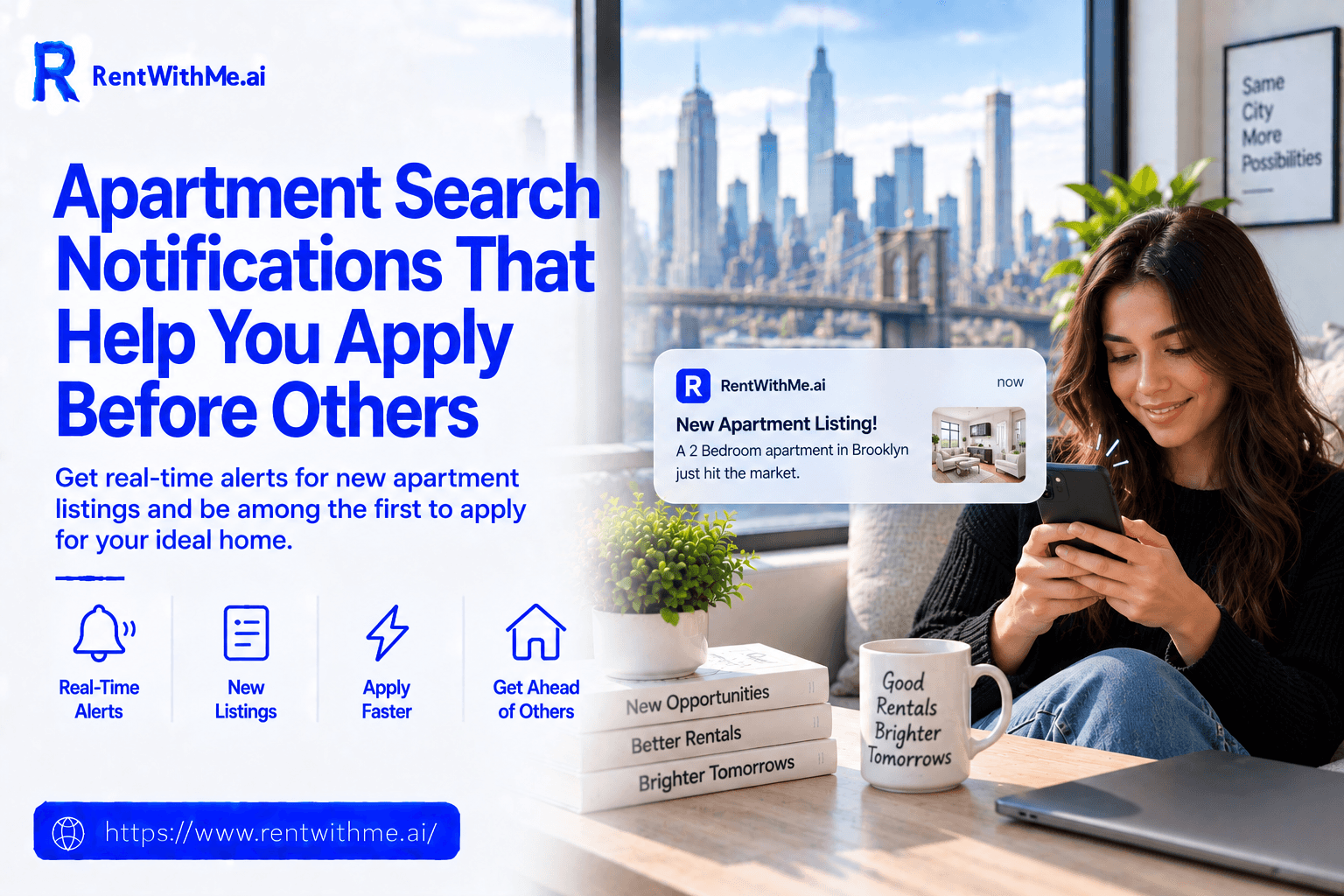
Apartment Search Notifications That Help You Apply Before Others
Introduction
Finding a suitable apartment often requires more than browsing rental listings. Desirable properties can attract serious renter interest shortly after appearing online. Apartment search notifications help renters discover promising opportunities considerably faster.
These notifications reduce the delay between property publication and renter awareness. Instead of repeatedly refreshing websites, renters receive relevant listing updates automatically. That advantage can become valuable when rental inventory moves quickly.
However, receiving a notification first does not guarantee a successful application. Renters still need realistic budgets, organized documents, and clear priorities. Speed becomes useful only when preparation supports confident decision-making.
Poorly configured notifications can actually make apartment hunting more difficult. Excessive updates create distractions while weak filters produce unsuitable property matches. A thoughtful notification strategy keeps attention focused on realistic rental opportunities.
The objective should never involve applying blindly before every competing renter. Instead, renters should shorten unnecessary delays between discovery and informed action. Proper notifications make that balance easier throughout demanding apartment searches.
Understand How Apartment Search Notifications Work
Apartment search notifications usually begin with saved renter search criteria. Platforms monitor available inventory for properties matching those selected preferences. Matching listings can then trigger automatic updates through different channels.
Mobile push notifications often provide the fastest awareness of new listings. Email notifications can provide additional details within a familiar communication channel. In-app updates keep new matches organized inside individual rental platforms.
Some services also provide personalized recommendations beyond traditional saved search filters. These systems may consider several preferences when identifying potentially relevant apartments. Personalized matching can broaden discovery without requiring constant manual browsing.
Notification timing varies considerably among different rental websites and applications. Some platforms send updates immediately while others provide scheduled summaries. Renters should understand these differences before depending heavily on notifications.
Remember that notification systems depend on available platform listing information. They cannot guarantee current availability after renter interest begins increasing. Every promising notification still requires appropriate screening and later verification.

Understand the Difference Between Alerts and Notifications
Apartment alerts and notifications often perform similar functions within rental platforms. However, understanding their differences can improve how renters configure searches. Saved-search alerts usually monitor criteria established directly by users.
Notifications represent the messages delivered after relevant platform activity occurs. They may announce new listings, updated properties, or personalized recommendations. Some notifications may appear without matching a traditional saved search exactly.
Daily summaries usually combine several matching properties into one scheduled update. This approach works well when immediate action remains less important. Renters can review multiple opportunities together without frequent interruptions.
Instant notifications provide faster awareness when newly listed apartments appear. They become particularly useful during competitive or time-sensitive apartment searches. Their usefulness depends heavily on accurate and focused search criteria.
Recommendation notifications deserve slightly different treatment from saved-search alerts. Their matching logic may include preferences beyond clearly visible filters. Review these recommendations carefully before assuming they satisfy essential requirements.
Define Your Rental Priorities Before Activating Notifications
Notifications become valuable only when they reflect realistic apartment requirements. Begin by defining priorities before creating multiple automated searches. Clear standards make incoming listings considerably easier to evaluate quickly.
Establish a comfortable rental budget using actual household financial circumstances. Separate your preferred rent from your absolute comfortable maximum. This distinction prevents competitive pressure from quietly increasing housing expenses.
Choose neighborhoods supporting work, transportation, errands, and regular personal activities. Consider nearby alternatives providing similar practical advantages at different prices. Location flexibility can expand opportunities without weakening important daily requirements.
Determine realistic bedroom and bathroom needs based on household functionality. Then identify essential features capable of changing your rental decision. These requirements should remain consistent when exciting notifications arrive unexpectedly.
Finally, establish a move-in window matching your current housing obligations. Timing determines whether otherwise excellent properties remain practical choices. Clear preparation turns rapid notifications into faster, more confident screening.
Apartment Search Notification Comparison Table
| Notification Type | Delivery Speed | Best Purpose | Main Benefit | Possible Drawback | Best Search Situation |
|---|---|---|---|---|---|
| Instant push notification | Usually immediate | New listing awareness | Supports faster review | Can become distracting | Competitive active searches |
| Email notification | Fast or scheduled | Detailed listing updates | Easy information access | Inbox can become crowded | Regular apartment searching |
| Daily summary | Scheduled daily | Organized property review | Reduces interruptions | Slower discovery | Flexible search timelines |
| In-app notification | Platform dependent | Tracking platform activity | Keeps matches centralized | Requires application checking | Multi-platform renters |
| Personalized recommendation | Platform dependent | Broader property discovery | Finds unexpected matches | Recommendations need screening | Renters with flexible preferences |
No single notification format works perfectly for every apartment hunter. Search urgency should determine which delivery methods receive priority. Competitive situations may justify faster updates than early-stage rental research.
Combine notification types only when each method provides practical additional value. Receiving identical updates everywhere can create unnecessary digital clutter. Your system should accelerate discovery without overwhelming your attention.

Set a Realistic Price Range for Faster Decisions
A clear rental budget makes rapid notification screening considerably easier. Renters can immediately reject properties exceeding established financial boundaries. This prevents unnecessary research into apartments that remain financially unsuitable.
Set a preferred monthly rent that supports comfortable household spending. Establish a separate maximum for unusually strong rental opportunities. Your maximum should remain responsible rather than emotionally expandable.
Consider predictable housing expenses beyond the advertised monthly rental amount. Utilities, transportation, internet, parking, and laundry can affect affordability. Complete financial thinking helps renters compare notifications more accurately.
A cheaper apartment may require significantly greater monthly transportation spending. Another property could include services reducing other household expenses. Headline rent alone cannot reveal these important financial differences.
Competitive conditions should never automatically justify exceeding comfortable financial limits. Faster applications cannot repair an unsustainable monthly housing commitment. Budget preparation protects renters when attractive listings create urgency.
Create Location Notifications Around Practical Neighborhoods
Location notifications should reflect neighborhoods you would genuinely consider living within. Begin with preferred areas supporting your most important daily routines. These searches usually deserve the highest notification priority.
Create additional searches around nearby neighborhoods offering comparable transportation access. Alternative areas can sometimes provide stronger inventory or better value. Geographic flexibility works best when every included location remains practical.
Transit-connected neighborhoods may deserve consideration despite greater physical distance. Efficient transportation can make farther apartments surprisingly convenient for commuters. Map-based research helps identify these useful geographic alternatives.
Avoid creating notifications across huge areas merely to increase listing volume. More properties create little value when most locations remain unsuitable. Every notification should have a realistic chance of becoming actionable.
Extremely narrow boundaries can create the opposite problem during apartment searching. Strong properties may sit slightly outside preferred neighborhood borders. Reasonable flexibility can reveal opportunities without changing your broader location priorities.

Configure Essential Property Requirements Carefully
Essential requirements should eliminate apartments that cannot support household needs. Bedroom counts provide one obvious example for many renters. Set these filters according to actual occupancy and functional requirements.
Bathroom needs may also matter for larger households or particular routines. However, additional bathrooms can significantly reduce available affordable inventory. Keep requirements realistic rather than automatically choosing ideal configurations.
Pet eligibility becomes essential when existing animals will occupy the apartment. Accessibility requirements can determine whether properties remain usable at all. These filters deserve priority because compromises may become impossible.
Laundry or parking can represent genuine necessities for certain households. Other renters may consider those features convenient rather than mandatory. The distinction should reflect real routines rather than general preferences.
Platform information can sometimes remain incomplete within detailed property filters. Therefore, essential features eventually require confirmation from stronger sources. Notifications provide screening assistance rather than absolute guarantees about property suitability.
Keep Optional Amenities From Blocking Strong Listings
Optional amenities can make rental properties more attractive during apartment searching. Fitness centers, rooftops, lounges, and outdoor areas often appear appealing. However, requiring them can dramatically reduce available notification matches.
Ask whether each amenity would genuinely influence your final rental decision. Features that simply sound enjoyable should usually remain flexible. This keeps strong apartments visible despite lacking secondary conveniences.
Luxury finishes deserve similar treatment unless they hold unusual personal importance. Attractive countertops cannot compensate for difficult commutes or unaffordable rent. Practical housing fundamentals should remain stronger than decorative presentation.
Consider evaluating optional amenities after notifications identify otherwise suitable properties. This approach protects inventory while preserving meaningful comparison opportunities. Finalists can then receive deeper evaluation across secondary preferences.
Strong notification settings distinguish necessities from features that merely improve desirability. That distinction becomes particularly valuable when rental inventory remains competitive. Flexible preferences create options without weakening essential household standards.

Match Notification Speed With Search Urgency
Notification frequency should change according to your apartment search timeline. Renters moving soon may benefit from immediate new-listing notifications. Earlier researchers may find constant updates unnecessary and distracting.
Instant notifications provide an advantage when suitable properties attract attention quickly. They shorten the time between listing publication and renter awareness. However, they also require disciplined screening to remain useful.
Daily summaries work better when renters can tolerate slower property discovery. They group several opportunities into convenient scheduled review periods. This format can reduce interruptions during work or personal responsibilities.
Renters should increase notification urgency as realistic move dates approach. Earlier searches can focus more heavily on understanding available inventory. Later searches often require faster responses to strong opportunities.
Notification speed should never create pressure to skip important evaluation. Faster awareness simply gives renters additional time for thoughtful action. Preparation determines whether that extra time becomes genuinely useful.
Create Several Purposeful Saved Searches
A small collection of strategic searches can improve notification coverage significantly. Each search should represent a distinct and realistic rental approach. Avoid creating multiple searches differing only through minor optional preferences.
One search can focus closely on your most preferred neighborhood. Another might prioritize stronger affordability across several acceptable locations. Both strategies address different priorities while preserving essential household requirements.
A commute-friendly search can emphasize locations supporting practical transportation routines. Meanwhile, a flexible backup search can widen geographic options carefully. These alternatives protect renters when preferred inventory becomes temporarily limited.
Keep fundamental requirements consistent across searches whenever those needs remain nonnegotiable. Change flexible criteria strategically rather than rebuilding everything repeatedly. This structure makes notification results easier to understand and compare.
Review saved searches after gathering several weeks of meaningful market evidence. Remove strategies that consistently produce properties you would reject. Useful searches should become more refined as your experience increases.

Avoid Overlapping Notifications
Overlapping searches can make identical properties appear repeatedly throughout your notifications. This repetition creates noise without increasing actual rental opportunities. It can also distort your perception of available inventory.
Compare saved search criteria whenever duplicate notifications become unusually common. Searches with nearly identical settings may deserve consolidation. Reducing overlap makes genuinely new listings easier to recognize.
Multiple platforms can also generate notifications for identical rental properties. This duplication can still provide useful information during verification. Different sources may contain additional photographs or updated property details.
Track repeated properties by address instead of treating notifications separately. This keeps your active apartment inventory more accurate. It also prevents repeated listings from cluttering serious candidate comparisons.
Your notification system should emphasize meaningful new information rather than repetition. Every unnecessary alert consumes attention that stronger opportunities might need. Cleaner notifications support faster and more reliable apartment screening.
Prepare a Fast Listing Screening Routine
Fast screening allows renters to evaluate notifications without making rushed decisions. Begin with several criteria capable of eliminating unsuitable apartments immediately. Consistency makes this process easier as notification volume increases.
Check rent first against your established preferred and maximum amounts. Then evaluate location, availability, bedrooms, and essential household features. These details usually determine whether deeper research deserves your time.
Do not begin by studying attractive photographs or decorative finishes extensively. Visual appeal can create attachment before practical suitability receives evaluation. Functional requirements should guide the earliest screening stage.
Promising properties can then move into deeper research and verification. Obvious mismatches should leave consideration without unnecessary additional browsing. This routine protects both time and decision-making energy.
Practice the same screening order whenever important notifications arrive. Repetition makes quick evaluation increasingly natural and dependable. A consistent process helps renters respond faster without weakening established standards.

Build an Apartment Search Tracker Before Notifications Increase
A central apartment tracker becomes valuable once several notifications arrive daily. It prevents important property details from becoming scattered across platforms. Create the system before notification volume becomes difficult managing.
Record property address, listing source, and notification date consistently. Include advertised rent, availability, and essential property information. Add verification status once direct confirmation begins.
Track your next required action for every serious apartment candidate. That action might involve research, contact, touring, or application preparation. Clear next steps prevent promising listings from becoming forgotten.
Duplicate properties should remain connected within one primary tracker entry. Note additional sources whenever they provide meaningful information. This structure keeps your shortlist accurate while preserving useful comparison evidence.
Update records as soon as important property information changes. Remove unavailable or rejected candidates from your active viewing area. Current organization helps renters respond faster when stronger notifications appear.
Recognize Which Notifications Deserve Immediate Attention
Not every apartment notification deserves an immediate response or detailed investigation. Strong opportunities usually satisfy several important conditions simultaneously. Recognizing these conditions helps renters direct attention where it matters.
The property should fall within comfortable financial boundaries established beforehand. Its location should support realistic transportation and everyday routines. Move-in timing should also align reasonably with your housing transition.
Essential features should appear compatible with your household requirements. The listing should provide enough information for meaningful initial evaluation. Major missing details can still require verification before further action.
A strong notification does not automatically justify immediate application submission. Instead, it deserves faster screening, verification, and potentially direct communication. This distinction protects renters while preserving valuable timing advantages.
Prioritize notifications according to suitability rather than visual presentation alone. Attractive photographs should never outrank budget or essential requirements. Strong apartment opportunities combine practical fit with acceptable overall tradeoffs.

Avoid Treating Every New Notification as an Emergency
Instant notifications can create an artificial feeling that decisions require immediate action. That emotional pressure can weaken otherwise careful rental judgment. Renters should distinguish timely responses from impulsive commitments.
You do not need to contact every property immediately after notification. First confirm whether the apartment passes basic screening standards. A few focused minutes can prevent unnecessary conversations and applications.
Never increase your budget simply because one notification appears unusually attractive. Financial boundaries should remain established before competitive pressure begins. Emotional exceptions can create expensive commitments lasting throughout the lease.
Avoid submitting applications when important property details remain seriously unclear. Speed becomes dangerous when it replaces essential verification. A suitable apartment should survive reasonable questions before receiving significant commitment.
Notifications should create opportunities for faster informed decisions rather than panic. Prepared renters can move quickly without abandoning practical standards. That balance provides the real advantage behind automated apartment updates.
Prepare Questions Before Promising Listings Appear
Prepared questions can reduce delays after strong apartment notifications arrive. Create a short collection covering details requiring frequent confirmation. This prevents renters from composing every inquiry from scratch.
Ask whether the apartment remains currently available for your timeframe. Confirm the advertised rent and any conditions affecting pricing. These questions immediately address two major sources of rental uncertainty.
Request clarification about recurring expenses when listings provide incomplete information. Essential features should also receive confirmation before unnecessary property visits. Focus questions on information capable of changing your decision.
Ask about the application process once a property survives initial verification. Understanding required steps can improve readiness if interest continues. Avoid requesting unnecessary application details for apartments already failing basic requirements.
Keep questions concise so representatives can answer them efficiently. Long unfocused messages can slow communication during competitive searches. Prepared communication supports speed while preserving thoughtful rental evaluation.
Prepare to Turn Fast Notifications Into Informed Action
The greatest notification advantage comes from reducing unnecessary discovery delays. However, discovery represents only the beginning of successful apartment searching. Promising properties still require careful investigation before applications begin.
Open the complete listing immediately when a strong notification arrives. Compare descriptions, photographs, floor plans, and available property details. Look specifically for information capable of changing your initial assessment.
Check whether the listing appears genuinely recent or recently updated. Reposted properties may trigger notifications without representing completely new inventory. Listing freshness provides context but cannot guarantee current availability.
Record missing information before contacting the appropriate property representative. Focus first on rent, availability, timing, and essential requirements. Clear questions make verification faster when competition requires efficient communication.
Part Two will move from notification screening toward rapid property verification. It will cover maps, costs, communication, tours, and application preparation. These steps help renters act sooner without sacrificing careful rental decisions.
Review Promising Notifications Immediately and Systematically
A promising apartment notification should trigger a clear screening process. Open the listing quickly, but evaluate it using established priorities. Speed matters most when renters already know what deserves attention.
Begin with rent, location, availability, and essential property requirements. These categories usually determine whether a listing deserves deeper review. Obvious mismatches should leave consideration before consuming additional search time.
Avoid studying photographs first when practical details remain unresolved. Attractive visuals can create emotional interest before affordability gets checked. Functional screening should happen before presentation influences judgment.
Strong candidates can then move into verification and comparison immediately. This approach preserves timing advantages without encouraging impulsive applications. Fast awareness becomes useful only when followed by disciplined evaluation.
Confirm Listing Freshness Before Acting
New notifications do not always represent newly created apartment listings. Some platforms may alert users when existing properties receive updates. Reposted listings can also appear fresh without being genuinely new.
Check posting dates and recent update information whenever available. This context helps renters understand how recently the listing changed. However, freshness alone does not prove current availability.
A listing posted minutes ago can still attract immediate renter interest. An older listing might remain genuinely available for ordinary reasons. Direct confirmation matters more than assumptions based only on timing.
Track when each property first entered your search system. Repeated notifications become easier to recognize with organized records. This prevents one apartment from appearing like several separate opportunities.
Read Complete Listings Before Contacting Properties
Notification previews usually provide only limited property information. Open the complete listing before contacting any representative directly. Important details may appear deeper within descriptions or building information.
Read the full description while checking against your established priorities. Look for pricing conditions, timing, utilities, and relevant property features. Missing information should become specific questions for later confirmation.
Review every available photograph instead of focusing on attractive highlights. Check whether bedrooms, bathrooms, storage, and kitchen areas appear clearly. Missing rooms may deserve clarification before scheduling a tour.
Floor plans can provide valuable context about layout and usable space. Compare them with photographs when both resources remain available. This review helps renters understand whether deeper investigation remains worthwhile.
Compare Notified Listings Across Multiple Sources
The same apartment can appear through several rental platforms simultaneously. Duplicate listings create useful opportunities for comparing available property information. Renters should examine differences before assuming all versions match.
Start by comparing advertised rent and stated availability dates. Then review move-in timing, bedroom counts, and important features. Significant differences should become questions requiring direct clarification.
One platform may provide better photographs or more complete descriptions. Another might display newer pricing or updated availability. Combining sources can therefore improve the quality of initial research.
Do not automatically trust the source showing the lowest price. Different update schedules can produce temporary inconsistencies across platforms. Verified current information should guide final affordability decisions.
Apartment Notification Verification Table
| Property | Notification Source | Notification Time | Advertised Rent | Availability | Verification Status | Next Action |
|---|---|---|---|---|---|---|
| Apartment A | Rental app | Recorded | Listed amount | Available | Pending | Confirm rent |
| Apartment B | Email alert | Recorded | Listed amount | Available soon | Partially confirmed | Ask about timing |
| Apartment C | AI match | Recorded | Listed amount | Available | Confirmed | Schedule tour |
| Apartment D | Marketplace | Recorded | Listed amount | Uncertain | Pending | Verify availability |
| Apartment E | Property alert | Recorded | Listed amount | Later date | Confirmed | Compare move-in timing |
Use this table to organize strong notifications as they arrive. Replace example entries with actual information from your active search. Consistent records make pending verification easier to manage.
Update statuses immediately after reliable information becomes available. Remove properties that clearly stop matching your household requirements. Your tracker should increasingly reflect verified rental opportunities.
Verify Important Details Before Applying
Before applying, confirm the information most likely to affect your decision. Current rent should remain at the top of that list. Promotional pricing can sometimes require additional explanation before comparison.
Availability deserves confirmation because rental inventory can change rapidly. Ask whether the apartment is still being offered to applicants. This prevents unnecessary applications after properties effectively leave the market.
Move-in timing should also match your actual housing transition reasonably. Confirm the date rather than assuming the listing remains current. Timing problems can create unnecessary lease overlap or temporary housing expenses.
Essential features deserve direct confirmation whenever household suitability depends upon them. Pet eligibility, accessibility, laundry, or parking may require questions. Filters and listing descriptions should support verification rather than replace it.
Use Maps to Screen Newly Notified Apartments
Mapping tools can quickly reveal whether a promising listing deserves further attention. Start by checking the apartment’s exact neighborhood position. Location descriptions inside listings may remain broad or marketing-focused.
Review nearby transportation, groceries, pharmacies, and important everyday services. Frequent destinations can strongly influence how convenient an apartment feels. Small geographic differences may create large lifestyle differences over time.
Check practical walking routes rather than straight-line distances only. Major roads or indirect paths can make nearby places less convenient. Maps help identify these issues before renters invest additional effort.
Use mapping research as a screening tool rather than final evidence. Neighborhood experience still requires physical observation when possible. However, maps can remove clearly impractical locations very quickly.
Check Commutes Before Spending Time on Applications
A strong listing can become unsuitable because of difficult transportation. Check realistic commute conditions before preparing formal application materials. This prevents renters from investing deeply in poor-location choices.
Measure complete travel from the apartment to frequent destinations. Include walking, transfers, waiting, and final destination access. Station proximity alone rarely explains actual commuting convenience.
Test routes during periods resembling your normal work or school schedule. Peak travel can differ substantially from quiet daytime estimates. Weekend service may also matter for some lifestyles.
Look for practical backup routes when transportation reliability remains important. Multiple good options can improve location value considerably. Commute tools help renters compare convenience alongside housing price.
Calculate Complete Monthly Costs Quickly
Fast decisions still require realistic financial analysis before applications begin. Advertised rent represents only one part of monthly housing costs. Other recurring expenses can materially change affordability.
Estimate utilities, internet, transportation, laundry, parking, and similar costs. Use the same categories across all serious rental candidates. Consistent financial comparison makes fast screening considerably more reliable.
A lower-rent apartment may require more expensive transportation every month. Another property could include services reducing outside household spending. Headline pricing alone cannot show these differences.
Replace estimates with confirmed information whenever reliable details become available. Quick calculations should remain conservative rather than artificially precise. The objective is protecting affordability during faster decision-making.
Contact Property Representatives Efficiently
Once a listing passes basic screening, contact representatives without unnecessary delay. Keep your message concise and specific to the property. Clear communication usually produces faster and more useful responses.
Identify the apartment and mention your intended move-in timeframe. Ask whether the listing remains available at the advertised rent. Include only unresolved questions capable of changing your interest.
Avoid long introductions or unrelated personal information in initial messages. Representatives need enough context to answer practical rental questions. Focused communication supports speed without sacrificing professionalism.
Record important answers immediately inside your apartment tracking system. This prevents details from becoming trapped inside scattered conversations. Organized communication helps renters compare several active opportunities quickly.
Prepare Application Materials Without Oversharing
Application preparation should begin before the ideal notification arrives. Keep commonly requested records organized and reasonably current. This reduces delays when verified apartments deserve prompt applications.
Store sensitive documents securely rather than sending them casually. Initial property inquiries generally require much less information. Formal application stages should use appropriate and verified submission channels.
Understand which records are likely required before you need them. This improves readiness without encouraging unnecessary disclosure. Prepared renters can move quickly while still protecting personal information.
Review documents periodically during longer apartment searches for accuracy. Outdated information can create avoidable delays later. Organized records improve both speed and confidence during serious applications.
Use Notifications Strategically in Competitive Rental Markets
Competitive markets make notification speed especially valuable for renters. Immediate updates can shorten the time between listing and review. That advantage matters when desirable apartments attract attention quickly.
Keep filters focused enough that most notifications remain realistic opportunities. Broad alerts waste valuable attention during fast-moving searches. High-quality notifications make quicker screening significantly easier.
Maintain budget and essential household requirements despite competitive pressure. Speed should never justify financially uncomfortable or impractical housing. Strong standards protect renters after temporary urgency disappears.
Prepare communication templates and application records before listings appear. This reduces avoidable delays after suitable opportunities arrive. Readiness creates more advantage than simply receiving the earliest notification.
Track Response Times and Listing Outcomes
Tracking timing can reveal how efficiently your notification system performs. Record when promising notifications arrive and when you review them. Then note when representatives receive your inquiries.
Track whether tours or applications followed each initial notification. Record when properties become unavailable before further action. These outcomes can reveal whether your process needs faster review.
Do not obsess over every minute unless market conditions genuinely require it. The goal is identifying repeated delays within your workflow. Small improvements can reduce missed opportunities over several searches.
Response tracking also shows whether certain alert platforms perform better. Some sources may consistently provide earlier or more relevant information. That evidence can guide which notifications deserve priority.
Adjust Notifications Based on Real Search Results
Search results should influence how your notification settings evolve over time. Repeated mismatch patterns provide useful evidence for adjustment. One weak listing should not automatically trigger major changes.
If most notifications exceed budget, strengthen your price boundaries. Location problems may require narrower geographic settings. Repeated missing features could justify adjusting essential filters.
When notifications become too scarce, review optional restrictions first. Amenities or overly narrow boundaries may block suitable inventory. Preserve essential requirements before loosening financially important limits.
Adjustments should reflect evidence gathered from actual market activity. This creates better notification quality without constant unnecessary experimentation. Strong searches become more refined as renters understand available inventory.
Use AI-Powered Notifications Without Depending on Them Completely
AI-powered notifications can broaden discovery beyond simple search filters. They may combine lifestyle, location, budget, and feature preferences. This can reveal apartments renters might otherwise overlook.
However, personalized recommendations still depend on available listing data. They may misinterpret preferences or emphasize less important similarities. Every recommendation requires the same independent screening as other listings.
Use AI notifications to reduce irrelevant browsing rather than replace judgment. They should support established priorities instead of redefining them. Human evaluation remains essential when balancing affordability and lifestyle tradeoffs.
Verify rent, availability, and property details regardless of matching quality. A strong algorithmic match can still contain outdated information. Technology improves discovery without guaranteeing current suitability.
Use Apartment Tours as Rapid Verification Tools
Apartment tours can provide information that digital notifications cannot fully deliver. They reveal actual layout, condition, noise, light, and building experience. Use tours to test expectations formed during online screening.
Compare real rooms against listing photographs and available floor plans. Notice whether dimensions feel practical for your existing furniture. Attractive staging should not distract from functional shortcomings.
Check essential property features during the visit whenever possible. Confirm storage, laundry, accessibility, or parking arrangements directly. These observations help determine whether an application deserves serious consideration.
Observe common areas and immediate surroundings before leaving. Building quality and street conditions can influence everyday satisfaction. Tours transform digital opportunities into more reliable real-world evaluations.
Document Tours Immediately for Faster Decisions
Fast decisions become easier when tour information stays organized. Record observations immediately after each property visit. Similar apartments can quickly become difficult to distinguish later.
Write down strengths, concerns, and remaining unanswered questions. Include condition, layout, noise, light, and building impressions. Compare these observations with information originally shown online.
Take permitted photographs when they support later comparison effectively. Focus on permanent property features and practical room dimensions. Organized documentation reduces reliance on memory during time-sensitive decisions.
Update your main apartment tracker with tour results promptly. This keeps verification, research, and firsthand observations connected. Strong records make final application decisions considerably faster and clearer.
Build a Verified Shortlist Before Applying
A verified shortlist should contain properties you would genuinely rent. Remove stale listings and apartments failing important household requirements. Strong candidates should remain affordable and practically suitable.
Confirm current availability for every finalist before submitting applications. Update rent and complete cost calculations when new information appears. This keeps your shortlist grounded in current reality.
Compare commute quality, location, layout, condition, and essential features consistently. One impressive advantage should not hide several important compromises. Overall suitability matters more than winning a single category.
Maintain realistic backup options when competition remains especially strong. Part Three will explain applications, final verification, and lease review. Those steps turn fast notifications into confident rental commitments.
Know When a New Listing Deserves an Application
Not every promising notification should immediately become a formal rental application. A strong candidate should first satisfy your essential financial and practical requirements. This protects speed from turning into unnecessary application activity.
Affordability should remain comfortable after considering complete monthly housing costs. Location should support transportation, errands, work, and other regular routines. Move-in timing should also fit your current housing situation reasonably well.
Essential apartment features should already appear confirmed or strongly supported. Major unresolved concerns deserve clarification before sensitive documents are submitted. A suitable listing should survive careful screening before receiving serious commitment.
Application readiness becomes stronger when remaining compromises feel manageable long term. Minor tradeoffs may be acceptable when important priorities remain satisfied. Focus on overall suitability rather than chasing perfect apartment combinations.
Prepare to Apply Quickly Without Rushing
Fast applications usually depend on preparation completed before ideal listings appear. Renters should organize documents, budgets, questions, and priorities ahead of time. This reduces avoidable delays once strong opportunities become available.
Keep commonly requested application materials organized within a secure personal system. Review them periodically so outdated information does not create problems. Prepared records can make competitive application processes considerably easier.
Know your comfortable financial boundaries before any time-sensitive decision appears. Clear limits prevent urgency from changing what you can realistically afford. Strong preparation supports quick action without weakening financial discipline.
Create a consistent review process for every serious apartment candidate. Confirm the same important categories before submitting each application. Repetition makes fast decisions easier without sacrificing important evaluation standards.
Verify Application Channels Before Sharing Sensitive Information
Rental applications can involve private identification and financial documentation. Verify the receiving party before sending sensitive information anywhere. Secure handling should remain part of every competitive rental strategy.
Confirm that the representative is legitimately connected with your selected property. Compare application instructions against communication already received through verified channels. Unexpected changes deserve clarification before documents are submitted.
Ask which materials are required and why they are necessary. Avoid sending extra information simply because it remains readily available. Responsible document sharing supports both speed and personal information protection.
Payment instructions also deserve careful review before any transaction occurs. Confirm amounts, purposes, and legitimate recipients whenever applicable. Urgency should never eliminate reasonable financial verification.
Final Fast-Response Apartment Comparison Table
| Property | Notification Source | Confirmed Rent | Complete Monthly Cost | Commute | Tour Result | Verification Status | Application Status |
|---|---|---|---|---|---|---|---|
| Apartment A | Instant app alert | Confirmed | Calculated | Strong | Positive | Verified | Ready to apply |
| Apartment B | Email notification | Confirmed | Calculated | Moderate | Positive | Verified | Comparing |
| Apartment C | AI recommendation | Confirmed | Calculated | Strong | Excellent | Verified | Application started |
| Apartment D | Marketplace alert | Pending | Incomplete | Moderate | Not toured | Partial | Verification required |
| Apartment E | Property update | Confirmed | Calculated | Excellent | Positive | Verified | Timing review |
Use this table once several promising notifications become serious rental candidates. Replace example entries with information gathered during your actual search. Consistent comparison makes tradeoffs easier to evaluate under time pressure.
Do not let one impressive category dominate the entire final decision. Strong apartments usually perform reasonably across several important areas. Verified information should carry more weight than attractive notification presentation.
Keep Backup Listings Active During Applications
A submitted application does not guarantee that a rental agreement follows. Competitive properties may receive several qualified applicants at once. Keeping backups active protects your search from unnecessary restarts.
Backup apartments should still satisfy your important housing requirements realistically. Do not keep weak properties simply because they remain available. Strong alternatives should represent homes you could genuinely accept.
Continue monitoring limited notifications while primary applications remain unresolved. Focus only on searches producing realistic backup opportunities. This preserves flexibility without returning toward excessive browsing.
Reduce search intensity once applications become highly promising or approved. Constantly comparing new properties can create unnecessary second-guessing. Backup strategies should support confidence rather than weaken it.
Understand When Notifications Have Completed Their Purpose
Notifications exist primarily to help renters discover suitable properties faster. Their role becomes smaller after verified finalists enter active applications. Continuing every alert indefinitely can create distracting new comparisons.
Strong search systems should eventually move from discovery toward decision-making. When enough realistic options exist, additional inventory adds diminishing value. Attention should then shift toward verification and written rental information.
Turn off duplicate or low-value alerts during serious application stages. Keep only searches protecting meaningful backup options if necessary. This creates a calmer environment for evaluating final housing choices.
Notifications succeed when they reduce search delays and eventually become unnecessary. The goal is not receiving updates forever. The goal involves reaching suitable, verified rental opportunities efficiently.
Review Written Rental Terms Before Final Commitment
Written rental documents deserve careful attention before final agreements become binding. They contain information that notifications and listings cannot fully establish. Renters should compare written terms against previously verified expectations.
Confirm monthly rent and lease dates within the actual documents. Any meaningful difference from earlier information should receive clarification. Written obligations deserve stronger attention than marketing or messaging summaries.
Review utilities, recurring costs, and other household responsibilities carefully. These details can affect complete affordability after moving. Update financial calculations whenever written terms change earlier assumptions.
Policies involving pets or building responsibilities may also influence suitability. Final terms should align reasonably with expectations formed throughout searching. Clear documentation supports confident decisions after rapid notification-based discovery.
Avoid Common Notification Mistakes
Creating too many notifications can make apartment searching less efficient. Repeated alerts consume attention without increasing realistic rental options. Purposeful searches usually outperform maximum notification volume.
Another mistake involves configuring filters too broadly or too narrowly. Broad searches produce excessive mismatches while restrictive searches hide opportunities. Balanced criteria should protect essentials while preserving reasonable flexibility.
Some renters also apply immediately without confirming important listing information. Speed becomes risky when availability or rent remains uncertain. Verification should remain part of every strong application workflow.
Increasing budgets impulsively after competitive notifications creates another common problem. Attractive properties do not automatically justify uncomfortable monthly expenses. Financial boundaries should remain stable under rental pressure.
Ignoring complete costs can also distort fast affordability decisions significantly. Transportation and utilities may change the real value of apartments. Quick decisions still require complete financial thinking.
Avoid Notification Fatigue During Competitive Searches
Notification fatigue can reduce your ability to recognize strong opportunities. Constant updates eventually make every new listing feel equally unimportant. Focused settings help preserve attention for meaningful matches.
Prioritize immediate notifications only for high-value saved searches. Lower-priority searches can use summaries or less frequent updates. This creates balance between responsiveness and manageable daily interruption.
Disable duplicated searches producing the same apartment repeatedly. Remove alerts that consistently deliver properties outside your requirements. Every active notification should justify the attention it demands.
Schedule dedicated review periods when your situation allows greater flexibility. Structured searching reduces the temptation to monitor platforms constantly. Decision quality often improves when renters protect their attention deliberately.
Know Which Notifications Provide the Greatest Advantage
Immediate new-listing notifications provide value when strong properties move quickly. They help renters discover suitable apartments before manual searches would. Their usefulness increases when filters remain focused and realistic.
Price-based notifications can protect attention within established financial boundaries. Neighborhood notifications support renters targeting specific practical areas. Essential-feature alerts can remove listings that obviously cannot work.
Personalized matching notifications may reveal additional properties beyond strict filter combinations. These recommendations can broaden discovery without requiring more manual searching. They still need the same independent evaluation as other alerts.
The strongest notification mix depends on your actual apartment search priorities. No universal configuration fits every renter equally well. Purposeful settings create more value than simply enabling everything.
Know Which Information Always Requires Direct Confirmation
Current availability should always receive confirmation before renters make major commitments. A recent notification cannot guarantee the apartment remains open. Fast-moving inventory can change shortly after platform updates.
Actual rent also deserves direct clarification when pricing appears complicated. Concessions or other conditions may influence what renters truly pay. Final affordability should reflect the most reliable available information.
Move-in timing should align with your current housing transition requirements. Essential features should also receive confirmation before applying. Filters may not explain every property-specific condition completely.
Recurring costs and application requirements can affect suitability significantly. Ask direct questions whenever these details remain unclear. Strong confirmation reduces the risk of acting quickly on incomplete information.
Know When Faster Action Becomes Unnecessary Pressure
Fast action stops being helpful when important information remains missing. Incomplete details can make serious financial decisions unnecessarily risky. Renters should pause applications when essential facts remain unresolved.
Budget concerns also deserve attention regardless of competitive conditions. A property exceeding comfortable affordability remains financially challenging after urgency disappears. Speed cannot transform unsuitable housing into sustainable housing.
Unverified property representatives create another reason to slow down. Sensitive documents should not move before legitimate connections become clear. Personal information protection should remain stronger than artificial time pressure.
Major compromises involving commute or household needs also require careful thought. Strong notifications should not force renters into obviously poor tradeoffs. Timely action works best when the property already fits.
Realistic Fast-Notification Apartment Search Scenarios
A busy professional may depend on immediate notifications throughout the workweek. Focused criteria can surface strong properties without constant manual browsing. That renter can then review listings during short scheduled breaks.
If a suitable apartment appears, prepared questions speed up verification. Organized documents can support a later application after confirmation. Preparation turns limited free time into an effective search advantage.
A first-time renter might feel pressured by every urgent-looking notification. Clear screening standards can reduce unnecessary emotional responses substantially. Only listings meeting essential requirements should move toward serious action.
A commuter may monitor several transportation-friendly neighborhoods simultaneously. Notifications can reveal affordable opportunities across different connected areas. Commute tools then identify which locations actually support daily travel.
A pet owner may receive fewer suitable apartment notifications overall. Pet-related requirements should remain firm while optional amenities stay flexible. Direct confirmation can clarify property-specific restrictions before applications begin.
These examples show that faster notifications help different renters differently. The advantage depends on preparation and clearly defined priorities. Technology works best when the renter already understands what matters.
Frequently Asked Questions About Apartment Search Notifications
How Quickly Should Renters Respond to New Listing Notifications?
Respond quickly when a listing clearly matches your established requirements. Begin with screening and verification rather than immediate application submission. Strong preparation can make this process both fast and careful.
Competitive markets may reward same-day communication for suitable properties. However, important affordability and legitimacy checks should remain intact. Speed should improve timing without eliminating sensible renter judgment.
Do Instant Notifications Improve Apartment Search Results?
Instant notifications can improve awareness of newly available rental properties. They reduce delays caused by repeated manual searching. This advantage matters most when desirable inventory receives strong attention.
However, instant delivery alone cannot improve weak search criteria. Poorly configured alerts simply deliver irrelevant properties faster. Strong filters remain necessary for useful notifications.
How Many Notification Searches Should Renters Create?
A few purposeful searches usually provide enough useful coverage. Each alert should represent a distinct and realistic apartment strategy. Overlapping notifications create repetition without improving meaningful inventory.
Remove searches that consistently produce identical or unsuitable properties. Add alerts only when they cover genuinely useful alternatives. Search quality remains more important than total notification quantity.
Should Renters Apply Immediately After Receiving Notifications?
Renters should screen and verify listings before applying whenever possible. A notification only confirms that a platform identified a potential match. It does not establish complete suitability.
Check affordability and essential requirements before beginning applications. Verify property information and application channels appropriately. Fast action should follow these steps rather than replace them.
Why Do Notified Properties Sometimes Become Unavailable Quickly?
Desirable properties may attract renter interest soon after appearing publicly. Listing updates can also lag behind actual application activity. Notifications therefore cannot guarantee continued availability.
Contact appropriate representatives after promising properties pass basic screening. Current confirmation provides better evidence than a listing status alone. Fast communication can reduce delays without guaranteeing final availability.
Can Notifications Miss Suitable Apartments?
Yes, overly restrictive filters can exclude apartments that might work well. Platform data may also categorize certain features inconsistently. Notifications should therefore complement rather than completely replace manual searching.
Occasional broader searches can reveal missed opportunities worth considering. Keep optional preferences flexible when inventory becomes limited. Essential requirements should remain stronger than convenience filters.
Complete Apartment Search Notification Checklist
- Establish your comfortable monthly rental budget before enabling notifications.
- Define preferred neighborhoods and realistic transportation-friendly alternatives clearly.
- Confirm your expected move-in window before building saved searches.
- Configure essential filters while keeping optional amenities reasonably flexible.
- Choose notification frequencies matching your actual apartment search urgency.
- Prepare commonly requested application materials before competitive listings appear.
- Create a fast screening routine for incoming property notifications.
- Track serious listings within one organized apartment search system.
- Verify rent, availability, and essential features before applying.
- Research maps and realistic commutes before pursuing unfamiliar locations.
- Calculate complete monthly housing costs before making financial commitments.
- Contact legitimate representatives through appropriate property communication channels.
- Document property tours and unresolved questions immediately afterward.
- Maintain strong backup apartments while primary applications remain pending.
- Reduce unnecessary notifications once verified finalists reach application stages.
Use this checklist throughout active notification-based apartment searching. Each step supports faster action without weakening important safeguards. Organized renters can respond efficiently because preparation already happened earlier.
Return to your priorities whenever competitive listings create unnecessary emotional pressure. Notifications should highlight opportunities rather than dictate rental decisions. Strong boundaries keep speed aligned with long-term housing suitability.
Final Advice for Applying Before Other Renters
The strongest advantage comes from preparing before attractive listings appear. Organized documents and clear priorities reduce unnecessary response delays. Preparation usually matters more than simply receiving notifications first.
Respond promptly when properties satisfy your established screening requirements. Review important information before emotional excitement starts influencing decisions. Strong opportunities deserve fast attention without automatic commitment.
Verify rent, availability, and essential apartment features before applying. Confirm legitimate application channels before sending sensitive documents. Fast verification protects renters while preserving competitive timing advantages.
Keep realistic backup properties active until your housing situation becomes secure. One promising application should not stop all useful searching immediately. Strong alternatives reduce pressure when rental competition remains unpredictable.
Most importantly, separate productive urgency from unnecessary fear-driven action. Apartment searching rewards prepared renters more consistently than reckless ones. Good notifications create time advantages when supported by organized decision-making.
Conclusion
Apartment search notifications can provide meaningful advantages during competitive rental searches. They reduce delays between listing publication and renter discovery. Faster awareness can create more time for verification and communication.
However, notifications alone do not help renters submit stronger applications. Preparation determines whether new listing information becomes genuinely useful. Clear budgets and priorities make rapid screening substantially easier.
Focused saved searches improve notification quality by reducing irrelevant matches. Budget and location should remain central within those searches. Essential requirements deserve stronger filtering than optional apartment amenities.
Notification speed should reflect how urgent the apartment search actually remains. Immediate alerts work well for competitive active searches. Daily summaries can support renters whose moving timelines remain more flexible.
A consistent screening routine helps renters review new listings efficiently. Price and location should receive attention before attractive photographs. This protects practical decision-making when time feels limited.
Maps and transportation research can quickly eliminate unsuitable notified properties. Complete housing calculations also reveal affordability beyond advertised monthly rent. These tools help renters avoid fast applications to poor matches.
Verification remains essential regardless of how quickly notifications arrive. Current rent and availability can change after platform updates. Important features and application requirements should also receive direct confirmation.
Prepared application materials can reduce delays once verified opportunities appear. Sensitive documents should remain secure until legitimate submission channels become clear. Organization supports speed without weakening privacy or judgment.
Apartment tours provide valuable evidence when serious candidates reach that stage. They reveal physical characteristics digital listings cannot completely communicate. Immediate documentation then supports faster final comparisons.
Ultimately, apartment notifications provide timing rather than certainty. Renters still need research, verification, financial discipline, and thoughtful judgment. When those pieces work together, notifications can support faster and stronger applications.