
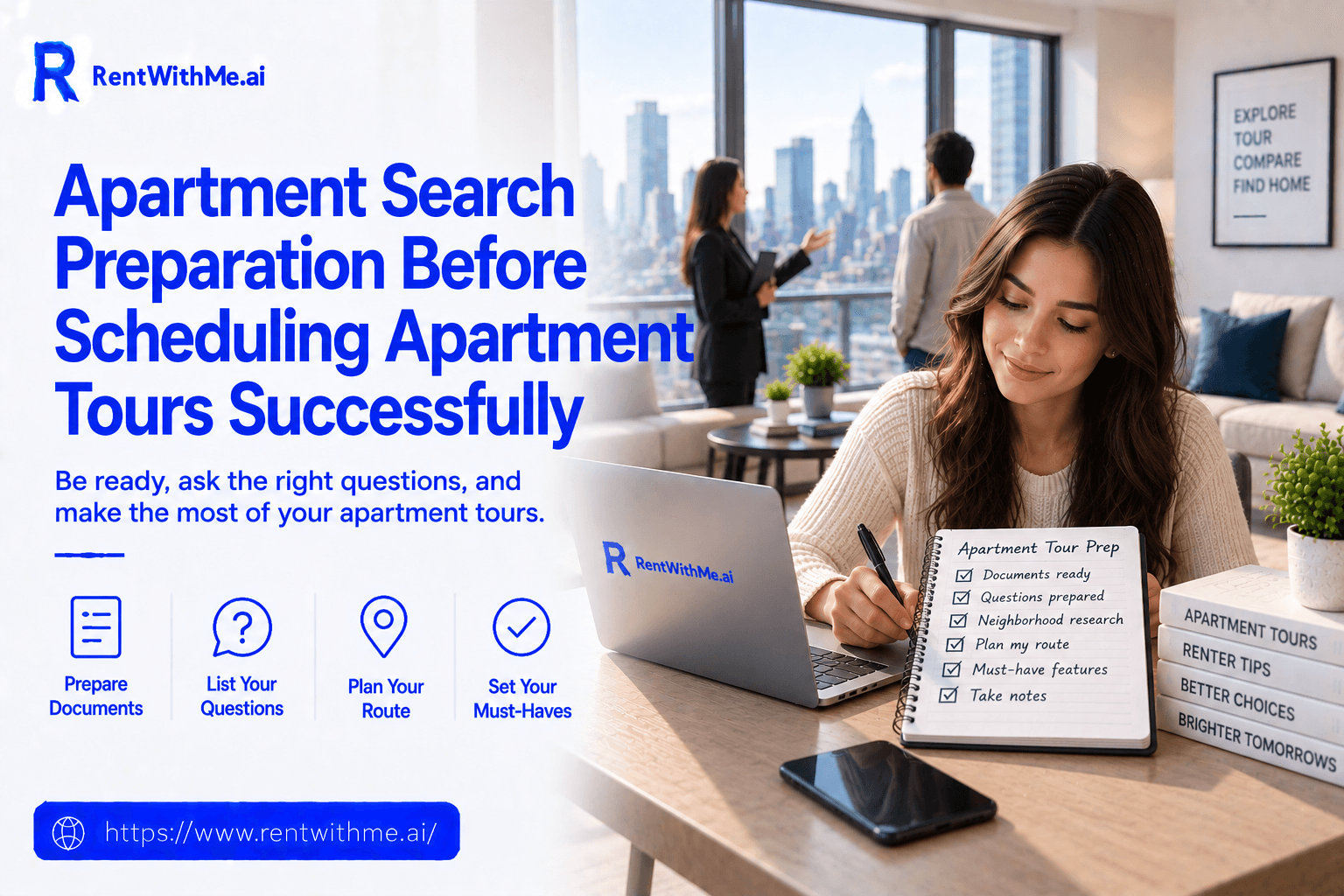
Apartment Search Preparation Before Scheduling Apartment Tours Successfully
Introduction
Successful apartment tours begin long before renters arrive at any property. Strong preparation helps eliminate unsuitable apartments before valuable time gets wasted. It also makes every scheduled viewing more focused, organized, and productive.
Many renters schedule tours immediately after seeing attractive listing photographs online. That approach can create unnecessary appointments with apartments that never fit. Better preparation connects each tour with realistic financial and household priorities.
The purpose of apartment touring should involve confirming genuine rental suitability. Every appointment should answer questions that online listings cannot resolve completely. Preparation turns property visits into structured evaluations instead of casual browsing.
Define Your Apartment Needs Before Scheduling Tours
Before scheduling tours, determine exactly what your household genuinely requires. Clear requirements make it easier to reject obviously unsuitable listings quickly. They also protect important needs when attractive properties create emotional distractions.
Begin with practical factors affecting your everyday household routine consistently. Bedrooms, bathrooms, storage, accessibility, and location may require serious consideration. Different households will naturally assign different importance to these apartment features.
Separate genuine requirements from features that would simply improve overall comfort. Optional preferences can remain flexible when stronger apartment opportunities become available. This distinction creates more realistic choices without weakening essential household needs.

Establish a Comfortable Rental Budget First
Your budget should be established before scheduling any serious apartment tours. Attractive properties can easily encourage renters to stretch spending unexpectedly. Clear financial boundaries reduce that risk before emotions influence decisions.
Set a preferred monthly rental range based on sustainable household finances. Then create a firm maximum representing your comfortable upper spending limit. Most properties you tour should remain comfortably below that maximum.
Avoid treating your maximum as the normal target for apartment searching. It should remain a boundary used only when value justifies spending. Financial comfort usually matters more than premium finishes or impressive amenities.
Calculate the Complete Cost of Potential Apartments
Monthly rent represents only one portion of complete housing expenses. Other recurring costs can significantly change whether an apartment remains affordable. These expenses deserve consideration before you invest time scheduling tours.
Utilities, internet, laundry, and parking can add predictable monthly spending. Transportation expenses may also change considerably between different apartment locations. Include these estimates whenever comparing financially realistic touring candidates.
A lower-rent apartment may create higher commuting or service expenses. Another property could cost more while reducing several recurring household costs. Complete housing cost provides better guidance than advertised rent alone.

Confirm Your Realistic Move-In Timeline
Move-in timing should be established before active apartment touring begins. Your current lease usually provides the starting point for planning. Clear timing prevents appointments with properties having incompatible availability dates.
Review your current lease expiration and any relevant notice responsibilities. Then decide which moving dates would realistically work for you. A small range can provide useful flexibility without creating planning confusion.
Consider whether limited lease overlap would make moving significantly easier. Additional days may simplify packing, cleaning, and furniture transportation. However, overlapping housing costs should remain manageable within your budget.
Choose Target Neighborhoods Before Booking Tours
Neighborhood selection should happen before multiple apartment appointments enter your schedule. Start with locations supporting your financial and transportation requirements. Then consider everyday services and lifestyle preferences within those areas.
Think about groceries, healthcare, recreation, dining, and regular household destinations. A neighborhood should support the routine you actually maintain weekly. Popularity alone does not guarantee practical convenience for your household.
Keep several nearby alternatives available when they offer comparable daily benefits. Small geographic flexibility can reveal stronger apartments at better prices. This approach creates options without making apartment touring geographically overwhelming.

Evaluate Transportation and Commute Requirements
Transportation should influence which neighborhoods deserve serious apartment tour attention. Identify destinations you travel toward most frequently during ordinary weeks. Work, school, healthcare, and family responsibilities may shape location choices.
Estimate complete door-to-door travel instead of relying only on distance. Walking, waiting, transfers, and traffic can change commuting significantly. Route reliability may matter just as much as theoretical travel speed.
Compare transportation costs alongside estimated commute time for each neighborhood. Lower rent can lose value when regular travel becomes expensive. Better access may occasionally justify slightly higher housing costs comfortably.
Apartment Tour Preparation Planning Table
| Preparation Category | Essential Requirement | Preferred Outcome | Flexible Alternative | Information Already Known | Information Requiring Confirmation |
|---|---|---|---|---|---|
| Monthly budget | Comfortable housing cost | Preferred rent range | Up to firm maximum | Personal budget | Complete property costs |
| Move-in timing | Workable transition date | Preferred moving window | Nearby manageable dates | Current lease timing | Property availability |
| Location | Practical neighborhood access | Preferred areas | Nearby suitable alternatives | Target neighborhoods | Exact property convenience |
| Transportation | Reliable regular travel | Simple commute | Slightly longer manageable route | Frequent destinations | Realistic travel conditions |
| Bedrooms | Adequate household capacity | Preferred room count | Functional alternative layout | Household needs | Actual room usability |
| Accessibility | Required household access | Necessary features | Limited flexibility | Personal requirements | Building-specific access |
| Laundry | Practical routine | Preferred arrangement | Shared or nearby alternative | Household usage | Exact laundry setup |
| Storage | Adequate organization | Strong built-in storage | Furniture-based solutions | Belonging volume | Actual closet capacity |
Use this table before converting promising listings into scheduled appointments. It keeps confirmed information separate from details needing further verification. This structure also helps identify which questions should come first.
Update the table whenever reliable information changes your property evaluation. Strong preparation depends on current facts rather than initial assumptions. A listing should earn a tour by satisfying important requirements.

Determine Your Minimum Space Requirements
Space requirements should reflect household function rather than impressive measurements. Start with bedrooms and bathrooms genuinely needed for daily living. Then consider privacy, storage, and work-from-home requirements carefully.
A remote worker may need quiet workspace without another formal bedroom. Roommates may prioritize bedroom separation and functional shared living areas. Families may require more storage for clothing and household supplies.
Avoid touring oversized apartments simply because additional space appears attractive. Larger homes often involve higher rent and greater recurring costs. Every extra room should provide meaningful value throughout your lease.
Identify Essential Apartment Features
Essential apartment features should support activities happening regularly inside your home. Laundry access may matter greatly for households washing clothing frequently. Storage may become equally important when belongings require consistent organization.
Natural light can influence renters spending significant daytime hours indoors. Workspace may become critical for frequent remote or hybrid workers. Cooling or ventilation needs can also influence long-term comfort significantly.
Ask what happens when each desired feature remains unavailable entirely. If the absence creates recurring problems, the feature may be essential. Otherwise, it may belong among stronger but flexible preferences.
Identify Essential Building Features
Building characteristics can matter as much as individual apartment features. Elevator access may become essential for mobility or higher-floor living. Parking could also matter significantly for households relying on vehicles.
Shared laundry can provide sufficient convenience when in-unit machines are unavailable. Package handling may matter for renters receiving frequent online deliveries. Building storage can also reduce clutter inside smaller apartments.
Avoid treating every available building feature as automatically important. Prioritize systems supporting your actual routine throughout ordinary weeks. This keeps your search focused without unnecessarily limiting rental inventory.

Separate Essential Features From Optional Amenities
Amenities often receive significant attention within modern apartment marketing materials. Rooftops, lounges, gyms, and coworking areas can appear especially attractive. Their importance should depend on realistic expected usage after moving.
Consider whether you already use similar facilities within your current routine. Existing habits provide stronger evidence than imagined future lifestyle changes. Frequently used amenities can deserve priority when costs remain comfortable.
Optional amenities should rarely outweigh affordability, location, or essential household requirements. They work best as comparison factors among otherwise suitable apartments. This approach preserves stronger inventory during the early touring stage.
Review Pet Requirements Before Contacting Properties
Pet ownership can directly influence whether certain apartments remain available. Review relevant pet information before scheduling any property appointment. This prevents wasted tours for homes that cannot accommodate your household.
Consider both building policies and your animal’s practical everyday needs. Nearby outdoor areas may matter for some renters with pets. Apartment size or elevator access may also influence daily convenience.
Do not assume every pet-friendly listing follows identical rules or restrictions. Important details may require confirmation before scheduling a tour. Eligibility requirements should remain firm while unrelated preferences stay flexible.
Research Listings Thoroughly Before Scheduling
Every serious apartment listing deserves complete review before scheduling transportation. Read the description instead of relying mainly on photographs. Important details may appear deeper within pricing or building information.
Review availability, rent, apartment size, and clearly advertised building features. Examine photographs for layout clues and visible property condition. Floor plans can provide additional context regarding usable living space.
Compare listing details against your established budget and household requirements. Obvious incompatibilities should eliminate properties before tours consume additional time. Strong preparation means touring apartments with realistic rental potential.

Watch for Missing or Unclear Listing Information
Incomplete listings do not always mean apartments should be rejected immediately. However, missing information should become a question before scheduling. Important uncertainty deserves clarification when it could change your decision.
Look for unclear pricing, availability, utilities, or important building features. Conflicting details across listing sections should also receive attention. Small inconsistencies may reflect updates rather than serious property problems.
Create a short verification list for every promising apartment candidate. Focus questions on information affecting affordability or essential household requirements. Minor details can usually wait until the actual property tour.
Create Your Initial Apartment Tour Shortlist
Your initial shortlist should contain only financially realistic apartment candidates. Every property should satisfy essential requirements based on available information. Weak options should leave consideration before appointment scheduling begins.
Prioritize listings combining strong location, timing, layout, and overall affordability. Optional amenities can help distinguish otherwise similar rental properties later. They should not rescue apartments failing more important household priorities.
Keep several realistic alternatives when your rental market changes quickly. Backup apartments should still represent homes you could genuinely accept. A focused shortlist makes later verification and scheduling considerably easier.
Once serious candidates remain, the next stage involves direct property verification. Part Two will explain communication, scheduling, and practical tour organization. That preparation helps every appointment become a more useful evaluation.

Verify Important Details Before Scheduling Any Tour
Your shortlist becomes more valuable after important listing details receive verification. Contact properties before scheduling when essential information remains unclear or incomplete. This prevents avoidable travel toward apartments that cannot satisfy your requirements.
Begin by confirming that the advertised apartment remains genuinely available currently. Rental listings sometimes remain visible after applications or agreements begin. Current availability should therefore receive confirmation before arranging your schedule.
Verify advertised rent whenever pricing appears unclear, promotional, or unusually complicated. Ask whether displayed pricing reflects standard rent or temporary concessions. Understanding actual payment expectations helps protect your established housing budget.
Confirm move-in timing when the available date affects your housing transition. Even excellent apartments become impractical when timing creates serious complications. Essential features should receive similar verification before appointments become worthwhile.
Contact Property Representatives Efficiently
Effective communication can make apartment tour scheduling considerably faster and easier. Keep your initial inquiry concise while providing relevant rental information. Property representatives should quickly understand which apartment interests you specifically.
Mention your intended move-in period when timing could affect property suitability. Ask whether the apartment remains available for your required timeframe. Include focused questions concerning essential details missing from the advertisement.
Avoid sending numerous minor questions within your first communication attempt. Prioritize information determining whether the apartment deserves an in-person visit. Less important questions can remain available for the actual tour.
Clear communication also helps property representatives provide more useful responses. Specific questions usually receive stronger answers than broad information requests. Organized communication establishes an efficient foundation for later scheduling conversations.
Ask About Costs Before Committing to a Tour
Financial surprises can make otherwise productive apartment tours completely unnecessary. Confirm important recurring expenses before committing valuable time to appointments. Your established budget should include more than advertised monthly rent.
Ask which utilities renters typically handle separately from monthly housing payments. Parking or storage may involve additional charges when applicable. Laundry expenses can also influence recurring costs for some households.
Clarify significant upfront costs whenever available information remains incomplete. Understanding expected payments helps determine whether a property remains realistic. Financial verification should happen before emotional attachment develops during touring.
Do not assume every property structures expenses in identical ways. Buildings can handle services and recurring costs quite differently. Confirm relevant amounts whenever they could influence your affordability decision.
Confirm Apartment Availability and Showing Details
After verifying suitability, confirm the apartment remains available for touring. Rental inventory can change between your initial research and communication. Updated information prevents scheduling around properties that already became unavailable.
Confirm the appointment date and exact meeting time before finalizing plans. Ask whether the showing will be private or grouped. Knowing the format helps you prepare appropriate expectations for the appointment.
Verify the meeting location because buildings may have multiple entrances. Some representatives might request meeting outside or within leasing offices. Clear instructions reduce confusion when you arrive in unfamiliar neighborhoods.
Save the representative’s contact information somewhere accessible during your trip. Unexpected transportation delays sometimes require quick communication before appointments. Prepared contact details make those situations considerably easier to manage.
Apartment Tour Verification Table
| Listing Detail | Advertised Information | Question Requiring Confirmation | Confirmed Information | Impact on Tour Decision |
|---|---|---|---|---|
| Availability | Listed as available | Is the apartment currently available? | Determines whether touring remains worthwhile | |
| Monthly rent | Advertised amount | Is this standard or promotional pricing? | Confirms budget compatibility | |
| Move-in date | Listed availability date | Can my required move-in timing work? | Confirms scheduling compatibility | |
| Utilities | Partial information | Which utilities require separate payment? | Changes complete housing cost | |
| Bedrooms | Advertised room count | Does the layout match this description? | Confirms household suitability | |
| Laundry | Listed building feature | Where is laundry located exactly? | Affects recurring convenience | |
| Accessibility | Limited information | Are required access features available? | Determines practical usability | |
| Pet policy | General statement | Are my specific pet circumstances permitted? | Determines household eligibility | |
| Showing details | Appointment offered | Where and how will we meet? | Prevents appointment confusion |
Use this table for properties remaining serious candidates after initial research. Recording confirmed details prevents repeated questions during later communication. It also keeps different apartment listings from becoming confused together.
Leave uncertain information clearly marked until reliable confirmation becomes available. Never convert missing answers into assumptions simply because apartments appear promising. Important uncertainty should remain visible throughout your evaluation process.
Decide Whether Each Apartment Is Worth Touring
Not every promising online listing deserves an in-person apartment tour. Verified information should determine whether each property remains genuinely realistic. This screening protects time for apartments offering stronger potential.
Compare confirmed details against the essential requirements established earlier. Remove properties failing affordability, timing, accessibility, or household capacity needs. These problems rarely become smaller after seeing attractive interiors.
Consider whether remaining compromises involve flexible preferences rather than serious requirements. Missing optional amenities may not justify removing otherwise suitable apartments. Strong tour candidates should satisfy essentials while offering reasonable overall value.
Avoid keeping unsuitable apartments merely because appointments seem easy to schedule. Every unnecessary tour consumes transportation, attention, and decision-making energy. Focused scheduling creates more meaningful comparisons among genuinely realistic options.
Group Apartment Tours by Location
Geographic organization can dramatically improve an apartment touring schedule. Group properties located within nearby neighborhoods whenever appointment availability allows. This reduces unnecessary travel between distant sections of your search area.
Review transportation routes before deciding which appointments belong together logically. Apartments appearing geographically close may require surprisingly inconvenient travel connections. Actual transportation patterns should guide scheduling rather than map distance alone.
Leave enough time between tours for unexpected delays and observations. You may also want several minutes for immediate note-taking afterward. Tight schedules can make every appointment feel rushed and stressful.
Geographic grouping works best when quality remains more important than quantity. Do not add weak apartments simply because they sit nearby. Every scheduled property should independently deserve your serious consideration.
Avoid Scheduling Too Many Tours Together
Touring numerous apartments consecutively can reduce your ability to evaluate carefully. Mental fatigue makes details increasingly difficult to remember accurately. Physical exhaustion can also make later appointments receive less attention.
Choose a manageable schedule that allows meaningful observation inside each property. Allow time for questions rather than rushing toward another appointment. Quality usually matters more than maximizing the number of daily tours.
Consider your transportation demands when determining a reasonable daily amount. Several nearby apartments may remain easier than fewer distant properties. Your schedule should reflect travel complexity alongside appointment duration.
Leave space afterward for reviewing photographs and written observations carefully. Immediate comparison becomes harder when every tour blends together mentally. A balanced schedule preserves attention throughout the complete touring day.
Choose Useful Tour Times When Possible
Showing time can influence what you learn about an apartment significantly. Daytime tours provide stronger opportunities for evaluating natural interior lighting. Evening appointments may reveal different neighborhood activity and building conditions.
Consider when you would normally spend significant time inside the apartment. Remote workers may benefit from observing daytime noise and brightness. Night workers might care more about morning quiet and sleeping conditions.
Transportation conditions can also change substantially throughout different daily periods. A convenient midday route may behave differently during commuting hours. Touring near realistic travel periods can provide additional neighborhood context.
You cannot always choose the perfect appointment time during competitive searches. When scheduling flexibility remains limited, gather missing information through other observations. Recognize which conditions the tour cannot realistically reveal.
Prepare Questions Before Every Apartment Tour
Prepared questions make property tours more informative and considerably more efficient. Write important questions before arriving rather than relying on memory. Touring unfamiliar spaces can easily distract you from necessary details.
Focus first on information affecting your established apartment search priorities. Ask about costs, maintenance, utilities, building access, and relevant policies. Questions should address genuine uncertainties instead of repeating clearly verified information.
Keep property-specific questions separate when several tours occur together. Different listings may contain different gaps requiring clarification. Organized notes prevent asking irrelevant questions about the wrong apartment.
Bring your questions in a format that remains easy to access. A phone note or compact written checklist usually works well. Prepared questions help ensure important concerns receive attention before leaving.
Prepare a Consistent Apartment Tour Checklist
A consistent checklist makes different apartments easier to compare afterward. Evaluate the same important categories during every property visit. Consistency reduces the influence of attractive staging or memorable decorative features.
Your checklist should reflect priorities established before scheduling any appointments. Condition, layout, storage, light, noise, and access deserve consideration. Include household-specific requirements that strongly influence your daily living experience.
Avoid creating an excessively detailed checklist that interrupts natural observation. The purpose involves improving attention rather than turning tours into inspections. Focus on factors capable of changing your final rental decision.
Use the same evaluation approach even when one apartment feels immediately exciting. Consistency protects against overlooking weaknesses during emotionally positive first impressions. It also makes later comparisons more balanced and reliable.
Prepare to Document Every Tour
Apartment details can become surprisingly difficult to remember after several showings. Prepare a simple system for recording each property immediately. Consistent documentation protects useful observations from disappearing later.
Take photographs or videos when permission and circumstances allow them. Focus on details that standard listing photographs do not capture. Storage, room proportions, views, and condition may deserve documentation.
Record written impressions about qualities photographs cannot represent accurately. Noise, odors, temperature, building atmosphere, and layout flow matter significantly. These observations can become important when comparing finalists later.
Keep unanswered questions connected with the correct apartment within your notes. Follow-up becomes easier when missing information remains clearly organized. Strong documentation transforms touring memories into useful decision-making evidence.
Plan Transportation Between Tour Appointments
Transportation planning deserves attention before a busy apartment touring day. Check routes between every scheduled property before leaving home. This reveals whether your appointment sequence remains genuinely realistic.
Include walking time between stations, buildings, parking areas, or meeting locations. Maps may underestimate delays involving unfamiliar streets or complicated entrances. Additional buffer time helps prevent one delay affecting every appointment.
Consider backup transportation options when certain connections appear potentially unreliable. Knowing alternatives reduces stress when unexpected service disruptions occur. Simple preparation can protect an otherwise carefully organized touring schedule.
Avoid creating appointment sequences requiring perfect transportation conditions throughout the day. Real cities produce delays, missed connections, and unexpected complications regularly. Reasonable buffers allow you to remain attentive rather than rushed.
Prepare Financial and Application Information Early
Preparation should extend beyond the apartment tour itself whenever possible. Competitive rental opportunities may require interested renters to respond quickly. Organizing common information beforehand can reduce unnecessary delays afterward.
Review which application materials properties commonly request within your rental market. Gather relevant records you can appropriately prepare ahead of time. Keep sensitive information secure rather than distributing documents unnecessarily.
Understanding your financial information also helps answer legitimate application questions confidently. You should already know your comfortable budget before serious touring. Preparation supports speed without encouraging rushed or uninformed commitments.
Do not submit sensitive documentation simply because someone requests immediate action. Verify legitimate property representatives and understand the application process first. Organization should improve readiness while maintaining appropriate personal security.
Confirm Appointments Before Leaving
Rental availability can change quickly after appointments receive initial scheduling. Confirm important showings before beginning significant travel whenever appropriate. A short confirmation can prevent wasted journeys toward unavailable properties.
Verify the appointment time, meeting location, and representative information again. Check whether any access instructions changed after your original conversation. Updated details help eliminate avoidable confusion around unfamiliar buildings.
If representatives provide confirmation automatically, review those messages before departing. Save relevant information somewhere easily accessible during your trip. Searching through lengthy message threads outside buildings creates unnecessary stress.
Contact the representative promptly when delays could affect your arrival time. Clear communication gives them an opportunity to adjust arrangements. Professional scheduling benefits both renters and people conducting apartment showings.
Arrive Prepared Without Arriving Excessively Early
Aim to reach the immediate area shortly before your appointment begins. Extra travel time protects against transportation delays and unfamiliar surroundings. However, arriving excessively early can create inconvenience for occupied properties.
Use spare time nearby to observe the surrounding neighborhood carefully. Notice transportation access, street activity, services, and general convenience. These observations add useful context before entering the apartment itself.
Review your questions and priority checklist shortly before the appointment. This refreshes important concerns without overwhelming your attention during touring. You can enter prepared while still observing the property naturally.
Keep your schedule accessible so upcoming appointments remain easy to manage. Knowing your next destination reduces distraction during the current showing. Good organization allows each property to receive appropriate attention.
Enter Every Tour With Clear Evaluation Standards
Apartment tours can create strong emotional reactions within only several minutes. Attractive views or finishes may temporarily overshadow important practical concerns. Clear evaluation standards help maintain perspective during those moments.
Remember the essential requirements established before contacting any property representatives. Budget, location, space, timing, and accessibility should remain visible mentally. Optional features should influence decisions only after essential requirements remain satisfied.
Approach every tour as an opportunity to test apartment suitability. You are gathering evidence rather than searching for immediate emotional certainty. This mindset encourages careful observation without removing excitement from the process.
Preparation now gives each scheduled appointment a clear practical purpose. The next stage involves evaluating apartments consistently during actual tours. Careful observation will transform preparation into stronger final rental decisions.
Evaluate Apartments Systematically During Tours
Preparation becomes most valuable when you apply it consistently during tours. Every apartment should receive the same basic evaluation process. Consistency helps prevent attractive features from dominating your overall judgment.
Begin by observing how the apartment feels before studying smaller details. Notice layout, brightness, noise, condition, and general functionality. These immediate observations can reveal strengths that photographs never communicated.
Then compare those impressions against priorities established before scheduling your appointment. Essential requirements should remain more influential than decorative finishes. A visually impressive apartment still needs to support everyday household routines.
Avoid deciding immediately whether an apartment feels perfect or completely unsuitable. Give yourself enough time to examine practical details carefully. Structured evaluation creates stronger evidence for comparisons after every tour finishes.
Inspect Layout and Usable Space Carefully
Room measurements matter, but usable space usually matters considerably more. Furniture placement can reveal whether advertised square footage functions effectively. Awkward proportions sometimes make larger apartments surprisingly difficult to furnish.
Imagine your existing furniture inside bedrooms and main living spaces. Consider walking paths after beds, tables, sofas, and storage arrive. Rooms should remain comfortable after necessary furniture occupies available floor space.
Pay attention to privacy when household members share the apartment. Bedroom placement and bathroom access can influence daily household comfort. Open layouts may feel spacious while providing limited separation between activities.
Storage deserves attention throughout bedrooms, kitchens, bathrooms, and entrance areas. Check whether closets provide useful depth and practical internal dimensions. Functional storage can significantly improve smaller apartments after moving.
Evaluate Natural Light, Noise, and Ventilation
Natural light can change dramatically depending on windows and surrounding buildings. Observe which rooms receive useful brightness during your scheduled visit. Consider whether nearby structures substantially block available daylight.
Remember that one tour provides only a temporary lighting snapshot. Sun direction and seasonal changes can produce different conditions later. Ask relevant questions when natural light ranks highly among your priorities.
Listen carefully for traffic, construction, neighbors, elevators, and mechanical equipment. Brief quiet moments do not guarantee consistently peaceful living conditions. Consider what sounds might become more noticeable during different hours.
Ventilation also deserves attention when comfort depends on reliable airflow. Notice windows, cooling systems, and general air circulation possibilities. Confirm important climate-control details when listings provide incomplete information.
Inspect Apartment Condition Without Expecting Perfection
A rental apartment does not need flawless finishes to function successfully. Minor cosmetic wear may have little effect on everyday comfort. Focus primarily on condition issues that could create recurring problems.
Look carefully at floors, walls, windows, fixtures, and visible appliances. Check whether doors and cabinets appear reasonably functional and maintained. Visible damage deserves questions when its cause or repair status remains unclear.
Older finishes should not automatically make an apartment poor quality. Well-maintained older features can remain dependable throughout your tenancy. Conversely, newer surfaces cannot guarantee stronger underlying property maintenance.
Document significant concerns rather than relying entirely on your memory afterward. Ask whether identified issues will receive attention before occupancy. Clear answers can influence whether the property remains worth pursuing.
Evaluate the Building and Common Areas
Your rental experience extends beyond the apartment’s individual front door. Building entrances and shared spaces become part of everyday living. Their condition can provide useful information about general property upkeep.
Observe hallways, stairs, elevators, laundry rooms, and other accessible areas. Notice whether these spaces appear reasonably clean and functional. Repeated maintenance problems may deserve additional questions before applying.
Consider how building access would work during your normal routine. Carrying groceries or moving furniture can expose practical access limitations. Households with accessibility requirements should examine these details especially carefully.
Shared amenities should also receive realistic evaluation rather than quick admiration. Consider cleanliness, availability, location, and likely frequency of usage. Useful facilities should support habits you genuinely expect to maintain.
Observe the Surrounding Neighborhood
Apartment suitability depends partly on what happens outside the building. Use your visit to examine the immediate neighborhood personally. Online research cannot fully communicate everyday street conditions or convenience.
Notice transportation entrances and realistic walking routes around the property. Look for groceries, pharmacies, restaurants, and services you regularly use. Convenient access can reduce recurring effort throughout your entire tenancy.
Pay attention to street activity during the period you visit. Noise and pedestrian traffic may change substantially throughout each day. One observation should provide context rather than becoming your only evidence.
Consider whether the neighborhood supports routines identified during earlier preparation. Attractive surroundings matter less when essential destinations remain inconvenient. Practical location value should reflect repeated everyday movement and responsibilities.
Ask Remaining Questions During the Tour
Your prepared questions should guide conversation without controlling the complete tour. Ask unresolved questions when relevant features become visible naturally. This approach keeps communication focused while allowing careful observation.
Confirm essential details that remained unclear before your scheduled appointment. Ask about maintenance procedures, utilities, access, and relevant building policies. Important answers should support information already gathered during preparation.
Avoid spending valuable tour time discussing details already confirmed clearly. Instead, focus on information requiring physical observation or representative clarification. Efficient questions leave more time for evaluating the apartment itself.
Write down answers when they could influence later comparisons significantly. Memory becomes less reliable after multiple conversations and property visits. Organized notes protect important details during final decision-making.
Apartment Tour Comparison Table
| Property | Budget Fit | Location | Layout | Condition | Essential Features | Building Experience | Overall Suitability |
|---|---|---|---|---|---|---|---|
| Apartment A | Strong | Excellent | Functional | Good | All satisfied | Positive | Strong candidate |
| Apartment B | Excellent | Moderate | Spacious | Good | All satisfied | Positive | Strong alternative |
| Apartment C | Moderate | Excellent | Functional | Fair | One concern | Acceptable | Requires follow-up |
| Apartment D | Strong | Strong | Limited | Excellent | Most satisfied | Excellent | Worth comparing |
| Apartment E | Weak | Excellent | Excellent | Excellent | All satisfied | Positive | Financially unsuitable |
Complete this comparison shortly after visiting each serious apartment candidate. Use consistent standards rather than changing expectations between different properties. This makes meaningful tradeoffs considerably easier to recognize afterward.
Overall suitability should reflect essential priorities more strongly than optional features. Several attractive amenities cannot compensate for serious affordability problems. Your strongest candidate should perform reliably across important categories.
Record Impressions Immediately After Every Tour
Tour impressions can fade surprisingly quickly during a busy apartment search. Record your observations immediately after leaving each property. Even several minutes of note-taking can preserve valuable information.
Document the apartment’s strongest qualities and most significant concerns. Include details involving layout, noise, light, storage, and condition. Record anything that felt unexpectedly better or worse than anticipated.
Note your emotional reaction, but separate feelings from practical observations. Excitement can provide useful information about personal preferences and comfort. However, emotions should not override essential financial or functional requirements.
Review photographs while the apartment remains fresh within your memory. Add descriptions when images could become confusing after several tours. Organized records create stronger comparisons when final decisions approach.
Compare Apartments Only After Reviewing Your Notes
Avoid choosing a favorite property immediately after completing its tour. Recent experiences can receive disproportionate attention simply because they remain memorable. Review all relevant notes before comparing serious candidates.
Return to the priorities established before scheduling any apartment appointments. Compare how each property performs across those same categories. This restores structure after emotional and visual impressions influence your thinking.
Consider both advantages and compromises associated with every realistic option. One apartment may offer stronger location but smaller rooms. Another might provide more space while requiring longer transportation.
Focus on which tradeoffs would remain comfortable throughout ordinary daily routines. Repeated inconveniences deserve greater weight than occasional limitations. Strong comparisons should reflect long-term suitability rather than immediate excitement.
Identify Deal Breakers Before Applying
Deal breakers should involve genuine problems rather than minor disappointments. Unaffordable housing costs represent an important example for most renters. Serious accessibility limitations can create equally significant practical concerns.
Essential household capacity should also remain protected during final evaluations. An apartment cannot become suitable through attractive finishes when space fails. Necessary pet eligibility or transportation requirements may create similar boundaries.
Avoid turning every imperfect feature into an automatic deal breaker. Cosmetic preferences and optional amenities usually allow reasonable flexibility. Strong apartment searches distinguish genuine incompatibilities from manageable compromises.
If uncertainty surrounds a possible deal breaker, seek clarification before applying. Reliable information can prevent both unnecessary rejection and poor decisions. Final evaluations should depend on verified facts whenever possible.
Follow Up on Unanswered Questions
Some important questions may remain unresolved after an apartment tour finishes. Create a short follow-up list before contacting property representatives again. Prioritize questions capable of changing your application decision.
Ask for clarification about pricing, availability, repairs, or important policies. Essential building features may also require additional verification afterward. Keep communication concise so representatives can answer questions efficiently.
Avoid filling information gaps with assumptions because the apartment feels appealing. Missing details remain uncertain until someone provides reliable confirmation. Strong rental decisions require evidence where important consequences exist.
Record follow-up answers alongside your original tour notes afterward. This creates one complete information source for every serious candidate. Organized records make final comparisons faster and considerably more accurate.
Decide Which Apartments Deserve Applications
Applications should focus on apartments offering realistic long-term household suitability. Review affordability before allowing excitement to influence your final decision. Comfortable monthly costs remain important after every other feature becomes familiar.
Confirm that essential requirements receive adequate satisfaction without major unresolved concerns. Then evaluate strong preferences and compromises across remaining candidates. The best apartment may not lead every individual category.
Think about whether each compromise would remain manageable after several months. Minor inconvenience can become significant when experienced repeatedly every week. Long-term comfort should influence applications more than short-term visual appeal.
Apply when verified information supports both financial and practical suitability. Preparation should create confidence without encouraging unnecessary delays. Strong candidates deserve timely action once important questions receive satisfactory answers.
Avoid Common Apartment Tour Preparation Mistakes
Scheduling apartment tours without enough research creates unnecessary travel and frustration. Another mistake involves visiting properties already exceeding firm financial boundaries. These appointments can encourage emotional attachments to unrealistic housing options.
Renters sometimes forget prepared questions after becoming distracted during impressive tours. Others schedule too many appointments and lose meaningful comparison ability. Both problems become easier to avoid through simple organization.
Poor transportation planning can also disrupt otherwise productive apartment touring days. Unrealistic appointment spacing creates stress and reduces observation quality. Reasonable buffers protect both punctuality and careful property evaluation.
Failing to document observations creates another common problem during active searches. Similar apartments can become difficult to distinguish afterward. Consistent notes preserve details needed for confident final comparisons.
Realistic Apartment Tour Preparation Scenarios
Consider a renter planning several apartment tours within one neighborhood. Grouping nearby appointments can reduce transportation time and unnecessary travel. Reasonable scheduling gaps still allow careful observations after every property.
A remote worker may prioritize workspace, natural light, and daytime quiet. Their preparation should identify these requirements before scheduling property visits. Daytime tours could provide especially useful information about working conditions.
Another household might compare larger apartments requiring substantially longer daily commutes. Their evaluation should consider space benefits alongside transportation consequences. The strongest choice depends on which factor affects routines more frequently.
A pet owner should confirm eligibility before scheduling potentially unsuitable properties. Relevant restrictions can determine whether an apartment remains genuinely available. Early verification prevents wasted appointments and unnecessary emotional attachment.
These scenarios demonstrate why apartment tour preparation cannot remain completely universal. Different routines create different questions and evaluation priorities. Preparation works best when tailored around actual household requirements.
Frequently Asked Questions About Apartment Tour Preparation
What Should Renters Do Before Scheduling Apartment Tours?
Renters should establish budgets, priorities, neighborhoods, and realistic moving timelines first. They should then research listings and confirm important missing details. This process removes unsuitable properties before valuable touring time disappears.
Prepare questions for information that online listings cannot answer confidently. Organize realistic candidates according to location and scheduling availability. Strong preparation makes each apartment visit more purposeful and productive.
How Many Apartments Should Renters Tour Daily?
There is no perfect number suitable for every apartment search. Travel distance and appointment complexity strongly influence realistic daily capacity. Several nearby tours may remain easier than fewer distant appointments.
Avoid scheduling enough tours that concentration begins declining noticeably. Each apartment deserves careful observation and immediate documentation afterward. A manageable schedule usually produces stronger decisions than maximum appointment volume.
What Information Should Be Confirmed Before Touring?
Confirm availability, pricing, move-in timing, and essential property requirements beforehand. Verify unclear pet, accessibility, or building information when applicable. These details can determine whether visiting the apartment remains worthwhile.
Recurring costs should also receive clarification when they affect affordability significantly. Missing information does not always require rejecting a property immediately. However, important uncertainty deserves attention before committing substantial touring time.
What Questions Should Renters Prepare Beforehand?
Questions should focus on information affecting affordability and practical household suitability. Ask about utilities, maintenance, building access, and relevant property policies. Include listing-specific questions whenever important information appears incomplete or inconsistent.
Avoid creating enormous question lists filled with insignificant details. Focus attention on answers capable of influencing your decision. Other questions can arise naturally while observing the apartment personally.
Should Renters Bring Documents to Apartment Tours?
Having application information organized beforehand can improve readiness in competitive markets. However, renters should handle sensitive documents carefully and securely. Preparation does not require distributing personal information during every property tour.
Understand the likely application process before sharing confidential financial materials. Verify legitimate representatives and appropriate submission procedures before providing sensitive information. Responsible preparation combines efficiency with reasonable personal security.
How Should Renters Compare Multiple Apartment Tours?
Use consistent evaluation categories for every apartment you seriously consider. Compare budget, location, layout, condition, and essential household features. Written notes help prevent recent properties from receiving unfair preference.
Review meaningful compromises instead of simply counting positive features. Higher-priority requirements should influence decisions more strongly than optional amenities. Overall suitability matters more than winning every individual comparison category.
Complete Apartment Tour Preparation Checklist
- Confirm your comfortable rental range and firm monthly spending maximum.
- Establish realistic move-in timing before scheduling serious apartment tours.
- Research target neighborhoods and nearby practical alternatives before booking appointments.
- Review complete listings instead of relying mainly on photographs.
- Confirm current availability before making significant travel arrangements for showings.
- Verify advertised pricing when concessions or calculations appear unclear.
- Identify essential apartment and building features before contacting representatives.
- Prepare focused questions addressing missing or uncertain listing information.
- Group nearby apartment tours when scheduling flexibility makes that practical.
- Leave realistic transportation buffers between every scheduled property appointment.
- Prepare a consistent checklist for evaluating each apartment during tours.
- Create an organized system for recording photographs, notes, and concerns.
- Review likely application requirements before finding your preferred apartment.
- Confirm appointment details and meeting instructions before beginning your journey.
- Compare completed tours against priorities established before scheduling appointments.
Use this checklist before arranging appointments and throughout your touring schedule. Each completed step reduces avoidable uncertainty during apartment evaluation. Preparation should simplify your search rather than make it unnecessarily complicated.
Return to the checklist whenever your search begins feeling disorganized or rushed. Missing preparation steps often explain why tours become difficult comparing afterward. A consistent process keeps your attention focused on realistic housing opportunities.
Final Advice for Scheduling Successful Apartment Tours
Research should happen before scheduling rather than after visiting unsuitable apartments. Read listings carefully and verify details capable of changing decisions. This approach protects both your time and attention throughout searching.
Tour only apartments that remain financially and practically realistic candidates. Attractive properties outside essential boundaries can create unnecessary emotional pressure. Focused appointments make your final comparisons considerably more useful.
Prepare consistent questions while allowing each apartment to reveal unexpected details. A checklist should guide observation without making tours feel mechanical. Strong renters remain organized while staying attentive to each property’s differences.
Protect financial and practical priorities throughout every stage of touring. Competitive conditions should increase preparation rather than weaken important boundaries. Faster decisions become safer when evaluation standards already remain clearly established.
Treat every apartment tour as structured evidence for your final decision. Observe carefully, document consistently, and verify important unanswered information. These habits transform ordinary property visits into productive rental evaluations.
Conclusion
Successful apartment tours depend heavily on preparation completed before scheduling begins. Renters save substantial time by defining requirements and researching properties. They also reduce unnecessary visits toward apartments that never fit.
A realistic budget provides the financial foundation for every touring decision. Complete housing costs should matter more than advertised rent alone. Comfortable affordability protects renters from choices creating persistent financial pressure.
Location and transportation deserve similar attention before appointments enter your calendar. Practical neighborhoods should support destinations you visit regularly throughout ordinary weeks. Strong location choices connect housing with real household routines.
Researching listings thoroughly helps identify missing information before property visits. Important questions can then receive verification through efficient communication. This process makes scheduled appointments more valuable from the beginning.
Thoughtful scheduling also improves how renters experience multiple apartment tours. Geographic grouping reduces travel while reasonable buffers prevent unnecessary rushing. Manageable appointment volumes protect concentration during long searching days.
Inside each apartment, consistent evaluation standards help maintain useful perspective. Layout, condition, light, noise, storage, and building access deserve attention. Attractive finishes should never distract from important practical household requirements.
Immediate documentation becomes especially valuable after several properties receive consideration. Notes and photographs preserve details that memory may quickly confuse. Consistent records also support more accurate comparisons between serious candidates.
The strongest apartment choice rarely provides perfection across every possible category. Instead, successful renters identify manageable compromises while protecting essential requirements. They evaluate overall fit rather than chasing isolated impressive features.
Preparation does not remove uncertainty from apartment searching completely. It creates a reliable framework for handling uncertainty more effectively. Each verified detail strengthens confidence before applications or lease decisions occur.
Ultimately, successful apartment tours begin with thoughtful decisions made beforehand. Research, organization, verification, and realistic priorities create more productive appointments. That preparation helps renters move from browsing toward confident housing choices.