
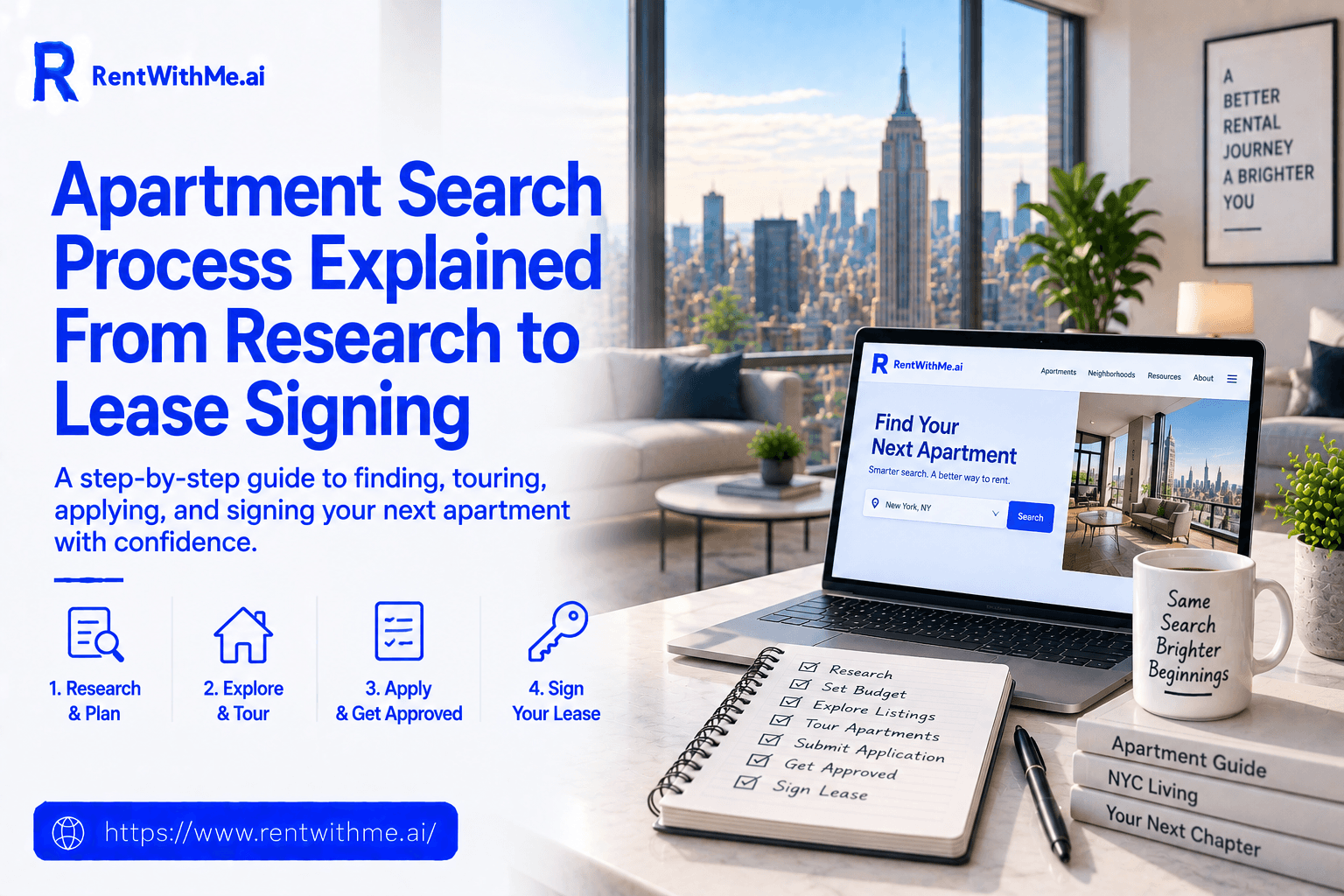
Apartment Search Process Explained From Research to Lease Signing
Introduction
Finding an apartment becomes easier when you understand the complete process beforehand. Each stage builds upon decisions made during the previous planning stage. Good preparation reduces confusion while helping renters make stronger housing decisions.
The apartment search process begins before you open any rental website. Budget, timing, neighborhood preferences, and household needs require careful consideration first. These decisions create useful boundaries for everything that follows afterward.
Without preparation, renters can spend valuable time evaluating completely unsuitable properties. They may tour unaffordable apartments or pursue locations creating difficult commutes. Clear priorities make apartment searching more efficient from the beginning.
The process eventually moves through listings, tours, applications, and lease signing. Understanding those stages helps renters recognize when important decisions require attention. It also prevents unnecessary urgency from controlling major housing choices.
Define Your Rental Goals Before Searching
Start by considering what your next apartment genuinely needs to provide. Household size should influence bedrooms, bathrooms, storage, and overall living space. Your everyday routine can reveal requirements that listing photographs cannot show.
Someone working remotely may need dedicated space for comfortable daily work. Roommates might prioritize privacy and practical separation between sleeping areas. Families may place greater importance on storage and functional shared spaces.
Think about how long you expect the apartment to remain suitable. Your needs could change significantly during the planned rental period. Choosing appropriate space now can prevent another premature apartment search later.
Write down your primary rental goals before reviewing serious apartment listings. Clear goals provide useful reference points when attractive properties create distractions. They help you judge suitability instead of simply reacting to appearance.

Separate Must-Haves From Flexible Preferences
Not every desired apartment feature deserves equal importance during searching. Separating requirements from preferences creates flexibility without sacrificing important household needs. This distinction becomes especially useful when comparing several promising rental options.
Must-haves should include features directly affecting everyday functionality or accessibility. Necessary bedrooms, location boundaries, or accessibility requirements may belong here. These conditions should remain relatively stable throughout your apartment search.
Flexible preferences can include finishes, views, amenities, or decorative characteristics. They still influence satisfaction, but suitable alternatives may remain acceptable. Keeping these preferences flexible increases your pool of realistic rental opportunities.
Review your priorities whenever the search becomes unnecessarily restrictive or frustrating. Adjust optional features before compromising important financial or household requirements. This approach preserves choice while keeping essential needs clearly protected.
Establish a Realistic Rental Budget
Your rental budget should reflect comfortable affordability rather than maximum possible spending. Start with dependable income and review your existing monthly financial responsibilities. Housing costs should leave room for ordinary life beyond monthly rent.
Consider transportation, groceries, insurance, debt payments, savings, and personal spending. These expenses continue after you receive keys to your apartment. Ignoring them can make an initially manageable rental feel financially uncomfortable.
Set a preferred rental range alongside a firm comfortable maximum. The preferred range guides normal searching while the maximum protects boundaries. Avoid increasing that limit simply because attractive apartments cost slightly more.
A realistic budget also speeds up your apartment search considerably. Properties outside your financial range can leave consideration immediately. This saves tours and research for apartments you could actually afford.

Calculate the Complete Monthly Housing Cost
Advertised rent provides only part of your actual housing expense. Utilities and internet may create additional recurring costs throughout your lease. Laundry or parking can also affect monthly spending depending on the property.
Transportation deserves attention because apartment location directly influences commuting expenses. A cheaper apartment may require significantly more spending on daily travel. That difference can reduce savings created by lower advertised rent.
Renters insurance and storage may create other predictable monthly expenses. Building-specific services could also influence your complete housing cost. Include known recurring expenses whenever comparing apartments with different pricing structures.
Use reasonable estimates when exact amounts remain unavailable during early research. Update calculations when reliable information becomes available later. Consistent cost estimates make affordability comparisons considerably more accurate and useful.
Apartment Budget Planning Table
| Budget Category | Apartment A | Apartment B | Apartment C |
|---|---|---|---|
| Advertised monthly rent | |||
| Estimated utilities | |||
| Internet | |||
| Transportation | |||
| Parking or laundry | |||
| Renters insurance | |||
| Other recurring expenses | |||
| Estimated total monthly cost | |||
| Overall affordability |
This table helps renters compare apartments using complete monthly estimates. Identical categories make financial differences easier to understand during evaluation. Update each column whenever new property information changes your calculations.
Avoid choosing apartments using advertised rent without considering additional expenses. Total monthly cost provides a stronger picture of actual affordability. Better financial comparisons reduce surprises after you become interested in properties.

Prepare for Upfront Rental and Moving Expenses
Moving requires money beyond your regular monthly housing budget. Legitimate rental-related expenses can become necessary during the application process. Moving services and transportation may create additional costs before occupancy begins.
Packing supplies can also become meaningful expenses for larger household moves. New renters may need furniture, kitchenware, cleaning products, or basic necessities. These purchases should become part of your broader financial planning.
Estimate likely moving expenses before your active apartment search becomes intense. Knowing available funds helps prevent financial surprises during important rental decisions. Keep reasonable reserves whenever your circumstances allow additional financial flexibility.
Do not spend every available dollar simply securing the apartment itself. Unexpected moving or household expenses can appear shortly afterward. Financial breathing room makes the transition into your new home easier.
Choose Your Target Move-In Date
Your target move-in date provides structure for the entire apartment search. Without one, listing availability becomes difficult to evaluate consistently. Renters may pursue apartments that cannot realistically match their intended schedule.
Start with your preferred moving date based on current housing obligations. Consider employment schedules, travel plans, and personal responsibilities affecting relocation timing. Then determine whether several days of flexibility remain realistically possible.
A small timing range can provide useful options during active searching. However, excessive uncertainty can make property conversations and planning more difficult. Choose a practical timeframe you can communicate clearly when necessary.
Use your move-in target whenever screening available apartment listings later. Timing should receive similar importance as budget and location. An otherwise perfect apartment cannot help when availability remains completely incompatible.

Review Your Current Lease Before Searching
Current housing responsibilities should shape the timing of your next move. Review your existing lease before beginning serious apartment hunting. Confirm the expiration date and any applicable notice requirements carefully.
Do not assume your current rental automatically ends without required communication. Your agreement may describe procedures that affect your departure planning. Understanding those responsibilities prevents unexpected conflicts with your next apartment timeline.
Consider whether limited lease overlap would create practical moving flexibility. Some renters prefer additional time for cleaning and gradual relocation. However, overlapping rent should remain affordable within your established moving budget.
Housing gaps can create different challenges when move-in dates fail alignment. Temporary arrangements may add costs, transportation problems, and additional moving effort. Early lease review helps renters avoid both extremes whenever possible.
Select Target Neighborhoods
Neighborhood selection should happen before serious apartment listings dominate your attention. Begin with areas matching your budget and realistic transportation needs. Then consider lifestyle preferences and access to important everyday services.
A desirable neighborhood should support how you actually spend your week. Grocery stores, pharmacies, parks, restaurants, or childcare may influence convenience. Different renters will naturally prioritize different combinations of these neighborhood features.
Avoid searching dozens of unrelated areas simply to maximize available listings. Excessive geographic range creates more research and complicated apartment comparisons. Several focused neighborhoods usually provide enough variety without overwhelming your search.
Include nearby alternatives when they offer similar transportation or lifestyle benefits. Small geographic flexibility can reveal better value or stronger apartment options. Focused expansion works better than searching an entire city without direction.

Research Neighborhoods Before Active Apartment Hunting
Neighborhood research provides context before individual listings create emotional reactions. Learn typical rental prices across areas you are seriously considering. This helps you recognize unusually strong value or unrealistic advertised pricing.
Research transportation access and important everyday services within each area. Consider grocery shopping, healthcare, recreation, and other regular household needs. Convenience should reflect your actual routine rather than general neighborhood popularity.
When practical, spend time walking through promising neighborhoods personally. Observe traffic, street activity, noise, transportation access, and general convenience. Online research cannot always communicate how an area feels firsthand.
Visit during relevant times when neighborhood conditions may differ significantly. Evening activity can feel different from a quiet weekend morning. Broader observation helps prevent location concerns from appearing after apartment tours.
Evaluate Your Realistic Commute
A realistic commute includes much more than simple geographic distance. Walking and transfers can significantly increase total door-to-door travel time. Waiting for transportation also matters when connections are less frequent.
Estimate commuting time during periods resembling your normal work schedule. Midday travel estimates may not represent morning or evening conditions. Consider transportation reliability alongside the fastest theoretical journey available.
Remote workers should still evaluate access to important regular destinations. Occasional office visits or household responsibilities may require convenient transportation. Your apartment location should support the journeys you make most frequently.
Compare commuting costs alongside travel time when evaluating different neighborhoods. Longer transportation can reduce savings from slightly cheaper monthly rent. Practical location decisions balance affordability with sustainable everyday convenience.

Determine the Apartment Size and Layout You Need
Bedroom count alone does not explain whether an apartment functions comfortably. Two similarly sized apartments can provide very different usable layouts. Room proportions and circulation affect how your furniture fits inside.
Think about furniture you already own and expect to keep. Beds, sofas, dining tables, and desks require practical usable space. Awkward room shapes can make generous square footage surprisingly difficult to use.
Storage should also match your household’s realistic volume of belongings. Limited closets may require additional furniture that reduces living space. Consider seasonal belongings, luggage, cleaning supplies, and everyday household storage.
Remote work can create additional layout requirements for some renters. A dedicated room may not always be necessary for productivity. However, sufficient quiet space and practical furniture placement can become important.
Identify Important Building Features
Apartment suitability also depends on how the overall building functions. Laundry arrangements can strongly influence convenience for many renter households. Consider location, availability, and accessibility when evaluating laundry options.
Elevators may become essential for accessibility or higher-floor apartments. They can also simplify moving furniture and managing heavy household items. Understand whether important building features support your everyday practical needs.
Package handling deserves attention when you regularly receive online deliveries. Different buildings use different systems for receiving or storing packages. Reliable arrangements can become valuable during ordinary weekly routines.
Parking and storage may matter depending on your transportation and belongings. Shared amenities can provide additional value when you genuinely use them. Avoid paying more solely for features that rarely support your lifestyle.
Prepare Common Rental Documents Early
Rental applications often require applicants to provide supporting personal information. Preparing commonly requested materials early can make later applications more efficient. Exact requirements vary, so confirm legitimate instructions for individual properties.
Keep identification and relevant financial or employment information organized securely. Review documents for accuracy, readability, and current information before active searching. Correct files reduce avoidable confusion when legitimate application requests eventually arrive.
Do not distribute sensitive documents simply because someone requests them casually. Verify appropriate application channels before sharing important personal information. Preparation should improve speed without weakening reasonable privacy safeguards.
Create a secure location where necessary documents remain easy to access. Organized storage prevents frantic searching when strong apartment opportunities appear. Good document preparation becomes especially valuable within competitive rental markets.

Create an Apartment Search Tracking System
Apartment searching quickly becomes confusing when several properties look similar. A simple tracking system keeps important details available during comparisons. You do not need complicated software to remain organized effectively.
Record property location, advertised rent, availability, and important listing details. Include contact information, unanswered questions, tour dates, and current status. Update records whenever new information changes your evaluation of properties.
Mark apartments as rejected when they no longer deserve consideration. This prevents accidentally researching or contacting the same unsuitable listing again. Clear status labels also highlight which properties require timely follow-up.
Use whichever system you can maintain consistently throughout active searching. A spreadsheet works well, but organized notes can also succeed. Consistency matters more than creating an elaborate tracking process you avoid updating.
Know When Research Should Become Active Searching
Early research eventually needs to transition into serious apartment searching. Watch when available listings begin matching your intended move-in timeframe. That change usually indicates when greater daily attention becomes worthwhile.
By this point, your budget and target neighborhoods should feel established. Important household requirements and common application materials should also remain organized. Preparation allows you to evaluate current opportunities without restarting basic decisions.
Begin applying your filters consistently as suitable listings become available. Save serious properties and eliminate obvious mismatches before deeper research. Your tracking system should now become an active daily decision-making tool.
The next stage focuses on listings, communication, tours, and comparisons. Each step moves you closer toward choosing a serious apartment candidate. Part Two will explain how to navigate those active searching stages.
Begin the Active Apartment Search
Active searching begins once available listings match your planned moving timeframe. Your earlier preparation now provides boundaries for evaluating properties quickly. Budget, location, apartment size, and availability should guide every search.
Search consistently instead of browsing randomly whenever spare time becomes available. A regular routine helps you notice promising apartments before opportunities disappear. It also prevents apartment hunting from consuming your entire day.
Focus primarily on properties meeting most established essential requirements. Attractive photographs should not persuade you to ignore obvious incompatibilities. Strong searching means finding suitable options rather than collecting countless listings.
Keep your established priorities nearby whenever reviewing new rental opportunities. Consistent standards make comparisons easier as your shortlist gradually develops. They also prevent temporary excitement from changing important housing requirements.
Set Useful Apartment Listing Alerts
Listing alerts can reduce time spent repeatedly checking rental platforms. Create alerts using criteria closely connected with your established priorities. Useful filters usually include budget, location, apartment size, and availability.
Avoid creating numerous overlapping alerts that generate excessive notifications. Too many alerts can bury genuinely relevant apartments beneath weaker options. Focused notifications make promising listings easier to recognize and evaluate.
Review alert settings when results repeatedly fall outside your requirements. Small adjustments may improve relevance without changing your fundamental rental goals. Keep essential financial and household boundaries protected during those adjustments.
Alerts should support your apartment search rather than completely control it. Continue checking reliable listing sources when your search requires broader visibility. Combining alerts with focused browsing creates a more balanced approach.
Screen Listings Before Contacting Anyone
Every interesting listing deserves basic screening before you contact its representative. This step prevents unnecessary conversations about apartments that clearly cannot work. Effective screening also protects valuable time during competitive searching periods.
Start by confirming advertised rent and the stated apartment location. Next, compare available timing against your realistic move-in window. Check bedrooms, bathrooms, and other essential requirements before researching further.
Remove obvious mismatches from consideration as soon as you identify them. Keeping unsuitable apartments creates clutter and makes stronger options harder recognizing. Your shortlist should contain properties you could realistically consider renting.
Basic screening does not require investigating every minor property detail immediately. Instead, determine whether an apartment deserves additional research or communication. This distinction keeps active searching efficient without encouraging careless decisions.
Read Every Serious Listing Completely
A listing headline rarely provides enough information for responsible evaluation. Read the complete description whenever an apartment passes initial screening. Important conditions may appear deeper within the listing information.
Review stated availability, lease length, building features, and apartment characteristics. Look for information affecting costs or important household requirements. Note anything unclear that could influence whether you continue pursuing it.
Photographs should complement written information rather than replace careful reading. Images can highlight appearance while leaving practical questions completely unanswered. Floor plans may provide additional context about layout and usable space.
Reading thoroughly also improves your later communication with property representatives. You can ask focused questions instead of requesting information already provided. Better questions usually make the next search stage more productive.
Understand Advertised Rental Pricing
Rental advertisements can present pricing differently depending on the specific arrangement. Some listings may mention concessions alongside standard monthly rental amounts. Understanding the actual payment structure remains essential before comparing apartments.
Read available pricing explanations carefully before assuming what monthly payments require. Ask for clarification whenever promotional language makes actual obligations difficult understanding. Clear pricing information should support every serious apartment comparison.
Compare properties using consistent calculations rather than relying on prominent headlines. Otherwise, different pricing presentations can make comparisons misleading or confusing. Your budget should reflect what the rental arrangement actually requires.
Keep notes explaining any unusual pricing structure within your tracking system. This prevents confusion when comparing several apartments later. Financial clarity becomes increasingly important as you approach application decisions.
Review Known Recurring Costs
Recurring expenses can change whether an apartment remains comfortably affordable. Review known utility responsibilities before placing properties on your serious shortlist. Internet and transportation costs should also remain within your calculations.
Parking may create significant additional expenses for renters keeping vehicles. Laundry and storage can similarly influence monthly household spending. Consider these costs whenever they apply to your expected lifestyle.
Ask about important recurring expenses when listings provide incomplete information. Focus first on costs large enough to affect affordability. Minor unknown expenses should not necessarily prevent an otherwise worthwhile apartment tour.
Update your budget comparison whenever reliable new information becomes available. A previously attractive property may become less competitive after additional costs. Another apartment may offer better overall value despite higher advertised rent.
Apartment Listing Evaluation Table
| Evaluation Factor | What to Review | Why It Matters | Current Assessment |
|---|---|---|---|
| Advertised rent | Stated monthly rental amount | Establishes basic affordability | Record confirmed amount |
| Total monthly cost | Rent plus predictable recurring expenses | Shows realistic housing expense | Estimate consistently |
| Availability | Expected apartment availability date | Determines timing compatibility | Compare with move-in target |
| Neighborhood | Location and everyday convenience | Influences lifestyle suitability | Compare target areas |
| Commute | Door-to-door transportation needs | Affects time and transportation costs | Test realistic routes |
| Layout | Room arrangement and usable space | Determines household functionality | Review photographs and floor plans |
| Essential features | Required apartment or building characteristics | Protects important housing needs | Confirm before applying |
| Overall suitability | Combined practical assessment | Supports stronger final comparisons | Update after each stage |
Use the same evaluation categories whenever comparing serious apartment candidates. Consistency makes differences easier to identify without relying on memory. Update assessments after conversations and tours provide additional reliable information.
A table should support judgment rather than automatically choose your apartment. Personal priorities still determine how much individual factors matter. Use structured comparisons alongside your firsthand impressions and practical requirements.
Verify Important Listing Information
Promising listings deserve reasonable verification before you invest significant effort. Compare important details across the information available from reliable sources. Pay particular attention to pricing, availability, location, and apartment characteristics.
Inconsistencies do not always indicate serious problems or intentional misrepresentation. Listings can contain outdated details or simple administrative errors. However, important differences deserve clarification before applications or financial commitments.
Ask direct questions when information conflicts across advertisements or communications. Record confirmed answers within your apartment tracking system afterward. This keeps outdated details from influencing your later comparisons.
Verification becomes especially important when something appears unusually attractive financially. Extremely favorable terms deserve the same careful review as ordinary listings. Responsible checking protects both your search timeline and financial security.
Contact Property Managers Professionally
Once an apartment passes screening, communication becomes the next practical stage. Keep your first message concise, specific, and easy to understand. Clearly identify the property you are asking about.
Mention your approximate move-in timing when that information affects availability. Ask focused questions that remain unanswered after reviewing the listing. Avoid sending an extensive personal history before basic suitability becomes established.
Professional communication does not require excessively formal or complicated language. Clear sentences and relevant questions usually create the strongest first interaction. Respectful communication also makes later scheduling and follow-up considerably easier.
Track each serious conversation immediately after contacting a property representative. Record when you contacted them and which questions remain unanswered. This prevents duplicated messages and forgotten follow-ups during busy search periods.
Ask the Right Questions Before Scheduling a Tour
Some questions deserve answers before you spend time traveling somewhere. Confirm current availability when the listing information may have changed. Pricing should also remain clear enough for meaningful affordability evaluation.
Ask about major recurring expenses when they could change your decision. Confirm essential building or apartment features when listings remain unclear. These questions help eliminate properties that would never survive deeper evaluation.
Avoid asking dozens of minor questions before seeing the apartment personally. Many details become easier to understand during an actual viewing. Focus early communication on factors determining whether touring makes practical sense.
Save secondary questions within your tracking notes for the property tour. This approach keeps initial communication focused without losing important concerns. Prepared questions also make your eventual viewing considerably more productive.
Schedule Apartment Tours Efficiently
Apartment tours can consume significant time when scheduling lacks geographic planning. Group nearby properties whenever appointment availability reasonably allows that approach. This reduces transportation time while improving neighborhood comparisons.
Leave sufficient time between appointments for careful viewing and travel. An overly ambitious schedule can create stress throughout your entire day. Unexpected transportation delays may also affect every later appointment.
Confirm each appointment before traveling whenever circumstances make confirmation practical. Save meeting instructions and contact information somewhere easily accessible. Small organizational steps prevent unnecessary confusion around unfamiliar properties.
Avoid scheduling more tours than you can evaluate thoughtfully. Viewing fatigue makes details increasingly difficult remembering accurately afterward. Several focused tours often provide more value than excessive rushed appointments.
Prepare for Each Apartment Viewing
Review the apartment listing shortly before attending your scheduled viewing. Refresh your memory about pricing, layout, availability, and advertised features. This helps you focus on details requiring firsthand evaluation.
Prepare questions based on information still missing after earlier communication. Keep those questions connected with your actual housing priorities. Random questions can distract from issues that genuinely influence suitability.
Bring measurements for important furniture when room dimensions could become decisive. Beds, sofas, desks, and tables require appropriate usable space. Knowing measurements can prevent unpleasant discoveries after committing to an apartment.
Approach each tour with curiosity rather than predetermined excitement or rejection. The purpose is gathering information that photographs cannot provide. Balanced observation produces better comparisons when several properties appear promising.
Inspect Apartment Condition Carefully
Apartment tours should include more than admiring attractive finishes and furniture. Look carefully at walls, flooring, windows, doors, and visible surfaces. General condition can reveal questions requiring additional discussion before applying.
Spend meaningful time evaluating the kitchen and bathroom during viewing. Check available storage, workspace, fixtures, ventilation, and practical functionality. Consider whether these rooms support your normal household routines comfortably.
Natural light can change significantly depending on windows and surroundings. Notice window placement and any nearby structures affecting daylight. Consider how lighting conditions might influence your everyday use of rooms.
Look beyond cosmetic details that could dominate your initial impression. Practical function usually matters more than decorative styling over time. Your inspection should focus on how the apartment actually supports living.
Evaluate Building Access and Shared Areas
The apartment itself represents only part of your rental experience. Building access and shared spaces can strongly influence everyday convenience. Observe these areas while entering and leaving your scheduled tour.
Consider stairs and elevators when evaluating accessibility and moving logistics. Laundry arrangements should also match your household’s realistic routine. Package handling may matter when deliveries form part of everyday life.
Shared areas can provide useful clues about general building organization. Notice visible maintenance without making conclusions from isolated cosmetic imperfections. Ask relevant questions when important building procedures remain unclear.
Amenities deserve attention when they genuinely contribute to your lifestyle. Avoid assigning excessive value to facilities you would rarely use. Practical building features often provide more lasting value than impressive extras.
Evaluate Noise and Privacy
Noise can significantly influence comfort inside an otherwise attractive apartment. Spend several quiet moments listening during your property viewing. Notice sounds coming from streets, hallways, neighboring spaces, or building systems.
Window orientation can influence both outside noise and perceived privacy. Bedrooms facing busy areas may feel different during nighttime hours. Ask reasonable questions when surrounding activity creates concerns about everyday comfort.
Hallways and elevators can also affect apartments positioned nearby. Frequent shared traffic may matter differently depending on your preferences. Consider whether the layout provides enough separation from common building activity.
One short visit cannot reveal every possible sound condition. Still, careful observation provides useful information for comparing properties. Combine firsthand impressions with reasonable questions when noise remains important.
Take Notes Immediately After Every Tour
Apartment details can blend together surprisingly quickly after multiple tours. Write useful observations soon after leaving each property. Record strengths, concerns, unanswered questions, and your overall impression.
Focus notes on details that could influence your final decision. Avoid documenting every decorative feature unless it genuinely matters. Practical observations create stronger comparisons than lengthy descriptions of minor characteristics.
Update the property’s status inside your tracking system immediately afterward. Mark whether it remains promising, uncertain, rejected, or requires follow-up. Clear statuses keep your search organized as available options change.
When photographs are permitted, use them to support written observations. Images cannot capture every detail involving noise, layout, or comfort. Short written context makes those photographs more useful during later comparisons.
Compare Apartments Using Consistent Criteria
Apartment comparison becomes difficult when every property receives different evaluation standards. Return to the priorities established before your active search began. Compare affordability, location, commute, layout, condition, and essential features consistently.
Consider how each apartment would support your ordinary weekly routine. An impressive feature matters less when everyday logistics become inconvenient. Practical suitability should remain central throughout your comparison process.
Avoid comparing only the strongest feature from each apartment. One may have better finishes while another offers better transportation. Look at the complete living experience rather than isolated advantages.
Your comparison system should clarify decisions instead of making them mechanical. Personal judgment remains important when several apartments perform similarly. Structured evaluation simply helps that judgment rely on consistent information.
Build a Serious Shortlist
After several tours, reduce your options to genuinely competitive apartments. Remove properties with disadvantages you already know remain unacceptable. Keeping weak options creates unnecessary work during final comparisons.
A serious shortlist should contain apartments you could realistically rent. Each property should satisfy essential requirements and remain financially comfortable. Flexible preferences can help distinguish candidates without overriding fundamental needs.
Compare compromises directly when no apartment satisfies every preference perfectly. One property may offer location advantages but less storage. Another might provide better space while requiring additional commuting time.
Recognizing acceptable compromises is part of making realistic housing decisions. The strongest apartment often balances several priorities rather than maximizing everything. A focused shortlist makes that balance considerably easier to understand.
Adjust Your Search Strategically
Sometimes your initial search criteria produce fewer suitable apartments than expected. Adjustments can help, but they should remain deliberate and controlled. Avoid changing several important criteria after one disappointing search day.
Start by reviewing preferences previously classified as flexible rather than essential. Certain amenities or finishes may deserve less importance than expected. Removing optional restrictions can reveal additional realistic properties.
Nearby neighborhoods can provide another reasonable area for strategic flexibility. Compare transportation and lifestyle before expanding your geographic search significantly. A carefully chosen alternative area may provide stronger rental value.
Increasing your budget should not become the automatic solution to difficulty. Financial boundaries exist to protect your longer-term household stability. Explore other reasonable adjustments before accepting higher recurring housing expenses.
Prepare for Competitive Rental Opportunities
Strong rental opportunities sometimes require renters to make decisions relatively quickly. Preparation allows faster action without replacing careful judgment or verification. Your earlier document organization becomes especially useful during this stage.
Keep important application materials current while serious apartment searching continues. Know which properties fit your budget before considering formal applications. Understanding your financial boundaries reduces hesitation when appropriate opportunities appear.
Respond promptly to legitimate communications involving apartments you genuinely want. However, urgency should never pressure you into skipping reasonable verification. Sensitive documents and payments still require appropriate caution throughout applications.
Once a preferred apartment emerges, the process moves toward formal application. Qualification review and lease signing introduce several important final responsibilities. Part Three will explain those stages through completed rental commitment.
Understand the Rental Application Process
Once you choose a strong apartment, the application process becomes important. Each property may use different requirements, forms, and review procedures. Understanding those steps helps you prepare without unnecessary confusion or delays.
Read all application instructions before submitting personal or financial information anywhere. Confirm which documents are required and how they should be provided. Organized applicants can usually respond faster when legitimate requests arrive afterward.
Use only the application channels provided by verified property representatives. Avoid sending sensitive documents through casual messages or unfamiliar links. Clear procedures protect your information while keeping the rental process moving.
Keep copies of confirmations, submitted documents, and important application communications securely. These records help you track what information has already been provided. They also simplify follow-up when property representatives request additional clarification.
Review Qualification Requirements Before Applying
Qualification requirements should be understood before spending time completing applications. Properties may consider income, credit history, rental history, or related information. Requirements can differ considerably between buildings and individual rental situations.
Review any disclosed income standards before starting the formal application process. Meeting a qualification requirement does not automatically make rent comfortably affordable. Your personal budget should remain separate from the property’s screening standards.
Credit history may also become part of an apartment application review. First-time renters may have limited rental history compared with experienced tenants. Ask how that situation is handled when relevant to your application.
Some properties may permit guarantors or other legitimate qualification arrangements. Confirm whether those options are available before relying upon them. Early understanding prevents delays when additional documents or approvals become necessary.
Protect Personal Information During Applications
Apartment applications can involve highly sensitive personal and financial information. Protecting that information remains important even when rental competition feels intense. Urgency should never eliminate reasonable verification and secure document handling.
Verify the representative and property before submitting identification or financial records. Confirm that the application process matches information provided during earlier communication. Unexpected changes should receive additional questions before you continue.
Avoid including sensitive documents within casual rental inquiry messages whenever possible. Use appropriate systems intended specifically for legitimate apartment applications instead. This keeps private information separate from ordinary property conversations.
Store application records securely after submission rather than leaving files scattered. Organized storage also makes legitimate follow-up requests easier to complete. Good privacy habits can support speed without reducing reasonable caution.
Submit a Complete and Accurate Application
Incomplete applications can slow review even when an apartment is available. Missing information often creates additional communication before processing can continue. Careful preparation helps prevent unnecessary delays during competitive rental situations.
Review every application section before submitting the completed form officially. Confirm names, dates, addresses, employment details, and financial information carefully. Accuracy creates fewer questions during later verification and approval stages.
Attach all legitimately requested supporting documents in the correct format. Make sure files are readable, current, and properly organized beforehand. Clear documentation makes the application easier for representatives to review efficiently.
If something remains unclear, ask before guessing or providing incorrect information. A brief clarification can prevent a larger problem during verification. Strong applications combine speed with careful attention to important details.
Respond Promptly During Application Review
Application review may involve additional questions after your original submission. Property representatives can request clarification or other legitimate supporting information. Delayed responses may extend the approval timeline unnecessarily.
Monitor the communication channels connected with serious rental applications regularly. Important messages should remain easy to distinguish from general apartment alerts. Good organization reduces the risk of missing time-sensitive application requests.
Respond promptly when requests appear legitimate and relevant to your application. Ask questions before providing anything that seems unexpected or unclear. Responsible responsiveness keeps the process moving without abandoning sensible verification.
Update your apartment tracking system whenever the application status changes. Record follow-up requests, completed actions, and any new expected timelines. This creates a clear picture of where the rental process stands.
Understand What Approval Actually Means
Rental approval is significant, but it may not complete everything immediately. Additional lease, payment, or documentation steps can still remain afterward. Understanding remaining responsibilities helps you avoid premature moving commitments.
Confirm which apartment, rent, and expected lease dates were approved. Compare these details with information received before you applied. Unexpected differences should be clarified before moving further into the process.
Ask what steps remain before the rental becomes appropriately finalized. Understanding signatures, payments, or other requirements protects your planning timeline. Clear expectations make the transition toward lease signing much easier.
Keep realistic backup options until the necessary rental steps become complete. A positive approval message should not automatically end every alternative search. Backup options reduce pressure when unexpected issues appear before finalization.
Review the Lease Carefully
The lease deserves careful attention because it governs your rental arrangement. Read the complete agreement rather than focusing only on monthly rent. Important responsibilities can appear throughout several different sections.
Confirm the apartment address, lease dates, rent, and payment procedures. Compare those details with the information you previously received. Any meaningful difference should be discussed before you complete required signatures.
Review sections covering household responsibilities, building rules, and apartment use. These provisions may affect pets, guests, utilities, or maintenance procedures. Important rules should remain workable throughout your expected tenancy period.
Do not rush because moving plans have already started emotionally. A thoughtful review can prevent confusion after the lease begins. Understanding the agreement should remain part of responsible apartment selection.
Check Important Lease Terms
Several lease terms deserve especially close attention before you sign. Rent payment procedures should remain clear and reasonably easy to follow. Confirm when payments are due and which methods are accepted.
Utility responsibilities should also match your understanding from earlier conversations. Determine which services are included and which remain your responsibility. Unexpected utility obligations can affect your complete monthly housing cost.
Review policies involving pets, guests, and other household activities carefully. These terms should support how you realistically expect to live. Ask questions when written language appears different from earlier property information.
Maintenance responsibilities also deserve attention before your tenancy officially begins. Understand how residents report problems and what procedures normally apply. Clear expectations can make future apartment issues easier to manage.
Verify Payments Before Sending Money
Rental payments should always follow a reasonably verified process. Confirm the legitimate recipient before transferring deposits or other required amounts. Understand exactly what each requested payment represents before sending money.
Unexpected payment changes deserve additional verification rather than immediate action. A different account or unusual method can justify direct confirmation. Competitive rental conditions should never remove basic financial safeguards.
Keep receipts and written confirmations for every legitimate rental payment. Store those records alongside your lease and application documents securely. Organized records provide useful support when future payment questions arise.
Prepare funds early enough to meet legitimate deadlines without unnecessary pressure. Readiness should improve efficiency rather than encourage careless financial decisions. Verification protects both your money and the rental process.
Application and Lease Process Table
| Stage | Required Action | Common Delay | Important Verification | Next Step |
|---|---|---|---|---|
| Application preparation | Gather requested documents | Missing or outdated files | Confirm property requirements | Complete application |
| Application submission | Submit accurate information | Incomplete forms | Use verified application channels | Await review |
| Review period | Respond to legitimate requests | Slow follow-up | Confirm request authenticity | Provide required information |
| Approval | Review approved details | Unclear remaining steps | Confirm rent and apartment | Review lease |
| Lease review | Read complete agreement | Delayed questions | Compare terms with prior information | Sign when understood |
| Payment | Complete legitimate required payment | Payment confusion | Verify recipient and purpose | Keep confirmation |
| Finalization | Complete remaining requirements | Missing signatures or documents | Confirm rental status | Prepare move-in |
This table provides a simple overview of the final rental stages. Each step depends on accurate information and reasonably timely action. Organized renters can prevent small issues from becoming larger delays later.
Use the table as guidance rather than treating every property identically. Different buildings may structure application and lease procedures differently. Always follow the legitimate written instructions connected with your specific rental.
Know When the Apartment Is Actually Secured
An apartment should not be treated as secured too early. Positive conversations or preliminary approval may still leave important steps unfinished. Confirm when required documents, signatures, and payments have been completed appropriately.
Avoid canceling major backup options before your rental status becomes clear. Another opportunity can remain valuable during uncertain final stages. This protects you from restarting the search under unnecessary time pressure.
Ask direct questions when you do not understand the current status. Clear communication can prevent assumptions about approval, signing, or availability. Knowing your exact position helps you plan the move confidently.
Once the rental is properly finalized, shift fully toward move-in preparation. Your search tracking system can then archive rejected and backup properties. The process moves from apartment evaluation into practical relocation planning.
Prepare for Move-In After Lease Signing
Lease signing begins the final transition into your new apartment. Create a moving checklist based on your confirmed access date. Prioritize tasks requiring appointments or advance coordination with other people.
Mover scheduling should happen early enough to preserve useful date options. Independent movers still need transportation, helpers, and timing coordinated carefully. Property access procedures can also influence when moving activity is allowed.
Utilities and internet may require setup before or shortly after arrival. Confirm which services remain your responsibility under the lease. Schedule essential activation early enough to avoid unnecessary service gaps.
Packing should begin gradually instead of becoming a final-day emergency. Start with belongings you rarely use during ordinary daily life. Leave everyday essentials accessible until shortly before the actual move.
Coordinate Building Access Before Moving
Building procedures can significantly influence your moving-day schedule and efficiency. Ask whether elevators or loading areas require advance scheduling. Large buildings may have specific time windows for move-in activities.
Share relevant building instructions with movers or helpers before arrival. Everyone should know where loading and property access will occur. This reduces confusion when furniture and boxes begin arriving together.
Confirm final arrangements shortly before moving day whenever practical. A quick check can reveal scheduling changes before they become problems. Advance coordination helps protect both your time and building operations.
Arrange Utilities and Internet
Utilities should be arranged according to responsibilities described within your lease. Determine which services require individual activation before moving into the apartment. Avoid assuming every utility automatically transfers when another resident leaves.
Schedule essential services early when providers require installation appointments or verification. Internet setup can sometimes involve limited availability during popular moving periods. Early scheduling gives you more flexibility if appointment times change.
Keep confirmation numbers and appointment details with your moving records. These details are easier to find when everything remains organized together. Good service planning supports a smoother first week inside your apartment.
Plan Your Packing Process
Packing should happen in stages instead of one exhausting final session. Begin with seasonal items, decorations, books, and rarely used belongings. This reduces the workload remaining near your actual moving date.
Label boxes clearly with room destinations and useful contents descriptions. Organized labels make unloading and early unpacking considerably easier. Avoid creating dozens of unidentified boxes that require immediate opening.
Keep medications, documents, chargers, toiletries, and clothing easily accessible. These essentials should travel separately from general household items whenever possible. A small essentials bag can make your first night more comfortable.
Document Apartment Condition at Move-In
Documenting the apartment early creates a useful record of existing conditions. Take clear photographs before furniture and boxes cover important surfaces. Focus on visible damage or maintenance concerns that already exist.
Record walls, floors, appliances, fixtures, windows, and other relevant areas. Keep those photographs stored with your broader rental documentation. Organized records help you locate important information if questions arise later.
Report appropriate concerns through the property’s established maintenance or communication process. Written communication can help create a clear record of reported conditions. Do not delay significant observations until weeks after your move.
Common Apartment Search Mistakes to Avoid
Several mistakes can weaken otherwise well-planned apartment searches quickly. Searching without financial boundaries often leads renters toward unsuitable properties. Ignoring total monthly expenses can create affordability problems after deeper evaluation.
Touring apartments with obvious deal-breakers also wastes valuable time. Applying without preparation can create document problems during competitive situations. Rushing through lease review may create longer-term misunderstandings afterward.
Another mistake involves allowing attractive features to override practical priorities. Stylish finishes cannot solve a poor commute or uncomfortable layout. Return to your original requirements whenever emotional excitement begins influencing decisions.
Realistic Apartment Search Scenarios
A first-time renter may prioritize affordability while wanting a convenient location. Comparing transportation costs can reveal which apartment provides stronger overall value. The cheapest rent does not always create the lowest living cost.
A remote worker may choose a slightly larger apartment with better layout. Daily workspace quality could matter more than proximity to an office. That decision reflects actual usage rather than a general housing rule.
Another renter may face strong competition for several suitable apartments. Prepared documents and clear priorities allow faster responsible applications. Verification still matters even when desirable properties receive rapid renter interest.
Someone comparing two final apartments may focus on different compromises. One property might offer better storage while another shortens commuting. Structured comparison helps reveal which tradeoff affects everyday life more.
Frequently Asked Questions About the Apartment Search Process
When Should Apartment Research Begin?
Research can begin before active apartment searching becomes immediately necessary. Budgeting and neighborhood comparisons benefit from additional preparation time. Serious searching should align more closely with realistic apartment availability.
When Should Renters Contact Property Managers?
Contact managers after a listing passes your basic suitability screening. Confirm budget, location, timing, and essential requirements before sending messages. Focused inquiries usually produce more useful information and stronger conversations.
What Should Renters Inspect During Tours?
Inspect general condition, layout, storage, windows, doors, kitchens, and bathrooms. Pay attention to natural light, noise, ventilation, and building access. Everyday functionality should matter more than decorative staging during viewings.
Which Documents Should Applicants Prepare?
Prepare commonly requested identification, income, employment, or related information securely. Exact requirements can differ significantly between properties and rental situations. Confirm legitimate instructions before sharing any sensitive documents.
What Should Renters Review Before Signing?
Review rent, lease dates, payment procedures, utilities, policies, and responsibilities. Compare written terms with important information received during your search. Ask questions whenever significant language remains unclear before signing.
When Is an Apartment Considered Secured?
That depends on the specific rental process and required steps. Approval alone may not complete every necessary rental requirement. Confirm signatures, payments, and remaining obligations with the verified property representative.
Complete Apartment Search Process Checklist
- Establish a realistic budget and calculate complete monthly housing costs.
- Confirm your target move-in timing before active apartment searching begins.
- Research neighborhoods, transportation, and practical everyday services beforehand.
- Organize commonly requested application documents and protect sensitive information.
- Screen listings carefully before contacting property managers or scheduling tours.
- Compare serious apartments using consistent affordability and lifestyle criteria.
- Submit complete applications through legitimate and verified rental channels.
- Review approval details, lease terms, and payment instructions carefully.
- Keep written records of important communications, payments, and agreements.
- Prepare movers, utilities, packing, and building access before moving day.
This checklist connects the major stages of a successful apartment search. Each completed step should make the next stage easier to manage. Consistent preparation prevents unnecessary repetition and reduces pressure throughout the process.
Final Advice Before Lease Signing
Lease signing should reflect a decision you already understand thoroughly. Your budget, location, apartment condition, and responsibilities should feel reasonably clear. Important unanswered questions deserve attention before you complete the agreement.
Keep your original priorities visible during the final decision stage. Competition should not persuade you to abandon essential financial boundaries. A strong rental choice should remain sustainable after the excitement fades.
Verify important information rather than relying entirely on memory or assumptions. Written terms ultimately matter more than casual descriptions during apartment tours. Careful review helps create confidence before your rental commitment begins.
Act promptly when legitimate steps require timely attention from you. Responsible speed comes from preparation rather than pressure-driven decision-making. That balance supports both efficiency and better long-term housing outcomes.
Conclusion
The apartment search process begins long before lease signing actually occurs. Strong research gives renters clearer budgets, priorities, neighborhoods, and timing. Those early decisions influence every stage that follows later.
Budgeting should include more than the apartment’s advertised monthly rent. Utilities, transportation, laundry, parking, and insurance can influence affordability significantly. Complete financial planning protects renters from unpleasant surprises after moving.
Neighborhood research helps connect housing with the renter’s actual daily routine. Transportation and nearby services can change how convenient an apartment feels. Location should support everyday life rather than simply look desirable online.
Active searching becomes easier once your criteria remain clearly established. Filters, alerts, and tracking systems help organize available rental opportunities. Consistent screening keeps weak listings from consuming unnecessary time.
Apartment tours provide information that online listings cannot communicate completely. Condition, noise, light, storage, and layout deserve careful firsthand evaluation. Written notes make those observations easier to compare afterward.
Shortlisting should focus on realistic apartments rather than endless available choices. Every strong candidate will probably involve some practical compromise. The goal is choosing tradeoffs that remain manageable throughout tenancy.
Applications require preparation, accuracy, and responsible protection of personal information. Complete documents can help the review process move more efficiently. Verification remains important whenever sensitive information or payments become involved.
Approval should lead into careful lease review rather than immediate celebration. Renters should confirm pricing, dates, responsibilities, and important written policies. Understanding those terms creates stronger expectations before moving into the apartment.
Move-in preparation represents the final stage of the apartment search journey. Movers, utilities, packing, and building access all require organized coordination. Early preparation helps relocation feel controlled instead of chaotic.
The strongest apartment searches combine research, structure, flexibility, and careful judgment. Renters who understand each stage can respond faster without rushing. That confidence makes the path from research to lease signing considerably smoother.