
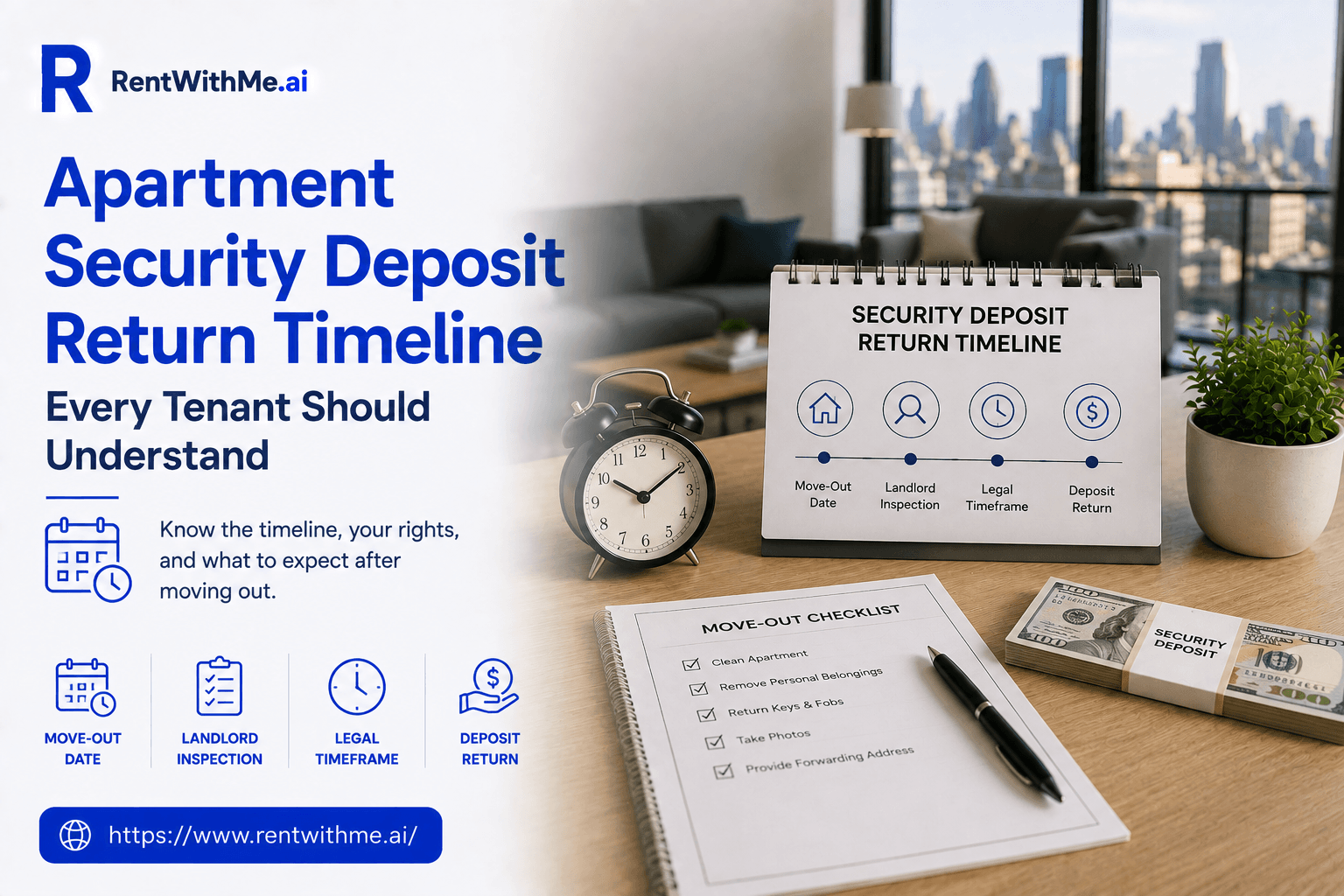
Apartment Security Deposit Return Timeline Every Tenant Should Understand
Introduction
A security deposit can represent a significant amount of money, especially for renters in New York City. When a lease ends, most tenants want to know exactly when that money should come back, what the landlord may deduct, and what they can do if the deposit is delayed or reduced unexpectedly.
New York law provides important protections surrounding residential security deposits. For many tenants, the landlord must return the remaining deposit and provide an itemized statement of any deductions within 14 days after the tenant vacates the apartment. Rent-stabilized tenants received expanded protections effective November 15, 2025, including a 14-day return requirement and enhanced inspection rights. (NYSenate.gov)
The rules matter because a security deposit does not automatically become the landlord’s money simply because the tenancy has ended. It remains money held as security, and deductions must be connected to legally permitted reasons rather than ordinary wear from normal occupancy.
Tenants can improve their chances of receiving the correct amount by preparing before move-out. Cleaning carefully, documenting the apartment, requesting the appropriate inspection, keeping payment records, and providing a forwarding address can make the deposit-return process much easier to manage.
The most important step is understanding the timeline before you hand back the keys. Waiting until several weeks after moving to research your rights can make an already stressful transition more difficult.

What a Security Deposit Is Meant to Cover
A security deposit protects the landlord against certain financial losses connected with the tenancy. It is not an automatic cleaning fee, moving fee, or additional rent payment.
New York generally limits a residential security deposit to no more than one month’s rent. The deposit remains the tenant’s money while being held as security and must be handled according to applicable state requirements. (New York State Attorney General)
For many covered residential tenancies, lawful deductions can include unpaid rent, qualifying unpaid utility charges payable directly to the landlord, tenant-caused damage beyond normal wear and tear, and certain costs associated with moving and storing belongings left behind. (NYSenate.gov)
Rent-stabilized tenants now receive similar statutory protections. HCR states that owners may retain only amounts legally allowed for unpaid rent, utilities, damage beyond normal wear and tear, and moving or storage of tenant belongings.
This distinction matters because landlords cannot simply decide that an apartment should look brand new after every tenancy and charge the departing tenant for restoring it to unused condition.
A Security Deposit Is Not Automatically Your Last Month’s Rent
Tenants sometimes decide to stop paying rent during the final month because the landlord already holds a deposit equal to one month’s rent.
That can create unnecessary problems.
The security deposit and monthly rent serve different purposes. Unless the landlord agrees to a different arrangement or another applicable rule changes the situation, tenants should continue treating rent as a separate obligation.
If you want the deposit applied to the final month’s rent, ask the landlord rather than assuming.
A written agreement can clarify how the money will be handled and prevent a later dispute over unpaid rent.

The Current New York Security Deposit Return Timeline
For most residential tenants covered by General Obligations Law § 7-108, the landlord must return the remaining security deposit within 14 days after the tenant has vacated the premises. If the landlord retains any portion, the landlord must also provide an itemized statement explaining the basis for the amount kept. (NYSenate.gov)
The 14-day period is tied to vacating the apartment. This makes the actual surrender date important. Moving most of your belongings out is not necessarily the same as completing the tenancy if you still retain possession, have not returned the keys, or have another agreed occupancy date.
Document when possession is returned. If you hand keys to management, keep whatever confirmation is reasonably available.
The 14-Day Rule for Rent-Stabilized Apartments
Rent-stabilized tenants should be aware of an important recent change.
Effective November 15, 2025, New York extended several security-deposit protections to rent-stabilized tenants. HCR states that owners must return the full deposit within 14 days after the tenant moves out, less amounts lawfully retained.
When an owner keeps part of the deposit, the owner must provide an itemized list of damages and repair costs. Rent-stabilized tenants also received expanded rights concerning pre-move-out inspections and the opportunity to correct conditions before the tenancy ends.
This change is important because older tenant guides and articles may still describe the 14-day rule as applying only to unregulated apartments. When researching security-deposit rights in 2026, use current information rather than older summaries published before the November 2025 change.

Rent-Controlled Apartments Require Separate Attention
Rent-controlled apartments should not automatically be treated the same way as ordinary market-rate or rent-stabilized units.
Current General Obligations Law § 7-108 contains exceptions for dwelling units subject to specific rent-control laws. (NYSenate.gov)
Because rent-controlled tenancies operate under a specialized regulatory framework, tenants should confirm the current rule applicable to their specific apartment rather than assuming every security-deposit provision discussed for other apartments applies identically.
This is particularly relevant for long-term NYC tenants whose apartments have been rent controlled for decades.
What Happens if the Landlord Keeps Part of the Deposit?
A landlord who makes deductions generally needs to explain what was retained.
Under § 7-108, the landlord must provide an itemized statement showing the basis for the amount kept and return the remainder within the 14-day period. If the landlord fails to provide the required statement and remaining deposit within that deadline, the law states that the landlord forfeits the right to retain any portion of the deposit. (NYSenate.gov)
This makes documentation important for both sides. A vague statement such as “apartment repairs” provides much less information than an itemized explanation identifying the relevant condition and amount.
Tenants should keep the statement after receiving it. If a deduction appears unreasonable, the itemization becomes the starting point for requesting supporting information or disputing the charge.

What Landlords May Lawfully Deduct
Security-deposit deductions should relate to recognized obligations rather than ordinary use of the apartment.
Common permitted categories can include:
- Unpaid rent and qualifying unpaid utility charges owed directly to the landlord.
- Reasonable costs for repairing tenant-caused damage beyond normal wear and tear, along with qualifying costs involving belongings the tenant leaves behind. (NYSenate.gov)
Rent-stabilized tenants receive comparable protection under the updated rules described by HCR.
The amount deducted should also be reasonable. If a dispute reaches a proceeding covered by § 7-108, the landlord bears the burden of proving the reasonableness of the amount retained. (NYSenate.gov)
Normal Wear and Tear Versus Tenant-Caused Damage
One of the biggest causes of security-deposit disputes is disagreement over what counts as normal wear. Apartments naturally change while people live in them.
Minor signs of ordinary use should not automatically be treated as tenant-caused damage requiring the tenant to restore every surface to new condition.
Damage is different. A broken fixture caused by misuse, substantial holes, significant stains, missing property, or other deterioration beyond ordinary occupancy may support a deduction depending on the facts.
The distinction is not always perfectly clear. That is why before-and-after photographs and inspection records can become important when the landlord and tenant remember the apartment differently.

Think About Age and Existing Condition
Imagine a tenant moves into an apartment where the flooring already shows years of ordinary use.
Three years later, the floor has additional normal signs of walking and furniture placement. It would be very different from a situation where the tenant caused substantial physical damage.
Existing condition matters. A landlord should not be able to charge the departing tenant for a problem that existed before the tenant moved in.
For covered tenants, New York law specifically allows an initial inspection process that can document existing defects before occupancy. Conditions recorded in that agreement generally cannot later become the basis for security-deposit deductions against the tenant. (NYSenate.gov)
Your Right to Request a Pre-Move-Out Inspection
One of the most useful tenant protections is the opportunity to identify potential deductions before moving out.
For tenancies covered by § 7-108, after either party gives notice of an intention to terminate the tenancy, the landlord must notify the tenant in writing of the right to request a pre-move-out inspection and the right to be present. An exception applies when the tenant terminates with less than two weeks’ notice. (NYSenate.gov)
Rent-stabilized tenants received corresponding inspection protections effective November 15, 2025. HCR explains that after timely notice of the intention to end the tenancy, the tenant can receive an inspection and an itemized statement of conditions that could lead to deductions.
This inspection can be extremely valuable. Instead of discovering a deduction after moving, the tenant gets an opportunity to identify potential problems while there is still time to address them.

How the Inspection Timeline Works
For units covered by § 7-108, the requested inspection should occur no earlier than two weeks and no later than one week before the tenancy ends. The landlord must provide at least 48 hours of written notice stating the inspection date and time. (NYSenate.gov)
After the inspection, the landlord must provide an itemized statement identifying repairs or cleaning that are proposed as possible deductions.
The tenant then has an opportunity to cure those conditions before moving out. (NYSenate.gov)
This process can potentially save both parties time. The tenant can fix legitimate issues, while the landlord receives an apartment that requires less turnover work.
Why You Should Attend the Inspection
Being present gives you an opportunity to see what the landlord or representative identifies.
You can ask questions immediately. If management believes the oven needs additional cleaning, for example, you still have time to address it.
If a wall condition existed when you moved in, you can refer to older photographs or inspection records. The inspection also reduces surprises.
It does not necessarily guarantee that no other legitimate issue will be discovered later, but it creates a useful record of the apartment shortly before surrender.

Use the Opportunity to Cure Problems
The pre-move-out process is most valuable when tenants actually use the information management provides. Addressing reasonable concerns before leaving can help prevent avoidable problems during the final security-deposit accounting.
If management identifies reasonable cleaning or repair concerns, determine which issues you can safely and appropriately address before leaving. Focus on conditions that clearly fall within your responsibilities as the tenant.
Do not perform unauthorized renovations or complicated repairs simply because you are concerned about protecting the deposit. Unnecessary work can create additional damage, expenses, or disagreements with management.
Some work should be handled by the landlord or a qualified professional rather than the tenant. Focus on removing belongings, cleaning appropriately, addressing minor conditions you caused, and restoring agreed items where required.
Do Not Make Major Unauthorized Repairs
The opportunity to cure identified problems does not mean tenants should undertake complicated or unauthorized construction work. Major repairs can require specialized knowledge, proper equipment, and approval from building management.
If management identifies significant damage during the inspection, discuss how the condition should be handled before attempting repairs. Clear communication can prevent unnecessary work and additional problems.
A poorly performed repair can create a larger problem than the original condition and potentially increase costs. For straightforward cleaning or minor tenant responsibilities, correcting the identified issue may be relatively simple.
For major plumbing, electrical, structural, appliance, or building work, coordination with the landlord is usually more appropriate. Protecting your deposit should never involve creating safety risks or violating your lease.
Questions to Ask When Your Deposit Is Late
If the applicable return period has passed without receiving your deposit or required accounting, contact the landlord in writing. A clear written request creates a record while allowing management to explain the delay.
Ask when the deposit was processed, where it was sent, whether any amount was retained, and when you can expect the itemized statement. These questions help identify exactly what happened.
Confirm your forwarding address again to make sure management has accurate information for sending your deposit. Sometimes a delayed payment results from an administrative problem rather than an intentional refusal.
A check may have been sent to an old address or processed incorrectly by management. Giving management an opportunity to explain can often resolve straightforward administrative mistakes relatively quickly.
Keep the First Follow-Up Simple
You do not necessarily need to begin your first follow-up message with threats or accusations. A concise, factual request is usually a more practical starting point for resolving the issue.
State your move-out date and clearly mention the amount of the security deposit being returned. Confirm that the applicable return period has passed and request the deposit and any required itemization.
Keep a copy of your written message as part of your security-deposit documentation and records. If management responds, preserve that response together with your original follow-up communication.
If the issue remains unresolved, you will have evidence showing that you attempted to address it directly. This written history can become useful if further action is eventually necessary.
What if Management Claims the Check Was Mailed?
If management says the security-deposit check was mailed, ask when and where it was sent. Confirm that the mailing address matches the forwarding information you previously provided.
If the check was sent to the wrong location, ask whether management can stop payment and issue another one. Keep written records showing how management responds to the delivery problem.
Do not assume that delayed mail delivery automatically means the landlord unlawfully retained your security deposit. Postal or administrative delays can occur even when management processed the payment.
At the same time, document all relevant dates carefully while the situation is being resolved. If a dispute develops later, the complete timeline may become particularly important.
What if You Receive the Deposit but No Itemization?
If money was deducted from your deposit without the required explanation, follow up with management immediately. Ask specifically for documentation explaining each amount that was retained from your security deposit.
For covered tenancies, the statutory itemization requirement is not optional. General Obligations Law § 7-108 connects the landlord’s right to retain money with compliance with the required accounting and timeline. (nysenate.gov)
Ask management to provide the missing documentation so you can properly review the final accounting. Keep your request clear, professional, and focused on the information you have not received.
Preserve the envelope, payment record, correspondence, and any other evidence showing what you received and when. These records can help establish the timeline if questions arise later.
What if the Landlord Says Everything Was Damaged?
Broad accusations about widespread apartment damage should be answered with specific questions and supporting evidence. Ask management to identify each condition rather than responding to a general statement about damage.
Request an itemized breakdown showing the individual conditions and the amounts associated with each claimed deduction. Then compare those specific claims carefully against your move-in and move-out records.
A tenant with photographs showing clean rooms, intact appliances, and documented preexisting conditions is in a stronger position. Organized evidence provides more useful information than relying entirely on memory.
Do not respond by guessing about what management may be referring to in its claim. Build your response around specific evidence and the individual conditions management has identified.
What if You Agree With Some Deductions?
You do not need to dispute every deduction simply because you disagree with one charge. Security-deposit accounting should be evaluated item by item based on the relevant facts and evidence.
Suppose you know that you damaged a bathroom fixture and accept a reasonable repair charge. You can acknowledge that deduction while separately disputing an unrelated flooring charge.
This approach can make your position clearer and easier for management to understand and evaluate. It demonstrates that your disagreement concerns specific charges rather than the entire accounting.
Focus your response on the money and deductions that are genuinely in disagreement between you and management. Security-deposit disputes do not need to become all-or-nothing arguments.
Compare the Deposit Statement With Your Final Rent Ledger
Before challenging management’s final accounting, confirm that your own financial records are complete and accurate. Reviewing the ledger first can prevent confusion between damage deductions and other outstanding obligations.
Check whether every required rent payment cleared and appears correctly in your available financial records. Confirm any utility amounts that were payable directly to the landlord under your rental arrangement.
Review concessions or other lease accounting that could affect the final balance management calculates after move-out. These items can sometimes explain differences that initially appear to involve security-deposit deductions.
A disputed damage deduction and an unpaid-rent balance are separate issues requiring different supporting information. Understanding the complete accounting prevents you from challenging the wrong charge.
A Practical Security Deposit Accounting Example
Imagine a tenant who paid a $3,400 security deposit and later moved out on June 30. The tenant has already paid all rent owed through the end of the tenancy.
Management claims $300 for damage to a cabinet and another $200 for removing furniture from storage. The tenant agrees that the cabinet was damaged but disputes the furniture-removal charge.
The tenant has final photographs showing that the storage area was completely empty before possession was surrendered. Instead of disputing the entire $500, the renter challenges only the unsupported $200 charge.
Management reviews the photographs and removes the disputed furniture-removal deduction from the final accounting. The disagreement becomes easier to resolve because both parties are discussing one specific charge.
Another Example Involving Preexisting Damage
Consider a tenant who moves into an apartment where several noticeable scratches already exist on the flooring. The tenant photographs those scratches immediately and emails management to document their condition.
Two years later, the landlord deducts money from the security deposit for alleged floor damage. The tenant can respond using the original photographs and written email sent at move-in.
That evidence may significantly strengthen the tenant’s position by establishing that at least some damage existed before occupancy. The documentation provides a clear comparison rather than relying on memory.
This example illustrates why move-in documentation should remain preserved until the security deposit is fully resolved. Records created years earlier can become extremely valuable during final accounting.
A Long-Term Tenant With Deposit Interest
Consider a renter who has lived for many years in a building containing six or more units. The tenant remembers paying a security deposit but has rarely reviewed the interest generated over time.
Before moving out, the renter gathers available annual statements and asks management for the current deposit balance. This provides clearer information for reviewing the final accounting after the tenancy ends.
The renter is not forced to reconstruct years of security-deposit history entirely from memory after moving out. Existing statements provide a more reliable record of how the deposit was handled.
Long-term tenants should therefore review available security-deposit records well before completing their final move. Doing so makes the eventual accounting easier to understand and verify.
A Tenant Whose Building Changed Owners
A tenant originally pays a security deposit to the landlord who owned the property at move-in. Five years later, the property is sold and a new management company takes over.
The new management company eventually becomes responsible for handling the tenant’s move-out and final accounting. The tenant still has the original lease, deposit receipt, and ownership-change notices.
Those records become valuable if the new management system shows an incorrect security-deposit balance at move-out. They provide documentation showing what was originally paid and how ownership later changed.
New York law addresses transfer of security money when ownership interests change, so a building sale should not simply erase the tenant’s deposit. (nysenate.gov)
Security Deposit Disputes Are Easier When You Prepare Before Moving
Many renters begin thinking seriously about their security deposit only after returning the apartment keys. By that point, it may be too late to create the strongest move-out evidence.
Before moving, confirm how much security money the landlord currently holds for your tenancy. Request the available inspection and preserve any documentation created through that inspection process.
Photograph the apartment carefully, download payment records, and save relevant maintenance history before losing portal access. These records can become important if management later questions the apartment’s condition.
Provide your forwarding address and preserve evidence showing when possession was formally returned to management. These relatively small tasks can make a significant difference if the final accounting is incorrect.
Keep Your Security Deposit File After the Refund Arrives
Do not immediately delete your security-deposit records simply because a payment has arrived from management. First review the payment carefully and confirm that the returned amount is correct.
Check whether deductions were made and whether the final accounting matches what you reasonably expected. Review any supporting documentation management provided for amounts retained from your original deposit.
Confirm that any applicable interest has also been handled appropriately within the final accounting process. Keep relevant statements or notices that help establish how the amount was calculated.
Once the matter is clearly resolved, retain important documents for a reasonable period rather than discarding them immediately. Rental records can sometimes remain useful even after you have moved.
Preparing to Take Action When the Deposit Is Not Returned
Most security-deposit returns should ideally conclude with straightforward accounting and payment after the tenancy ends. When that does not happen, tenants should understand the practical steps that may follow.
A late deposit may initially require nothing more than a clear written follow-up to management. An unexplained deduction may instead require additional documentation showing how the amount was calculated.
A more serious or unresolved disagreement may eventually justify a formal complaint or court claim. The appropriate path can depend on the disputed amount and the specific nature of the problem.
The final part will cover realistic security-deposit scenarios, frequently asked questions, a complete move-out and deposit-recovery checklist, practical recovery steps, complaint processes, small claims considerations, common mistakes, and final protection strategies.
Real-Life Security Deposit Return Examples for Different Tenant Situations
Security deposit rules become easier to understand when applied to realistic rental situations and circumstances. Similar rules can produce different outcomes depending on apartment condition, tenant records, tenancy type, and landlord compliance.
The following examples illustrate practical ways renters can approach common security-deposit problems after moving out. They are general scenarios rather than predictions about how any particular legal dispute would be decided.
A Tenant Who Receives the Full Deposit on Time
Consider a renter who pays a $3,200 security deposit when moving into an NYC apartment. Before leaving, the tenant carefully prepares for the final inspection and completes the required move-out steps.
The tenant requests the available pre-move-out inspection, completes identified cleaning, photographs every room, returns all keys, and provides management with an accurate forwarding address.
The apartment has no significant tenant-caused damage, and all required rent payments have been completed. Management therefore has a relatively straightforward final accounting to complete after possession is returned.
Management completes the accounting and returns the full deposit within the applicable 14-day period. This represents the ideal outcome for a properly documented and completed move-out process.
Good documentation does not create the tenant’s right to the money, but it reduces unnecessary uncertainty. It also makes final accounting easier when no unresolved questions remain about the apartment.
A Tenant Who Receives a Partial Refund
Another renter pays a $3,500 security deposit when beginning the tenancy in an apartment. During occupancy, the tenant accidentally damages a kitchen cabinet beyond ordinary wear and tear.
The tenant understands that the cabinet damage will require repair and may affect the final security-deposit accounting. The condition is different from ordinary deterioration caused by normal residential use.
After move-out, management returns most of the deposit and provides an itemized statement identifying the cabinet deduction. The tenant can then evaluate that specific amount rather than receiving an unexplained reduction.
The renter compares the charge with the condition, available documentation, and any supporting information management provides. If the deduction is legitimate and reasonable, there may be little reason for dispute.
Security deposit protection does not mean tenants can never be charged for actual tenant-caused damage. It means deductions should have a lawful basis rather than being automatically imposed after every tenancy.
A Tenant Charged for Preexisting Damage
Suppose a renter moves into an apartment with an already damaged bathroom vanity at move-in. The tenant takes clear photographs on the first day and emails management documenting the existing condition.
Two years later, management deducts money from the security deposit for damage to that same vanity. The tenant still has both the original photographs and the written email.
Instead of generally arguing that the deduction is unfair, the tenant can provide specific evidence showing the damage existed before occupancy. That evidence creates a direct comparison with management’s later claim.
This is one of the strongest reasons renters should create and preserve a move-in condition record. Security-deposit preparation begins when the tenancy starts rather than only when it eventually ends.
A Tenant Charged for Ordinary Wear
Consider a renter who has lived in the same apartment for several years before moving out. The apartment shows ordinary signs of occupancy but does not have unusual tenant-caused physical damage.
Management attempts to charge the tenant for several conditions the renter believes represent normal residential wear. The tenant reviews those charges against available move-in and final move-out documentation.
New York’s security-deposit rules distinguish damage beyond ordinary wear and tear from ordinary deterioration. For covered tenancies, reasonable amounts may be retained for damage caused by the tenant beyond normal wear and tear, not simply because the apartment is no longer in brand-new condition. (nysenate.gov)
The tenant can compare each deduction with move-in photographs, final photographs, length of occupancy, and inspection documentation. These records provide useful context for determining whether the claimed conditions changed during tenancy.
A Tenant Who Leaves Furniture Behind
A renter moves quickly and accidentally leaves an unwanted table, mattress, and several boxes behind. Management must deal with those belongings before completing the apartment’s normal turnover process.
For covered tenancies, New York law allows reasonable security-deposit deductions for moving and storing tenant belongings. (nysenate.gov)
This is why deciding that unwanted belongings no longer matter is not a good move-out strategy. Property left behind can create additional work and potentially affect the final security-deposit accounting.
Unless management expressly agrees that particular items may remain, tenants should completely remove their belongings before surrendering possession. A final empty-apartment walkthrough can help prevent this problem.
A Tenant Whose Deposit Does Not Arrive
Another renter moves out, returns all keys, provides a forwarding address, and receives no response from management. Fortunately, the tenant preserved written documentation establishing when possession was formally surrendered.
The tenant keeps the key-return confirmation and communications showing the exact move-out date and forwarding information. These records become useful once the applicable deposit-return period has passed.
After the applicable 14-day period passes, the renter sends a concise written request for the deposit and required itemized statement. The message creates an additional record of the tenant’s follow-up.
For covered tenancies, § 7-108 requires the itemized statement and remaining deposit within 14 days after the tenant vacates. Failure to comply results in forfeiture of the landlord’s right to retain any portion of the deposit. (nysenate.gov)
The tenant’s organized records make the relevant timeline significantly easier to establish and review. This demonstrates why key-return and move-out documentation should be preserved after leaving.
Frequently Asked Questions About Security Deposit Returns in New York
Tenants often focus primarily on one question after moving out: “When will I get my money?” The complete answer depends on several factors surrounding the tenancy and surrender.
The move-out date, tenancy type, claimed deductions, and landlord’s compliance with applicable procedures can all matter. Understanding these details helps renters evaluate whether the deposit was handled properly.
How long does a landlord have to return a security deposit in New York?
For residential tenancies covered by General Obligations Law § 7-108, the landlord must return the remaining security deposit and provide an itemized statement for any amount retained within 14 days after the tenant vacates. (nysenate.gov)
Effective November 15, 2025, rent-stabilized tenants also received a 14-day security-deposit return requirement. HCR’s current guidance explains that the owner must return the deposit within 14 days after move-out, less amounts lawfully retained. (hcr.ny.gov)
Rent-controlled apartments should be evaluated separately because statutory exceptions may affect the applicable security-deposit requirements. Tenants should verify current guidance for their specific type of regulated tenancy.
When does the 14-day period begin?
The statute refers to the relevant period beginning after the tenant has vacated the premises. This makes clear documentation of the actual surrender of possession particularly important for renters.
If you physically leave on Friday but retain possession and return the keys several days later, disagreement could arise about when the apartment was actually surrendered.
Create a clear written record showing when you completed the move-out and returned possession to management. Return keys through the appropriate procedure and preserve evidence confirming the handover.
Does the landlord get 14 business days?
The statutory language refers to 14 days rather than specifically stating 14 business days. (nysenate.gov)
Tenants should calculate the period carefully from the actual vacancy date and preserve supporting records. Clear documentation helps establish when possession ended and when the applicable period began.
If timing later becomes disputed between the tenant and landlord, the exact circumstances can matter. Preserve key-return records and related communications rather than relying solely on memory.
What happens if the landlord misses the deadline?
For covered tenancies, § 7-108 states that a landlord who fails to provide the required itemized statement and remaining deposit within 14 days forfeits the right to retain any portion of the deposit. (nysenate.gov)
Rent-stabilized tenants have corresponding protection under the rules effective November 15, 2025. (hcr.ny.gov)
Keep evidence showing your move-out date and exactly what you received from management afterward. These dates and records can become central if a disagreement develops over compliance.
Can a landlord deduct for cleaning?
Potentially, depending on the apartment’s actual condition and the law applicable to the tenancy. The difference between unusual cleaning needs and routine turnover work can become important.
New York’s statute allows covered landlords to retain reasonable amounts for costs associated with restoring the apartment to its condition at the beginning of the tenancy, except for ordinary wear and tear. (nysenate.gov)
An unusually dirty apartment can therefore present a different situation from ordinary cleaning performed between tenancies. Final photographs can provide useful evidence showing the apartment’s actual condition at surrender.
Can the landlord charge for repainting?
Whether a repainting charge is appropriate can depend on why the apartment actually requires repainting. Ordinary deterioration associated with normal occupancy should be distinguished from tenant-caused damage beyond ordinary wear.
If walls contain unusual damage caused during the tenancy, the analysis may be different from ordinary aging. The specific condition and cause should therefore be considered before evaluating the charge.
Do not assume every repainting charge is automatically valid or automatically invalid without reviewing the circumstances. Consider the condition, cause, move-in evidence, occupancy length, and available supporting documentation.
Can the landlord charge me for damage that already existed?
Preexisting damage should not simply become the departing tenant’s responsibility when the tenancy eventually ends. Documentation from move-in can help establish whether the disputed condition was already present.
Move-in photographs, inspection records, maintenance requests, and written emails can help demonstrate when a particular condition existed. These records are especially useful when management later claims tenant-caused damage.
New York’s initial inspection provisions for covered tenancies also allow existing defects to be documented. Conditions recorded in the resulting agreement generally cannot later serve as the basis for a security-deposit deduction. (nysenate.gov)
This makes complete and well-organized move-in documentation particularly valuable when the security deposit is eventually calculated. Keep those records throughout the entire tenancy rather than deleting them early.
Can the landlord keep my deposit for unpaid rent?
For covered tenancies, unpaid rent can be a lawful basis for retaining security-deposit funds after move-out. (nysenate.gov)
That does not mean tenants should automatically treat the security deposit as payment for the final month’s rent. Doing so can create an unnecessary unpaid-rent issue during final accounting.
Continue following the payment requirements in your lease unless another arrangement has been clearly agreed upon. Preserve any written agreement if management authorizes a different payment arrangement.
What if I disagree with only one deduction?
If you disagree with only one security-deposit deduction, challenge that specific amount rather than everything. You can accept a legitimate charge while separately disputing another unsupported or incorrect deduction.
For example, you might acknowledge responsibility for a broken fixture while disputing separate preexisting flooring damage. Supporting photographs and records can help explain why the charges should be treated differently.
A focused dispute is often easier for both tenant and management to evaluate and resolve. Address each disputed deduction according to its individual facts rather than treating every charge as improper.
Does my security deposit earn interest?
In certain rental properties, a tenant’s security deposit may earn interest during the tenancy. Building size and the circumstances of the tenancy can affect how the requirement applies.
New York General Obligations Law § 7-103 generally requires security deposits involving rental properties containing six or more family dwelling units to be placed in interest-bearing accounts at New York banking organizations. The landlord may retain an administrative amount equal to one percent per year, while the remaining interest belongs to the tenant. (nysenate.gov)
Building size and tenancy circumstances matter, so not every renter will have the same interest arrangement. Long-term renters should preserve available records concerning deposit interest and account information.
What happens to my deposit if the building is sold?
A property sale does not simply cause an existing tenant security deposit to disappear. Security money remains relevant even when ownership or management of the rental property changes.
New York General Obligations Law § 7-105 addresses the transfer of security money when the landlord’s interest in the property changes. (nysenate.gov)
Keep your original deposit receipt and lease even after ownership of the property changes. These records can help establish the correct deposit amount if the new owner’s accounting is inaccurate.
Complete Security Deposit Return and Move-Out Checklist
A strong deposit-return strategy begins well before the final day of the tenancy arrives. Preparing records and completing move-out responsibilities early can reduce uncertainty during the final security-deposit accounting.
Use the following checklist as a practical framework:
- Locate your lease and all renewal agreements.
- Confirm the original security-deposit amount.
- Determine whether your apartment is market-rate, rent stabilized, or rent controlled.
- Save the original deposit receipt and available account information.
- Gather move-in photographs and inspection documents.
- Save maintenance and repair communications.
- Confirm that your rent ledger is accurate.
- Pay outstanding obligations that are legitimately due.
- Give required notice concerning the end of the tenancy.
- Request the available pre-move-out inspection.
- Attend the inspection when practical.
- Obtain the landlord’s inspection-related itemization.
- Address appropriate conditions before leaving.
- Remove all personal belongings.
- Clean the apartment reasonably.
- Photograph every room after cleaning.
- Take close-up photographs of important surfaces and fixtures.
- Record a final walkthrough video if useful.
- Provide your forwarding address in writing.
- Return all keys, fobs, remotes, and other access devices.
- Obtain evidence showing when possession was surrendered.
- Save final rent and utility payment confirmations.
- Record the move-out date.
- Monitor the applicable deposit-return deadline.
- Review any itemized deduction statement carefully.
- Compare deductions with move-in and move-out evidence.
- Request clarification or supporting information for disputed charges.
- Keep all correspondence with management.
- Follow up promptly if the deposit is late.
- Escalate through an appropriate complaint or court process if necessary.
Not every tenant will need to complete every individual step listed in this checklist. However, completing the relevant items creates a stronger record than reconstructing the tenancy after a dispute begins.
Practical Steps to Take When Your Security Deposit Is Late
A late security deposit does not always mean the landlord intends to permanently keep your money. Administrative errors and communication problems can sometimes delay an otherwise routine security-deposit return.
Checks can be mailed to outdated addresses, management staff can change, and accounting systems may contain incorrect information. Begin by confirming the basic facts surrounding your move-out and deposit.
Make sure management has your correct forwarding address and accurately understands when possession was surrendered. Then ask whether the security deposit has already been processed for return.
These initial questions can identify simple administrative problems before the issue becomes a larger dispute. Keep written records of management’s explanation and any updated information they provide.
Send a Written Follow-Up
If the applicable security-deposit deadline has passed, communicate with management through a written channel. A written follow-up creates a clear record while providing an opportunity for prompt resolution.
Identify the apartment, your move-out date, the security-deposit amount, and the fact that you have not received the required return or accounting.
Ask management to resolve the matter promptly and provide any required information concerning the deposit. Keep your message professional, concise, and focused on the missing payment or accounting.
Save management’s response together with your original written request and other move-out documentation. If management does not respond, the unanswered request also becomes part of your records.
Organize Your Evidence Before Escalating
Before escalating a security-deposit disagreement, organize your records into a clear and understandable timeline. This makes the history easier for management or another reviewer to follow.
Record when the deposit was originally paid, notice was given, the inspection occurred, you vacated, keys were returned, and you contacted management afterward.
Attach or organize the relevant evidence alongside each important event in the timeline whenever practical. A chronological file is easier to understand than dozens of unrelated screenshots or messages.
If you later submit a formal complaint or court claim, organized documentation can make presenting the issue easier. A clear timeline helps another person understand what happened without reconstructing everything independently.
Dispute Deductions in Writing
If the deposit arrives with deductions you believe are improper, identify each disputed amount clearly. Explain why you disagree with the particular deduction and provide supporting evidence where available.
For example, you might explain that flooring damage appears in your move-in photographs or that a claimed cleaning issue conflicts with final photographs taken before key return.
Avoid exaggerating the situation or disputing charges that you know are reasonably supported by the facts. A precise written response generally makes your position clearer and easier to evaluate.
If one deduction is legitimate, acknowledging it can make the remainder of your position more understandable. The goal is to recover money you can reasonably support with evidence and facts.
Common Security Deposit Dispute Mistakes to Avoid
Tenants can weaken an otherwise strong security deposit claim through poor documentation or unnecessary escalation. Avoidable mistakes can make a legitimate dispute more difficult to explain and support later.
One common mistake is deleting move-in photographs because they seem unimportant several years into the tenancy. Those photographs may become valuable evidence when the final security deposit is calculated.
Another common mistake is relying entirely on verbal conversations without preserving important information in writing. Written records provide a clearer history when memories or accounts later differ between parties.
Some renters also wait months before questioning deductions, making important records and details harder to reconstruct. Promptly reviewing the accounting helps preserve evidence while the move-out circumstances remain clear.
Others demand the entire deposit even when they know that part of the deduction is legitimate. A more focused dispute can make reasonable concerns easier for management to understand and evaluate.
The strongest approach is usually precise, documented, and timely throughout the entire security deposit process. Clear evidence and focused communication can make legitimate disagreements considerably easier to address.
Do Not Alter Evidence
Keep original photographs, videos, emails, and documents that relate to the tenancy and security deposit. Original records provide the clearest evidence of what existed and when events occurred.
Do not edit an image in a way that could create uncertainty about what it originally showed. Altered photographs can create unnecessary questions about otherwise useful documentation.
Basic organization is completely appropriate, but preserve the original files whenever reasonably possible for future reference. Organized copies can be created without changing or deleting the underlying evidence.
The same principle applies to emails, text messages, and other communications exchanged during the tenancy. Preserve complete conversations whenever they contain information relevant to the security deposit dispute.
Save complete conversations rather than isolated screenshots that remove important context from the original communication. Reliable evidence should make the timeline clearer rather than creating additional questions about what occurred.
Do Not Throw Away the Landlord’s Itemized Statement
Even when you strongly disagree with the landlord’s itemized statement, keep the original document carefully. It provides an important record of the deductions management claimed after your move-out.
The statement establishes what the landlord claimed and how much money was withheld from your deposit. This information allows you to evaluate and challenge individual deductions more accurately.
Preserve the envelope or electronic delivery information when the timing of the statement may be relevant. Delivery records can help establish exactly when the accounting was provided to you.
Combine the statement with the payment you received and your other relevant move-out documentation. Keeping these materials together creates a clearer record of the final security deposit accounting.
A dispute becomes easier to explain when you can show exactly what management sent and retained. Complete records reduce the need to reconstruct important information later from memory.
Filing a New York Attorney General Rent Security Complaint
When direct communication does not resolve a security deposit problem, tenants may have formal options available. These options can provide another path when reasonable efforts with management have been unsuccessful.
The New York Attorney General provides a Rent Security Complaint form for tenants seeking assistance with security-deposit issues. The Attorney General’s tenant guidance also directs renters to its office for complaints involving security deposits. (ag.ny.gov)
Before submitting a complaint, organize the relevant documentation connected with your tenancy and security deposit. Clear records can make the underlying problem significantly easier for another person to understand.
Include accurate information about the tenancy, landlord, deposit, move-out, disputed amount, and your attempts to resolve the matter. Keeping these details organized creates a clearer account of what occurred.
Do not treat the complaint as an opportunity to provide an unnecessarily emotional or lengthy narrative. A clear factual explanation supported by relevant documents is much easier to evaluate.
What to Include With a Security Deposit Complaint
Useful materials can include the lease, proof of the security deposit, and relevant move-out correspondence. Itemized statements, photographs, inspection documentation, and landlord communications can also support the complaint.
Payment records can also become important when management claims that rent remained unpaid after the tenancy. Clear payment documentation can help establish whether the claimed outstanding balance actually existed.
Include only materials that are genuinely relevant to the security deposit problem you are disputing. Unrelated documents can make the central issue unnecessarily difficult for another person to identify.
Hundreds of unrelated pages can make an otherwise straightforward security deposit disagreement harder to understand. Organize supporting documents carefully instead of submitting every record from the entire tenancy.
Arrange documents logically and clearly identify the specific amount you believe remains due from management. A well-organized submission makes your position and supporting evidence considerably easier to review.
When Small Claims Court May Be Appropriate
A tenant may also consider court when a security deposit dispute cannot be resolved informally. This option may become relevant when repeated efforts to resolve the disagreement have been unsuccessful.
New York City Small Claims Court handles qualifying monetary claims up to $10,000. The New York State Unified Court System explains that Small Claims Court is designed as a simplified, informal process for individuals seeking money damages within the jurisdictional limit. (nycourts.gov)
A security deposit dispute can potentially fit within that framework when the amount and circumstances qualify. Tenants should organize the relevant facts and documentation before deciding how to proceed.
Court should not automatically be the first step when a disagreement develops over the security deposit. A clear written demand may resolve the problem without requiring formal litigation.
However, tenants should understand that an unresolved deposit does not necessarily need to be abandoned. Management’s refusal of an initial request does not automatically mean the dispute cannot proceed further.
Preparing for a Small Claims Case
If court becomes necessary, careful preparation can make the security deposit dispute easier to present clearly. The relevant facts should be organized before the tenant appears for the proceeding.
The judge needs to understand what happened without having personally experienced the tenancy or move-out process. A clear timeline can make the sequence of events significantly easier to follow.
Create a short timeline showing the important events from payment of the deposit through final move-out. Include the dates that directly relate to the disputed security deposit and deductions.
Bring the lease, proof of the deposit, move-in records, move-out photographs, and relevant inspection documents. Rent-payment evidence, correspondence, deduction statements, and recovery requests should also be organized and available.
Organize everything so that individual documents can be located quickly when they become relevant to the discussion. A strong case is not simply a large stack of paperwork without structure.
It is a coherent explanation supported by relevant evidence that clearly connects to the disputed amount. Organized documentation makes the facts easier for another person to understand and evaluate.
Understand What You Are Asking For
Before filing a claim, calculate the amount genuinely in dispute as carefully and accurately as possible. Your requested amount should reflect the deductions you actually challenge rather than the original deposit automatically.
Suppose your original security deposit was $3,500 and management later returned only $2,600 after move-out. That means the landlord retained a total of $900 from your deposit.
You agree that $250 relates to legitimate damage but dispute the remaining $650 retained by management. Your actual disagreement may therefore concern $650 rather than the entire original security deposit.
Precise calculations make your position considerably easier for management or a court to understand and evaluate. Clearly separating accepted and disputed deductions also keeps the disagreement focused on the relevant amount.
Include applicable interest or other amounts only when you have a sound basis for requesting them. Avoid adding unsupported amounts that could unnecessarily complicate an otherwise straightforward security deposit claim.
Additional Damages Can Depend on the Circumstances
New York’s security deposit statute contains provisions concerning damages when landlords willfully violate certain applicable requirements. These provisions can become relevant depending on the specific facts surrounding the landlord’s conduct.
General Obligations Law § 7-108 provides that a person who violates the applicable provisions may be liable for actual damages and, in cases of willful violation, punitive damages of up to twice the deposit or advance. (nysenate.gov)
Tenants should not assume that every delayed security deposit automatically results in the maximum additional recovery. The circumstances surrounding the violation can affect what additional damages may be appropriate.
Whether particular conduct was willful and what damages are appropriate can depend heavily on the facts. Avoid making assumptions about additional recovery without considering the specific circumstances of the dispute.
If substantial additional damages are being considered, qualified legal guidance can help clarify the potential claim. Professional guidance can be particularly useful when the facts or applicable requirements are complicated.
When Professional Legal Guidance May Be Worthwhile
Many security deposit disputes involve amounts that tenants can pursue through direct communication or small claims procedures. Straightforward disagreements may not necessarily require extensive professional legal assistance.
Some security deposit situations, however, can become considerably more complicated than ordinary deduction disagreements. The amount involved, tenancy type, or landlord’s claims may make additional guidance worthwhile.
Consider qualified guidance when the dispute involves a large amount, complicated rent regulation, or disputed ownership transfers. Unusual lease provisions, significant counterclaims, or uncertainty about applicable deposit rules may also justify assistance.
Legal assistance can also be useful when the landlord threatens claims substantially exceeding the security deposit amount. A tenant should understand the potential financial exposure before deciding how to respond or proceed.
Final Advice for Protecting Your Security Deposit
The best security deposit protection strategy begins on move-in day rather than shortly before moving out. Records created at the beginning can become extremely valuable when the tenancy eventually ends.
Photograph the apartment carefully before settling in and document existing defects throughout each important area. Keep your lease and proof clearly showing the amount of security money originally paid.
During the tenancy, preserve important maintenance communications involving conditions that could affect the apartment’s final condition. These records can help explain how particular damage or deterioration developed over time.
If water damage, appliance problems, leaks, or other conditions develop, report them and preserve the communication. This creates a useful record showing when the problem first appeared and was reported.
As move-out approaches, shift your attention from ordinary recordkeeping toward preparing the apartment for final surrender. Review the apartment carefully and identify conditions that may reasonably require attention before leaving.
Request the applicable inspection and address legitimate issues while you still have access to the property. Correcting appropriate concerns before surrender can reduce unnecessary deductions during the final security deposit accounting.
Then create a complete final visual record showing the apartment’s condition immediately before you surrender possession. Photograph the apartment after your belongings have been removed and final cleaning has been completed.
Return possession clearly and provide management with an accurate forwarding address for future correspondence and payment. Preserve evidence showing when keys, fobs, and other required access devices were formally returned.
Afterward, monitor the applicable security deposit timeline and keep your move-out documentation readily available for reference. Do not assume management will automatically remember every requirement without any follow-up from you.
When the deposit arrives, verify the returned amount instead of accepting payment without reviewing the accounting. If deductions appear, examine each individual charge rather than focusing only on the total amount.
Compare each deduction with your lease, inspection documents, photographs, maintenance history, and available payment records. Challenge only those deductions that you have a reasonable factual basis to question.
If the deposit does not arrive when required, follow up promptly with management through a written channel. A professional written request can resolve many administrative problems without unnecessarily escalating the disagreement.
When direct communication does not resolve the issue, New York tenants may have additional complaint and court options. Understanding those available options can help renters decide what further action is appropriate.
Conclusion
A security deposit may be paid at the beginning of a tenancy, but protecting it continues beyond move-out. Good documentation and careful preparation throughout the tenancy can significantly reduce uncertainty during final accounting.
For many New York residential tenants, one of the most important requirements is the 14-day security deposit return timeline. Understanding when this period begins can help tenants monitor whether the return process is proceeding properly.
General Obligations Law § 7-108 requires covered landlords to provide an itemized statement of deductions and return the remaining deposit within 14 days after the tenant vacates. (nysenate.gov)
Rent-stabilized tenants should also understand the significant security deposit change that took effect on November 15, 2025. This change affects the timeline for returning deposits after qualifying rent-stabilized tenancies end.
HCR’s current guidance states that owners must return a rent-stabilized tenant’s deposit within 14 days after move-out, less amounts lawfully retained, and provide an itemized list when deductions are made. (hcr.ny.gov)
The security deposit return deadline, however, represents only one part of the complete move-out process. Tenants should also understand what expenses can potentially affect the final amount returned.
Unpaid rent, certain qualifying utility obligations, tenant-caused damage beyond normal wear and tear, and applicable costs involving belongings left behind can potentially affect the final amount.
Ordinary deterioration from normal residential occupancy should be distinguished from actual tenant-caused damage requiring additional work. A rental home naturally changes over time while someone regularly lives in and uses it.
Normal use naturally affects surfaces, fixtures, and other materials throughout an apartment over several years. Distinguishing ordinary wear from actual tenant-caused damage is therefore an important part of deposit accounting.
Documentation provides one of the strongest protections against uncertainty about the apartment’s condition during the tenancy. Move-in and move-out records can provide useful evidence when the parties remember conditions differently.
Move-in photographs can establish that particular damage or imperfections already existed before the tenancy officially began. Preserve those photographs even when they appear unimportant during the middle of a long tenancy.
Maintenance records can show that deterioration resulted from a previously reported building, plumbing, appliance, or maintenance problem. These records can provide valuable context when the final apartment condition is later reviewed.
Pre-move-out inspection documents can identify concerns while the tenant still has an opportunity to address them appropriately. Keeping those documents also creates a useful record of conditions management identified before surrender.
Final photographs can show how the apartment looked after belongings were removed and cleaning was completed. These images can be compared with move-in photographs if a security deposit disagreement later develops.
Financial documentation is equally important when reviewing the landlord’s final security deposit accounting after move-out. Keep rent receipts, payment confirmations, utility records, deposit information, and applicable interest statements together.
Do not assume you will continue to have permanent access to an online tenant portal after moving. Download important records while your account remains active and store copies somewhere you personally control.
Tenants in buildings with six or more dwelling units should also be aware of New York’s rules concerning interest-bearing security-deposit accounts. These requirements may affect the handling of qualifying deposits throughout longer tenancies.
General Obligations Law § 7-103 generally requires qualifying deposits to be placed in interest-bearing New York banking accounts, subject to the landlord’s permitted administrative amount and the tenant’s rights to the remaining interest. (nysenate.gov)
Building ownership changes should not cause an existing tenant’s security deposit to simply disappear from the records. Preserve deposit documentation whenever a property changes ownership or management during your tenancy.
New York law addresses the transfer of security money when a landlord’s interest in the property changes. Keeping your original lease and deposit documentation can be particularly valuable when a property changes owners or management companies during a long tenancy. (nysenate.gov)
If a security deposit deduction appears unreasonable, begin your review with evidence rather than frustration or assumptions. Identify the exact charge and determine which records relate directly to that deduction.
Compare the disputed charge with your move-in records, final photographs, maintenance history, and other relevant documentation. Ask management for clarification or supporting information whenever the basis for a deduction remains unclear.
A tenant with dated photographs, inspection records, payment confirmations, and written communications has a stronger documented position. Those materials provide more useful evidence than relying only on memories about the apartment’s condition.
When a security deposit is late, begin with a clear and professional written follow-up to management. Confirm the move-out date, forwarding address, deposit amount, and exactly what has not been received.
Preserve management’s response together with your original message and other relevant security deposit documentation. If direct communication fails, formal complaint or court options may become appropriate depending on the circumstances.
The New York Attorney General provides resources concerning rent security complaints, while qualifying monetary disputes may also be considered through New York City’s Small Claims Court, which handles eligible claims up to $10,000. (ag.ny.gov) (nycourts.gov)
Most importantly, tenants should not wait until after moving out to begin thinking about their security deposit. Protecting the deposit effectively requires attention throughout the complete rental relationship.
Protect the money from the beginning by documenting the apartment carefully when you first take possession. Maintain important records throughout the tenancy and prepare systematically as the final move-out date approaches.
Request available inspections, document the final apartment condition, and surrender possession clearly through the appropriate management process. After moving out, monitor the applicable return timeline and preserve all important records.
A security deposit may equal only one month’s rent, but in New York City that can still represent thousands of dollars. Understanding the rules and maintaining clear records can help protect that significant amount.
Good documentation gives tenants the best opportunity to receive the money they are entitled to after move-out. It also provides a stronger basis for responding when the landlord’s final accounting does not look correct.