Apartment Subletting Rules Every NYC Tenant Must Understand Before Subletting
Introduction
Apartment subletting can be a practical solution for New York City tenants who need to leave their rental temporarily without giving up their lease. Whether you are relocating for work, studying abroad, traveling for an extended period, or dealing with unexpected life changes, subletting may allow you to keep your apartment while someone else occupies it for a limited time.
However, subletting an apartment in NYC is not as simple as finding someone willing to move in. There are lease provisions, landlord approval requirements, legal obligations, and financial responsibilities that every tenant should understand before handing over the keys.
Many renters mistakenly believe they can sublet whenever they want or assume that verbal agreements are enough to protect everyone involved. These misunderstandings can create unnecessary disputes, financial losses, or even lease violations that could jeopardize the original tenancy.
Learning the rules before beginning the process helps you make informed decisions, protect your rights, and create a smoother experience for both you and your subtenant. This guide explains the essential apartment subletting rules every NYC tenant should understand before entering into a sublease agreement.
What Is Apartment Subletting?
Apartment subletting occurs when the original tenant temporarily rents all or part of their apartment to another individual while remaining responsible for the original lease.
The person named on the lease continues to have a legal relationship with the landlord, while the new occupant, commonly referred to as the subtenant, occupies the apartment according to the terms of the sublease agreement.
Unlike a lease assignment, where another person may permanently take over the lease under certain circumstances, a sublease is generally intended to be temporary. Once the agreed sublease period ends, the original tenant typically resumes occupancy or otherwise fulfills the obligations outlined in the lease.
Although a subtenant lives in the apartment, the original tenant usually remains accountable for complying with the lease agreement unless other arrangements have been formally approved.

How Apartment Subletting Works in New York City
Subletting in New York City involves more than simply advertising an apartment online and selecting a new occupant.
Before beginning the process, tenants should carefully review their lease agreement to determine whether subletting is addressed and whether specific procedures must be followed. Lease provisions often explain the conditions under which subletting may occur, including any required notices or documentation.
Many NYC landlords require tenants to submit a formal request before approving a sublease. Depending on the property and lease terms, additional information about the proposed subtenant may also be requested.
Once approval is obtained, the original tenant and subtenant typically enter into a written sublease agreement outlining the rental period, payment responsibilities, apartment rules, and other important terms.
Even after the subtenant moves in, the original lease generally remains in effect, making it important for the original tenant to stay informed and maintain communication throughout the sublease period.
Why Understanding NYC Subletting Rules Is Important
Subletting affects more than just who occupies the apartment.
Because the original tenant often remains responsible for the lease, misunderstanding the rules can create financial and legal complications that continue even after the subtenant has moved out.
Understanding the applicable procedures also helps tenants prepare realistic timelines. Obtaining approvals, reviewing documents, and finding a suitable subtenant often take longer than many renters initially expect.
Being informed from the beginning also promotes better communication with landlords and prospective subtenants. Clear expectations reduce misunderstandings and create a more professional rental experience for everyone involved.
Most importantly, understanding the rules allows tenants to make confident decisions while protecting their housing interests.

Lease Clauses Every Tenant Should Review Before Subletting
Before considering a sublease, the lease agreement should become your primary reference.
Every lease is different, and the terms governing subletting may vary from one apartment to another. Reading the lease thoroughly helps identify any restrictions, approval requirements, notice procedures, or responsibilities that apply.
Pay particular attention to provisions related to occupancy, rent payments, maintenance obligations, apartment use, and any clauses that specifically discuss subleasing.
Important lease sections commonly include:
- Subletting or occupancy provisions.
- Landlord approval requirements.
- Rent payment obligations.
- Maintenance and repair responsibilities.
- Apartment rules and community policies.
- Notice requirements and lease duration.
Understanding these sections before making plans can help prevent avoidable delays and ensure that the subletting process begins on the right footing.
If any language in the lease seems unclear, obtaining clarification before proceeding is generally preferable to relying on assumptions.
Landlord Approval and Permission Requirements
One of the most important aspects of apartment subletting is understanding whether landlord approval is required.
Many lease agreements establish procedures for requesting permission before another person occupies the apartment. Following these procedures demonstrates good faith and helps maintain a positive landlord-tenant relationship.
A landlord may request information about the proposed subtenant, the anticipated duration of the sublease, or other documentation described in the lease agreement.
Submitting complete and organized information often helps the review process move more efficiently. Waiting until the last minute, on the other hand, can create unnecessary complications if additional documentation is needed.
Maintaining professional communication throughout the approval process benefits everyone involved and establishes clear expectations before the subtenant moves into the apartment.

Rights and Responsibilities of the Original Tenant
Subletting does not usually eliminate the responsibilities of the original tenant.
In many situations, the original tenant remains responsible for fulfilling the obligations outlined in the lease agreement even while another individual occupies the apartment.
These responsibilities often include paying rent according to the lease, complying with community policies, maintaining communication with the landlord when necessary, and ensuring that the apartment is used appropriately.
The original tenant should also remain familiar with the terms of the sublease agreement. Understanding the responsibilities assigned to the subtenant helps reduce confusion if questions arise during the rental period.
Remaining actively involved throughout the sublease protects both the tenant’s interests and the overall rental relationship.
Common Reasons NYC Tenants Choose to Sublet
Every renter’s situation is unique, and there are many legitimate reasons why someone may consider subletting an apartment.
Temporary employment opportunities often require tenants to relocate for several months without permanently leaving New York City. A sublease may provide flexibility during these assignments.
Students participating in exchange programs or internships may also prefer subletting instead of terminating their lease if they plan to return.
Other tenants choose to sublet while caring for family members, completing extended travel, serving temporary military assignments, or waiting for renovations to finish on another property.
In each of these situations, subletting can provide a practical housing solution while allowing tenants to preserve their existing lease arrangement.

Common Misconceptions About Apartment Subletting
Apartment subletting is often misunderstood, particularly among first-time renters.
One common misconception is that finding a willing subtenant is the only requirement. In reality, the lease agreement and applicable rules typically play a significant role in determining how the process should proceed.
Another misunderstanding is believing that the original tenant no longer has responsibilities after the subtenant moves in. In many cases, the original lease obligations continue throughout the sublease period.
Some renters also assume that verbal agreements provide sufficient protection. A well-prepared written sublease agreement generally creates much clearer expectations regarding rent, occupancy dates, apartment rules, and other important responsibilities.
Recognizing these misconceptions early helps tenants avoid preventable mistakes during the subletting process.
Benefits of Learning the Rules Before Subletting
Taking time to understand apartment subletting rules provides significant advantages before beginning the process.
Instead of reacting to unexpected challenges, informed tenants can prepare documents, review lease terms, communicate effectively with landlords, and evaluate prospective subtenants with greater confidence.
Learning the rules also encourages realistic planning. Knowing what information may be required, how approvals typically work, and what responsibilities continue during the sublease allows tenants to organize every stage more efficiently.
Perhaps most importantly, understanding the process helps protect both the original tenant and the subtenant by creating clear expectations from the very beginning. Good preparation often leads to smoother communication, fewer misunderstandings, and a more successful subletting experience overall.
In the next section, we’ll explore the legal considerations involved in apartment subletting in NYC, discuss how to find and screen a reliable subtenant, explain the financial responsibilities that continue during a sublease, review the importance of creating a written sublease agreement, examine common mistakes tenants should avoid, identify situations where subletting makes sense, explain when it may not be the best option, and outline the key details every tenant should review before signing a sublease agreement.

Legal Considerations for Apartment Subletting in NYC
Understanding the legal aspects of subletting is one of the most important responsibilities of any NYC tenant.
Subletting is governed by the terms of your lease as well as applicable laws and regulations. While many tenants focus on finding someone to occupy the apartment, the legal requirements should always be addressed before advertising the unit or accepting a prospective subtenant.
Start by reviewing your lease carefully to determine whether subletting is permitted and whether specific procedures must be followed. Every property is different, and the requirements outlined in one lease may differ significantly from another.
It is equally important to understand that entering into a sublease does not necessarily transfer all responsibilities to the subtenant. The original tenant often remains accountable for complying with the lease agreement throughout the sublease period.
If questions arise regarding your rights or obligations, obtaining reliable information before proceeding is far better than attempting to resolve problems after the subtenant has moved in.
Finding and Screening a Reliable Subtenant
Selecting the right subtenant is one of the most important decisions during the entire subletting process.
A reliable occupant helps protect both the apartment and the original tenant’s interests. Rushing this step simply because someone is available can create avoidable financial and administrative challenges later.
Begin by communicating clearly about the apartment, rental expectations, occupancy dates, and community rules. Transparency helps attract applicants who genuinely understand the arrangement.
It is also helpful to evaluate whether a prospective subtenant appears financially responsible, communicates professionally, and understands the responsibilities associated with occupying another person’s leased apartment.
A careful screening process often includes reviewing information such as:
- Rental history and references.
- Employment or income information.
- Intended length of stay.
- Understanding of apartment rules.
- Communication and responsiveness.
Taking time to evaluate prospective subtenants carefully often leads to a smoother experience for everyone involved.

Financial Responsibilities During a Sublease
One of the most misunderstood aspects of subletting involves financial responsibility.
Many tenants mistakenly believe that once a subtenant begins paying rent, their own financial obligations disappear. In reality, the original lease often continues to govern the relationship between the tenant and the landlord.
This means the original tenant should remain aware of rent payment schedules, utility arrangements, security deposit terms, and any recurring obligations described in the lease.
Creating a clear financial understanding before the sublease begins reduces confusion later. Both parties should understand payment deadlines, methods of payment, utility responsibilities, and procedures for addressing unexpected expenses.
Maintaining organized financial records throughout the sublease also helps resolve questions quickly if they arise.
Creating a Written Sublease Agreement
A written sublease agreement is one of the best tools for protecting both the original tenant and the subtenant.
Rather than relying on verbal conversations or informal messages, a written agreement establishes expectations in a clear and organized manner. It also provides a useful reference if questions develop during the sublease period.
Although every agreement is different, it generally explains the rental period, payment arrangements, occupancy expectations, apartment rules, and responsibilities of each party.
The table below highlights several common sections found in many written sublease agreements.
| Agreement Section | Purpose |
|---|---|
| Rental period | Identifies the beginning and ending dates |
| Monthly rent | Explains payment expectations |
| Utility responsibilities | Clarifies who pays recurring utilities |
| Apartment rules | Outlines occupancy expectations |
| Maintenance responsibilities | Defines day-to-day responsibilities |
| Signatures | Confirms both parties agree to the terms |
Preparing a detailed written agreement helps reduce misunderstandings and encourages open communication throughout the sublease.

Mistakes That Can Lead to Subletting Problems
Many apartment subletting problems begin long before the subtenant moves in.
One common mistake is failing to review the lease before making plans. Assumptions about what is permitted can easily create unnecessary complications later.
Another frequent error is choosing a subtenant too quickly. Selecting someone without adequate communication or evaluation increases the likelihood of future disagreements.
Some tenants also neglect documentation. Keeping organized records of correspondence, approvals, payments, and agreements provides valuable protection throughout the rental period.
Waiting until the last minute to begin the subletting process is another avoidable mistake. Allowing sufficient time for approvals, paperwork, and communication generally leads to a much smoother experience.
When Subletting Is a Good Option
Subletting can be an effective housing solution under many circumstances.
Tenants who expect to return to their apartment after a temporary absence often find that a sublease provides flexibility without requiring them to permanently surrender their lease.
Examples of situations where subletting may be beneficial include:
- Temporary work assignments.
- Study abroad or educational programs.
- Extended travel.
- Family caregiving responsibilities.
- Temporary housing transitions while purchasing or renovating a home.
Each of these situations involves temporary changes rather than permanent relocation, making subletting an option worth considering for many renters.
Carefully evaluating your future plans helps determine whether subletting aligns with your housing needs.
Situations Where Subletting May Not Be the Right Choice
While subletting offers flexibility, it is not appropriate in every situation.
If you know you will not return to the apartment, another housing arrangement may better reflect your long-term plans depending on your lease and circumstances.
Subletting may also become more complicated if you cannot devote adequate time to screening applicants, preparing documentation, maintaining communication, or overseeing the rental arrangement during your absence.
Tenants should also consider whether managing an ongoing lease from another city or country is practical. Remaining responsible for the lease requires continued attention even while someone else occupies the apartment.
Evaluating these practical considerations before beginning the process often leads to better long-term decisions.
What to Review Before Signing a Sublease Agreement
Before signing any sublease agreement, take time to review every important detail carefully.
Both the original lease and the proposed sublease should be consistent with one another whenever appropriate. Reviewing the documents together helps ensure expectations remain clear throughout the rental period.
Pay particular attention to occupancy dates, rent payment procedures, apartment rules, maintenance responsibilities, utilities, security deposit arrangements, and communication expectations.
The following table summarizes several important items every tenant should verify before signing.
| Item to Review | Why It Matters |
|---|---|
| Original lease provisions | Confirms subletting requirements |
| Sublease dates | Prevents occupancy misunderstandings |
| Rent payment terms | Establishes payment expectations |
| Utility responsibilities | Clarifies recurring expenses |
| Apartment rules | Helps maintain compliance |
| Contact information | Supports ongoing communication |
After both parties review the agreement, retain signed copies along with any supporting documentation in a secure location. Organized records make future communication much easier and provide valuable reference material if questions arise.
In the final section of this guide, we’ll explore real-life examples of successful apartment subletting in New York City, answer frequently asked questions, provide a complete subletting checklist, share expert recommendations for protecting yourself throughout the process, examine common financial and legal mistakes to avoid, discuss additional strategies for reducing risk during a sublease, and conclude with practical advice every NYC tenant should remember before subletting an apartment.
Real-Life Examples of Apartment Subletting in NYC
Seeing how apartment subletting works in everyday situations can make the process much easier to understand. While every lease, landlord, and rental property is different, these examples demonstrate why preparation and communication are essential before entering into a sublease.
The scenarios below are fictional and provided for educational purposes. Actual lease terms, landlord policies, and legal requirements may differ depending on the property and applicable laws.
A Tenant Relocates for a Temporary Work Assignment
Alex accepted a six-month work assignment in another state but planned to return to New York City afterward.
Rather than terminating the lease, Alex reviewed the lease agreement, submitted the required request to the landlord, and found a qualified subtenant after completing a careful screening process. Throughout the sublease, Alex maintained communication with both the landlord and the subtenant, helping ensure the arrangement remained organized until returning home.
The experience demonstrated that planning ahead and following the required procedures can make temporary relocations much less stressful.
A Graduate Student Studies Abroad
Emily received an opportunity to study overseas for one academic semester.
Since she intended to return to the same apartment, she chose to sublet instead of ending her lease. By preparing a detailed written sublease agreement and discussing expectations with the subtenant before moving out, she reduced the likelihood of misunderstandings during her absence.
When Emily returned, the transition back into the apartment was smooth because expectations had been clearly established from the beginning.
A Tenant Rushes the Screening Process
Marcus needed to leave New York quickly due to an unexpected family situation.
Feeling pressed for time, he accepted the first interested applicant without thoroughly discussing apartment rules or documenting responsibilities in writing. During the sublease period, communication became difficult because important expectations had never been clearly established.
This example illustrates why taking time to prepare properly often prevents avoidable complications later.
A Couple Waits for Their New Home
Sophia and Daniel purchased a home that would not be ready for several months.
Rather than giving up their apartment immediately, they temporarily sublet the unit while waiting for construction to finish. Careful planning allowed them to maintain housing flexibility while avoiding unnecessary disruption before moving into their new residence.
These examples show that successful apartment subletting depends less on luck and more on preparation, communication, and understanding the responsibilities associated with the original lease.
Frequently Asked Questions About NYC Apartment Subletting
Many tenants ask similar questions before deciding whether subletting is the right option.
What is the difference between a sublease and a lease assignment?
A sublease generally allows another person to occupy the apartment temporarily while the original tenant remains connected to the lease.
A lease assignment typically involves transferring lease responsibilities under circumstances permitted by the lease and applicable requirements.
Should I read my lease before looking for a subtenant?
Yes.
Your lease should always be the first document you review because it explains whether subletting is permitted and what procedures may apply.
Why is a written sublease agreement important?
A written agreement helps establish clear expectations regarding occupancy dates, rent, apartment rules, and responsibilities for both parties.
It also provides a useful reference if questions arise during the sublease period.
Should I keep records throughout the sublease?
Absolutely.
Maintaining copies of lease documents, approvals, payment records, inspection notes, emails, and other important correspondence helps create an organized record of the entire process.
Can careful planning reduce subletting problems?
In many cases, yes.
Preparing early, communicating clearly, and reviewing every important document before signing often contribute to a smoother subletting experience.
Complete Apartment Subletting Checklist
A structured checklist helps ensure important details are not overlooked before your subtenant moves in.
Use the following checklist as you prepare for the subletting process.
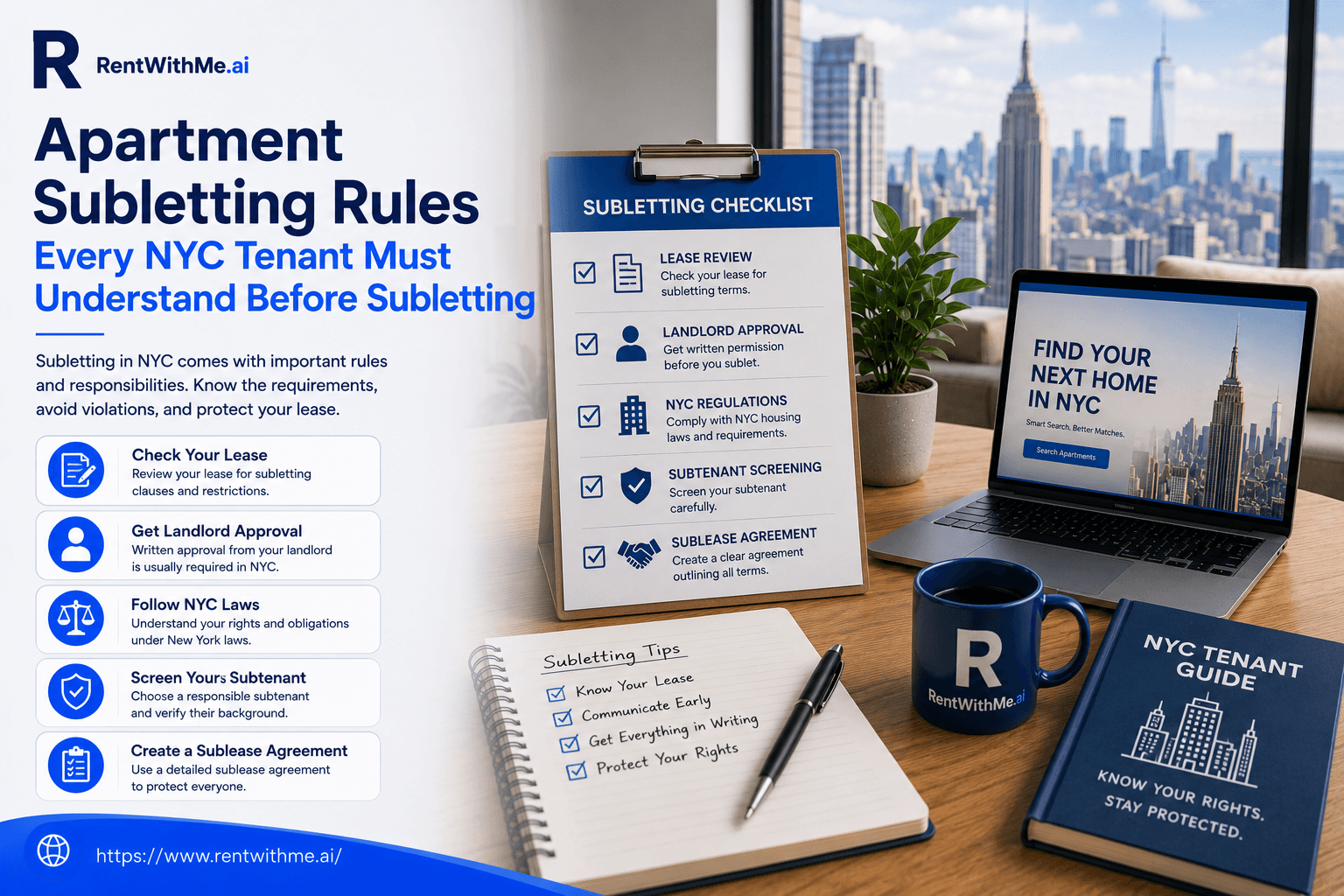
- Review your lease agreement carefully.
- Understand any subletting requirements outlined in the lease.
- Communicate with your landlord according to the lease procedures.
- Prepare a written sublease agreement.
- Screen prospective subtenants carefully.
- Document the apartment’s condition before move-in.
- Organize payment arrangements and utility responsibilities.
- Keep copies of all agreements and correspondence.
- Maintain communication throughout the sublease.
- Prepare for the apartment’s return at the end of the sublease period.
Completing these steps helps create a more organized process while reducing the likelihood of misunderstandings between everyone involved.
Expert Tips for a Successful Subletting Experience
A successful sublease usually begins long before another person moves into the apartment.
Allow yourself plenty of time to review your lease, organize documentation, and communicate with your landlord before searching for a subtenant. Rushing important decisions often increases the likelihood of avoidable mistakes.
Choose communication over assumptions whenever possible. If expectations regarding apartment use, utilities, maintenance, or move-out procedures are discussed clearly at the beginning, both parties are much more likely to have a positive experience.
Keep thorough records throughout the entire sublease period. Organized documentation provides peace of mind and makes it much easier to answer questions if they arise.
Finally, remember that selecting the right subtenant is just as important as finding one quickly. Careful evaluation often leads to a more successful and less stressful rental arrangement.
Common Financial and Legal Mistakes to Avoid
Many subletting problems can be traced to a handful of preventable mistakes.
The table below highlights several common errors along with better approaches.
| Common Mistake | Better Approach |
|---|---|
| Skipping a lease review | Read every relevant lease provision first |
| Choosing the first available applicant | Screen prospective subtenants carefully |
| Relying on verbal agreements | Prepare a detailed written sublease |
| Poor communication | Maintain regular communication with all parties |
| Losing important records | Organize and retain all documentation |
| Waiting until the last minute | Begin planning well before the intended move |
Avoiding these mistakes helps reduce unnecessary stress while protecting both the original tenant and the subtenant throughout the rental period.
Additional Ways to Protect Yourself During a Sublease
Protecting yourself starts with organization.
Store copies of your lease, sublease agreement, landlord correspondence, payment confirmations, inspection reports, and photographs in a secure location. Keeping everything together makes future reference much easier.
It is also beneficial to document the apartment’s condition before the subtenant moves in and again when the sublease ends. Clear documentation helps establish the condition of the property at each stage of occupancy.
Maintain professional communication throughout the sublease rather than waiting until problems develop. Addressing small concerns early often prevents larger disagreements later.
If your circumstances change during the sublease, communicate promptly with the appropriate parties so expectations remain clear throughout the process.
Final Advice for NYC Tenants Considering Subletting
Apartment subletting can be an excellent option when handled responsibly.
The key is approaching the process with preparation rather than urgency. Understanding your lease, following applicable procedures, communicating openly, and documenting important decisions all contribute to a smoother experience.
Remember that flexibility should never replace careful planning. Taking the time to evaluate your housing goals, choose a reliable subtenant, and prepare detailed documentation can significantly reduce unnecessary complications.
A successful sublease benefits everyone involved by creating clear expectations, maintaining professionalism, and protecting the interests of both the original tenant and the person temporarily occupying the apartment.
Conclusion
Apartment subletting offers many New York City tenants the flexibility to manage temporary life changes without permanently giving up their rental home. Whether you are relocating for work, studying abroad, traveling for an extended period, or facing another temporary transition, subletting can provide a practical solution when approached thoughtfully and responsibly.
However, flexibility should always be balanced with preparation. Before beginning the process, carefully review your lease agreement, understand any subletting provisions, communicate with your landlord as required, and familiarize yourself with your ongoing responsibilities as the original tenant. These early steps help establish a strong foundation for a successful sublease.
Finding the right subtenant is equally important. Taking time to screen applicants, communicate expectations clearly, and prepare a comprehensive written sublease agreement helps reduce misunderstandings and creates a more positive experience for everyone involved. Good planning at the beginning often prevents avoidable problems later.
Financial organization also plays a significant role. Maintaining payment records, documenting the apartment’s condition, organizing important correspondence, and keeping copies of all agreements provide valuable protection throughout the sublease period. Careful documentation promotes transparency and supports smoother communication if questions arise.
Ultimately, every apartment, lease agreement, and tenant’s situation is unique. Rather than relying on assumptions or informal advice, take time to understand the specific terms of your lease and carefully evaluate whether subletting aligns with your housing goals. By preparing thoroughly, communicating professionally, and following the appropriate procedures, you can navigate the subletting process with greater confidence while protecting both your rental interests and your future housing opportunities.