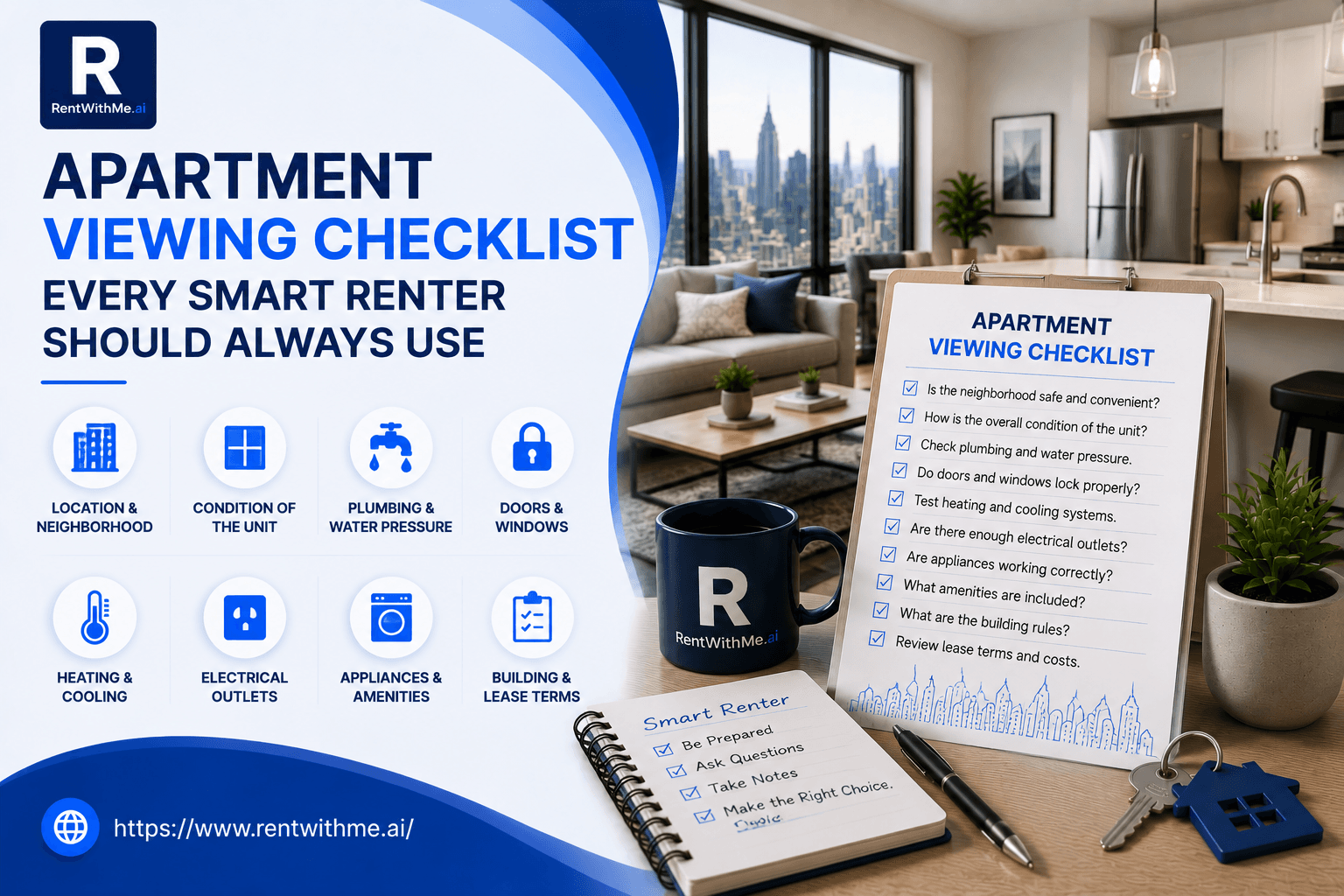
Apartment Viewing Checklist Every Smart Renter Should Always Use
Introduction
An apartment viewing is one of the most important steps in the rental process. Online listings can help you discover potential homes, but photographs and descriptions rarely reveal the complete reality of living in a space. The true condition of an apartment, the quality of the building, the surrounding environment, and many practical details only become clear when you visit the property yourself.
Many renters approach apartment tours casually. They walk through the rooms, notice the kitchen finishes, admire the view, and make decisions based on first impressions. While appearance matters, a smart renter knows that the best apartment is not always the one that looks the most impressive during a short visit.
A thorough apartment viewing requires careful observation, thoughtful questions, and a consistent evaluation process. Without a checklist, it is easy to overlook important details that later affect your comfort, finances, and overall rental experience.
This apartment viewing checklist is designed to help renters evaluate properties more effectively. From preparing before the tour to inspecting the smallest details inside the apartment, these steps will help you make confident decisions and avoid costly mistakes.
Why Every Smart Renter Needs an Apartment Viewing Checklist
An apartment tour is often limited to a short period of time. In those few minutes, you are expected to evaluate a space where you may potentially live for months or even years.
Without a structured checklist, important details can easily be missed. You may remember the beautiful kitchen but forget to check storage space. You may notice the large windows but overlook outside noise. You may love the apartment layout but fail to consider whether the building is properly maintained.
A checklist creates a more balanced evaluation process. Instead of focusing only on attractive features, you examine the factors that influence your daily life.
Smart renters understand that an apartment is more than a collection of rooms. It is a place where you sleep, work, relax, store your belongings, and build your daily routine.
A proper viewing checklist helps you determine whether the apartment truly supports the lifestyle you want.
Common Mistakes Renters Make During Apartment Tours
Many apartment viewing mistakes happen because renters become emotionally influenced by the appearance of the property.
One common mistake is focusing only on design features. Modern kitchens, updated bathrooms, and stylish finishes can create a strong first impression, but they do not always indicate whether an apartment is practical or well maintained.
Another mistake is failing to test important features. Some renters never check water pressure, open windows, inspect appliances, or examine storage space because they assume everything works properly.
Many people also forget to evaluate the building itself. The apartment may look excellent, but poor maintenance, noisy neighbors, unreliable elevators, or unresponsive management can negatively affect your experience.
Other common mistakes include:
- Not visiting the neighborhood before committing.
- Forgetting to ask important questions during the tour.
- Taking no photos or notes for later comparison.
- Ignoring potential maintenance concerns.
- Making a decision based only on online photographs.
Avoiding these mistakes allows you to evaluate apartments more objectively and choose a rental that works well beyond the first impression.

Preparing Before Your Apartment Viewing
A successful apartment viewing begins before you arrive at the property.
Preparation helps you use your time efficiently and ensures you focus on the details that matter most. Before attending a tour, review the listing carefully and identify any questions you need answered.
Confirm the apartment address, scheduled viewing time, contact information, monthly rent, available move-in date, and any listed requirements.
Research the property beforehand so you understand what you are visiting. Knowing basic information about the building and neighborhood allows you to spend more time evaluating details that are not available online.
Create a short list of your priorities before entering the apartment. For example, if natural light, quiet surroundings, transportation access, or storage space are important to you, make sure you evaluate those factors intentionally during the visit.
A prepared renter does not simply look around. They inspect, compare, and gather information.
Researching the Property and Neighborhood Before Visiting
An apartment should never be evaluated separately from its surroundings. The neighborhood and building environment have a major impact on your everyday experience.
Before visiting, research the area using maps, local information sources, and neighborhood reviews. Understand nearby transportation options, grocery stores, restaurants, parks, healthcare facilities, and other services you regularly use.
Check the commute from the apartment to your workplace, school, or other important locations. A beautiful apartment that creates an exhausting daily commute may not be the right choice.
If possible, visit the neighborhood before or after your scheduled apartment viewing. Different times of day can reveal changes in traffic, noise levels, pedestrian activity, and overall atmosphere.
Pay attention to details such as:
| Area to Research | Why It Matters |
|---|---|
| Transportation access | Determines daily convenience and commute time |
| Nearby services | Makes everyday errands easier |
| Noise levels | Affects comfort and sleep quality |
| Safety and lighting | Influences overall living experience |
| Local atmosphere | Helps determine lifestyle compatibility |
Understanding the neighborhood before your tour helps you evaluate whether the apartment fits your complete lifestyle.
Setting Your Evaluation Criteria Before the Tour
Every renter has different priorities. Before visiting apartments, decide which factors matter most to you.
Creating evaluation criteria prevents you from making decisions based only on emotions. A property may look attractive during a quick tour, but it may not meet your actual needs.
Start by identifying your non-negotiable requirements. These may include monthly budget, apartment size, commute time, pet policies, accessibility features, parking, or building amenities.
Then create a secondary list of preferences that would improve your experience but are not essential.
For example, you may consider:
- Must-have features such as budget, location, bedroom count, and transportation access.
- Preferred features such as balconies, upgraded appliances, rooftop amenities, or fitness centers.
Knowing your priorities allows you to compare apartments fairly instead of becoming distracted by features that are attractive but not necessary.

What to Bring to Every Apartment Viewing
Being prepared with the right tools makes apartment tours much more productive.
Many renters rely only on their memory after a viewing, but details become difficult to remember after seeing multiple properties. Bringing simple tools helps you document information accurately.
Useful items include:
- Smartphone for photos and videos.
- Notebook or notes application for observations.
- Measuring tape for checking furniture placement.
- List of prepared questions.
- Identification if requested by the property manager.
These items allow you to gather useful information during the tour instead of trying to remember everything afterward.
Taking photos and notes also makes comparing apartments much easier when deciding between multiple options.
First Impressions: Evaluating the Building Before Entering the Apartment
Your apartment viewing begins before you open the apartment door.
The building exterior, entrance, lobby, hallway, and shared spaces often reveal important information about property management and maintenance quality.
Observe whether the entrance appears clean, secure, and properly maintained. Look at the condition of hallways, elevators, staircases, mail areas, and package storage spaces.
A well-maintained building often reflects responsible management. On the other hand, neglected common areas may indicate potential maintenance issues after you become a tenant.
Consider questions such as:
- Is the entrance secure?
- Are common areas clean?
- Are elevators functioning properly?
- Does the building appear well maintained?
- Are residents treating shared spaces respectfully?
The building environment contributes significantly to your overall living experience, so it deserves the same attention as the apartment itself.
Inspecting the Apartment Layout and Overall Condition
Once inside the apartment, avoid making an immediate decision based only on appearance.
Begin by evaluating the overall layout. Consider whether the rooms are practical, whether furniture placement makes sense, and whether the apartment supports your daily activities.
A visually appealing apartment may still feel uncomfortable if the layout does not work for your lifestyle.
Walk through each room carefully and observe:
| Feature | What to Evaluate |
|---|---|
| Room layout | Whether the space supports your needs |
| Walls and ceilings | Signs of damage, stains, or repairs |
| Flooring | Condition and maintenance quality |
| Doors and windows | Operation, security, and insulation |
| Overall cleanliness | General property condition |
Look beyond decorative elements and focus on functionality. The apartment should work for your everyday life, not just look impressive during a short visit.

Checking Natural Light, Space, and Room Functionality
Natural light can significantly influence how comfortable an apartment feels.
During your viewing, notice how much sunlight enters each room and whether the apartment feels bright or dark. If possible, ask about the direction of windows and how lighting changes throughout the day.
Room size should also be evaluated realistically. A bedroom may appear spacious when empty but feel much smaller once furniture is added.
Think about your actual lifestyle. Will you work from home? Do you need space for hobbies? Will you have guests regularly? These questions help determine whether the apartment layout truly fits your needs.
Consider:
- Whether rooms comfortably fit your furniture.
- Whether there is enough walking space.
- Whether work and relaxation areas can be separated.
- Whether the apartment feels comfortable for daily use.
A good apartment is not simply one with enough square footage. It is one where the available space works efficiently for your lifestyle.
Evaluating Storage, Closets, and Practical Living Features
Storage is one of the most overlooked factors during apartment tours.
Many renters become focused on bedrooms and kitchens but forget to evaluate where they will actually store clothing, household items, cleaning supplies, and personal belongings.
Open every closet and cabinet during your viewing. Check the available space and consider whether it realistically meets your needs.
Pay attention to:
- Bedroom closets.
- Kitchen cabinets.
- Bathroom storage.
- Entryway storage.
- Laundry storage options.
- Additional storage areas offered by the building.
Limited storage can quickly become frustrating after moving in, especially in smaller apartments.
Practical features often have a greater impact on daily comfort than decorative upgrades. A well-designed apartment with excellent storage can provide a better living experience than a larger apartment with poor functionality.
As you continue your apartment viewing process, the next step is moving deeper into the inspection. Evaluating kitchens, bathrooms, appliances, utilities, noise levels, building amenities, and asking the right questions during the tour will help you determine whether a property is truly the right fit.
Kitchen Inspection Checklist During an Apartment Viewing
The kitchen is one of the most important areas to inspect because it is used every day. A kitchen that looks attractive in photographs may still have practical issues that only become obvious during an in-person visit.
Start by examining the overall condition of the space. Check the cabinets, countertops, flooring, lighting, and available storage. Look for signs of water damage, damaged surfaces, loose handles, or poor maintenance.
Open cabinets and drawers to evaluate their condition and storage capacity. Make sure they open smoothly and provide enough room for your cookware, dishes, food supplies, and everyday items.
Inspect the appliances carefully. Turn on the stove, check the refrigerator condition, examine the dishwasher if available, and ask about the age and maintenance history of major appliances.
Important kitchen areas to evaluate include:
- Cabinet and drawer condition.
- Counter space availability.
- Appliance quality and functionality.
- Sink condition and water pressure.
- Ventilation and cooking space.
- Storage capacity.
A practical kitchen should support your daily habits. A beautiful kitchen that lacks storage, workspace, or functional appliances may become frustrating after you move in.

Bathroom Inspection Checklist
Bathrooms deserve careful attention because maintenance problems in this area can become expensive and inconvenient quickly.
Begin by checking water pressure, temperature control, drainage, and overall cleanliness. Turn on faucets and showers to confirm that water flows properly and drains efficiently.
Inspect the walls, ceilings, tiles, and grout for signs of moisture damage. Discoloration, peeling paint, mold-like spots, or unusual odors may indicate previous water issues.
Check important fixtures such as the toilet, sink, shower, bathtub, mirrors, and ventilation systems. Make sure everything appears functional and properly maintained.
Look for:
| Bathroom Feature | What to Check |
|---|---|
| Shower and faucets | Water pressure and temperature control |
| Drainage | Water flows away properly |
| Walls and ceilings | Signs of leaks or moisture |
| Ventilation | Prevents humidity and odors |
| Fixtures | Overall condition and functionality |
A clean, well-maintained bathroom often reflects the overall quality of apartment management.
Checking Appliances, Fixtures, and Utilities
Appliances and building systems directly affect your comfort, convenience, and monthly expenses.
During your apartment viewing, do not assume everything works properly just because appliances are present. Test what you can and ask questions about anything unclear.
Check whether the refrigerator maintains a proper temperature, whether the stove operates correctly, and whether laundry appliances are available and functional if included.
You should also ask about heating, cooling, electricity, and water systems. Understanding how these systems work before moving in prevents unexpected issues later.
Pay attention to:
- Heating and cooling systems.
- Electrical outlets.
- Light fixtures.
- Kitchen appliances.
- Laundry equipment.
- Hot water availability.
Small details matter because these systems affect your everyday experience throughout the lease.
Evaluating Noise Levels, Windows, and Privacy
Noise is one of the most common apartment complaints, yet it is often overlooked during short apartment tours.
During your viewing, listen carefully. Pay attention to sounds from neighboring apartments, hallways, elevators, traffic, construction, or nearby businesses.
Windows play an important role in both noise control and comfort. Check whether they open and close properly and whether they provide enough insulation from outside sounds.
Consider the apartment’s privacy as well. Look at the distance between windows, hallway visibility, and whether neighbors can easily see inside.
Important factors include:
- Street noise.
- Neighbor noise.
- Window quality.
- Apartment location within the building.
- Bedroom placement.
- Privacy from surrounding units.
If possible, visit the apartment at different times of day before making a final decision. A quiet afternoon viewing may not reflect the noise levels during evenings or busy hours.

Inspecting Building Amenities and Common Areas
Amenities can improve your rental experience, but only if they are properly maintained and actually useful for your lifestyle.
If the building advertises features such as a gym, rooftop, lounge, coworking area, package room, laundry facility, or parking, inspect those areas during your visit.
Look beyond the appearance. Consider whether the spaces are clean, accessible, safe, and well maintained.
A building with impressive amenities but poor management may create more frustration than value.
Evaluate:
- Cleanliness of shared spaces.
- Availability of advertised amenities.
- Security features.
- Maintenance quality.
- Accessibility and convenience.
Amenities should support your lifestyle rather than simply increase the apartment’s appeal during the viewing.
Questions Every Smart Renter Should Ask During a Tour
A good apartment viewing involves active communication. Asking the right questions helps you understand what living in the apartment will actually be like.
Many renters focus on what they can see but forget to ask about important details that affect daily life.
Useful questions include:
| Question | Why Ask It |
|---|---|
| How quickly are maintenance requests handled? | Shows management responsiveness |
| Which utilities are included? | Helps calculate monthly expenses |
| Are there additional fees? | Prevents unexpected costs |
| How does package delivery work? | Important for online shoppers |
| Are there building rules about guests or pets? | Helps confirm lifestyle compatibility |
| What is the lease renewal process? | Helps with future planning |
If you have specific needs, such as working from home, owning pets, or needing quiet hours, discuss them openly during the tour.
Clear communication before applying reduces misunderstandings after moving in.
Comparing Apartments After Multiple Viewings
After visiting several apartments, it can become difficult to remember which property offered the best overall value.
Instead of relying only on your emotions, create a comparison system. Evaluate every apartment using the same categories so your final decision is based on facts.
Consider:
- Monthly rent.
- Neighborhood convenience.
- Commute time.
- Apartment condition.
- Storage space.
- Building quality.
- Amenities.
- Noise levels.
- Overall comfort.
A simple rating system can help organize your thoughts. For example, you can score each apartment based on location, affordability, condition, and lifestyle compatibility.
The most attractive apartment during a quick tour is not always the best long-term choice. A practical apartment that fits your routine and budget often provides greater satisfaction.

Identifying Red Flags Before Applying
Apartment tours are also an opportunity to identify potential problems before you invest additional time and money.
Pay attention to inconsistencies between the listing and the actual apartment. If the size, condition, amenities, or pricing differ significantly from what was advertised, ask questions before moving forward.
Be cautious if the person showing the apartment avoids answering reasonable questions or pressures you to apply immediately without providing complete information.
Other warning signs may include:
- Poor building maintenance.
- Strong odors.
- Visible water damage.
- Broken fixtures.
- Unclear fees.
- Lack of proper documentation.
- Difficulty communicating with management.
Not every issue means you should immediately reject a property, but concerns should always be investigated before signing a lease.
Understanding Rental Costs Before Making a Decision
Before applying for an apartment, calculate the complete financial commitment.
Many renters focus only on monthly rent and forget about additional expenses associated with moving and maintaining the apartment.
Review costs such as:
| Cost | Consideration |
|---|---|
| Monthly rent | Main housing expense |
| Security deposit | Required before move-in |
| Utilities | May or may not be included |
| Internet | Common monthly expense |
| Renters insurance | Protects belongings |
| Moving costs | One-time transition expense |
| Parking or storage | Additional convenience costs |
Understanding the full cost helps you compare apartments more accurately.
A slightly more expensive apartment may actually provide better value if it includes utilities, reduces commuting expenses, or eliminates other recurring costs.
Preparing for the Application and Lease Process
Once you find the right apartment, preparation allows you to move quickly.
Before applying, confirm that your financial documents are complete and ready. Competitive rentals often move quickly, and delays can result in another applicant securing the apartment.
Review the application requirements carefully. Make sure you understand income requirements, credit expectations, fees, and required documentation.
After approval, prepare to review the lease carefully before signing. Confirm that all agreed-upon terms are included and ask questions about anything unclear.
The apartment viewing process is not just about deciding whether you like a property. It is about collecting enough information to make a confident decision.
With your inspection completed, questions answered, and apartment comparison finished, the final stage focuses on making your choice official. Reviewing lease terms, preparing for move-in, documenting the apartment condition, and building good tenant habits will help ensure your new rental becomes a comfortable and successful home.

Final Apartment Evaluation Before Applying
After completing your apartment tours and reviewing your notes, it is time to make a final evaluation before submitting an application.
This stage is where many renters make emotional decisions. A beautiful apartment may create an immediate connection, but a smart renter takes time to confirm that the property truly fits their lifestyle, budget, and long-term needs.
Review everything you learned during the viewing process. Consider the apartment condition, building quality, neighborhood convenience, monthly expenses, transportation options, and overall comfort.
Before applying, ask yourself a few important questions:
- Does this apartment fit comfortably within my budget?
- Does the location support my daily routine?
- Does the apartment provide enough space and storage?
- Did I identify any maintenance concerns?
- Were all my questions answered clearly?
- Can I see myself living here long term?
Taking a final moment to evaluate the apartment objectively can prevent costly mistakes and help you move forward with confidence.
Documenting the Apartment Condition Before Moving In
Once your application is approved and your move-in date approaches, documenting the apartment becomes one of the most important steps.
Even if the apartment appears perfect during your viewing, record its condition before bringing in furniture or personal belongings. This creates a clear record of the property’s original state.
Take detailed photographs and videos of every room. Include walls, ceilings, flooring, appliances, cabinets, windows, doors, fixtures, and any existing damage.
Pay special attention to:
- Scratches or marks on walls.
- Damaged flooring or carpets.
- Appliance condition.
- Bathroom fixtures.
- Kitchen surfaces.
- Window conditions.
- Existing stains or imperfections.
Save these records with your lease agreement and other rental documents. They can become extremely valuable if questions arise regarding maintenance responsibilities or security deposit deductions later.
Understanding Lease Terms After Choosing a Rental
Finding the right apartment is exciting, but the lease agreement is what officially defines your rental relationship.
Before signing, carefully review every section of the lease. The document explains your financial obligations, tenant responsibilities, landlord responsibilities, and important rules that apply throughout your tenancy.
Important details to confirm include:
| Lease Detail | Why It Matters |
|---|---|
| Monthly rent amount | Confirms your financial obligation |
| Lease dates | Defines your rental period |
| Security deposit terms | Explains deposit handling |
| Maintenance responsibilities | Clarifies repair expectations |
| Renewal procedures | Helps with future planning |
| Building policies | Defines daily living rules |
Do not assume verbal agreements automatically become part of the lease. If something important was discussed during the apartment tour or application process, make sure it is documented properly before signing.
Taking time to understand your lease protects both you and your landlord.

Preparing for a Smooth Move-In Experience
A successful move begins well before moving day.
Once your lease is signed, create a moving plan that includes packing, transportation, building requirements, and essential services. Breaking tasks into smaller steps makes the transition much easier.
Many apartment buildings have specific move-in procedures. Some require elevator reservations, moving insurance, or scheduled arrival times. Confirm these requirements with building management before your moving date.
Prepare an essentials box that includes items you will need immediately after arriving.
Useful first-day items include:
- Cleaning supplies.
- Phone chargers.
- Toiletries.
- Important documents.
- Basic kitchen items.
- Medication if needed.
- Change of clothes.
Having essential items available prevents you from searching through boxes during your first night.
A smooth move allows you to enjoy your new apartment instead of feeling overwhelmed by unfinished tasks.
Setting Up Utilities, Internet, and Renters Insurance
Your apartment viewing may be complete, but setting up your new home requires additional preparation.
Review your lease to determine which utilities are included and which services you need to activate yourself. Electricity, gas, internet, and other services may require advance scheduling.
If you work remotely or rely heavily on internet access, arrange installation as early as possible. Delaying this task can leave you without reliable service during your first days.
Renters insurance is another important consideration. While some landlords require it, many renters choose coverage because it helps protect their belongings against certain unexpected events.
You should also update your address with:
- Employers.
- Banks and financial institutions.
- Insurance providers.
- Subscription services.
- Government agencies.
Completing these updates early prevents important documents and deliveries from going to your previous address.
Building a Positive Relationship With Your Landlord
A good relationship with your landlord or property manager can greatly improve your rental experience.
Professional communication should begin from the first day. Respond promptly to messages, report maintenance concerns quickly, and communicate respectfully whenever questions arise.
Responsible tenants often experience smoother interactions because landlords appreciate reliability and clear communication.
Simple habits can make a major difference:
- Pay rent on time.
- Follow building policies.
- Respect shared spaces.
- Report problems early.
- Keep communication professional.
If disagreements occur, focus on finding solutions rather than creating conflict. A respectful approach usually leads to better outcomes for everyone involved.

Maintaining Your Apartment Throughout the Lease
Finding the right apartment is only the beginning. Maintaining it properly helps protect your comfort, your belongings, and your relationship with your landlord.
Keep your apartment clean and organized through regular maintenance rather than waiting until problems become overwhelming.
Inspect your apartment periodically for signs of damage or maintenance issues. Small problems, such as leaks or appliance concerns, are often easier to fix when addressed early.
Keep records of maintenance requests and important conversations with management. Organized documentation helps resolve questions quickly if they arise.
Financial organization is also important. Continue monitoring your monthly expenses so you remain comfortable with rent, utilities, transportation, and other recurring costs.
A well-maintained apartment creates a much better living experience throughout your lease.
Lease Renewals, Moving Out, and Security Deposit Protection
Although your apartment viewing process is complete, planning for the future helps you make better decisions later.
Several months before your lease expires, evaluate whether the apartment still meets your needs. Consider your budget, commute, neighborhood satisfaction, apartment condition, and future plans.
If you decide to renew, review the updated lease carefully before signing. Confirm any changes in rent, dates, or policies.
If you plan to move, begin searching early. Starting ahead of time provides more options and reduces pressure.
When moving out, protect your security deposit by leaving the apartment in good condition.
Before returning your keys:
- Remove all personal belongings.
- Clean the apartment thoroughly.
- Complete agreed-upon repairs.
- Take final photographs.
- Return keys according to instructions.
Proper preparation at the end of your lease helps ensure a smoother move and reduces potential disputes.
Frequently Asked Questions About Apartment Viewings
How long should an apartment viewing take?
Most apartment tours take between 15 and 30 minutes, but the time depends on the property size and how many questions you have. A thorough inspection is more important than a quick visit.
Should I visit an apartment more than once?
If you are seriously considering the apartment, a second visit can be helpful. Visiting at a different time of day may reveal differences in noise, lighting, traffic, or neighborhood activity.
What should I never skip during an apartment tour?
Never skip checking water pressure, storage space, windows, appliances, building condition, and lease-related questions. These details have a major impact on daily living.
Should I take pictures during an apartment viewing?
Yes. Photos and notes help you compare apartments later and provide useful documentation if you decide to move forward.
What is the biggest apartment viewing mistake?
Many renters focus only on appearance and ignore practical factors such as noise, storage, maintenance quality, and neighborhood convenience.
How many apartments should I view before choosing one?
There is no perfect number. View enough properties to understand your options, but focus on quality comparisons rather than simply touring as many apartments as possible.
Complete Apartment Viewing Checklist
Use this checklist during every apartment tour to make sure you evaluate the property thoroughly.
| Category | Checklist Items |
|---|---|
| Building | Entrance, security, elevators, hallways, common areas |
| Apartment Condition | Walls, floors, ceilings, windows, doors |
| Kitchen | Appliances, cabinets, counters, storage, water pressure |
| Bathroom | Fixtures, drainage, ventilation, moisture signs |
| Comfort | Lighting, noise levels, privacy, temperature control |
| Practical Needs | Storage, furniture space, outlets, layout |
| Costs | Rent, utilities, fees, deposits, additional expenses |
| Questions | Maintenance, policies, lease terms, move-in procedures |
| Documentation | Photos, videos, notes, inspection records |
Using a consistent checklist ensures that every apartment receives the same level of attention and evaluation.
Conclusion
Apartment viewing is one of the most important steps in finding a rental that truly fits your lifestyle. While online listings help you discover available properties, the viewing process allows you to understand what living in the apartment will actually feel like.
Smart renters do not make decisions based only on appearance. They inspect carefully, ask thoughtful questions, evaluate the building and neighborhood, compare properties objectively, and document important details throughout the process.
A great apartment is not simply one with attractive finishes or impressive amenities. It is a place that fits your budget, supports your daily routine, provides comfort, and remains a good choice long after the excitement of moving in fades.
By following a detailed apartment viewing checklist, you can avoid common mistakes, identify potential problems early, and make confident rental decisions. Taking the time to evaluate every property carefully helps ensure that the apartment you choose becomes a comfortable, practical, and enjoyable place to call home.