
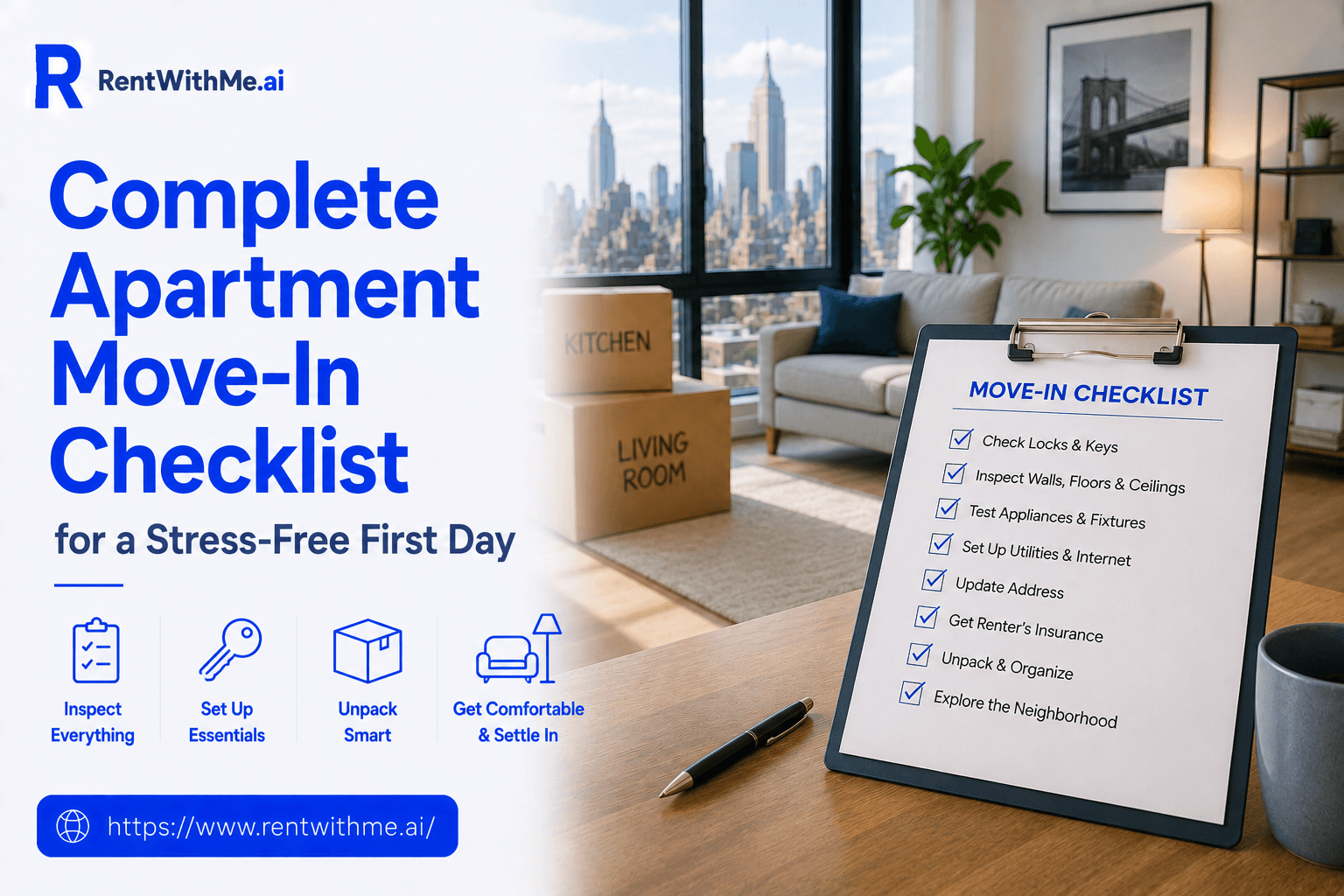
Complete Apartment Move-In Checklist for a Stress-Free First Day
Introduction
Moving into a new apartment is one of life’s most exciting milestones, but it can also be one of the most overwhelming. Between coordinating movers, transferring utilities, unpacking boxes, and learning your new neighborhood, it is easy to overlook important details that can make your first day either smooth or stressful.
Many renters spend weeks searching for the perfect apartment but devote very little time to planning the move itself. Without a clear strategy, simple tasks can quickly become frustrating, leading to forgotten essentials, unnecessary expenses, and a chaotic first night in your new home.
A well-organized move-in checklist helps eliminate much of that stress. By preparing in advance and following a logical plan, you can focus on settling into your apartment instead of scrambling to solve avoidable problems.
This guide walks you through everything you should prepare before moving day, explains what to bring, outlines the documents and services you should organize, and highlights common mistakes every renter should avoid before stepping into their new apartment.
Why a Move-In Checklist Makes Moving Easier
Moving involves dozens of individual tasks that must often be completed within a short period.
Without a checklist, even experienced renters can forget important responsibilities such as updating their address, scheduling internet installation, or documenting the apartment’s condition before unpacking.
A comprehensive checklist provides structure throughout the moving process. Instead of trying to remember everything at once, you can complete tasks one by one while tracking your progress.
Organization also reduces stress. Knowing that each important task has been planned allows you to enjoy the excitement of moving instead of worrying about what might have been forgotten.
Most importantly, a checklist saves time. Completing tasks in a logical order minimizes last-minute surprises and helps ensure your first day in the apartment is focused on getting comfortable rather than solving preventable issues.

Preparing Before Moving Day
Successful move-ins begin well before the moving truck arrives.
Preparation starts by reviewing your lease agreement, confirming your move-in date, and understanding any building procedures that may apply. Some apartment communities require advance elevator reservations, designated unloading times, or parking arrangements for moving vehicles.
It is also helpful to create a timeline several weeks before moving day. Breaking large projects into smaller tasks makes the entire process much more manageable. Begin packing non-essential belongings first while continuing to use everyday household items until the final few days. This gradual approach reduces stress and helps maintain normal routines before the move.
As moving day approaches, confirm important appointments, organize essential documents, and verify that everyone involved understands the moving schedule. Good preparation often determines whether move-in day feels organized or overwhelming.
Important Documents to Organize Before Move-In
Keeping your documents organized prevents unnecessary delays during the move. Instead of searching through boxes for paperwork, gather everything you may need into one easily accessible folder before moving day.
Important documents commonly include:
- Signed lease agreement.
- Government-issued identification.
- Proof of renters insurance if required.
- Utility account information.
- Moving company confirmation.
- Payment receipts and deposit records.
- Emergency contact information.
Store both digital and printed copies whenever possible. Having backup versions available can be helpful if internet access or electronic devices become temporarily unavailable during the move. Organizing paperwork in advance also allows you to respond quickly if building management requests documentation during check-in.

Scheduling Utilities and Essential Services
One of the easiest ways to improve your first day is making sure essential services are ready before you arrive. Electricity, water, gas, internet, and other services should ideally be scheduled to begin before or on your move-in date. Walking into an apartment without power or internet can make even simple tasks much more difficult.
Contact service providers well in advance whenever appointments are required. Some installations may require scheduling several days or even weeks before your move. It is equally important to confirm activation dates a few days before moving. A quick verification helps prevent scheduling misunderstandings and allows time to resolve any issues before move-in day. Preparing utilities early allows you to focus on unpacking rather than waiting for service appointments.
Packing Smart for a Stress-Free First Day
Packing efficiently makes unpacking significantly easier. Instead of filling boxes randomly, organize belongings by room and clearly label every container. This allows movers to place boxes directly where they belong, reducing unnecessary lifting later.
Packing an essentials box for your first day is especially helpful. Rather than opening dozens of boxes searching for basic necessities, you’ll have immediate access to the items you’ll need most.
Your first-day essentials may include:
- Phone chargers.
- Basic toiletries.
- Medications.
- Change of clothes.
- Important documents.
- Snacks and bottled water.
- Basic cleaning supplies.
Keeping these items with you instead of placing them on the moving truck helps ensure they remain easily accessible throughout the day. Thoughtful packing also protects fragile belongings while making unpacking much more organized.

Apartment Essentials to Bring Immediately
Even if most of your belongings arrive later, certain items should be available as soon as you enter your apartment. Having a few essential household supplies nearby allows you to begin settling in comfortably before every box has been unpacked.
These items often include cleaning products, paper towels, trash bags, light bulbs, simple kitchen utensils, basic tools, toiletries, towels, bedding, and a first aid kit.
Many renters also appreciate having a few easy-to-prepare meals available during the first evening. After a long day of moving, cooking an elaborate dinner is rarely a priority.
Preparing these essentials ahead of time allows your apartment to become functional much more quickly.
Inspecting the Apartment Before Unpacking
Before unpacking furniture and boxes, take time to inspect the apartment carefully.
Walk through every room while paying attention to walls, flooring, windows, appliances, plumbing fixtures, lighting, and other visible features. If anything appears damaged or different from what you expected, document it before arranging your belongings.
Photographs taken immediately after move-in provide a useful record of the apartment’s initial condition. Keeping these images together with your lease documents creates valuable documentation for future reference.
The table below highlights several important areas worth inspecting before unpacking.
| Area | What to Check |
|---|---|
| Walls and ceilings | Scratches, holes, stains, or cracks |
| Floors | Damage, loose flooring, or excessive wear |
| Windows and doors | Locks, operation, and visible damage |
| Kitchen appliances | Basic operation and cleanliness |
| Bathroom fixtures | Faucets, drains, toilets, and shower function |
| Electrical outlets and lights | Proper operation throughout the apartment |
Completing this inspection before unpacking makes it much easier to identify pre-existing conditions and communicate any concerns while the apartment is still empty.

Common Move-In Mistakes First-Time Renters Make
Even well-prepared renters sometimes overlook important details during a move.
One common mistake is packing everything without separating first-day essentials. Searching through dozens of boxes for toiletries, chargers, or medications can quickly become frustrating after a long day.
Another frequent mistake is failing to inspect the apartment before moving furniture inside. Once boxes are stacked throughout every room, documenting existing conditions becomes much more difficult. Some renters also forget to verify utility activation dates until after arriving. Discovering that electricity or internet service has not yet started can significantly complicate the first day.
Waiting until the last minute to organize paperwork is another avoidable error. Keeping lease documents, receipts, identification, and other records together helps eliminate unnecessary stress throughout the move.
Benefits of Being Fully Prepared Before Arrival
Preparation transforms the entire moving experience. Instead of spending your first day solving unexpected problems, you can focus on organizing your apartment, meeting neighbors, and becoming comfortable in your new surroundings.
Planning ahead also reduces unnecessary expenses. Forgotten supplies, rushed purchases, duplicate utility appointments, and missed deadlines often cost both time and money.
Perhaps the greatest benefit is peace of mind. Knowing that your documents are organized, utilities are scheduled, essentials are packed, and the apartment has been inspected allows you to begin this new chapter with confidence rather than uncertainty.
In the next section, we’ll cover everything you should do immediately after arriving at your apartment, provide a room-by-room move-in checklist, explain the safety and security checks every tenant should complete, discuss setting up utilities and smart devices, share efficient unpacking strategies, review budgeting for unexpected move-in expenses, highlight common first-day mistakes to avoid, and outline the important tasks every renter should complete during the first week in their new home.

What to Do Immediately After Arriving at Your Apartment
The first hour inside your new apartment sets the tone for the rest of move-in day.
Rather than unpacking the first box you see, spend a few minutes confirming that everything is functioning properly. Unlock the doors, turn on the lights, check the thermostat, and verify that utilities are working as expected.
If movers are helping you, guide them to place boxes in the correct rooms. Doing this at the beginning saves considerable time later and reduces unnecessary lifting after they leave.
Once large furniture has been positioned, keep walkways clear to make unpacking safer and more efficient. Taking a calm, organized approach during the first hour prevents small problems from becoming larger frustrations later in the day.
Room-by-Room Move-In Checklist
Unpacking one room at a time makes the entire apartment feel organized much faster. Instead of opening every box simultaneously, focus on completing one space before moving to the next. Seeing finished rooms provides a sense of progress and keeps clutter under control.
A practical order for unpacking is:
- Bedroom
- Bathroom
- Kitchen
- Living room
- Home office or guest room
- Storage areas and decorations
Setting up your bedroom first ensures you have a comfortable place to sleep after a long moving day. The bathroom comes next because toiletries, towels, and cleaning supplies are often needed immediately.
The kitchen should be functional before the first evening so you can prepare meals, store groceries, and access drinking water without searching through boxes. Leave decorative items until the end. Prioritizing essentials allows your apartment to become livable much sooner.
Safety and Security Checks Every Tenant Should Complete
Safety should always be one of your highest priorities after moving into a new apartment. Take time to verify that important safety features are working properly before becoming fully settled.
Check smoke detectors, carbon monoxide detectors if applicable, locks, windows, emergency exits, and any building access systems. If something appears damaged or does not function correctly, notify property management promptly.
You should also familiarize yourself with the building layout. Locate stairwells, emergency exits, mailboxes, package rooms, parking areas, laundry facilities, and waste disposal locations. Knowing how the building operates makes everyday living much easier and helps you respond confidently during unexpected situations.

Once the apartment is safe and your essential furniture is in place, begin setting up your services.
Verify that electricity, water, heating or cooling, internet, and any other scheduled utilities are operating correctly. Testing everything on the first day gives you time to resolve issues before they interfere with your daily routine.
If you use smart home devices, this is also a good opportunity to connect Wi-Fi equipment, smart speakers, streaming devices, security cameras, or other household technology. Keep login information and account details together in one secure location. Organized records simplify future troubleshooting if needed. Completing these tasks early allows the apartment to function normally from the very beginning.
Organizing Furniture and Unpacking Efficiently
Many people waste hours rearranging furniture because they begin unpacking before planning the layout.
Instead, decide where large furniture belongs before opening dozens of boxes. Once major pieces are positioned, unpacking becomes much more efficient because everything already has a destination. Avoid trying to finish the entire apartment in one day. Focus first on creating comfortable, functional spaces that support your everyday routine.
Some helpful strategies include:
- Assemble large furniture before unpacking small items.
- Flatten empty boxes immediately to reduce clutter.
- Keep similar items together while unpacking.
- Organize storage spaces before filling them.
Working methodically prevents unnecessary stress and keeps your apartment organized throughout the move.

Budgeting for Unexpected Move-In Expenses
Even well-planned moves often include unexpected costs. You may discover that you need additional storage bins, cleaning supplies, kitchen utensils, extension cords, curtains, or other household items after arriving.
Rather than exhausting your budget before move-in day, leave room for these purchases. Having financial flexibility makes it much easier to handle unexpected needs without unnecessary stress. It is also wise to track moving expenses as they occur. Recording purchases helps you understand your total relocation costs and improves planning for future moves. Small expenses add up quickly, making careful budgeting especially valuable during the first few weeks.
Common First-Day Mistakes and How to Avoid Them
Move-in day can feel overwhelming, especially for first-time renters. One common mistake is attempting to unpack every box immediately. Working too quickly often leads to clutter, misplaced belongings, and unnecessary fatigue.
Another frequent mistake is ignoring apartment inspection notes until after furniture has been arranged. Reporting maintenance concerns while rooms remain accessible is generally much easier. Some renters also forget to eat, stay hydrated, or take breaks throughout the day. Moving is physically demanding, and maintaining your energy helps you remain productive.
Waiting several days to organize important paperwork is another avoidable mistake. Keeping lease documents, warranties, receipts, and utility information together from the beginning saves considerable time later.
What to Review During Your First Week
The first week offers an opportunity to become familiar with your new apartment beyond the excitement of move-in day. Spend time confirming that every appliance functions properly, storage areas meet your needs, and utilities continue operating without interruption. If maintenance concerns appear after several days of use, document them and communicate with the property manager according to your lease.
The table below highlights several important items worth reviewing during your first week.
| Area | What to Review |
|---|---|
| Appliances | Confirm normal operation after regular use |
| Plumbing | Check faucets, drains, and toilets for consistent performance |
| Heating and cooling | Test during different times of the day |
| Internet service | Verify speed, reliability, and equipment setup |
| Keys and access devices | Confirm every lock and entry system works properly |
| Building amenities | Learn operating hours and community guidelines |
Your first week is also a great time to introduce yourself to neighbors, learn nearby grocery stores and pharmacies, identify public transportation options, and explore your new neighborhood. Settling into a new apartment is about more than unpacking boxes. Becoming familiar with your surroundings helps your new residence feel like home much sooner.
In the final part of this guide, we’ll explore real-life move-in success stories, answer frequently asked questions about apartment move-in day, provide a complete apartment move-in checklist, share expert strategies for making your first week easier, discuss common move-in mistakes that waste time and money, explain additional ways to make your apartment feel like home, and conclude with practical advice for enjoying a smooth and stress-free start in your new rental.
Real-Life Examples of Successful Apartment Move-Ins
Understanding how a well-planned move works in real life can help you prepare for your own moving day. While every renter’s experience is different, these examples show how organization and preparation can make the transition much smoother. The following situations are fictional and intended for educational purposes.
A First-Time Renter Plans Ahead
Sarah rented her first apartment after graduating from college. Instead of packing everything at the last minute, she created a detailed checklist several weeks before moving day. Utilities were scheduled in advance, important documents were organized, and each moving box was labeled by room.
When she arrived at her apartment, unpacking was straightforward because everything had already been planned. Her first evening was spent relaxing instead of searching through boxes.
A Family Coordinates a Large Move
James and his family were moving from a small apartment into a larger rental home. Before moving day, each family member packed personal belongings separately while larger household items were organized room by room. Everyone knew their responsibilities before the moving truck arrived.
The move required plenty of work, but the family’s preparation prevented unnecessary confusion and helped everyone settle in much more quickly.
A Remote Worker Prioritizes the Home Office
Emily worked remotely and depended on reliable internet every day. Rather than unpacking decorative items first, she focused on setting up electricity, internet service, her desk, and computer equipment immediately after arriving.
By prioritizing her workspace, she was fully prepared to begin work the following morning without interruption.
A Couple Documents the Apartment Before Unpacking
Michael and Jessica walked through every room before moving furniture inside. They photographed the apartment, tested appliances, checked plumbing fixtures, and documented anything that appeared damaged before unpacking their belongings.
Taking these simple steps created an accurate record of the apartment’s condition and gave them greater confidence throughout their tenancy. These examples demonstrate that successful move-ins are usually the result of thoughtful planning rather than luck.
Frequently Asked Questions About Apartment Move-In Day
Many renters have similar questions before moving into a new apartment.
Should I inspect the apartment before unpacking?
Yes.
Walking through the apartment while it is still empty makes it much easier to identify maintenance concerns and document the property’s condition.
What should I unpack first?
Focus on the rooms you will use immediately.
Bedrooms, bathrooms, and the kitchen generally provide the greatest comfort during your first day.
Should utilities already be connected?
Ideally, yes.
Scheduling utilities before move-in helps ensure your apartment is fully functional when you arrive.
Why is labeling boxes important?
Clearly labeled boxes allow movers to place belongings directly into the correct rooms, making unpacking much faster and more organized.
How long does it usually take to feel settled?
Every move is different.
Some renters feel comfortable after a day or two, while others may spend several weeks organizing their apartment and becoming familiar with the neighborhood.
Complete Apartment Move-In Checklist
Following a structured checklist reduces stress and helps ensure that important tasks are completed in the proper order.
Use this checklist before and during your move.
- Confirm your move-in date and time.
- Organize all important documents.
- Schedule utility activation.
- Pack a first-day essentials box.
- Label every moving box clearly.
- Inspect the apartment before unpacking.
- Test appliances and utilities.
- Set up the bedroom first.
- Organize the kitchen and bathroom.
- Verify smoke detectors and locks.
- Keep receipts and moving records.
- Learn building amenities and community rules.
- Explore your neighborhood.
- Update your address where necessary.
- Dispose of boxes and packing materials responsibly.
Completing these tasks creates a smoother transition into your new home and reduces the likelihood of overlooking important responsibilities.
Expert Tips for a Smooth First Week in Your New Apartment
Moving does not end once the last box enters your apartment. During the first week, continue organizing one room at a time instead of trying to complete everything immediately. Breaking the work into manageable projects keeps the process enjoyable and prevents burnout.
Spend time learning how your apartment functions. Become familiar with heating and cooling controls, appliance manuals, circuit breakers, water shutoff locations if accessible, and building procedures.
Create a comfortable daily routine as quickly as possible. Preparing meals, organizing workspaces, and maintaining normal schedules help your apartment begin to feel like home.
It is also helpful to introduce yourself to neighbors when appropriate. Friendly relationships often make adjusting to a new building much easier.
Common Move-In Mistakes That Cost Time and Money
Many renters unintentionally create extra work because they rush through the moving process.
The table below highlights several common mistakes along with better approaches.
| Common Mistake | Better Approach |
|---|---|
| Packing without labels | Label every box by room and contents |
| Forgetting a first-day essentials box | Keep necessities easily accessible |
| Skipping the apartment inspection | Document the apartment before unpacking |
| Activating utilities too late | Schedule services before move-in day |
| Trying to unpack everything immediately | Complete one room at a time |
| Losing important paperwork | Keep documents organized throughout the move |
Avoiding these mistakes helps save both time and money while making your first week significantly less stressful.
Additional Ways to Make Your New Apartment Feel Like Home
Creating a comfortable living space involves more than unpacking furniture. Start by arranging furniture in a way that supports your daily routine instead of focusing only on appearance. Functional layouts often make smaller apartments feel much larger.
Adding familiar decorations, family photographs, artwork, plants, or favorite blankets can also create a welcoming atmosphere without requiring major renovations. Take time to explore your neighborhood as well. Finding nearby grocery stores, restaurants, parks, pharmacies, coffee shops, and public transportation helps you become comfortable in your new surroundings.
As your apartment becomes organized, establish regular cleaning routines and storage systems that make everyday life easier. Small habits developed during the first few weeks often remain beneficial throughout your entire tenancy.
Final Advice for a Stress-Free Move-In Experience
A successful move is rarely the result of doing everything perfectly. Instead, it comes from thoughtful preparation, realistic expectations, and staying organized throughout the process. Every completed task before moving day makes the first day in your apartment noticeably easier.
Remember that it is perfectly normal for your apartment to take time to feel completely organized. Prioritize comfort and functionality first, then gradually focus on decorating and personalizing your space.
Approaching the move with patience allows you to enjoy the excitement of a new beginning rather than feeling overwhelmed by everything that still needs to be done.
Conclusion
Moving into a new apartment marks the beginning of an exciting chapter, but it can also feel overwhelming without proper preparation. Between packing, coordinating movers, activating utilities, organizing documents, and settling into a new neighborhood, there are countless details to manage. A complete move-in checklist transforms what could be a stressful experience into a structured and organized process.
Preparation begins long before moving day. Reviewing your lease, scheduling utilities, organizing important paperwork, packing strategically, and assembling a first-day essentials box all contribute to a smoother transition. These early steps reduce last-minute surprises and allow you to focus on enjoying your new home instead of solving preventable problems.
Once you arrive, taking time to inspect the apartment, verify that everything is functioning correctly, and unpack one room at a time creates a much more manageable experience. Prioritizing safety, comfort, and functionality before worrying about decorations helps you establish a comfortable living environment quickly.
The first week is equally important. Becoming familiar with your apartment, learning the building’s procedures, exploring the neighborhood, and creating organized household routines all help your new residence feel like home. Small actions during these first few days often make a lasting difference throughout your tenancy.
Ultimately, the key to a stress-free move-in is preparation. A thoughtful plan, realistic expectations, and a well-organized checklist allow you to approach moving day with confidence instead of anxiety. By completing important tasks in advance and following a structured process, you can enjoy a smooth transition and begin creating new memories in your apartment from the very first day.