Complete Rental Application Checklist for Faster Apartment Approval Success
Introduction
Applying for an apartment can feel like a race, especially in competitive rental markets where desirable listings receive multiple applications within a short period. By the time you finish gathering paperwork, another renter may already have submitted a complete application and secured the apartment.
The good news is that you can avoid this situation with proper preparation. A complete rental application checklist helps you organize every required document, verify important information, and submit a strong application as soon as you find the right apartment.
Many first-time renters assume they only need an application form and proof of income. In reality, landlords often request several supporting documents to confirm your identity, financial stability, employment, and rental qualifications before approving your application.
This guide provides a complete rental application checklist designed to help you prepare before you apply. Whether you are searching for your first apartment or moving into a new rental, following this checklist can improve your chances of faster apartment approval and reduce unnecessary delays.
Why a Rental Application Checklist Improves Your Approval Chances
A rental application checklist is more than just an organizational tool. It helps ensure that every part of your application is complete before it reaches the landlord.
Missing documents are one of the most common reasons apartment applications are delayed. Even highly qualified renters may lose an apartment simply because they need extra time to locate financial records or employment verification.
Having every document prepared before apartment hunting allows you to submit your application immediately after touring a property. In fast-moving rental markets, this speed can give you a significant advantage over other applicants.
Preparation also demonstrates responsibility. Landlords often appreciate applicants who provide organized, complete, and accurate paperwork because it simplifies the review process.
A checklist reduces stress as well. Instead of wondering whether you forgot something, you can confidently verify that every required document is ready before applying.
Understanding How Landlords Review Rental Applications
Landlords review applications to determine whether an applicant is financially qualified and likely to become a reliable tenant.
Most applications begin with identity verification followed by income, employment, and financial reviews. Depending on the property, landlords may also review credit history, rental references, and other supporting documentation.
Each document serves a specific purpose during the evaluation process. Together, they help landlords verify that the information provided on the application is accurate and complete.
Although approval standards vary between properties, most landlords evaluate similar categories. Understanding these expectations allows you to prepare documents that answer common questions before they are even asked.
The more complete your application is, the easier it becomes for landlords to make a timely decision.

Common Rental Application Mistakes That Delay Approval
Many rental application delays are completely avoidable.
One of the biggest mistakes renters make is beginning to collect documents only after finding an apartment they want to rent. By then, time becomes extremely valuable, and waiting for employment letters or financial records can cause you to lose the opportunity.
Another common mistake is submitting outdated paperwork. Older pay stubs, expired identification, or incomplete bank statements may no longer meet the landlord’s requirements.
Applicants also sometimes overlook simple details such as missing signatures, inconsistent information, or poor-quality document scans. These issues often require additional follow-up before the application can move forward.
Avoid these common mistakes before submitting your application:
- Waiting until the last minute to gather documents.
- Using expired identification.
- Providing outdated financial records.
- Uploading blurry or incomplete document scans.
- Forgetting required signatures or authorization forms.
- Entering information that does not match supporting documents.
Taking a few extra minutes to review your application carefully can prevent days of unnecessary delays later.
Preparing Your Personal Information Before Applying
Before gathering supporting documents, organize your personal information so it is consistent across every part of your application.
Verify your legal name, current address, phone number, email address, employment information, and emergency contact details. Small inconsistencies between documents may create unnecessary questions during the review process.
If you recently changed your address, employer, or legal name, prepare any supporting documentation that explains those changes. Providing accurate information from the beginning reduces the likelihood of follow-up requests.
It is also helpful to create a simple reference sheet containing frequently requested information. Having everything available in one place allows you to complete rental applications more quickly and accurately.
Preparing your personal information first makes the rest of the application process much more efficient.
Gathering Identification and Proof of Identity
Identity verification is one of the first steps in almost every rental application.
Most landlords request a government-issued photo identification document to confirm that the applicant is who they claim to be. The information on your identification should match the information provided throughout your application.
Common forms of acceptable identification include driver’s licenses, state identification cards, passports, permanent resident cards, or other government-issued photo identification.
Before applying, confirm that your identification has not expired. If you recently updated your name or address, prepare any supporting documentation that may also be required.
The following table outlines common identity documents requested during apartment applications.
| Identification Document | Purpose |
|---|---|
| Driver’s license | Identity verification |
| State-issued identification card | Identity verification |
| Passport | Government-issued identification |
| Permanent resident card | Residency verification when applicable |
| Other government-issued photo ID | Applicant identification |
Keeping both digital and printed copies readily available allows you to respond quickly whenever a landlord requests proof of identity.

Organizing Proof of Income and Employment Documents
Proof of income is one of the most important components of any rental application.
Landlords need confidence that applicants can comfortably afford monthly rent throughout the lease period. Employment records and income verification provide that assurance.
Recent pay stubs are among the most commonly requested documents because they show your current earnings. Employment verification letters further strengthen your application by confirming your position, employment status, and salary.
If you recently accepted a new job, an official employment offer letter may also be helpful depending on the property’s requirements.
Applicants with multiple income sources should organize documentation for each source before applying. Presenting complete financial information makes the review process smoother and may reduce requests for additional paperwork.
Preparing Financial Records and Bank Statements
Income alone does not always provide a complete picture of an applicant’s financial situation.
Bank statements help landlords evaluate financial stability by demonstrating consistent income deposits and responsible money management. They may also show that you have sufficient funds available for move-in costs and ongoing rent payments.
Most landlords request recent bank statements rather than older records. Before submitting them, verify that every page is included and clearly readable.
If you maintain savings accounts or other financial assets, ask whether additional documentation would strengthen your application. Financial reserves often provide extra confidence during the approval process.
Organized financial records also allow you to respond quickly if landlords request additional verification later.
Reviewing Credit Information Before Submission
Many landlords include credit history as part of their rental application review.
Rather than requesting applicants to provide printed credit reports, landlords often ask for signed authorization allowing an approved screening service to obtain the necessary information.
Reviewing your own credit information before applying helps you understand what landlords may see during the screening process. If you notice errors or outdated information, addressing them early may improve your application.
Applicants with limited credit history should not assume they will automatically be denied. Stable employment, sufficient income, savings, strong references, or a qualified guarantor often help strengthen an application.
Understanding your financial profile before applying also allows you to answer questions confidently if they arise during the review process.

Creating a Complete Rental Application Folder for Fast Submission
One of the best ways to prepare for apartment hunting is to organize every required document into a single rental application folder.
Create clearly labeled digital folders containing identification, proof of income, employment verification, financial records, references, and any additional supporting documents. Proper organization makes it easy to locate files within seconds when a landlord requests them.
It is also wise to maintain printed copies in a separate folder for apartment tours or in-person meetings. Some landlords still prefer reviewing physical paperwork even when applications are submitted online.
Before beginning your apartment search, review every document to ensure it is current, complete, and easy to read. A well-organized application folder not only speeds up the submission process but also demonstrates professionalism and preparation.
Once your core documents are organized, the next step is strengthening your application with rental references, guarantor paperwork, specialized applicant documents, careful application review, and submission strategies that can further improve your chances of receiving faster apartment approval.
Preparing Rental History and Landlord References
A positive rental history can significantly strengthen your apartment application. Landlords often look at your previous renting experience to understand how you handled lease responsibilities and whether you were a dependable tenant.
If you have rented before, gather the names and contact information of your previous landlords or property managers. They may be contacted to verify your tenancy dates, payment history, property maintenance, and compliance with lease terms.
Good references from previous landlords demonstrate that you paid rent on time, respected the property, and communicated responsibly throughout your tenancy. These factors often provide landlords with additional confidence during the approval process.
If you are applying for your first apartment, do not worry if you lack rental history. Many landlords simply place greater emphasis on your employment, income, financial stability, and references.
Personal and Professional References
Some landlords request references to better understand an applicant’s reliability beyond financial qualifications.
Professional references are generally preferred because they can confirm your work ethic, responsibility, and character. Supervisors, managers, or long-term coworkers often serve as strong professional references.
Personal references may also be requested, particularly for first-time renters or applicants with limited rental history. Choose individuals who know you well and can honestly speak about your dependability and maturity.
Always ask permission before listing someone as a reference. Inform them that they may receive a phone call or email so they can respond promptly if contacted.
Providing accurate contact information helps landlords complete the verification process without unnecessary delays.

Guarantor and Co-Signer Documents
Not every renter qualifies based solely on personal income. In these situations, a guarantor or co-signer can help strengthen the application.
Because guarantors accept financial responsibility if necessary, landlords carefully evaluate their financial qualifications. Preparing these documents early prevents delays later in the approval process.
Common guarantor documents include:
- Government-issued photo identification.
- Employment verification letter.
- Recent pay stubs or proof of income.
- Recent bank statements.
- Tax returns if requested.
- Signed credit authorization forms.
Every property has its own guarantor requirements, so review the leasing criteria carefully before submitting your application. Having these documents prepared in advance allows your application to move forward more efficiently if financial support is required.
Documents for Self-Employed Applicants
Self-employed renters often need to provide additional documentation because traditional pay stubs may not be available.
Landlords usually evaluate income consistency through business records rather than payroll documents. Preparing organized financial records demonstrates professionalism and financial stability.
The following table summarizes documents commonly requested from self-employed applicants.
| Document | Purpose |
|---|---|
| Business tax returns | Verifies annual business income |
| Profit and loss statements | Demonstrates business performance |
| Business bank statements | Shows regular income deposits |
| Accountant-prepared financial statements | Confirms financial records |
| Client contracts or invoices | Verifies ongoing business activity |
| Business licenses when applicable | Confirms business operation |
Providing several months or years of consistent financial documentation often gives landlords greater confidence than submitting only recent records.

Student and First-Time Renter Documentation
Students and first-time renters frequently have limited employment history, rental references, or established credit profiles.
To compensate for these limitations, landlords may request alternative documentation that demonstrates financial responsibility and housing stability. Preparing these records ahead of time helps students compete more effectively in competitive rental markets.
Useful supporting documents may include proof of enrollment, student identification, scholarship awards, financial aid documentation, savings statements, family financial support, or guarantor information.
Recent graduates beginning their first full-time jobs should also include employment offer letters if available. These documents help landlords understand future earning potential even when employment history is limited.
Being proactive with supporting documentation often improves confidence during the application review.
Additional Documents That Strengthen Your Application
Some applicants choose to include additional documentation that is not specifically required but helps present a stronger financial profile.
Examples include retirement account summaries, investment statements, proof of savings, relocation letters from employers, military orders, or documentation explaining temporary employment gaps.
Providing supplemental information can be especially helpful if your financial situation differs from a traditional full-time employee with steady payroll income.
Only include documents that are relevant to your circumstances. Well-organized supporting information helps landlords understand your overall financial stability without overwhelming them with unnecessary paperwork.
Reviewing Your Rental Application Before Submission
A careful review before submission can prevent avoidable delays.
Read through every section of your application slowly and compare the information with your supporting documents. Your name, address, employment information, salary, and contact details should remain consistent throughout the entire application package.
Small errors such as incorrect phone numbers, missing apartment numbers, incomplete signatures, or inaccurate dates may require follow-up clarification before your application can be processed.
Reviewing your paperwork one final time also gives you an opportunity to confirm that every required document has been included.
A complete and accurate application creates a professional first impression and often speeds up the landlord’s review process.

Avoiding Common Application Errors
Even experienced renters occasionally make mistakes during the application process.
One common issue is submitting documents in random order, forcing property managers to spend additional time locating information. Organizing your files logically makes your application much easier to review.
Another mistake involves inconsistent financial information. Income reported on the application should match your pay stubs, employment verification, and other supporting records.
Applicants should also verify that scanned documents are complete, readable, and free from missing pages. High-quality documentation reflects careful preparation and professionalism.
Responding honestly to every question is equally important. Attempting to hide financial issues or providing inaccurate information may result in application denial if discrepancies are discovered during verification.
Responding Quickly to Landlord Requests
Many apartment approvals require some level of follow-up communication.
A landlord may request updated bank statements, additional proof of income, clarification regarding employment, or further verification of rental history. Responding promptly helps keep your application moving through the review process.
Check your email, voicemail, and phone regularly after submitting your application. Delayed responses may slow the approval process or allow another applicant to move ahead.
When sending additional documents, provide exactly what has been requested and clearly label every file. Organized communication demonstrates professionalism and makes the landlord’s job easier.
Keeping copies of every document you submit also helps if questions arise later during the review process.
Preparing for the Approval Process
Submitting your application is an important milestone, but it is not the final step.
Once your paperwork has been received, landlords typically verify employment, review financial information, contact references when necessary, and complete background or credit screenings according to their policies. Understanding this process helps set realistic expectations while your application is being reviewed.
During this period, avoid making major financial changes that could affect your qualification if additional verification becomes necessary. Continue monitoring your communications so you can respond quickly if the leasing office requests more information.
Being prepared throughout the approval process demonstrates responsibility from beginning to end. With your application thoroughly reviewed, supporting documents organized, and follow-up communication handled promptly, you will be ready for the final stage of securing your apartment, including proper document submission, protecting your personal information, understanding approval timelines, using a comprehensive rental application checklist, and completing the final steps toward a successful move-in.
Submitting Your Rental Application Correctly
A well-prepared application deserves an equally organized submission. Even if you have gathered every required document, submitting them incorrectly can create unnecessary delays and slow the approval process.
Always follow the property’s instructions regarding how applications should be submitted. Some landlords use online application portals, while others accept applications through email or require in-person delivery.
Before clicking the submit button or handing over your paperwork, review everything one final time. Make sure every required document has been included, every signature is present, and every uploaded file is clear and complete.
If you are submitting digital files, use descriptive file names such as “Driver_License.pdf” or “Pay_Stub_June_2026.pdf.” Organized files make it easier for leasing staff to review your application quickly.
Keep copies of every document you submit, along with confirmation emails or receipts. These records can be valuable if questions arise during the approval process.

Protecting Your Personal Information During the Application Process
Rental applications contain sensitive personal information, including financial records, identification documents, and employment details. Protecting this information should be a priority throughout your apartment search.
Only provide documents to verified landlords, licensed real estate professionals, or established property management companies. If a listing appears suspicious or requests unusual information, take time to confirm its legitimacy before sharing personal records.
Whenever possible, upload documents through secure application portals rather than unsecured websites or public file-sharing services. If documents must be sent by email, carefully verify the recipient’s email address before sending.
Store your digital application folder in a password-protected location and avoid using public computers when accessing sensitive financial information. Good security habits reduce the risk of identity theft and unauthorized access.
If physical copies are requested, deliver them directly whenever practical instead of leaving them unattended or sending unnecessary originals.
What Happens After You Submit Your Application
Once your application has been submitted, the landlord begins the review process.
During this stage, leasing staff verify your identity, confirm employment, review proof of income, evaluate financial information, and complete any required background or credit screenings. Previous landlords or references may also be contacted if the property includes rental history verification.
The review timeline varies depending on the property, application volume, and how quickly third parties respond to verification requests. Some applications receive decisions within a day, while others require several business days.
While waiting, continue monitoring your phone and email regularly. Prompt responses to requests for additional information help prevent unnecessary delays.
Patience is important during this stage, but staying available and responsive can make the process move much more smoothly.
Common Reasons Rental Applications Are Delayed or Rejected
Understanding why applications are delayed allows you to avoid many preventable mistakes.
In many situations, delays occur because landlords are waiting for missing documents or clarification rather than because an applicant is unqualified.
The following table outlines common reasons applications experience delays and how to prevent them.
| Common Issue | Prevention Tip |
|---|---|
| Missing documents | Use a complete checklist before submitting |
| Expired identification | Verify expiration dates in advance |
| Outdated financial records | Submit recent pay stubs and bank statements |
| Incomplete application | Review every section carefully before submission |
| Blurry document scans | Upload clear, readable copies |
| Slow responses to landlord requests | Monitor email and phone daily |
Most of these issues can be avoided through careful preparation. Taking the time to review your application thoroughly often leads to a faster approval decision.
Keeping Your Rental Documents Updated
A rental application folder should not be created only once.
As your employment, income, address, or financial circumstances change, update your documents accordingly. Keeping everything current means you can begin another apartment search without starting the preparation process from scratch.
Replace outdated pay stubs, bank statements, employment verification letters, and identification whenever newer versions become available. Current documentation reflects your most accurate financial situation.
It is also helpful to review your application folder every few months. Regular maintenance keeps your records organized and ready whenever a new rental opportunity appears.
Good organization today will continue saving time during future apartment searches.
Frequently Asked Questions About Rental Application Checklists
Many renters have similar questions while preparing their applications. Understanding these answers can help you approach the process with greater confidence.
Should I prepare my documents before looking for apartments?
Yes. Preparing your paperwork before apartment hunting allows you to submit complete applications immediately after finding a suitable property. This can be a major advantage in competitive rental markets.
Which documents are usually required?
Most landlords request government-issued identification, proof of income, employment verification, recent bank statements, and authorization for a credit check. Additional documents depend on the property’s specific requirements and your individual circumstances.
Can I submit digital copies?
In most cases, yes. Many property management companies use secure online application systems that accept electronic documents. However, keeping printed copies available remains helpful for in-person appointments.
What if I am renting my first apartment?
First-time renters often have limited rental history. Landlords may instead focus on employment, financial stability, references, savings, or guarantor documentation when evaluating the application.
How recent should my financial documents be?
Recent documents are generally preferred because they provide the most accurate representation of your current financial situation. Updated records also reduce requests for additional verification.
Should I keep copies after submitting my application?
Absolutely. Maintaining copies of every submitted document helps you respond quickly if additional information is requested or if you apply for another apartment.
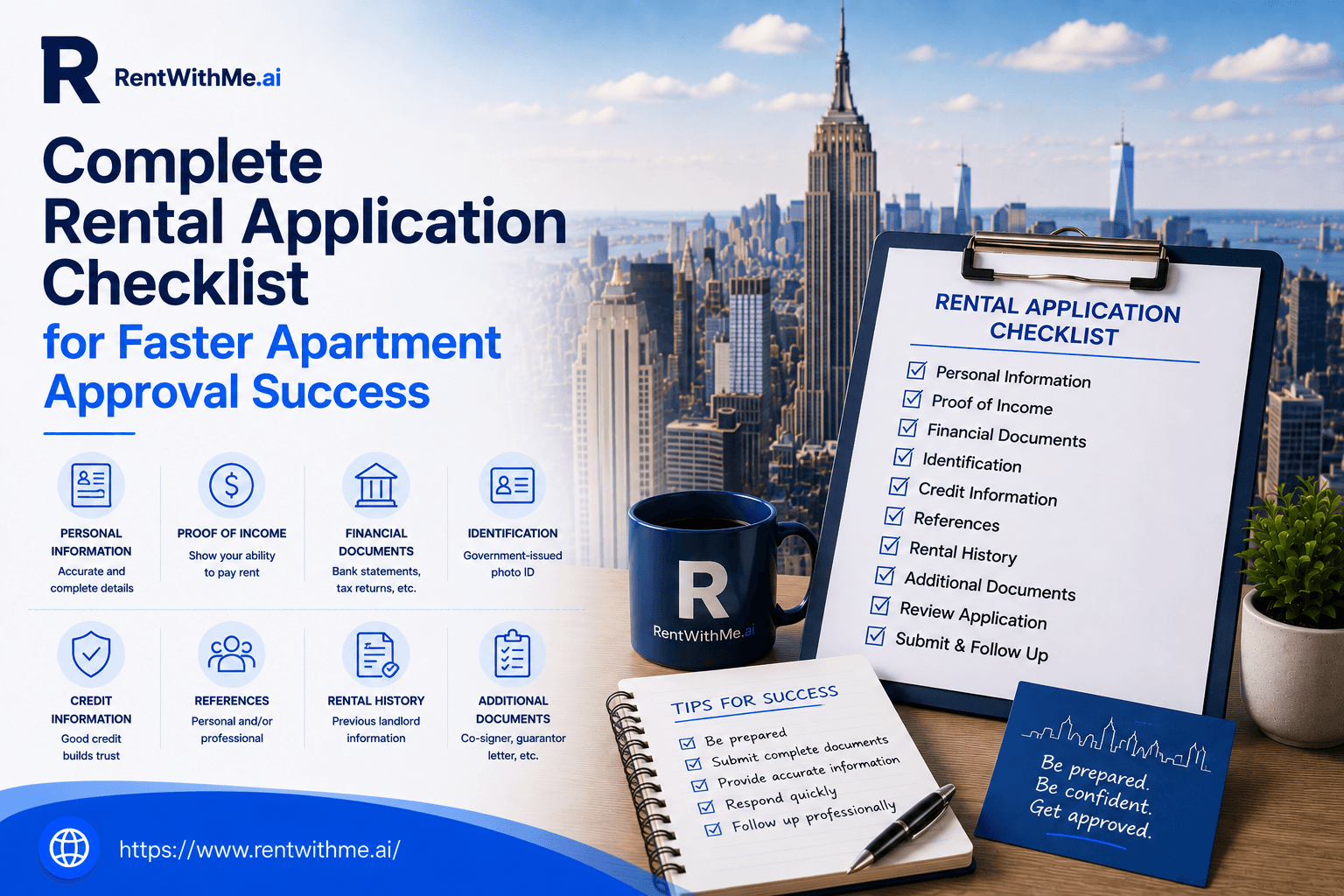
Complete Rental Application Checklist
Use this checklist before submitting your application to ensure every important document is included.
| Category | Documents to Prepare |
|---|---|
| Personal Identification | Government-issued photo ID, passport, or state identification card |
| Employment Verification | Employment letter, recent pay stubs, or job offer letter if applicable |
| Financial Records | Recent bank statements, proof of savings, tax returns when requested |
| Credit Documents | Credit authorization forms and supporting records if required |
| Rental History | Previous landlord contact information and rental references |
| References | Professional and personal references when requested |
| Guarantor Documents | Identification, proof of income, employment verification, financial records |
| Special Applicant Documents | Student enrollment records, self-employment documentation, or international applicant paperwork |
| Application Forms | Completed application, required signatures, and supporting documents |
Reviewing this checklist before every application helps ensure nothing important is overlooked. A complete application package demonstrates preparation, responsibility, and professionalism while making the landlord’s review process more efficient.
Final Tips for Faster Apartment Approval Success
A successful apartment application begins long before you submit your paperwork.
Prepare every required document before you start apartment hunting so you can act quickly when the right opportunity appears. Organize your records in clearly labeled digital and printed folders, and review them regularly to keep everything current.
Respond promptly to landlord communications, provide accurate information throughout your application, and double-check every document before submission. Small details often make a meaningful difference during the approval process.
Remember that landlords are evaluating more than your financial qualifications. A complete, organized, and professional application demonstrates that you are likely to be a responsible tenant throughout the lease.
Conclusion
A complete rental application checklist is one of the most valuable tools you can have during your apartment search. Preparing your documents in advance, organizing your paperwork, and carefully reviewing every detail before submission helps eliminate many of the delays that commonly slow the approval process.
From gathering identification and proof of income to preparing financial records, landlord references, guarantor documentation, and supporting paperwork, every item on your checklist contributes to a stronger application. When landlords receive complete and accurate information, they can evaluate your qualifications more efficiently and make faster decisions.
Success in today’s rental market often depends on preparation as much as qualification. Applicants who are organized, responsive, and ready to submit a complete application are better positioned to secure desirable apartments before the competition.
Whether you are renting for the first time or searching for your next home, following a comprehensive rental application checklist gives you confidence throughout the process. By staying organized, keeping your documents updated, and using the guidance provided in this article, you can improve your chances of faster apartment approval and enjoy a smoother, less stressful path to your next rental home.