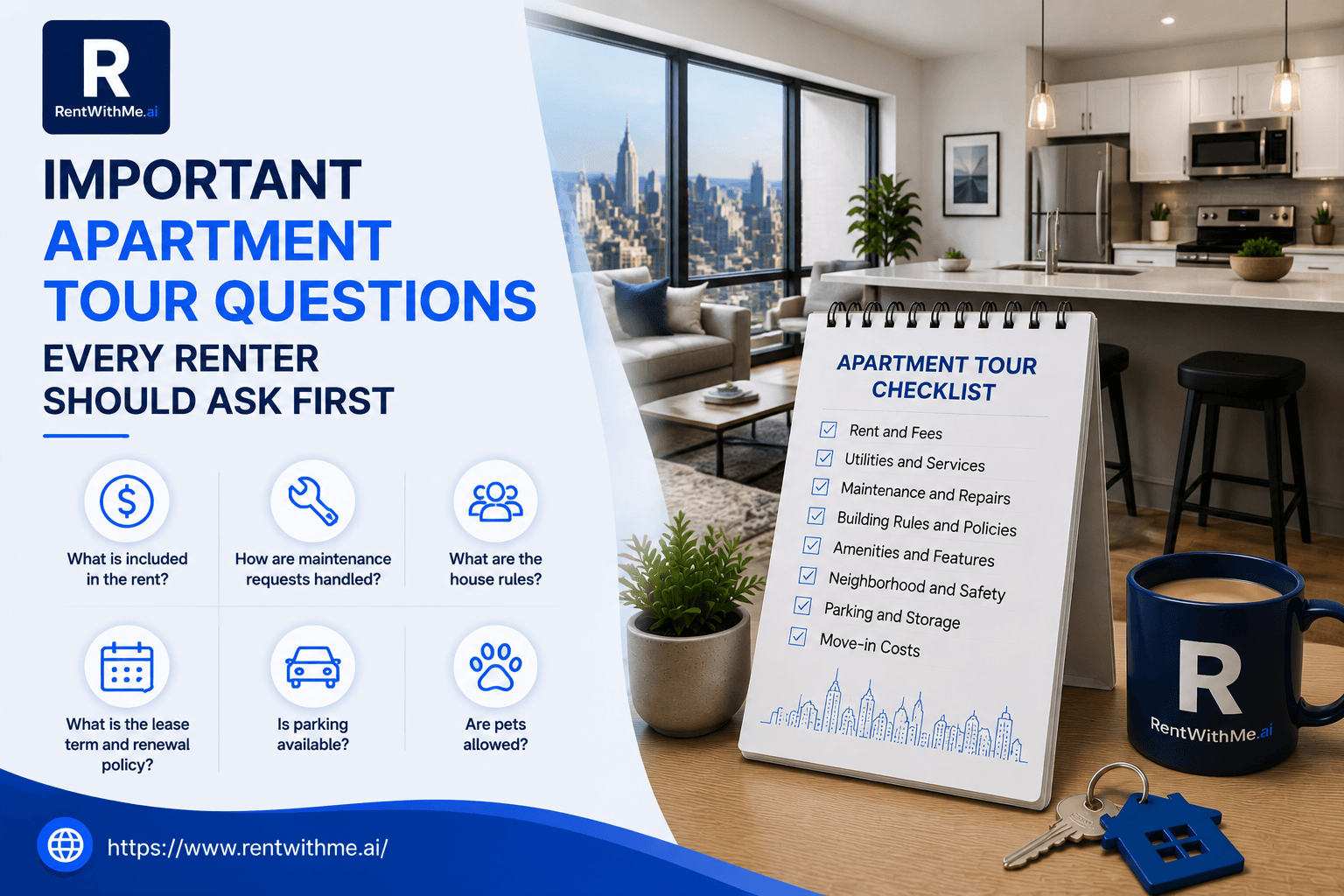
Important Apartment Tour Questions Every Renter Should Ask First
Introduction
Apartment tours are exciting because they bring you one step closer to finding your next home. However, they are also one of the most important opportunities to gather information before making a financial commitment. The questions you ask during a tour can reveal details that online listings and photographs never mention.
Many renters spend their entire viewing looking around the apartment while forgetting to ask about the lease, monthly expenses, maintenance policies, or building management. These overlooked details often become the biggest sources of frustration after moving in.
Smart renters approach apartment tours with a plan. Instead of relying on memory or asking questions as they come to mind, they prepare a checklist that helps them evaluate every property consistently.
This guide covers the most important apartment tour questions every renter should ask first. Whether you are renting your first apartment or moving within New York City, these questions will help you make informed decisions and avoid costly surprises.
Why Asking the Right Questions During an Apartment Tour Matters
An apartment tour is more than an opportunity to see the layout or admire modern finishes. It is your chance to learn what daily life in the apartment will actually be like.
A property may appear perfect at first glance, but important details often remain hidden until you ask about them. Utility costs, maintenance response times, parking policies, lease conditions, and move-in procedures can all affect your living experience.
The answers you receive also tell you something about the landlord or property manager. Clear, professional communication often reflects good management, while vague or inconsistent answers may deserve additional attention.
Asking thoughtful questions allows you to compare apartments fairly instead of making decisions based only on appearance.
Common Mistakes Renters Make During Apartment Viewings
Many renters leave apartment tours wishing they had asked more questions.
One of the most common mistakes is becoming distracted by attractive features such as renovated kitchens or large windows while forgetting to discuss practical topics like maintenance responsibilities or monthly expenses.
Some renters also assume that information shown in the listing is completely accurate. Rental prices, included amenities, utility responsibilities, and lease terms should always be confirmed during the tour.
Another common mistake is failing to take notes. After visiting several apartments, important details become difficult to remember.
Many renters also hesitate to ask questions because they worry about taking too much time. In reality, a responsible landlord or property manager expects thoughtful questions from prospective tenants.
Avoiding these mistakes helps you gather the information needed to choose the right apartment with confidence.

Preparing Your Questions Before the Apartment Tour
The best apartment tours begin before you arrive at the property.
Rather than thinking of questions during the visit, prepare a written list beforehand. This ensures you cover every important topic even if the tour moves quickly.
Review the apartment listing carefully before your appointment. Highlight any information that seems unclear or incomplete so you can request clarification during the viewing.
Think about your own priorities as well. If commuting, parking, pets, remote work, or storage are especially important to you, include questions related to those topics.
Bringing a prepared list also demonstrates that you are an organized renter who takes the rental process seriously.
Questions About Monthly Rent and Total Housing Costs
Monthly rent is usually the first number renters notice, but it rarely represents the complete cost of living in an apartment.
One of the first questions you should ask is exactly how much your monthly housing expenses will be after all required costs are included.
Ask the landlord or property manager to explain every recurring expense. This helps you compare apartments more accurately and prevents unexpected financial surprises after moving in.
Useful questions include:
- What is the monthly rent?
- Which utilities are included?
- Are there additional monthly building fees?
- Is parking available, and does it cost extra?
- Are there storage fees?
- Are there any recurring charges beyond rent?
Understanding your complete monthly financial commitment allows you to determine whether the apartment truly fits your budget.
Questions About Lease Terms and Move-In Requirements
Before becoming emotionally attached to an apartment, make sure the lease aligns with your plans.
Ask about the lease duration, renewal options, and any conditions related to ending the lease early. Understanding these details now prevents misunderstandings later.
You should also ask about move-in procedures. Some apartment buildings require advance scheduling, elevator reservations, certificates of insurance for movers, or other building-specific requirements.
A simple conversation during the tour can eliminate many moving-day surprises.

Questions About Apartment Availability and Move-In Dates
Timing is especially important in competitive rental markets like New York City.
Do not assume the apartment will remain available simply because it is listed online. Confirm its current availability and ask about the expected move-in timeline.
Important questions include:
| Question | Why It Matters |
|---|---|
| Is this apartment currently available? | Confirms availability before applying |
| When is the earliest move-in date? | Helps coordinate your moving schedule |
| How long is the apartment expected to remain available? | Indicates urgency for applying |
| Are there other pending applications? | Helps you understand competition |
Knowing the timeline allows you to plan your application and move more effectively.
Questions About Utilities, Internet, and Included Services
Utilities can significantly affect your monthly housing costs, making them an essential topic during every apartment tour.
Ask which services are included in your rent and which you will need to arrange independently. Electricity, gas, water, internet, trash collection, and heating responsibilities vary between properties.
If reliable internet is important for your work or studies, ask which providers service the building and whether high-speed connections are available.
Also ask whether any appliances or services are maintained by the landlord or building management.
Clarifying these details before signing the lease helps you estimate your actual monthly living expenses more accurately.
Questions About Parking, Storage, and Building Access
Practical features often influence daily convenience just as much as the apartment itself.
If you own a vehicle, ask about parking availability, assigned spaces, guest parking, and any associated fees. Parking policies vary considerably between buildings.
Storage is another commonly overlooked feature. Ask whether additional storage units are available and whether they require separate fees.
You should also ask about building access procedures.
Important topics include:
- Building entry systems.
- Key or electronic access.
- Package delivery procedures.
- Bicycle storage.
- Visitor access.
- Mailroom availability.
These everyday conveniences often become much more important after you move into the apartment.

Questions About the Neighborhood and Daily Convenience
The apartment itself represents only part of your living experience.
Ask questions about the surrounding neighborhood, transportation options, nearby grocery stores, restaurants, parks, healthcare facilities, and other services you expect to use regularly.
If possible, ask how residents typically commute and whether public transportation is easily accessible.
You should also visit the neighborhood independently before making your decision. Walking through the area during different times of day helps you evaluate traffic, noise, parking, and the overall atmosphere.
A great apartment in an inconvenient location may not provide the lifestyle you are looking for.
Organizing Your Apartment Tour Notes for Better Comparisons
Apartment tours become much more useful when your observations are organized.
After each viewing, write down the answers you received while they are still fresh in your memory. Even brief notes become valuable after visiting several apartments.
Take photographs if permitted and record anything that stood out, whether positive or negative. Include details about monthly costs, neighborhood impressions, apartment condition, and the professionalism of the landlord or property manager.
Creating a consistent comparison system also makes your final decision easier.
| Category | Notes to Record |
|---|---|
| Monthly Costs | Rent, utilities, parking, additional fees |
| Apartment Condition | Maintenance, cleanliness, layout |
| Building | Security, amenities, common areas |
| Neighborhood | Transportation, convenience, atmosphere |
| Management | Communication and responsiveness |
Good organization allows you to compare apartments objectively instead of relying on memory alone.
Once you have confirmed the basic financial details, lease terms, neighborhood information, and overall suitability of each apartment, the next step is asking deeper questions about maintenance, building management, safety, appliances, lease renewals, and the warning signs that may help you identify excellent rentals before submitting your application.
Questions About Apartment Maintenance and Repairs
Maintenance is one of the biggest factors affecting your experience after moving into an apartment. Even a beautiful rental can become frustrating if repairs take weeks to complete or management is difficult to reach.
During your apartment tour, ask how maintenance requests are submitted and what the typical response time is for urgent and non-urgent repairs. Understanding the process before signing the lease helps set realistic expectations.
You should also ask whether maintenance staff are available on-site or if outside contractors handle repairs. Knowing who is responsible for resolving problems can provide valuable insight into how the property is managed.
If you notice anything that appears damaged during the viewing, ask whether it will be repaired before move-in and request written confirmation if necessary.
Questions About Building Management and Response Times
The quality of building management often determines whether renting an apartment is enjoyable or stressful.
Ask who manages the property and how residents usually communicate with management. Some buildings have dedicated property managers, while others rely on management companies or individual landlords.
Find out how residents report emergencies and whether there is after-hours support for urgent maintenance issues such as plumbing leaks or heating problems.
Good questions include:
| Question | Why It Matters |
|---|---|
| Who manages the building? | Helps you understand who your main contact will be. |
| How are maintenance requests submitted? | Explains the repair process. |
| Is emergency maintenance available? | Important for urgent situations. |
| How quickly are repairs usually completed? | Indicates management responsiveness. |
The way these questions are answered can often tell you just as much as the answers themselves. Clear, professional communication usually reflects organized property management.
Questions About Appliances, Heating, Cooling, and Plumbing
Apartments rely on many systems that renters use every day, making it important to understand how they operate before signing a lease.
Ask whether major appliances are included and whether the landlord is responsible for repairs if they stop working during your tenancy.
Heating and cooling deserve special attention because they directly affect your comfort throughout the year. Ask what type of system the apartment uses and whether tenants control the temperature themselves.
You should also ask about plumbing.
Important topics include:
- Heating system type.
- Air conditioning availability.
- Hot water reliability.
- Appliance maintenance.
- Laundry facilities.
- Water pressure.
Learning these details during the apartment tour helps you avoid unexpected inconveniences after moving in.

Questions About Noise Levels, Safety, and Security
A quiet, secure apartment contributes significantly to your quality of life.
Ask whether the building has security features such as controlled entry systems, security cameras, intercoms, or on-site staff. While these features vary between buildings, understanding available security measures helps you evaluate the property more thoroughly.
Noise is another important topic. Ask whether residents have raised concerns about traffic, neighboring apartments, nearby construction, or nightlife.
You should also observe these factors yourself during the viewing. Walking through the hallways and spending a few minutes listening quietly often reveals more than simply asking questions.
If possible, visit the property during different times of the day before making your final decision.
Questions About Pets, Guests, and Building Policies
Every apartment building has its own policies regarding daily living, so it is important to understand these rules before signing a lease.
If you currently own a pet or may adopt one in the future, ask about pet policies, breed restrictions, weight limits, deposits, and monthly pet fees where applicable.
Guest policies should also be discussed, especially if you expect family or friends to visit regularly.
Other useful questions include:
- Are pets permitted?
- Are there pet-related fees?
- Are overnight guests allowed?
- Are there quiet hours?
- Are there restrictions on decorating or making small modifications?
Knowing these policies ahead of time helps ensure the apartment fits your lifestyle.
Questions About Building Amenities and Shared Spaces
Amenities often add value to apartment living, but it is important to understand exactly how they work.
Ask whether amenities such as fitness centers, rooftop lounges, coworking areas, package rooms, bicycle storage, or laundry facilities are included in your rent or require additional fees.
You should also ask about operating hours, reservation systems, and maintenance schedules for shared spaces.
Inspect these areas during your tour whenever possible. Clean, well-maintained amenities usually indicate that the property is managed responsibly.
Amenities should improve your daily life rather than simply make the apartment more attractive during the viewing.

Questions About Lease Renewals and Rent Increases
Many renters focus only on moving in and forget to ask about what happens after the initial lease ends.
Understanding renewal policies helps you plan for the future and reduces uncertainty later.
Ask whether lease renewals are commonly offered and when renewal discussions usually begin. You should also ask how rent adjustments are communicated and whether there are standard renewal procedures.
Although future rental amounts cannot always be predicted, understanding the process provides greater transparency and allows you to prepare financially.
These conversations also help you determine whether the property is a place where you could comfortably stay beyond your initial lease.
Identifying Red Flags Based on the Answers You Receive
The answers you receive during an apartment tour are just as important as the apartment itself.
If simple questions receive vague, inconsistent, or incomplete answers, take time to investigate further before applying.
Be cautious if you experience situations such as:
- Pressure to submit money immediately.
- Unclear explanations about fees.
- Refusal to answer maintenance questions.
- Conflicting information about the lease.
- Poor communication throughout the tour.
- Promises that cannot be confirmed in writing.
Not every concern automatically eliminates an apartment, but multiple warning signs deserve careful consideration before making a commitment.
Comparing Multiple Apartments After Several Tours
After viewing several apartments, comparing them objectively becomes increasingly important.
Rather than relying on memory or first impressions, evaluate every apartment using the same categories. Consistency helps remove emotion from the decision-making process.
Compare factors such as monthly costs, apartment condition, building quality, commute, neighborhood, storage space, amenities, and overall comfort.
Keeping organized notes after every tour makes this process much easier.
A structured comparison often reveals that the apartment which initially seemed less exciting actually provides the strongest overall value.

Preparing for the Apartment Application Process
Once your questions have been answered and you have selected your preferred apartment, begin preparing your application immediately.
Review the required documents and verify that everything is accurate before submitting it. Having identification, proof of income, employment verification, bank statements, and rental references ready allows you to move quickly in competitive rental markets.
Ask whether there are application deadlines or additional requirements before completing the paperwork.
Although choosing an apartment is an important milestone, the process is not quite finished. Before signing the lease, you should conduct one final review of the apartment, document its condition, prepare for move-in, understand your tenant responsibilities, and make sure every important detail has been confirmed before you officially call the apartment your new home.
Final Questions to Ask Before Signing the Lease
Finding the right apartment is exciting, but before signing the lease, take one final opportunity to confirm every important detail. This final conversation helps ensure there are no misunderstandings after you become a tenant.
Review everything that was discussed during the apartment tour and application process. Confirm that the apartment, pricing, move-in date, and lease terms all match your expectations.
Do not hesitate to ask follow-up questions if something still seems unclear. It is much easier to clarify information before signing than after your lease becomes effective.
Some final questions include:
- Is the monthly rent exactly as discussed?
- Are all agreed-upon repairs completed before move-in?
- Are there any additional move-in fees?
- What is the first rent payment schedule?
- How are maintenance requests submitted after move-in?
- Who should I contact if an emergency occurs?
Taking a few extra minutes now can prevent unnecessary confusion throughout your tenancy.

Reviewing the Apartment One Last Time
If possible, perform one final walkthrough before receiving the keys.
Use this opportunity to confirm that the apartment is in the expected condition and that any promised repairs have been completed. Compare what you see with the conversations you had during earlier tours.
Check windows, doors, appliances, plumbing fixtures, lighting, flooring, cabinets, and walls one final time. Even small maintenance concerns should be discussed before moving in.
Pay attention to overall cleanliness as well. A properly prepared apartment reflects good property management and helps you begin your tenancy on a positive note.
The final walkthrough is your last opportunity to identify concerns before officially taking possession of the apartment.
Documenting the Apartment Before Moving In
Once you receive your keys, document the apartment thoroughly before unpacking.
Walk through every room and photograph the apartment from multiple angles. Include walls, ceilings, floors, appliances, windows, doors, cabinets, plumbing fixtures, and any visible imperfections.
If your landlord provides a move-in inspection form, compare it with your own observations and ensure existing damage is recorded accurately.
Focus on documenting:
- Walls and ceilings.
- Flooring and carpets.
- Kitchen appliances.
- Bathroom fixtures.
- Windows and locks.
- Cabinets and countertops.
- Heating and cooling equipment.
- Existing scratches or cosmetic damage.
Keep these photographs together with your lease agreement and rental documents. They provide valuable documentation if maintenance questions arise or when your security deposit is returned.
Preparing for a Smooth Move-In Experience
Moving into a new apartment becomes much easier when everything is organized beforehand.
Create a moving checklist that includes packing, transportation, utility activation, address updates, and building-specific requirements. Completing tasks gradually reduces stress and makes moving day more manageable.
If you are hiring professional movers, confirm your reservation several days before the move. Verify arrival times, parking arrangements, and any building requirements that could affect the moving process.
Many apartment buildings require elevator reservations or scheduled move-in times. Contact building management early so everything is arranged before moving day.
Preparing an essentials box also helps. Keeping important documents, chargers, toiletries, medications, cleaning supplies, and basic kitchen items easily accessible makes your first day much more comfortable.
Setting Up Utilities, Internet, and Renters Insurance
Before your apartment feels like home, several important services need to be arranged.
Review your lease carefully to determine which utilities are included and which services you must establish yourself. Electricity, gas, internet, and television providers often require appointments, so scheduling them before move-in prevents unnecessary delays.
Reliable internet service is especially important if you work remotely, study online, or frequently use connected devices.
Renters insurance is another important consideration. Even when it is optional, many renters purchase coverage because it helps protect personal belongings against certain covered events and may also provide liability protection.
Remember to update your mailing address with employers, financial institutions, insurance companies, subscription services, and government agencies so important mail reaches your new home.
Building a Positive Relationship With Your Landlord or Property Manager
A positive relationship with your landlord or property manager can make apartment living much more enjoyable.
Respond to communications promptly, report maintenance concerns early, and communicate respectfully whenever questions arise. Good communication often leads to quicker repairs and smoother interactions throughout the lease.
Following building policies also helps establish trust. Respect quiet hours, use shared amenities responsibly, dispose of trash properly, and follow parking or package delivery procedures.
Reliable tenants who consistently pay rent on time and communicate professionally often enjoy a better overall rental experience.
If disagreements occur, remain calm and focus on practical solutions. Respectful conversations usually produce better outcomes than emotional reactions.

Protecting Your Security Deposit Throughout the Lease
Protecting your security deposit begins on your first day in the apartment, not when you move out.
Maintain the apartment responsibly and report maintenance issues promptly. Small repairs that are addressed early often prevent larger problems later.
Keep records of maintenance requests, repair approvals, and important communication with your landlord. Organized documentation is helpful if questions arise during your tenancy.
As your lease approaches its end, review the move-out requirements carefully. Cleaning the apartment thoroughly and returning it in good condition can improve the likelihood of receiving your security deposit according to the terms of your lease.
Taking photographs after cleaning and before returning the keys provides additional documentation of the apartment’s condition.
Frequently Asked Questions About Apartment Tours
Apartment tours often raise many questions, especially for first-time renters. Here are answers to several of the most common ones.
How long should an apartment tour usually take?
Most apartment tours last between 15 and 30 minutes, although larger apartments or buildings with multiple amenities may require additional time. The goal is to inspect the apartment carefully rather than finish quickly.
Should I ask questions even if the answers seem obvious?
Yes. Confirming important details directly with the landlord or property manager helps prevent misunderstandings and allows you to compare apartments more accurately.
Is it acceptable to take photos during a tour?
In most situations, yes, but always ask for permission first. Photos and notes make it much easier to compare apartments after several viewings.
Should I visit the apartment more than once?
If possible, yes. Visiting during different times of the day allows you to evaluate lighting, traffic, parking availability, and neighborhood activity more accurately.
What should I do if I notice damage during the tour?
Ask whether the issue will be repaired before move-in and request written confirmation if repairs have been promised.
What is the most important apartment tour question?
Rather than focusing on a single question, ask about rent, utilities, lease terms, maintenance procedures, building policies, and any additional costs. Together, these topics provide a complete picture of what living in the apartment will be like.
Complete Apartment Tour Questions Checklist
Use this checklist during every apartment tour to ensure you gather the information needed to make an informed decision.
| Category | Questions to Ask |
|---|---|
| Monthly Costs | Rent, utilities, deposits, parking fees, storage fees, additional charges |
| Lease | Lease length, renewal process, move-in date, lease requirements |
| Apartment | Repairs, appliances, heating, cooling, plumbing, storage |
| Building | Security, amenities, package delivery, parking, maintenance procedures |
| Neighborhood | Transportation, nearby services, noise levels, convenience |
| Management | Response times, emergency contacts, communication methods |
| Move-In | Building requirements, elevator reservations, first payment schedule |
| Documentation | Inspection forms, repair confirmations, lease copies |
Using the same checklist for every apartment tour helps you compare properties consistently and reduces the chance of overlooking important details.
Conclusion
Apartment tours are much more than opportunities to see available rentals. They are your best chance to gather the information needed to make a confident and well-informed decision before signing a lease.
The smartest renters do not rely solely on attractive photographs or stylish interiors. They ask meaningful questions about rent, lease terms, maintenance, utilities, building policies, neighborhood convenience, and management practices because these details influence everyday life far more than appearances alone.
Preparing your questions before every apartment tour also helps you compare multiple rentals fairly. Instead of relying on memory or emotion, you evaluate each property using the same standards, making it easier to identify the apartment that truly offers the best combination of value, comfort, and long-term suitability.
By using the questions and checklist in this guide, you can approach every apartment tour with greater confidence, avoid common rental mistakes, and make decisions based on complete information rather than assumptions. A thoughtful conversation today can save you significant time, money, and frustration throughout your entire lease, helping you choose a home that supports both your lifestyle and your future goals.