
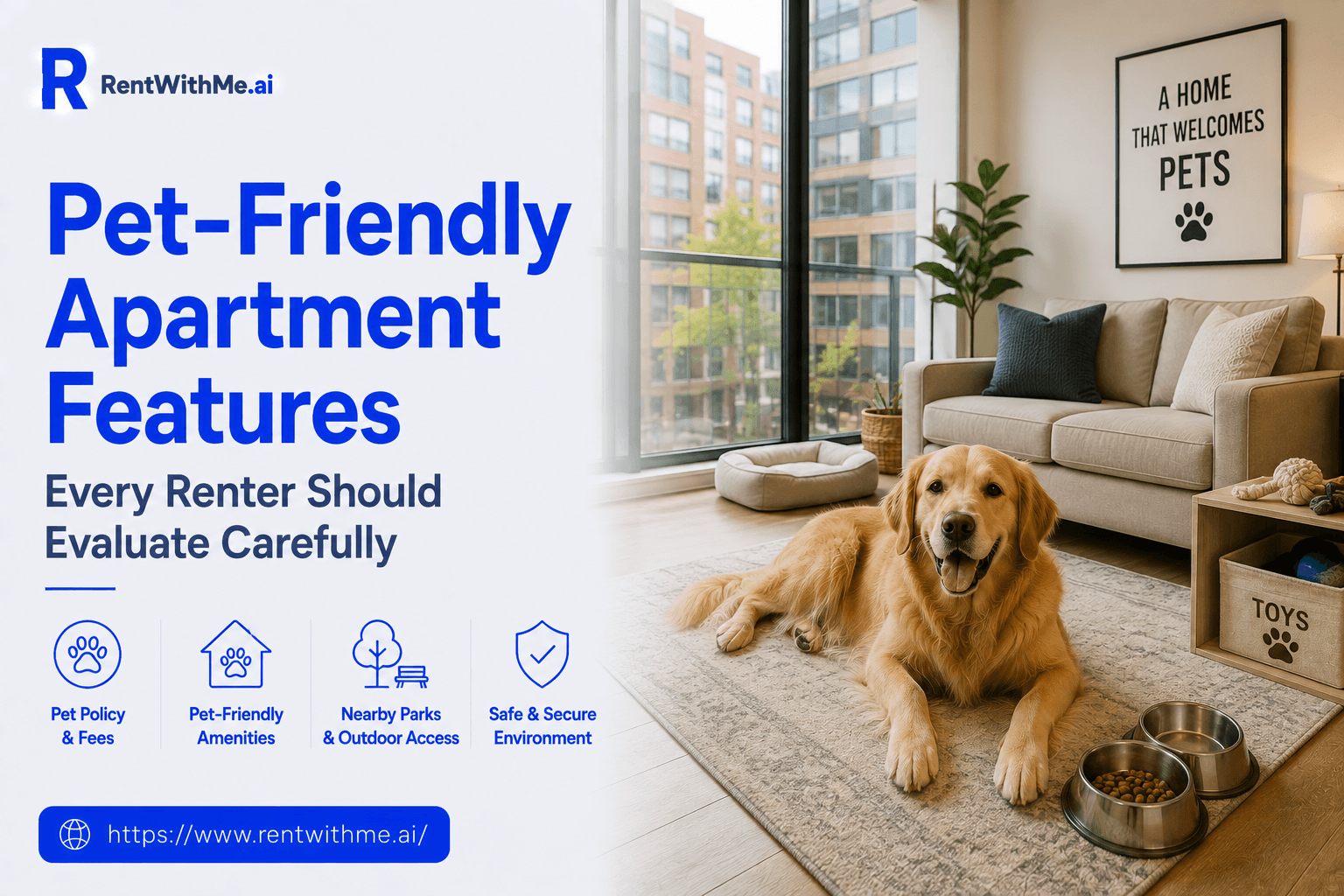
Pet-Friendly Apartment Features Every Renter Should Evaluate Carefully
Introduction
A pet-friendly apartment can look perfect in an online listing and still be surprisingly inconvenient once you move in. A landlord may allow animals, but that single policy does not tell you whether the apartment layout, flooring, building access, noise levels, or surrounding environment will actually support comfortable daily life with your pet.
For renters in New York City, these details deserve particular attention. Limited square footage, shared hallways, elevators, busy streets, older buildings, and varying property rules can turn seemingly minor features into important everyday considerations.
The best apartment for a pet owner is not necessarily the building with the longest list of pet amenities. In many cases, practical features such as durable flooring, convenient outdoor access, secure windows, manageable noise levels, and sufficient storage provide much greater value than specialized amenities that rarely get used.
Your pet’s individual characteristics matter too. A young dog with substantial exercise needs requires a different living environment from an indoor cat, an older dog with limited mobility, or a smaller animal that spends much of its time in a carefully maintained enclosure.
Evaluating an apartment through your pet’s daily routine helps you move beyond the simple question of whether animals are permitted. Instead, you can determine whether the property will actually make responsible pet ownership easier throughout your tenancy.
This guide explores the pet-friendly apartment features renters should evaluate carefully before signing a lease. By looking at the apartment, building, and surrounding neighborhood as one complete living environment, you can make a more informed decision for both yourself and your animal.

Why Pet-Friendly Means More Than Simply Allowing Animals
“Pet-friendly” is a useful search term, but renters should avoid treating it as a guarantee of suitability.
In its most basic sense, a property described this way may simply permit certain animals under specific conditions. The building does not necessarily offer specialized amenities, convenient outdoor access, spacious layouts, or features designed around pet ownership.
Another property may actively accommodate pet owners through practical design choices and useful services. Even then, the amenities offered may not be relevant to your particular animal.
A dog washing station, for example, might sound attractive in an advertisement. If you rarely need it but must navigate several difficult staircases every time your dog needs to go outside, the building may still be inconvenient for your routine.
Similarly, a rooftop pet area may have less practical value than a secure entrance and easy access to suitable walking routes. Marketing features should therefore be evaluated according to how frequently they improve your actual daily life.
The distinction becomes especially important when comparing apartments at different prices. Paying more for a property marketed heavily toward pet owners makes little sense if its premium amenities do not solve problems that matter to you.
Start with permission, but evaluate suitability separately.
Understanding Your Pet’s Needs Before Comparing Apartment Features
You cannot identify the right apartment features until you understand what your animal actually needs. Consider your pet’s age, size, activity level, temperament, mobility, established routines, and sensitivity to environmental changes. These factors influence which apartment characteristics deserve the most attention.
An energetic dog may benefit greatly from convenient street access and nearby exercise opportunities. An older dog may place greater importance on elevators, shorter walking routes, and flooring that provides comfortable footing.
Indoor cats create another set of priorities. Secure windows, opportunities for enrichment, appropriate litter placement, quiet resting areas, and usable vertical space may matter considerably more than proximity to a dog run.
Pets that live in tanks, cages, or specialized enclosures require their own planning. Owners may need to consider temperature stability, electrical access, ventilation, sunlight exposure, cleaning space, and a secure location for the enclosure.
Daily routines provide one of the easiest ways to identify your priorities. Imagine an ordinary weekday from the moment you wake up until you go to sleep and consider every interaction with your pet.
Where will your animal eat? Where will supplies be stored? How will bathroom needs be handled? What happens while you are at work? Where will your pet rest when guests visit or maintenance staff enter?
Answering these questions before apartment hunting creates a practical framework for evaluating properties rather than relying primarily on appearance.

Evaluating the Building’s Written Pet Policy
The most impressive pet-friendly features have little value if your particular animal does not comply with the property’s rules.
Before becoming attached to an apartment, verify the current pet policy. Do not rely exclusively on a listing description or a pet-friendly search filter because those sources may not provide every relevant condition.
Ask whether your animal is permitted and whether the property has rules concerning the number or types of animals allowed. You should also determine whether documentation, additional agreements, or applicable charges are involved.
Useful areas to clarify include:
- Whether your particular animal is permitted.
- How many animals may live in the apartment.
- Whether additional documentation is required.
- Whether pet-related charges apply.
- What rules govern shared building areas.
- What responsibilities apply to noise, cleanliness, or damage.
Important terms should ultimately be consistent with the written rental documents. If the listing, conversation with the leasing representative, and lease appear inconsistent, resolve the difference before signing or transferring money.
Ordinary pet policies should also not automatically be confused with disability-related accommodations involving service or assistance animals. Those circumstances can involve different legal requirements, so renters with specific accommodation questions should rely on appropriate current guidance.
Apartment Layout and Usable Space for Comfortable Pet Living
Square footage tells only part of the story.
A thoughtfully designed apartment can provide more usable space for a pet than a larger unit with narrow passages, awkward corners, or poorly positioned furniture areas. During a tour, focus on how the floor plan will function once your belongings and pet supplies are actually inside.
Imagine where your pet will sleep and where feeding will occur. Determine whether those locations interfere with doors, kitchen work areas, household walkways, or other daily activities.
For cats, consider whether the layout offers opportunities to separate feeding, resting, play, and litter areas. In a very compact apartment, poor placement can create cleanliness or odor-management challenges.
Dog owners should consider whether the pet has an appropriate place to settle without constantly occupying major walking paths. This becomes particularly important in studios and smaller one-bedroom apartments.
If you work from home, think about how your pet’s activity interacts with your workspace. A layout that provides some separation can be helpful during calls, meetings, or periods when you need concentration.
The goal is not necessarily to find the largest apartment within your budget. It is to find a layout where both human and animal routines can happen comfortably without competing constantly for the same limited space.

Flooring Materials and Their Importance for Pet Owners
Flooring is easy to overlook during an apartment search because renters often focus on appearance.
For pet owners, however, flooring affects cleaning, maintenance, traction, noise, and the potential for damage. Understanding the surface throughout the apartment can help you anticipate how easily you will be able to maintain it.
Hard surfaces may be convenient for cleaning certain spills, fur, or accidents, although individual materials vary considerably in durability and maintenance requirements. Carpet may provide softer footing but can require more attention when dealing with fur, odors, stains, or accidents.
Traction is another consideration, particularly for older animals or pets with mobility limitations. Very slippery flooring may make movement uncomfortable for some animals.
Area rugs or other renter-appropriate solutions may improve comfort in certain circumstances, but you should make sure anything you add is suitable for the apartment and safe for your animal.
Listen to how footsteps and pet movement sound on the flooring as well. In buildings with significant sound transmission between units, an active animal running across hard floors could potentially contribute to noise concerns.
Before signing a lease, inspect existing flooring carefully and follow appropriate move-in documentation procedures. Recording pre-existing scratches, stains, or other visible conditions can help distinguish them from changes that occur during your tenancy.
Secure Windows, Doors, Balconies, and Other Potential Escape Points
Security takes on another meaning when an animal lives in the apartment.
Windows, exterior doors, balconies, terraces, and other openings should be evaluated from your pet’s perspective. An opening that seems harmless to a person may present a fall or escape risk for a curious animal.
Look carefully at windows during the apartment tour. Consider how they open, whether existing screens or barriers appear secure, and whether your pet could reach them.
Do not assume a standard insect screen is automatically designed to contain an animal. The appropriate safety measures depend on the window, building, pet, and modifications permitted under your lease.
Balconies require equally careful evaluation. Railings, gaps, furniture placement, and access doors may create hazards depending on the animal.
Entrance doors can become escape points too. Pets that rush toward hallways whenever a door opens may require additional management, particularly in apartments where the front door leads directly into a busy corridor or stairwell.
Also examine less obvious openings. Utility spaces, damaged screens, gaps around certain fixtures, or access points created during maintenance may deserve attention depending on the animal.
Safety should be planned before the pet is given unrestricted access to the new home.

Noise Levels and Sound Transmission Between Apartments
Noise works in both directions when you live with a pet. Your animal may create sounds that neighbors can hear, while noises from neighboring apartments, elevators, hallways, construction, traffic, or building equipment may affect your pet’s behavior.
Spend a quiet moment listening during every apartment tour. The natural tendency is to talk continuously with the leasing representative, but silence can reveal information you would otherwise miss.
Listen near the entrance door for hallway activity. Stand in the bedroom and living area to determine how much street noise enters the apartment.
If possible, consider how the building may sound at different times of day. A quiet weekday afternoon does not necessarily represent morning deliveries, evening elevator traffic, weekend activity, or nearby nightlife.
Sound-sensitive dogs may react to people walking past the front door or elevators arriving nearby. Cats and other animals may also become stressed by unfamiliar recurring noises, even when they do not vocalize in response.
The apartment’s position within the building can therefore matter. A unit near an elevator, garbage area, busy entrance, mechanical equipment, or heavily traveled corridor may experience different sound patterns from a more isolated apartment.
You cannot eliminate ordinary city noise, but understanding the sound environment before moving helps you determine whether it is manageable for your particular animal.
Elevator, Stairway, Hallway, and Building Entrance Accessibility
The journey between your apartment and the street can become one of the most frequently used parts of the property. This is particularly important for dog owners. If your dog goes outside several times every day, even a minor inconvenience becomes significant after hundreds of trips.
Walk the complete route during your tour whenever possible. Do not evaluate only the apartment itself. Consider how long it takes to reach the street, whether elevators are readily accessible, and whether hallways provide enough space to pass other residents comfortably. Think about what the route would feel like while carrying groceries, managing a leash, or navigating bad weather.
Stairs deserve extra attention if your pet has existing mobility limitations or may develop them with age. A walk-up apartment that works for a young dog today may become difficult if the animal’s mobility changes during a future lease period.
Elevators solve some accessibility problems but create other considerations. Dogs that are nervous around strangers or other animals may find crowded elevators challenging.
Building entrances matter as well. A lobby that opens directly onto a heavily trafficked street requires more careful leash control than an entrance with a quieter transition to the sidewalk. Convenience is not about avoiding every minor inconvenience. It is about understanding the route you will realistically use every day and deciding whether it remains manageable over time.

Storage Space for Food, Carriers, Cleaning Supplies, and Pet Equipment
Pets occupy more storage space than many renters expect.
Food, treats, litter, carriers, leashes, grooming equipment, cleaning products, bedding, toys, medications, waste supplies, and seasonal equipment all need somewhere to go. In a small NYC apartment, these items can quickly create clutter when storage has not been planned.
Look inside closets rather than simply counting them. A deep but poorly configured closet may be less useful than a smaller space with practical shelving.
Consider where pet food can be stored securely and conveniently. Depending on the animal and product, storage should help maintain cleanliness while keeping supplies inaccessible to pets that might tear into packaging.
Large carriers are particularly easy to forget during apartment tours. They may be used only occasionally, but they still occupy space throughout the year and should remain reasonably accessible for emergencies.
Dog owners may need a practical location near the entrance for leashes, waste bags, towels, and outdoor gear. Creating a small departure station can make frequent walks much easier.
Cleaning supplies also need convenient storage because pet owners often use them more frequently. If everything necessary to clean an accident is buried behind unrelated household items, prompt cleanup becomes more difficult.
Adequate storage helps a pet-friendly apartment remain comfortable for the humans living there too.
Ventilation, Natural Light, and Indoor Comfort
Indoor environmental quality affects both people and animals. Ventilation becomes particularly important when an apartment contains litter boxes, animal bedding, cages, feeding areas, or other spaces that require regular cleaning. Good housekeeping remains essential, but a comfortable indoor environment makes maintenance easier.
During a tour, notice whether rooms feel stuffy and whether windows can be used appropriately. Ask relevant questions about ventilation systems when the apartment’s setup is unclear.
Natural light can make a small apartment feel more pleasant, and many animals enjoy resting near bright windows. However, direct sunlight can also increase temperatures significantly in certain rooms.
Think about where your pet will spend time during the hours when you are away. A sunny corner that feels comfortable during a short morning tour may become much warmer later in the day.
Temperature control deserves similar attention. Learn how heating works and what cooling options are available so you can maintain appropriate indoor conditions throughout changing seasons.
For animals kept in specialized habitats, environmental stability can be particularly important. Enclosure placement should take temperature, sunlight, ventilation, and equipment requirements into account rather than being decided purely according to appearance.
Comfort is ultimately about consistency. An apartment that allows you to maintain a clean, appropriately ventilated, and manageable indoor environment can make daily pet care significantly easier.

Looking Beyond the Apartment Walls
By this point, it becomes clear why evaluating a pet-friendly apartment requires more than checking whether animals are allowed.
The apartment’s layout determines how comfortably you can organize daily routines. Flooring influences maintenance and movement, windows and doors affect safety, sound conditions can influence behavior, and building access changes the practical experience of every outdoor trip.
Storage and indoor environmental conditions matter for similar reasons. These features may not appear prominently in an online listing, yet they can influence your experience every day after move-in.
A strong apartment choice therefore balances your needs with those of your individual animal. Rather than searching for the property with the most pet-focused marketing, look for the features that solve real problems in your routine.
The next stage of evaluation extends beyond the unit itself. Outdoor access, neighborhood walking conditions, nearby veterinary services, building amenities, feeding and cleaning areas, temperature control, maintenance practices, common-area rules, and property management can all determine whether an apartment that looks pet-friendly actually works that way in everyday life.
Evaluating Outdoor Access for Dogs and Other Pets
Once the apartment itself appears suitable, the next step is evaluating how easily you can move between the unit and the outside world. For dog owners in particular, outdoor access is not an occasional amenity. It becomes part of the daily routine several times a day.
Consider the complete journey from your apartment door to the sidewalk. Long corridors, crowded elevators, multiple security doors, steep stairways, or complicated exits may seem minor during one apartment tour but feel very different when repeated every morning, evening, and late at night.
The floor of the apartment can also affect convenience. A higher-floor unit with reliable elevator service may work perfectly, while the same floor in a building with frequent elevator problems could create significant difficulties.
Think about bad weather as well. Carrying supplies while managing a dog through rain, snow, wind, or extreme temperatures can make an inconvenient building layout even harder to manage.
Owners of older dogs should pay particular attention to accessibility. A route that works comfortably for a healthy young animal may become difficult if mobility changes later.
Outdoor access should therefore be judged by frequency rather than appearance. The more often you will use a feature, the more heavily it should influence your apartment decision.

Nearby Parks, Walking Routes, and Exercise Opportunities
The area immediately surrounding the building matters just as much as the entrance itself.
Dog owners should walk several nearby blocks before committing to an apartment. This simple exercise can reveal whether the neighborhood actually provides practical walking opportunities.
Notice sidewalk width, intersections, traffic patterns, construction, street activity, and places where walking feels comfortable. A neighborhood does not necessarily need a large park nearby to work well, but there should be realistic options for regular outdoor activity.
Distance can also be deceptive on a map. A green space that appears close may require crossing several heavily trafficked intersections or following an inconvenient route.
Consider the time of day when you will normally walk your dog. A route that feels comfortable on a weekend afternoon may be very different during morning rush hour or late in the evening.
Exercise requirements vary considerably among animals. Some dogs may be comfortable with neighborhood walks and indoor enrichment, while others require more substantial physical activity.
Your own willingness to maintain the routine matters too. Choosing an apartment based on an ambitious exercise plan that you are unlikely to follow consistently does not benefit you or your pet.
Evaluate the neighborhood according to the routine you can realistically maintain throughout the year.
Access to Veterinarians and Essential Pet Services
Veterinary access is easy to overlook when your pet is healthy. After moving, however, knowing where routine and urgent care are available can provide valuable peace of mind. Research veterinary options before choosing a neighborhood rather than waiting until your animal needs care.
Consider the practical journey between the apartment and veterinary provider. Distance, transportation options, your pet’s size, and whether you own a vehicle can all influence how manageable that trip will be.
Routine veterinary care is only part of the picture. It is also useful to understand where appropriate urgent or emergency services are available and how you would reach them if necessary.
Other pet services may matter depending on your lifestyle. Groomers, walkers, sitters, daycare providers, trainers, and pet supply stores can add convenience, although not every renter needs all of them nearby.
Avoid paying substantially more for an apartment simply because every possible service is within walking distance. Instead, identify the services you genuinely use and evaluate accessibility accordingly.
A neighborhood that supports your actual pet-care routine is more valuable than one with an impressive collection of businesses you rarely need.
Pet Washing Stations, Relief Areas, and Building Amenities
Modern apartment buildings sometimes advertise amenities specifically for pet owners. Pet washing stations can be useful for dogs that regularly return from walks wet or dirty. They may also make certain grooming tasks easier than attempting them in a small apartment bathroom.
Dedicated relief areas can provide convenience in some buildings, particularly when outdoor access is otherwise complicated. Their usefulness depends on cleanliness, accessibility, building rules, and whether your pet is comfortable using the space.
Some properties may offer additional pet-focused facilities or services. Evaluate each one according to how often you expect to use it rather than how impressive it appears during a tour.
A practical way to compare amenities is to separate essentials from conveniences.
| Feature | Everyday Value to Evaluate |
|---|---|
| Easy building exit | Can affect every outdoor trip |
| Reliable elevator | Important for upper floors and mobility needs |
| Nearby walking route | Supports regular exercise and bathroom routines |
| Pet washing area | Useful for some dogs but not essential for everyone |
| Dedicated relief space | Convenience depends on cleanliness and accessibility |
| Pet-focused social space | Value depends heavily on your animal and lifestyle |
Premium amenities can justify some additional value when they genuinely simplify your routine. They should not distract you from more fundamental concerns such as affordability, apartment condition, building management, or neighborhood suitability.
Kitchen and Feeding Areas That Support Easy Cleaning
Feeding may occupy only a small part of your pet’s day, but the feeding area becomes a permanent feature of the apartment.
Look for a practical location where bowls can remain accessible without blocking major household pathways. Placing food and water directly in a narrow walking route can create spills and inconvenience for both people and animals.
The surrounding surface should be reasonably easy to maintain. Water spills, crumbs, and scattered food are much simpler to address when the area can be cleaned promptly.
Food storage matters too. Large bags, containers, cans, treats, supplements, or specialized diets can consume considerable cabinet or closet space.
Think about whether food can be stored securely away from pests and from animals that may attempt to access it themselves. An attractive open shelf is not necessarily practical if your pet can reach everything on it.
Multi-pet households may require additional planning. Animals that eat different diets or compete over food may benefit from separate feeding locations.
A thoughtful feeding setup keeps a small daily task from becoming a recurring source of clutter.
Choosing Practical Locations for Litter Boxes and Pet Enclosures
Cat owners often discover that litter box placement becomes one of the most challenging aspects of a small apartment.
The ideal location needs to balance accessibility for the cat with ventilation, cleanliness, privacy, and the renter’s use of the surrounding space. Hiding the box somewhere inconvenient may make daily maintenance harder or discourage appropriate use.
During an apartment tour, identify realistic locations rather than assuming you will solve the problem after moving. Consider how the area will function once furniture and household belongings are present.
Cleaning access matters just as much as placement. You should be able to reach the area comfortably for routine maintenance without repeatedly moving furniture or other heavy items.
Owners of animals that live in cages, tanks, terrariums, or other enclosures face similar planning decisions. The enclosure needs a stable location with sufficient surrounding space for cleaning and care.
Electrical access may be important for certain setups, while direct sunlight, drafts, heat sources, or ventilation conditions can influence whether a location is appropriate. Requirements vary significantly by animal, so housing decisions should reflect species-specific care needs.
The apartment should have enough usable space for necessary animal equipment without forcing it into unsuitable locations.
Heating, Cooling, and Temperature Control for Pet Comfort
An apartment that feels comfortable during a twenty-minute tour may behave very differently throughout the year.
Ask how heating works and understand what cooling options are available. Consider which rooms receive significant direct sunlight and whether some areas become noticeably warmer than others.
Pets spend more time at home than many owners do. Indoor conditions during working hours therefore matter even when you personally spend much of the day elsewhere.
Older animals, very young animals, and pets with particular health considerations may be especially sensitive to temperature changes. Individual needs should be discussed with an appropriate veterinary professional when necessary.
Window placement can affect indoor temperature as well. Large windows may provide excellent natural light while contributing to substantial solar heat during certain parts of the day.
Do not assume that opening a window is always a safe solution when a pet is present. Window security must remain part of the ventilation plan.
A suitable apartment should allow you to maintain appropriate indoor conditions without relying on unrealistic workarounds.
Building Maintenance Practices and Pet Safety
Property maintenance affects pet owners in ways that may not be immediately obvious. Routine repairs can involve open doors, unfamiliar workers, loud equipment, temporary barriers, cleaning products, or other changes that affect animals. A well-managed building should communicate significant maintenance activities clearly enough for residents to prepare.
Ask how tenants normally receive notice about scheduled apartment access. Understanding the process helps you arrange appropriate containment or care for your pet before a worker arrives.
Common-area maintenance deserves attention too. Wet floors, construction materials, pest-control activities, and repair equipment may create temporary concerns that require owners to use additional caution.
Observe the general condition of the property during your tour. Broken doors, damaged common areas, overflowing waste areas, persistent maintenance issues, or poorly controlled access can indicate broader management problems.
Pet owners should not expect a building to eliminate every possible risk. They should, however, look for evidence that routine maintenance is handled professionally and communicated appropriately.
Responsive maintenance becomes especially valuable when a problem inside your apartment could affect your animal’s safety or comfort.
Common Areas and Rules for Elevators, Lobbies, and Shared Spaces
Pet-friendly does not mean that animals can use every part of a building without restrictions.
Properties may establish rules for elevators, lobbies, courtyards, rooftops, landscaped areas, and other shared spaces. Understanding those expectations before moving can prevent unnecessary conflicts.
Ask how residents with pets are expected to navigate the building. Rules may address control of animals, waste cleanup, designated areas, or other matters related to shared use.
Consider whether the common spaces themselves are manageable for your particular pet. A nervous dog may struggle in a crowded lobby even when the building technically welcomes animals.
Elevators create particularly close interactions between residents. Some people may be uncomfortable around animals, while other pets may not interact well with yours. Responsible owners need enough control to create space when appropriate. Sometimes that means waiting for another elevator rather than forcing an uncomfortable situation.
Also observe cleanliness in common areas during the tour. A property where residents consistently fail to clean up after animals can become unpleasant even if management markets the building as exceptionally pet-friendly. Good shared-space policies protect pet owners as much as they protect everyone else.
Evaluating Property Management From a Pet Owner’s Perspective
A building can have excellent physical features and still become frustrating if management communicates poorly.
Pay attention to how leasing representatives answer questions about animals. Clear, consistent responses suggest that the property has established procedures rather than improvising policies from one renter to another.
If you receive conflicting answers from different people, ask for the applicable written policy. Important rental decisions should not depend on vague verbal assurances.
Consider responsiveness more generally. Maintenance requests, building notices, access procedures, and rule enforcement affect all residents, but they can become particularly important when animals are involved.
For example, advance notice of planned work can give you time to secure your pet safely. Clear communication about elevator outages can help a dog owner on an upper floor plan accordingly.
Consistency in rule enforcement matters as well. A building where policies exist only on paper may experience recurring cleanliness, noise, or common-area problems.
You are evaluating more than whether management likes pets. You are evaluating whether the property appears capable of managing a shared residential environment professionally.
Questions to Ask During a Pet-Friendly Apartment Tour
A productive tour should leave you with fewer uncertainties than you had before arriving. Ask questions that cannot be answered simply by looking at the apartment. Focus on policies, daily operations, building access, and other details that will affect your routine after move-in.
Useful questions may include:
- What is the current written pet policy?
- Are there rules for specific shared areas?
- What pet-related charges apply, if any?
- How are scheduled maintenance visits communicated?
- How reliable are elevators in this building?
- Are there designated areas for pet-related use?
- How are noise or cleanliness complaints generally handled?
- Are there restrictions affecting renter-installed pet safety measures?
Use the answers as part of your overall evaluation rather than treating any single response as decisive. Whenever an answer affects your legal or financial obligations, verify that the relevant written rental documents are consistent.
You should also ask yourself questions during the tour. Imagine an ordinary Monday rather than an exciting move-in day.
Would morning pet care be convenient here? Is there enough storage? Where would supplies go? How difficult would the outdoor route feel during bad weather? Could your animal handle the building’s normal level of activity? Those practical questions often reveal more than a list of amenities.
Looking for the Features You Will Actually Use
By this stage of the search, you may be comparing properties with dramatically different definitions of pet-friendly living.
One building might offer a pet washing station and dedicated animal spaces but have a difficult route to the street. Another might offer almost no specialized amenities yet provide an excellent layout, reliable elevator, practical flooring, convenient outdoor access, and useful neighborhood services.
The second apartment may ultimately provide the better experience. Pet-friendly features should therefore be ranked according to frequency and importance. Features you use several times every day deserve greater weight than amenities you might use once a month.
Affordability remains part of that calculation. An apartment that requires stretching your budget for pet amenities may leave less money available for veterinary care, food, walking services, training, emergency expenses, and other needs that directly affect your animal.
The final evaluation should bring all of these considerations together. Comparing total housing costs, recognizing warning signs, distinguishing practical features from premium extras, planning for an aging pet, protecting the rental property, and creating a comfortable pet zone will help determine whether a promising apartment remains suitable throughout the lease and potentially beyond.
Comparing Pet-Friendly Apartments Beyond Monthly Rent
Monthly rent matters, but it should not be the only factor guiding your decision. Two apartments with similar rent can offer very different experiences for a pet owner. One may provide better access to outdoor space, more practical flooring, stronger ventilation, and easier building entry, while the other may require more compromises every day.
A useful comparison method is to look at total value rather than price alone. Consider how much time, effort, and additional money each property may require after move-in.
For example, an apartment with slightly higher rent may still provide better overall value if it reduces the need for frequent transportation to parks, eliminates the need for certain pet-care services, or offers a layout that is easier to maintain.
On the other hand, paying a large premium for specialized pet amenities may not make sense if you rarely use them.
Think about both direct and indirect costs when comparing apartments. Direct costs include rent, utilities, and any applicable pet-related charges, while indirect costs include transportation, time, cleaning effort, and services you may need because of the property’s limitations. The strongest apartment choice is usually the one that balances affordability with practical convenience.
Identifying Pet-Friendly Apartment Red Flags
Some apartments appear pet-friendly on the surface but reveal problems when you look more closely. One warning sign is inconsistent information about the building’s pet policy. If the listing says one thing, the leasing representative says another, and the lease says something different, resolve the issue before signing.
Poorly maintained common areas can also be concerning. Persistent odors, waste problems, damaged doors, or neglected hallways may indicate weak management or inconsistent rule enforcement.
A difficult outdoor route is another potential red flag for dog owners. Multiple steep staircases, unreliable elevators, or extremely busy exits can create daily problems that become more frustrating over time.
Excessive noise may also deserve careful consideration, especially if your pet is sensitive to hallway activity or street sounds.
Watch for apartments where essential pet routines seem difficult from the beginning. If you are already inventing complicated solutions during the tour, the property may not be the best long-term fit. Red flags do not always mean you should reject an apartment immediately, but they should encourage closer evaluation.
Balancing Premium Pet Amenities With Practical Everyday Features
Pet-focused amenities can be appealing, but they should be evaluated realistically. A dedicated dog wash, private pet area, or specialized building service may add convenience, but these features should not outweigh more important fundamentals such as safe access, usable space, good maintenance, and affordability.
Ask yourself how frequently you expect to use each amenity. Something used several times every week deserves more value than something you may use only occasionally.
Practical features often include easy exits, secure doors, appropriate flooring, reliable elevators, nearby walking routes, and enough storage for supplies. These features may sound less impressive in marketing materials, but they can have a much greater impact on everyday life.
Premium amenities are most valuable when they solve a real problem for you and your pet. Otherwise, they should be treated as optional extras rather than essential reasons to choose a property.
Evaluating Whether an Apartment Will Still Work as Your Pet Ages
A good apartment should meet your pet’s current needs, but long-term renters should also think ahead. Animals age, and their mobility, exercise requirements, health, and daily routines may change over time. Features that seem unimportant today may become valuable later.
A young dog may handle several flights of stairs easily, while an older dog may eventually struggle with the same route. Reliable elevator access can therefore provide long-term value even if it feels optional now.
Flooring matters for aging animals as well. Slippery surfaces can become more difficult for pets with reduced strength or joint problems. Access to veterinary services may also become more important as routine health care increases with age.
Consider whether the apartment offers enough flexibility to adjust sleeping areas, feeding locations, or furniture arrangements if your pet’s needs change.
You do not need to predict every future challenge, but choosing a home that can adapt to changing circumstances may prevent another difficult move later.
Protecting the Apartment From Common Pet-Related Damage
Responsible renters should think about property protection before damage occurs. Different pets create different risks, including scratching, chewing, staining, odors, and repeated wear in high-traffic areas. Preventive planning is usually easier and less expensive than repairing accumulated damage.
Provide appropriate scratching surfaces, chew-safe enrichment, and comfortable resting areas according to your animal’s needs. These alternatives can reduce the temptation to target apartment surfaces.
Clean spills and accidents promptly using suitable methods for the specific flooring or material involved. Delayed cleaning can allow stains and odors to become more difficult to remove.
Regularly inspect doors, trim, corners, and feeding areas for small signs of wear. Early attention often prevents minor issues from becoming larger problems.
Avoid unauthorized modifications when trying to pet-proof the apartment. Review your lease before attaching permanent gates, shelves, barriers, or other equipment to rental surfaces. Protecting the property is part of maintaining a positive tenancy and can also simplify the move-out process later.
Creating a Comfortable Pet Zone Without Sacrificing Living Space
A dedicated pet area can help organize even a small apartment. The goal is not necessarily to give your pet an entire room. Instead, create predictable areas for sleeping, feeding, play, supplies, or litter that fit naturally into the household layout.
Choose locations that do not block major pathways or interfere with furniture use. A well-planned pet zone should make the apartment feel more organized rather than crowded.
Vertical storage can help in smaller homes. Shelves or renter-appropriate storage solutions may allow pet supplies to remain accessible without taking up valuable floor space.
For cats, vertical enrichment can also increase usable territory without expanding the apartment’s footprint. Any setup should still be secure and appropriate for the individual animal.
Dog beds and feeding areas should be positioned where the animal can rest comfortably without constantly being in the middle of household activity. A clearly organized pet zone supports both cleanliness and routine while helping the apartment remain comfortable for everyone.
Frequently Asked Questions About Pet-Friendly Apartment Features
Pet owners often have similar questions when comparing apartments.
Is a pet washing station worth paying more for?
That depends on how often you expect to use it.
For some dog owners it may provide meaningful convenience, while others may receive much more value from easier outdoor access or better flooring.
Is hardwood flooring always better for pets?
Not necessarily.
Different flooring materials have different advantages and maintenance requirements, and some animals may have difficulty with very slippery surfaces.
How important is elevator access?
For upper-floor apartments, dog owners, senior animals, or pets with mobility limitations, elevator access can be extremely valuable.
Reliability matters just as much as availability.
Should I avoid apartments near elevators?
Not automatically.
However, animals that react strongly to hallway activity may find nearby elevator noise more difficult to manage.
Are balconies safe for pets?
Balconies require careful evaluation.
Railings, gaps, furniture placement, and access can create risks depending on the pet, so never assume an ordinary balcony is automatically animal-safe.
What is the most important pet-friendly apartment feature?
There is no universal answer.
The most valuable feature is the one that solves the most important everyday problem for your particular pet and lifestyle.
Complete Pet-Friendly Apartment Evaluation Checklist
Use this checklist during apartment tours and final comparisons.
- Verify the written pet policy.
- Confirm your specific animal is permitted.
- Understand all applicable pet-related charges.
- Evaluate the overall apartment layout.
- Identify practical feeding and sleeping areas.
- Check flooring materials and traction.
- Inspect windows and doors carefully.
- Review balcony or terrace safety.
- Listen for hallway and neighboring unit noise.
- Walk the route from the apartment to the street.
- Evaluate stairway and elevator accessibility.
- Check available storage for pet supplies.
- Assess ventilation and natural light.
- Understand heating and cooling systems.
- Explore nearby walking and exercise options.
- Research nearby veterinary services.
- Review building common-area pet rules.
- Ask how maintenance visits are communicated.
- Evaluate overall building cleanliness.
- Consider whether the apartment will work as your pet ages.
A checklist helps you compare properties more consistently instead of relying on first impressions.
Common Feature-Related Mistakes Pet Owners Should Avoid
Pet owners sometimes focus heavily on obvious amenities while overlooking everyday practicality.
The table below highlights several common mistakes and better alternatives.
| Common Mistake | Better Approach |
|---|---|
| Choosing a building because it markets itself as pet-friendly | Verify whether the actual features support your routine |
| Paying extra for amenities you rarely use | Prioritize features with everyday value |
| Ignoring the route to the street | Test the complete path during the tour |
| Overlooking noise levels | Listen carefully inside the apartment and hallway |
| Forgetting storage needs | Plan where food, carriers, and supplies will go |
| Ignoring future mobility needs | Consider how the apartment may work as your pet ages |
| Assuming windows and balconies are automatically safe | Evaluate every opening from your pet’s perspective |
| Focusing only on apartment size | Consider usable layout and function instead |
Most of these mistakes can be avoided with a more realistic tour strategy. Imagine living in the apartment rather than simply admiring it.
Final Advice Before Choosing a Pet-Friendly Apartment
The best pet-friendly apartment is not necessarily the one with the most specialized amenities.
It is the property where your pet’s needs, your budget, the apartment layout, building rules, and neighborhood all work together in a practical way.
Start by identifying the features you will use every day. Reliable access, appropriate space, secure doors and windows, manageable noise, good storage, and suitable outdoor options often matter more than premium extras.
Think about long-term needs as well. Your pet may age, your schedule may change, or your care routine may become more complicated.
Choose an apartment that provides enough flexibility to adapt without creating unnecessary financial or logistical stress.
Finally, evaluate property management alongside the physical features. Clear communication, responsive maintenance, and consistent policies often make pet ownership much easier in a shared building.
A thoughtful decision now can prevent months or years of frustration later.
Conclusion
Choosing a pet-friendly apartment requires much more than checking a box that says animals are allowed. The most successful rental decisions come from understanding how the entire property will function for both the renter and the pet throughout everyday life.
Apartment layout, flooring, storage, windows, doors, noise levels, ventilation, heating, cooling, and building access all influence comfort and convenience. These features may appear ordinary, but they often have a greater impact on daily routines than specialized pet amenities.
The surrounding neighborhood matters just as much. Practical walking routes, access to veterinary services, reliable transportation, and nearby pet-care resources can make responsible ownership significantly easier. Evaluating the area in person provides insight that an online listing cannot always offer.
Building management also plays an important role. Clear pet policies, professional maintenance procedures, clean common areas, and consistent communication create a more predictable living environment for everyone.
Financial considerations should remain part of every decision. Paying more for a pet-focused building may be worthwhile when the features genuinely improve your routine, but premium amenities should never place unnecessary pressure on your overall budget.
Long-term suitability deserves equal attention. Pets age, routines change, and mobility needs can evolve. Choosing an apartment with enough flexibility to adapt can reduce the likelihood that you will need to move simply because your pet’s needs change.
Ultimately, the strongest pet-friendly apartment is one that makes responsible ownership easier rather than more complicated. By evaluating practical features carefully, asking the right questions, comparing total value instead of rent alone, and considering both current and future needs, you can choose a home where you and your pet can live comfortably, safely, and confidently throughout the lease.