Ultimate Apartment Renting Checklist Before Signing Your Lease
Introduction
Signing a lease is one of the most important steps in the apartment renting journey. Once you sign, you are entering into a legal agreement that affects your finances, your living situation, and your responsibilities for months or even years. While finding the perfect apartment is exciting, taking a little extra time before signing can save you from costly mistakes later.
Many renters become so focused on securing an apartment that they rush through the final stages of the process. They may overlook hidden costs, skip a detailed inspection, or fail to read important lease terms carefully. These oversights can lead to unexpected expenses, misunderstandings with landlords, or dissatisfaction after moving in.
A thorough apartment renting checklist helps you slow down and evaluate every important detail before making your commitment. Instead of wondering whether you forgot something important, you can move through each step with confidence and peace of mind.
This guide provides a complete checklist to help you prepare before signing your lease. Whether you are renting your first apartment or have leased several homes in the past, these recommendations will help you make informed decisions and start your tenancy on the right foot.
Why Every Renter Needs a Lease Signing Checklist
Apartment hunting involves dozens of decisions. You compare neighborhoods, review listings, schedule tours, submit applications, and communicate with landlords or property managers. By the time lease signing arrives, it is easy to feel mentally exhausted and simply want the process to be over.
Unfortunately, this is exactly when careful attention matters the most. A lease signing checklist ensures that important details are not overlooked simply because you are eager to move.
Using a checklist also creates consistency. Rather than relying on memory or emotions, you evaluate every apartment using the same criteria, making it easier to recognize whether a property truly meets your expectations.
Even experienced renters benefit from following a structured checklist. Every apartment, landlord, and lease agreement is different, so reviewing the essentials each time helps prevent unnecessary surprises.

Common Mistakes Renters Make Before Signing a Lease
Many rental problems begin before tenants ever receive their keys. In many cases, these issues could have been avoided with a little more preparation.
One common mistake is focusing only on monthly rent while ignoring other recurring expenses. Another is assuming that verbal conversations automatically become part of the written lease.
Some renters also fail to inspect the apartment carefully, believing everything shown during the tour will remain exactly the same at move-in. Others neglect to ask questions about maintenance procedures, utility responsibilities, or building policies until after signing.
Rushing through paperwork is another frequent mistake. Excitement can cause renters to skim lease documents rather than reviewing every section carefully.
Recognizing these common pitfalls before signing allows you to approach the final stage of the rental process much more confidently.
Understanding Your Budget Before Making a Final Decision
Before signing any lease, take one final look at your budget. An apartment that seemed affordable when you first toured it should still fit comfortably within your overall financial plan.
Think beyond your monthly rent payment. Consider your complete housing expenses alongside your income and other financial obligations.
A realistic budget should include utilities, internet service, transportation, groceries, renters insurance, entertainment, savings, and emergency expenses.
Ask yourself whether you will still feel financially comfortable six months from now if unexpected costs arise. Choosing an apartment that leaves room for flexibility often creates a much more enjoyable living experience.
If you find yourself stretching your finances to qualify for an apartment, it may be worth reconsidering whether the property truly fits your long-term goals.

Reviewing All Upfront Costs and Monthly Expenses
Many renters are surprised to discover that the total cost of moving extends well beyond the advertised monthly rent.
Before signing your lease, request a complete breakdown of every expected payment. Understanding all costs upfront helps prevent unpleasant surprises during move-in.
Some common expenses include:
| Expense | Purpose |
|---|---|
| First month’s rent | Initial monthly payment |
| Security deposit | Protects against qualifying damages according to the lease |
| Utility setup costs | Activating required services |
| Moving expenses | Professional movers or transportation |
| Renters insurance | Protects personal belongings |
| Building move-in fees where applicable | Required by certain properties |
Review these expenses carefully and confirm when each payment is due. Knowing the full financial commitment allows you to move forward with confidence rather than uncertainty.
It is equally important to estimate your recurring monthly expenses after moving in. Looking at the complete financial picture gives you a more accurate understanding of long-term affordability.
Verifying the Apartment’s Condition Before Signing
One of the final tasks before signing a lease should be a careful inspection of the apartment itself.
Walk through every room with fresh attention. Instead of focusing on how attractive the apartment looks, examine how well everything functions.
Open cabinets, inspect flooring, check walls for damage, test windows, turn on lights, run faucets, flush toilets, and examine appliances. Small issues may seem insignificant during a tour but can become frustrating after you move in.
If you notice anything that concerns you, discuss it before signing the lease. Clarify whether repairs will be completed before your move-in date and request written confirmation whenever appropriate.
Taking time for a thorough inspection demonstrates responsibility and helps establish clear expectations with your landlord from the beginning.

Inspecting Building Amenities and Common Areas
Your apartment is only one part of your overall living experience. The condition of the building itself also deserves careful evaluation before you commit.
Walk through entrances, hallways, elevators, stairwells, package rooms, laundry facilities, parking areas, and any shared amenities available to residents.
Observe whether these areas appear clean, secure, and properly maintained. Well-maintained common spaces often reflect consistent property management and attention to resident satisfaction.
If the building advertises amenities such as fitness centers, rooftop lounges, coworking spaces, or bicycle storage, verify that they are available and functioning as expected.
Building quality influences your everyday experience just as much as the apartment itself.
Researching the Neighborhood Before Committing
An apartment may be perfect, but the surrounding neighborhood also plays a significant role in your daily life.
Visit the area at different times whenever possible. Morning, afternoon, and evening visits can reveal different traffic patterns, noise levels, parking availability, and pedestrian activity.
Spend time walking around nearby streets to get a better understanding of the community. Look for grocery stores, pharmacies, restaurants, parks, coffee shops, banks, and other businesses you expect to visit regularly.
Talking with current residents or local business owners can also provide valuable insight into the neighborhood that online reviews cannot always capture.
Choosing the right neighborhood often contributes just as much to your overall satisfaction as selecting the right apartment.
Confirming Commute, Transportation, and Everyday Convenience
Convenience has a direct impact on your quality of life. Before signing a lease, think carefully about how the apartment fits into your daily routine.
Calculate your commute during normal travel hours rather than relying only on mapping software estimates. Rush hour conditions can significantly affect travel time.
Also consider how easily you can reach grocery stores, healthcare providers, gyms, schools, restaurants, and other places you visit frequently.
Even small differences in convenience add up over the course of a year. An apartment that saves thirty minutes of commuting every weekday can provide hundreds of additional hours of personal time annually.
Evaluating convenience now helps ensure you remain satisfied with your decision long after moving in.
Preparing Your Financial Documents
By the time you are ready to sign a lease, most of your financial documents should already be organized. However, it is still worth confirming that everything remains accurate and complete.
Landlords occasionally request additional documentation before final approval. Having your paperwork readily available allows you to respond immediately without delaying the leasing process.
Typical documents include:
- Government-issued photo identification
- Recent pay stubs
- Employment verification letter
- Recent bank statements
- Tax returns if requested
- Rental references when available
Keeping secure digital copies of these documents also makes future apartment searches much easier should you move again later.
Organization demonstrates professionalism and helps the leasing process proceed smoothly.
Understanding Income, Credit, and Guarantor Requirements
Before signing your lease, confirm that every financial requirement has been satisfied and that there are no remaining conditions attached to your approval.
Landlords generally review income, employment history, available financial resources, and credit information before finalizing the lease. If you used a guarantor during the application process, verify that all required documentation has also been completed.
Understanding exactly how your approval was granted helps avoid confusion during the final paperwork stage.
If you have questions regarding payment schedules, financial obligations, or guarantor responsibilities, ask for clarification before signing rather than afterward.
Clear communication at this stage benefits both you and your landlord.
Organizing Your Final Apartment Comparison
If you are deciding between multiple apartments, make one final comparison before signing.
Review each option using the same evaluation criteria rather than relying on first impressions alone. Comparing apartments objectively helps ensure you select the property that provides the best overall value.
Consider factors such as monthly cost, neighborhood, commute, apartment condition, building management, storage, amenities, lease flexibility, and long-term suitability.
Sometimes the apartment that appears slightly less impressive during the first tour ultimately proves to be the stronger overall choice because it offers a better balance of affordability, convenience, and comfort.
Once you are confident that you have selected the right apartment, the final stage of the process begins. Carefully reviewing your lease, understanding every important clause, confirming move-in costs, and asking the right questions before signing will help ensure that your new home meets both your expectations and your long-term goals.

Reviewing the Apartment Application Before Submission
Although you may already have received preliminary approval, it is worth reviewing your application one final time before the lease is finalized. Small mistakes in personal information, employment details, or financial documents can delay the process unnecessarily.
Verify that your legal name, contact information, employer details, income figures, and current address are accurate across every document you submitted. Consistency helps landlords complete their review more efficiently.
If any of your circumstances have changed since you applied, such as a new job, updated contact information, or a revised move-in date, inform the landlord or property manager immediately. Keeping everyone informed demonstrates professionalism and helps prevent misunderstandings.
A careful review now gives you confidence that everything is complete before you move on to the final stage of the renting process.
Understanding What Landlords Check During Approval
Many renters wonder what happens after they submit their application. Understanding the approval process helps you know what to expect while waiting for the final decision.
Most landlords evaluate an applicant’s financial stability, employment history, income, credit profile, and overall ability to meet lease obligations. Some also contact previous landlords to learn about payment history and tenancy experience.
No two landlords use exactly the same approval criteria. One property may place greater emphasis on income, while another may focus more heavily on credit history or rental references.
If additional documents are requested, respond as quickly as possible. Prompt communication often helps the approval process move forward without unnecessary delays.
Reading Every Section of the Lease Carefully
Receiving the lease agreement is one of the most important moments in the apartment renting process. Even if you are excited to move in, avoid signing anything until you have read every page carefully.
A lease outlines the legal agreement between you and your landlord. It explains your financial obligations, your rights as a tenant, and the responsibilities each party accepts throughout the rental period.
Read slowly and carefully rather than skimming through familiar-looking sections. Small details that seem unimportant today may become significant later.
Pay close attention to dates, names, apartment numbers, rental amounts, and payment schedules. Correcting mistakes before signing is much easier than trying to revise legal documents afterward.
Lease Terms You Should Never Overlook
While every lease is different, several sections deserve particularly close attention before signing.
Understanding these provisions helps you avoid unexpected surprises during your tenancy.
| Lease Section | Why It Matters |
|---|---|
| Lease start and end dates | Defines the rental period. |
| Monthly rent amount | Confirms your financial obligation. |
| Rent due date | Helps prevent late payment fees. |
| Security deposit terms | Explains deposit handling and return conditions. |
| Maintenance responsibilities | Clarifies who handles repairs. |
| Renewal procedures | Explains what happens when the lease ends. |
Take notes while reading so you can easily return to any section that raises questions.
If something in the lease differs from earlier conversations, request clarification before signing. Never assume verbal agreements automatically become part of the written contract.
Understanding Security Deposits, Fees, and Move-In Costs
Before signing your lease, make sure you understand every payment you will be responsible for.
Most renters expect to pay the first month’s rent and a security deposit, but some buildings may also have additional costs related to move-in procedures or utility activation.
Request a complete explanation of every required payment, including when each payment is due and how it should be submitted.
Understanding these financial obligations in advance allows you to budget accurately and prevents unexpected expenses during move-in.
If any fee seems unclear, ask for an explanation before signing. A transparent landlord or property manager should have no problem explaining each charge.
Confirming Included Utilities and Building Policies
One of the most common misunderstandings between landlords and tenants involves utilities and building rules.
Some apartments include certain utilities in the monthly rent, while others require tenants to establish accounts with utility providers after moving in.
Ask exactly which services are included and which will become your responsibility. This information helps you calculate your true monthly housing costs.
You should also review important building policies before signing.
Common policies may include:
- Guest and visitor guidelines
- Pet regulations
- Noise policies
- Package delivery procedures
- Laundry room usage
- Parking rules if available
- Smoking restrictions
- Move-in and move-out procedures
Understanding these expectations before becoming a tenant helps prevent unnecessary conflicts later.
Questions to Ask Before Signing the Lease
Even after reviewing the apartment and reading the lease, there may still be important questions worth asking.
Good landlords appreciate renters who want to fully understand their responsibilities before making a commitment.
Some valuable questions include:
- How should maintenance requests be submitted?
- What is the typical response time for repairs?
- Who should be contacted during emergencies?
- How does the lease renewal process work?
- Are there any planned building renovations?
- What happens if I need to move before my lease expires?
These conversations often provide additional insight into how the property is managed and how responsive management is likely to be during your tenancy.
Clear communication before signing establishes a positive foundation for the future.
Identifying Potential Red Flags Before Committing
The lease signing stage is also your final opportunity to recognize warning signs before making a legal commitment.
Be cautious if information changes unexpectedly without explanation. For example, if rental amounts, lease dates, fees, or apartment details differ from what was originally discussed, ask for clarification immediately.
Pay attention to communication as well. Consistently delayed responses, vague answers, or unwillingness to explain lease terms may indicate future communication challenges.
The apartment itself should also match what you previously viewed. If repairs that were promised have not been completed or significant changes have occurred, discuss them before signing.
Trust your instincts. If something feels unclear or inconsistent, it is better to resolve the issue now rather than after moving in.
What to Do If Something in the Lease Is Unclear
Lease agreements often contain legal language that may be unfamiliar, especially for first-time renters.
If you encounter terms you do not fully understand, do not feel pressured to sign immediately. Asking questions is a normal and responsible part of the rental process.
Request explanations in plain language so you clearly understand your responsibilities and the landlord’s obligations.
If necessary, take additional time to review the document carefully before signing. A lease is an important legal agreement, and making sure you fully understand it protects everyone involved.
Confidence comes from understanding what you are signing rather than simply trusting that everything will work out.
Final Steps Before You Sign
Once every question has been answered and you feel comfortable with the lease, take one final moment to review everything.
Confirm that all agreed-upon repairs have been addressed or documented, verify every payment amount, and ensure you have copies of all important documents for your records.
Before signing, make sure you have:
- Reviewed the complete lease.
- Verified apartment details.
- Confirmed all move-in costs.
- Understood building policies.
- Asked every remaining question.
- Received copies of important documents.
Completing these final checks allows you to sign your lease confidently, knowing you have thoroughly evaluated every important aspect of your new home.
With the paperwork complete, the focus shifts from becoming an approved renter to becoming a successful tenant. Preparing for move-in, documenting the apartment’s condition, setting up essential services, understanding your responsibilities, and maintaining a positive relationship with your landlord will help ensure your new apartment provides a comfortable and rewarding place to live.

Preparing for Move-In After Signing the Lease
Signing your lease is an exciting achievement, but there are still several important steps to complete before you officially settle into your new apartment. Proper preparation helps ensure your move is organized, efficient, and far less stressful.
Begin planning your move as soon as your lease is finalized. Reserve professional movers if needed, gather packing supplies, notify your current landlord, and create a timeline that spreads tasks over several weeks instead of leaving everything until the last minute.
Many apartment buildings have move-in procedures that new tenants often overlook. Some require elevator reservations, designated moving hours, or proof of insurance from moving companies. Contact building management ahead of time so you understand every requirement before moving day.
Before unloading your belongings, walk through the apartment carefully. Take photographs of every room, including walls, floors, ceilings, appliances, cabinets, windows, and fixtures. These photos create a record of the apartment’s condition when your tenancy begins.
Setting Up Utilities, Internet, and Renters Insurance
After receiving your keys, the next priority is making sure your apartment is fully functional before your first night.
Review your lease to confirm which utilities are included and which accounts you need to establish. Electricity, natural gas, internet, and cable services often require appointments, so scheduling them before move-in can prevent unnecessary delays.
Reliable internet service has become essential for work, education, entertainment, and communication. Arranging installation early ensures you can begin using your apartment comfortably from day one.
Renters insurance is another important consideration. While some landlords require proof of coverage before move-in, many renters choose to purchase insurance even when it is optional because it helps protect personal belongings against covered losses.
You should also update your address with employers, banks, insurance providers, subscription services, government agencies, and any organization that regularly sends important mail.
Taking care of these details early allows you to focus on settling into your new home instead of dealing with administrative tasks after the move.
Documenting the Apartment Before Moving In
One of the smartest habits every renter should develop is documenting the apartment before unpacking.
Walk through each room carefully and photograph everything, even if the apartment appears to be in excellent condition. Existing scratches, dents, chipped paint, worn flooring, or appliance imperfections should all be documented.
If possible, compare what you observe with any move-in inspection forms provided by the landlord or property manager. Make sure every existing issue is recorded accurately.
Pay particular attention to:
- Walls and ceilings
- Flooring and carpets
- Windows and doors
- Kitchen appliances
- Bathroom fixtures
- Cabinets and countertops
- Smoke detectors
- Heating and cooling equipment
After documenting everything, save your photos in a secure location. These records can be extremely valuable when discussing maintenance concerns or the return of your security deposit after your lease ends.
Understanding Your Responsibilities as a Tenant
Signing a lease creates responsibilities for both you and your landlord. Understanding your role as a tenant helps you maintain a positive rental experience throughout your lease.
Paying rent on time is one of your primary responsibilities. Consistent payments help build trust with your landlord and prevent unnecessary late fees or disputes.
You are also responsible for keeping the apartment reasonably clean, reporting maintenance issues promptly, and following the terms outlined in your lease.
Treat the apartment with care and notify management whenever repairs become necessary. Addressing small problems early often prevents larger and more expensive issues from developing.
Respecting neighbors and following building policies also contributes to a more enjoyable living environment for everyone in the community.
Building a Positive Relationship With Your Landlord
A good relationship with your landlord or property manager can make apartment living significantly more enjoyable.
Communication is one of the most important factors. Respond promptly to emails or phone calls and report maintenance concerns as soon as you notice them.
Professional, respectful communication usually leads to faster resolutions when repairs or questions arise. Landlords generally appreciate tenants who are organized, cooperative, and proactive.
Paying rent consistently on time also establishes reliability. Responsible tenants often experience smoother lease renewals and more productive conversations throughout their tenancy.
If disagreements occur, remain calm and focus on solving the issue rather than assigning blame. A respectful approach typically produces the best results for everyone involved.
Managing Your Lease Successfully Throughout the Year
The apartment renting process does not end after move-in day. Successful renters continue managing their tenancy responsibly throughout the lease period.
Create a monthly budget that includes rent, utilities, groceries, transportation, insurance, and other recurring expenses. Tracking your spending helps prevent financial surprises and keeps your housing costs manageable.
Inspect your apartment occasionally for maintenance concerns such as plumbing leaks, damaged caulking, or appliance problems. Reporting issues early often prevents more significant repairs later.
Keep important documents organized throughout your lease.
| Document | Why You Should Keep It |
|---|---|
| Signed lease agreement | Reference for your rental terms |
| Payment confirmations | Proof of rent payments |
| Maintenance requests | Record of repair history |
| Email correspondence | Documentation of important discussions |
| Move-in photos | Evidence of apartment condition |
Maintaining organized records provides peace of mind and simplifies communication if questions ever arise.
Lease Renewals, Moving Out, and Security Deposit Tips
As your lease approaches expiration, begin thinking about your next steps well before the renewal deadline.
Evaluate whether your apartment still meets your needs by considering your commute, monthly budget, neighborhood, building management, and future plans. If you enjoy living there and the renewal terms fit your finances, renewing your lease may be the most convenient option.
If you decide to move, begin searching for your next apartment early. Starting your search ahead of time gives you more choices and reduces the pressure of finding a new home before your current lease expires.
When preparing to move out, clean the apartment thoroughly and remove all personal belongings. Repair any damage for which you are responsible under the lease, and photograph the apartment after cleaning.
Returning the apartment in excellent condition improves the likelihood of receiving your security deposit according to the terms of your lease and applicable regulations.
Frequently Asked Questions About Signing an Apartment Lease
Many renters have similar questions before signing their lease. Here are answers to some of the most common concerns.
Should I read the entire lease even if the landlord summarizes it?
Yes. A summary is helpful, but the written lease is the legal agreement that governs your tenancy. Reading every section ensures you understand your responsibilities before signing.
Can I negotiate parts of the lease?
Sometimes. Depending on the property and market conditions, certain terms may be open to discussion. It is always appropriate to ask respectful questions before signing.
What should I do if repairs were promised before move-in?
Request written confirmation that the repairs will be completed. Having documentation helps avoid misunderstandings after the lease begins.
Is renters insurance necessary?
Many landlords require it, and even when it is optional, renters insurance provides valuable protection for personal belongings against certain covered events.
Should I keep copies of my lease and payment receipts?
Absolutely. Keeping organized records throughout your tenancy makes it much easier to resolve questions regarding payments, repairs, or lease terms.
What if I discover a problem after moving in?
Notify your landlord or property manager as soon as possible. Prompt communication allows maintenance issues to be addressed before they become more serious.
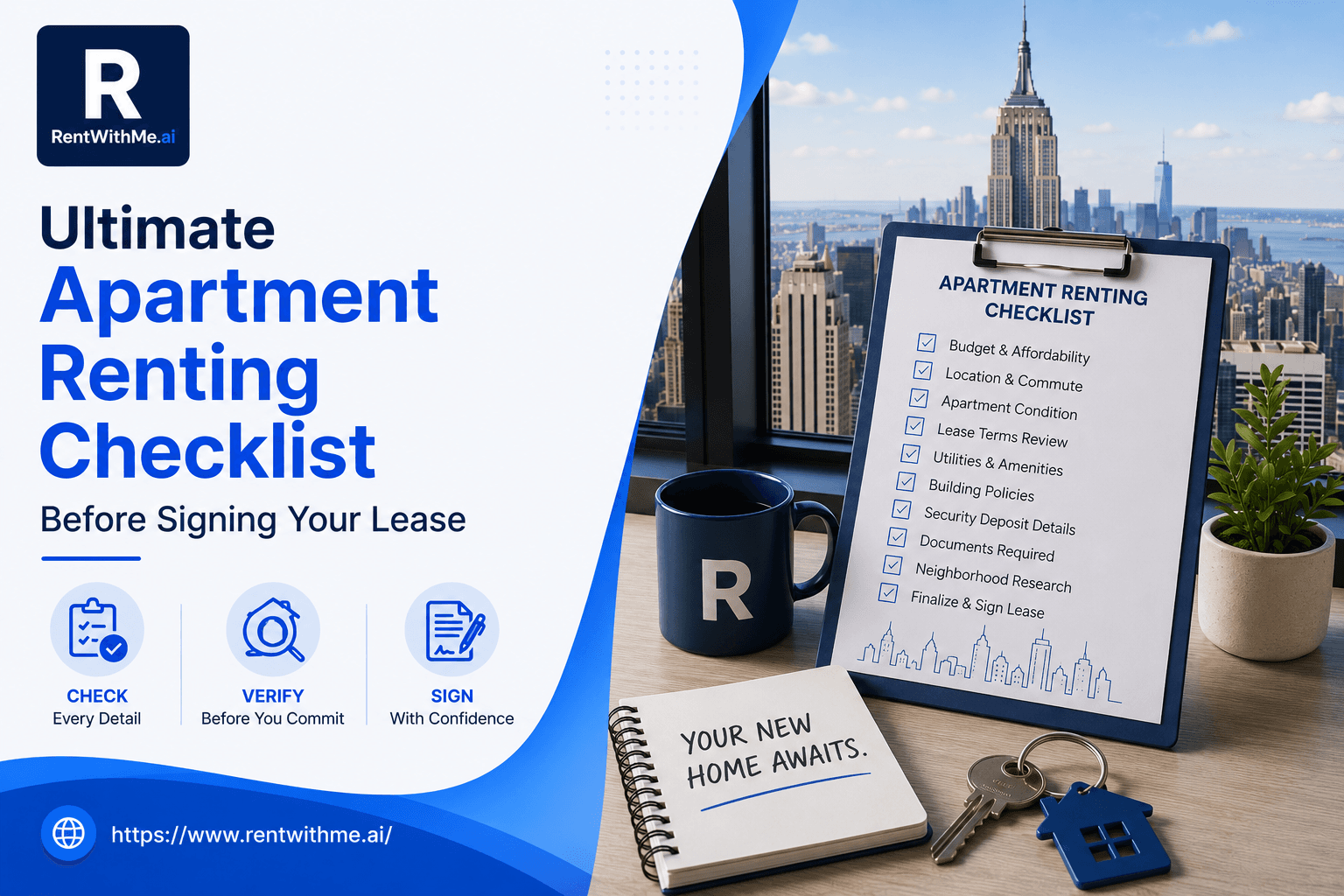
Ultimate Apartment Renting Checklist Before Signing Your Lease
Before committing to any apartment, review this complete checklist to ensure you have covered every important detail.
| Stage | Checklist Item |
|---|---|
| Budget | Confirm the apartment fits comfortably within your monthly budget. |
| Expenses | Review all upfront costs and recurring monthly expenses. |
| Apartment Inspection | Check the apartment’s condition and verify any promised repairs. |
| Building Review | Inspect common areas, amenities, and overall maintenance. |
| Neighborhood | Evaluate safety, transportation, shopping, and convenience. |
| Documents | Prepare identification, income verification, and financial records. |
| Lease Review | Read every section carefully before signing. |
| Policies | Confirm utilities, pet rules, guest policies, and building regulations. |
| Questions | Resolve every concern before making a commitment. |
| Move-In Planning | Prepare utilities, insurance, moving arrangements, and documentation. |
Using this checklist helps ensure you make a well-informed decision instead of rushing through the final stage of the apartment renting process. Spending a little extra time before signing often prevents many of the problems renters experience later.
Conclusion
Signing an apartment lease is much more than completing paperwork. It is the point where months of planning, searching, touring, and comparing apartments become a long-term commitment. Taking the time to review every important detail before signing helps ensure that commitment is one you will feel confident about.
A thoughtful renter looks beyond attractive finishes and monthly rent. They evaluate the neighborhood, inspect the apartment carefully, understand every financial obligation, review the lease thoroughly, and ask questions whenever something is unclear. These habits reduce uncertainty and create a much smoother renting experience.
Preparation continues to matter even after the lease is signed. Organizing your move, documenting the apartment’s condition, setting up essential services, maintaining open communication with your landlord, and managing your responsibilities throughout the lease all contribute to a successful tenancy.
Whether this is your first apartment or your tenth, a structured checklist provides valuable peace of mind. It helps ensure that every important decision is made deliberately rather than under pressure.
By following this ultimate apartment renting checklist before signing your lease, you can move into your new home knowing you have carefully evaluated every critical detail. That preparation not only protects your finances but also lays the foundation for a comfortable, rewarding, and stress-free rental experience.